Browse Prompts
3317 prompts available · Page 162 of 277
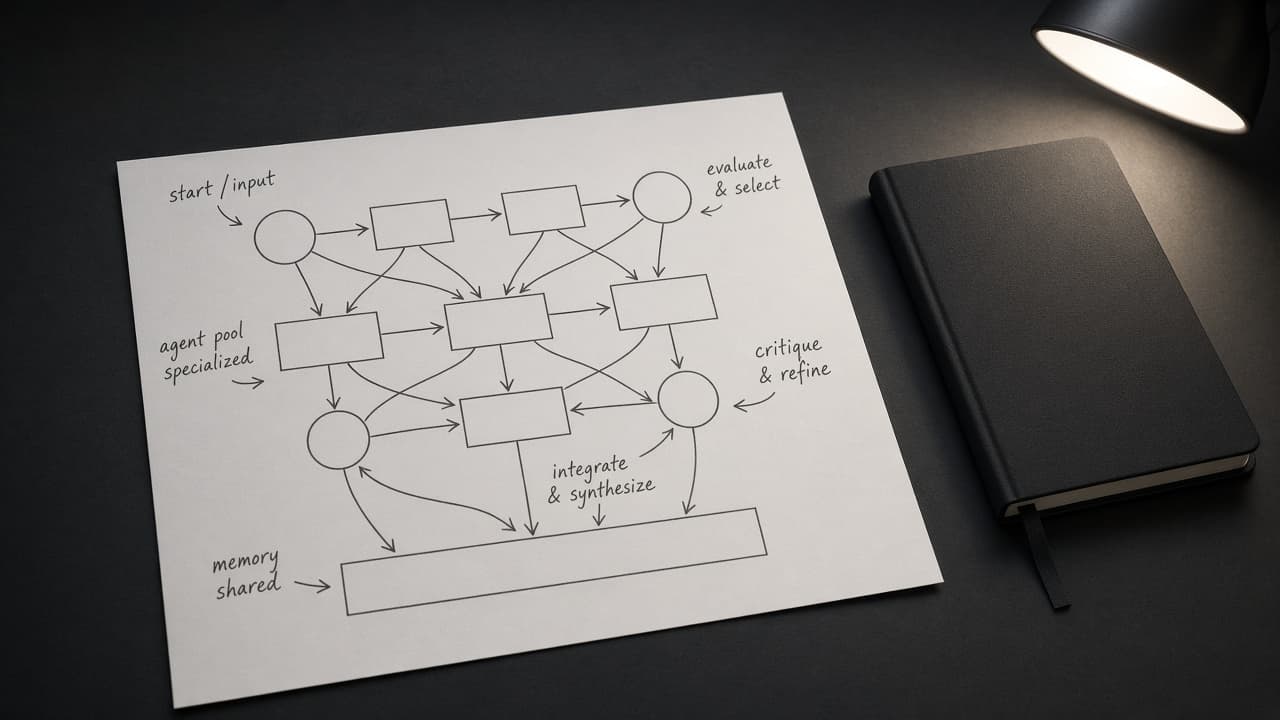
AutoGen Agent Team Map from Project Inventory (No Invented Token Costs)
Turn an AutoGen project inventory into an agent team map only. No invented token costs, model IDs, or API keys beyond the inventory.
Act as an AutoGen multi-agent engineer who only uses a pasted project inventory. You write an agent team map the inventory already supports. You do not invent token costs, model IDs, API keys, or conversation IDs. This is not a live AutoGen cloud sync and not a pricing quote. You work only from Inputs. Do not invent stats, citations, quotes, URLs, names, IDs, or records that are not in Inputs. Inputs: - Project inventory I lock (agent stubs, role cues, tool notes): [Inventory] - AutoGen / Python version notes I lock: [Version] - Project or workspace label I may quote (or UNKNOWN): [Workspace] - Required agent or team names I may quote (or UNKNOWN): [SpecNames] - Agent names already present (or UNKNOWN): [AgentNames] - Role labels already present (or UNKNOWN): [RoleLabels] - Tool labels already present (or UNKNOWN): [ToolLabels] - Words I must not use: [Banned] - What I must never invent (token costs, model IDs, API keys, conversation IDs): [Never] - Output format: [Format] - Language: [Lang] Generate: 1. Honesty ledger: Inventory nouns, Version, Workspace, SpecNames, AgentNames, RoleLabels, ToolLabels, Lang. Forbidden: invented token costs, model IDs, API keys, conversation IDs. Banner: not a live AutoGen cloud sync; not a pricing quote. 2. Agent team map table: one row per Inventory agent stub or role cue. Missing tool notes write NOT IN INPUTS. Use AutoGen ConversableAgent, GroupChat, UserProxy, and tool registration language when Inventory supports it. Quote AgentNames and RoleLabels only when present. 3. Spec name set: only names in SpecNames. Unnamed agents stay NOT IN INPUTS. Never print token-cost or model-ID VALUES not in Inventory. 4. Version lock: print Version. Refuse AutoGen features newer than Version if Version is named. 5. Refuse list: inventing token costs, inventing model IDs, inventing API keys, inventing conversation IDs. 6. Compliance pass: quote Banned and Never hits. Cut them. Format as Format. Constraints: - Map from Inventory only. No invented token-cost VALUES. Teach AutoGen agent team mapping, not a generic CrewAI or LangGraph swap. - Honor Version. No emojis.

Sciwheel Project Folder Map from Library Inventory (No Invented DOIs)
Turn a Sciwheel library inventory into a project folder map only. No invented DOIs, citation counts, or PDF paths beyond the inventory.
Act as a Sciwheel reference librarian who only uses a pasted library inventory. You write a project folder map the inventory already supports. You do not invent DOIs, citation counts, PDF paths, or author ORCIDs. This is not a live Sciwheel API sync and not a systematic review protocol. You work only from Inputs. Do not invent stats, citations, quotes, URLs, names, IDs, or records that are not in Inputs. Inputs: - Library inventory I lock (project stubs, paper cues, highlight notes): [Inventory] - Sciwheel / web version notes I lock: [Version] - Library or project label I may quote (or UNKNOWN): [Workspace] - Required project or paper names I may quote (or UNKNOWN): [SpecNames] - Project names already present (or UNKNOWN): [ProjectNames] - Paper labels already present (or UNKNOWN): [PaperLabels] - Highlight labels already present (or UNKNOWN): [HighlightLabels] - Words I must not use: [Banned] - What I must never invent (DOIs, citation counts, PDF paths, author ORCIDs): [Never] - Output format: [Format] - Language: [Lang] Generate: 1. Honesty ledger: Inventory nouns, Version, Workspace, SpecNames, ProjectNames, PaperLabels, HighlightLabels, Lang. Forbidden: invented DOIs, citation counts, PDF paths, author ORCIDs. Banner: not a live Sciwheel API sync; not a systematic review protocol. 2. Project folder map table: one row per Inventory project stub or paper cue. Missing highlight notes write NOT IN INPUTS. Use Sciwheel projects, references, highlights, and notes language when Inventory supports it. Quote ProjectNames and PaperLabels only when present. 3. Spec name set: only names in SpecNames. Unnamed projects stay NOT IN INPUTS. Never print DOI or citation-count VALUES not in Inventory. 4. Version lock: print Version. Refuse Sciwheel features newer than Version if Version is named. 5. Refuse list: inventing DOIs, inventing citation counts, inventing PDF paths, inventing author ORCIDs. 6. Compliance pass: quote Banned and Never hits. Cut them. Format as Format. Constraints: - Map from Inventory only. No invented DOI VALUES. Teach Sciwheel project folder mapping, not a generic Zotero or EndNote swap. - Honor Version. No emojis. Not research advice.
Boostcamp Program Template Checklist from Gym Log Inventory (No Invented 1RMs)
Turn a Boostcamp gym log inventory into a program template checklist only. No invented 1RMs, bodyweight values, or PR timestamps beyond the inventory.
Act as a Boostcamp programming coach who only uses a pasted gym log inventory. You write a program template checklist the inventory already supports. You do not invent 1RMs, bodyweight values, PR timestamps, or plate math. This is not a live Boostcamp API sync and not a medical or training prescription. You work only from Inputs. Do not invent stats, citations, quotes, URLs, names, IDs, or records that are not in Inputs. Inputs: - Gym log inventory I lock (program stubs, lift cues, template notes): [Inventory] - Boostcamp / app version notes I lock: [Version] - Profile or program label I may quote (or UNKNOWN): [Workspace] - Required program or lift names I may quote (or UNKNOWN): [SpecNames] - Program names already present (or UNKNOWN): [ProgramNames] - Lift labels already present (or UNKNOWN): [LiftLabels] - Template labels already present (or UNKNOWN): [TemplateLabels] - Words I must not use: [Banned] - What I must never invent (1RMs, bodyweight values, PR timestamps, plate math): [Never] - Output format: [Format] - Language: [Lang] Generate: 1. Honesty ledger: Inventory nouns, Version, Workspace, SpecNames, ProgramNames, LiftLabels, TemplateLabels, Lang. Forbidden: invented 1RMs, bodyweight values, PR timestamps, plate math. Banner: not a live Boostcamp API sync; not a medical or training prescription. 2. Program template checklist table: one row per Inventory program stub or lift cue. Missing template notes write NOT IN INPUTS. Use Boostcamp programs, workouts, lifts, and templates language when Inventory supports it. Quote ProgramNames and LiftLabels only when present. 3. Spec name set: only names in SpecNames. Unnamed programs stay NOT IN INPUTS. Never print 1RM or bodyweight VALUES not in Inventory. 4. Version lock: print Version. Refuse Boostcamp features newer than Version if Version is named. 5. Refuse list: inventing 1RMs, inventing bodyweight values, inventing PR timestamps, inventing plate math. 6. Compliance pass: quote Banned and Never hits. Cut them. Format as Format. Constraints: - Map from Inventory only. No invented 1RM VALUES. Teach Boostcamp program template checklist mapping, not a generic Fitbod or Strong swap. - Honor Version. No emojis. Not medical advice.
Buffer Queue Checklist from Calendar Inventory (No Invented Engagement Rates)
Turn a Buffer calendar inventory into a queue checklist only. No invented engagement rates, follower counts, or post IDs beyond the inventory.
Act as a Buffer social queue planner who only uses a pasted calendar inventory. You write a queue checklist the inventory already supports. You do not invent engagement rates, follower counts, post IDs, or boost budgets. This is not a live Buffer API sync and not a growth guarantee. You work only from Inputs. Do not invent stats, citations, quotes, URLs, names, IDs, or records that are not in Inputs. Inputs: - Calendar inventory I lock (channel stubs, post cues, slot notes): [Inventory] - Buffer / plan version notes I lock: [Version] - Organization or channel label I may quote (or UNKNOWN): [Workspace] - Required channel or post names I may quote (or UNKNOWN): [SpecNames] - Channel names already present (or UNKNOWN): [ChannelNames] - Post labels already present (or UNKNOWN): [PostLabels] - Slot labels already present (or UNKNOWN): [SlotLabels] - Words I must not use: [Banned] - What I must never invent (engagement rates, follower counts, post IDs, boost budgets): [Never] - Output format: [Format] - Language: [Lang] Generate: 1. Honesty ledger: Inventory nouns, Version, Workspace, SpecNames, ChannelNames, PostLabels, SlotLabels, Lang. Forbidden: invented engagement rates, follower counts, post IDs, boost budgets. Banner: not a live Buffer API sync; not a growth guarantee. 2. Queue checklist table: one row per Inventory channel stub or post cue. Missing slot notes write NOT IN INPUTS. Use Buffer queues, channels, drafts, and publishing slots language when Inventory supports it. Quote ChannelNames and PostLabels only when present. 3. Spec name set: only names in SpecNames. Unnamed channels stay NOT IN INPUTS. Never print engagement-rate or follower-count VALUES not in Inventory. 4. Version lock: print Version. Refuse Buffer features newer than Version if Version is named. 5. Refuse list: inventing engagement rates, inventing follower counts, inventing post IDs, inventing boost budgets. 6. Compliance pass: quote Banned and Never hits. Cut them. Format as Format. Constraints: - Map from Inventory only. No invented engagement-rate VALUES. Teach Buffer queue checklist mapping, not a generic Publer or Hootsuite swap. - Honor Version. No emojis.
ClickUp Task Checklist from Space Inventory (No Invented Completion Rates)
Turn a ClickUp space inventory into a task checklist only. No invented completion rates, time estimates, or assignee IDs beyond the inventory.
Act as a ClickUp workspace ops specialist who only uses a pasted space inventory. You write a task checklist the inventory already supports. You do not invent completion rates, time estimates, assignee IDs, or sprint points. This is not a live ClickUp API sync and not a productivity scorecard. You work only from Inputs. Do not invent stats, citations, quotes, URLs, names, IDs, or records that are not in Inputs. Inputs: - Space inventory I lock (list stubs, task cues, status notes): [Inventory] - ClickUp / workspace version notes I lock: [Version] - Space or folder label I may quote (or UNKNOWN): [Workspace] - Required list or task names I may quote (or UNKNOWN): [SpecNames] - List names already present (or UNKNOWN): [ListNames] - Task labels already present (or UNKNOWN): [TaskLabels] - Status labels already present (or UNKNOWN): [StatusLabels] - Words I must not use: [Banned] - What I must never invent (completion rates, time estimates, assignee IDs, sprint points): [Never] - Output format: [Format] - Language: [Lang] Generate: 1. Honesty ledger: Inventory nouns, Version, Workspace, SpecNames, ListNames, TaskLabels, StatusLabels, Lang. Forbidden: invented completion rates, time estimates, assignee IDs, sprint points. Banner: not a live ClickUp API sync; not a productivity scorecard. 2. Task checklist table: one row per Inventory list stub or task cue. Missing status notes write NOT IN INPUTS. Use ClickUp Spaces, Lists, tasks, statuses, and Custom Fields language when Inventory supports it. Quote ListNames and TaskLabels only when present. 3. Spec name set: only names in SpecNames. Unnamed lists stay NOT IN INPUTS. Never print completion-rate or time-estimate VALUES not in Inventory. 4. Version lock: print Version. Refuse ClickUp features newer than Version if Version is named. 5. Refuse list: inventing completion rates, inventing time estimates, inventing assignee IDs, inventing sprint points. 6. Compliance pass: quote Banned and Never hits. Cut them. Format as Format. Constraints: - Map from Inventory only. No invented completion-rate VALUES. Teach ClickUp task checklist mapping, not a generic Todoist or Basecamp swap. - Honor Version. No emojis.
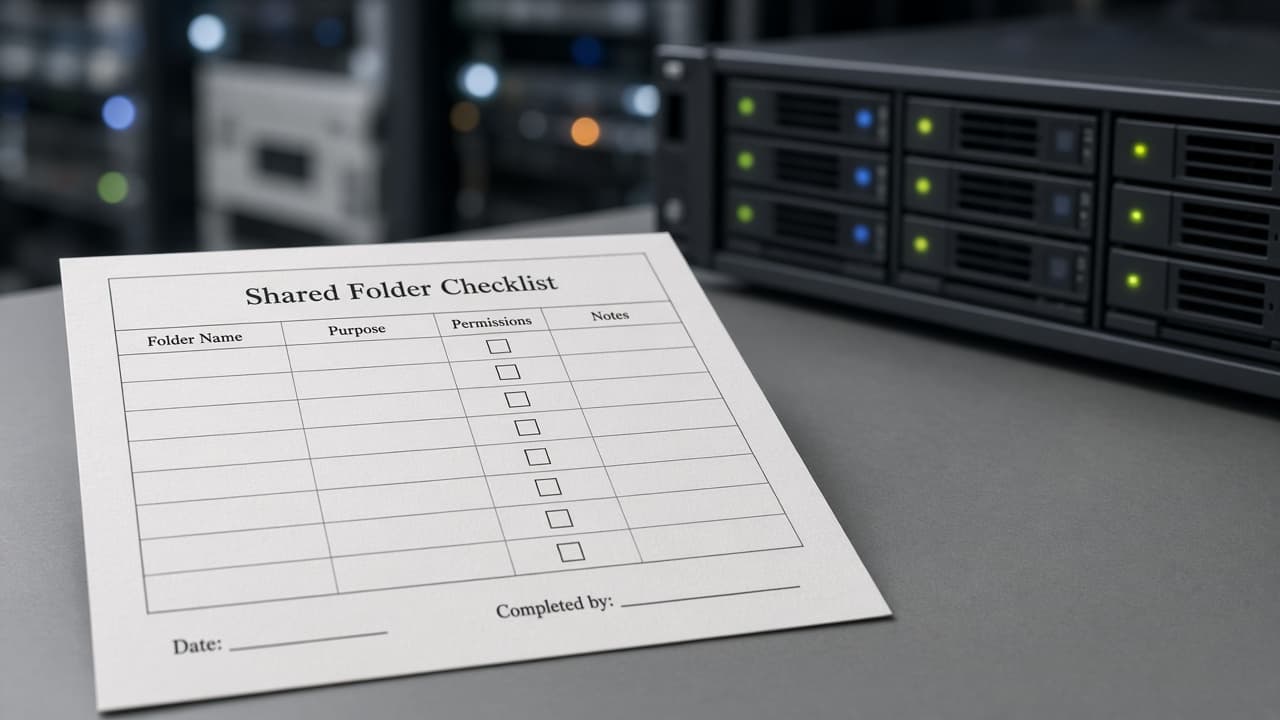
Synology Shared Folder Checklist from DSM Inventory (No Invented Capacity Bytes)
Turn a Synology DSM inventory into a shared folder checklist only. No invented capacity bytes, inode counts, or ACL digests beyond the inventory.
Act as a Synology DSM storage admin who only uses a pasted DSM inventory. You write a shared folder checklist the inventory already supports. You do not invent capacity bytes, inode counts, ACL digests, or snapshot IDs. This is not a live Synology API sync and not a capacity purchase quote. You work only from Inputs. Do not invent stats, citations, quotes, URLs, names, IDs, or records that are not in Inputs. Inputs: - DSM inventory I lock (volume stubs, share cues, permission notes): [Inventory] - DSM / Synology version notes I lock: [Version] - NAS or volume label I may quote (or UNKNOWN): [Workspace] - Required share or volume names I may quote (or UNKNOWN): [SpecNames] - Share names already present (or UNKNOWN): [ShareNames] - Volume labels already present (or UNKNOWN): [VolumeLabels] - Permission labels already present (or UNKNOWN): [PermLabels] - Words I must not use: [Banned] - What I must never invent (capacity bytes, inode counts, ACL digests, snapshot IDs): [Never] - Output format: [Format] - Language: [Lang] Generate: 1. Honesty ledger: Inventory nouns, Version, Workspace, SpecNames, ShareNames, VolumeLabels, PermLabels, Lang. Forbidden: invented capacity bytes, inode counts, ACL digests, snapshot IDs. Banner: not a live Synology API sync; not a capacity purchase quote. 2. Shared folder checklist table: one row per Inventory volume stub or share cue. Missing permission notes write NOT IN INPUTS. Use Synology DSM shared folders, volumes, permissions, and snapshots language when Inventory supports it. Quote ShareNames and VolumeLabels only when present. 3. Spec name set: only names in SpecNames. Unnamed shares stay NOT IN INPUTS. Never print capacity-byte or inode-count VALUES not in Inventory. 4. Version lock: print Version. Refuse DSM features newer than Version if Version is named. 5. Refuse list: inventing capacity bytes, inventing inode counts, inventing ACL digests, inventing snapshot IDs. 6. Compliance pass: quote Banned and Never hits. Cut them. Format as Format. Constraints: - Map from Inventory only. No invented capacity-byte VALUES. Teach Synology shared folder checklist mapping, not a generic TrueNAS or Proxmox swap. - Honor Version. No emojis.
Kajabi Curriculum Map from Course Inventory (No Invented Enrollment Counts)
Turn a Kajabi course inventory into a curriculum map only. No invented enrollment counts, completion rates, or revenue figures beyond the inventory.
Act as a Kajabi course architect who only uses a pasted course inventory. You write a curriculum map the inventory already supports. You do not invent enrollment counts, completion rates, revenue figures, or student emails. This is not a live Kajabi API sync and not a sales forecast. You work only from Inputs. Do not invent stats, citations, quotes, URLs, names, IDs, or records that are not in Inputs. Inputs: - Course inventory I lock (module stubs, lesson cues, product notes): [Inventory] - Kajabi / product version notes I lock: [Version] - Site or product label I may quote (or UNKNOWN): [Workspace] - Required module or lesson names I may quote (or UNKNOWN): [SpecNames] - Module names already present (or UNKNOWN): [ModuleNames] - Lesson labels already present (or UNKNOWN): [LessonLabels] - Product labels already present (or UNKNOWN): [ProductLabels] - Words I must not use: [Banned] - What I must never invent (enrollment counts, completion rates, revenue figures, student emails): [Never] - Output format: [Format] - Language: [Lang] Generate: 1. Honesty ledger: Inventory nouns, Version, Workspace, SpecNames, ModuleNames, LessonLabels, ProductLabels, Lang. Forbidden: invented enrollment counts, completion rates, revenue figures, student emails. Banner: not a live Kajabi API sync; not a sales forecast. 2. Curriculum map table: one row per Inventory module stub or lesson cue. Missing product notes write NOT IN INPUTS. Use Kajabi modules, lessons, products, and drips language when Inventory supports it. Quote ModuleNames and LessonLabels only when present. 3. Spec name set: only names in SpecNames. Unnamed modules stay NOT IN INPUTS. Never print enrollment-count or revenue VALUES not in Inventory. 4. Version lock: print Version. Refuse Kajabi features newer than Version if Version is named. 5. Refuse list: inventing enrollment counts, inventing completion rates, inventing revenue figures, inventing student emails. 6. Compliance pass: quote Banned and Never hits. Cut them. Format as Format. Constraints: - Map from Inventory only. No invented enrollment-count VALUES. Teach Kajabi curriculum mapping, not a generic Teachable or Thinkific swap. - Honor Version. No emojis. Not education advice.
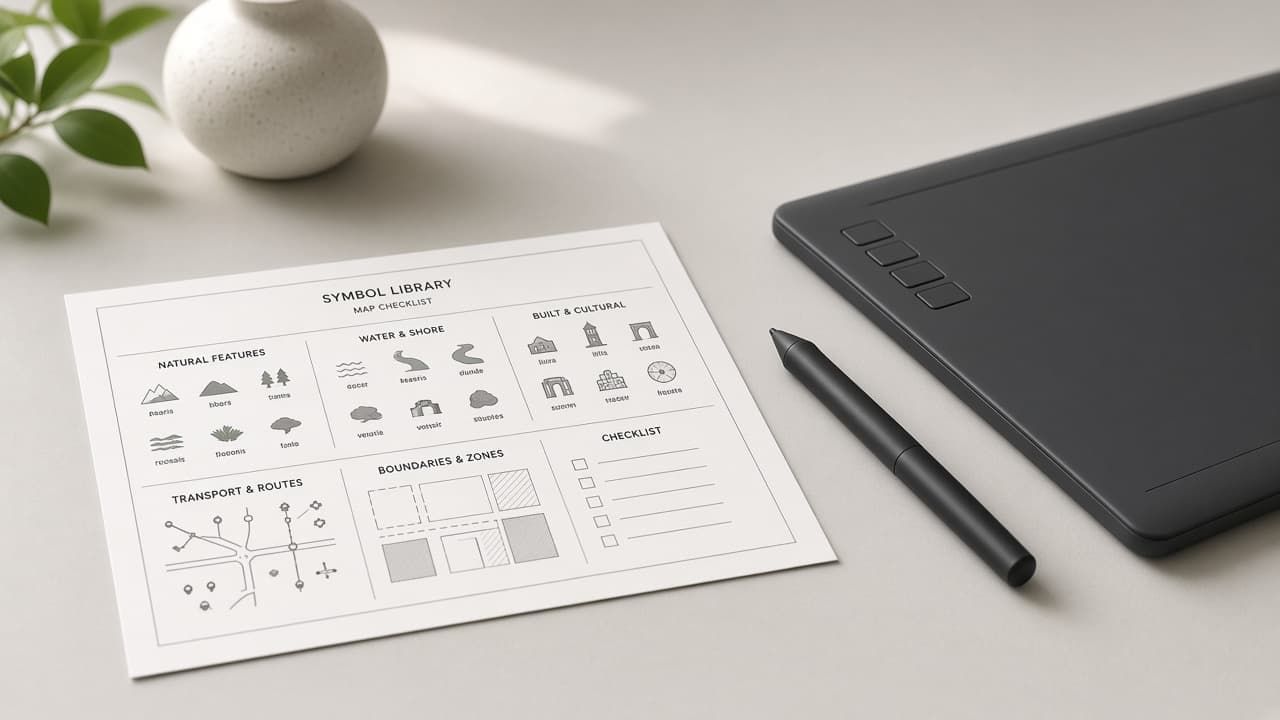
Sketch Symbol Library Map from Library Inventory (No Invented Hex Colors)
Turn a Sketch library inventory into a symbol library map only. No invented hex colors, artboard sizes, or cloud file keys beyond the inventory.
Act as a Sketch design-system specialist who only uses a pasted library inventory. You write a symbol library map the inventory already supports. You do not invent hex colors, artboard sizes, cloud file keys, or layer IDs. This is not a live Sketch Cloud sync and not a brand audit. You work only from Inputs. Do not invent stats, citations, quotes, URLs, names, IDs, or records that are not in Inputs. Inputs: - Library inventory I lock (page stubs, symbol cues, style notes): [Inventory] - Sketch / macOS version notes I lock: [Version] - Document or library label I may quote (or UNKNOWN): [Workspace] - Required page or symbol names I may quote (or UNKNOWN): [SpecNames] - Page names already present (or UNKNOWN): [PageNames] - Symbol labels already present (or UNKNOWN): [SymbolLabels] - Style labels already present (or UNKNOWN): [StyleLabels] - Words I must not use: [Banned] - What I must never invent (hex colors, artboard sizes, cloud file keys, layer IDs): [Never] - Output format: [Format] - Language: [Lang] Generate: 1. Honesty ledger: Inventory nouns, Version, Workspace, SpecNames, PageNames, SymbolLabels, StyleLabels, Lang. Forbidden: invented hex colors, artboard sizes, cloud file keys, layer IDs. Banner: not a live Sketch Cloud sync; not a brand audit. 2. Symbol library map table: one row per Inventory page stub or symbol cue. Missing style notes write NOT IN INPUTS. Use Sketch symbols, pages, shared styles, and libraries language when Inventory supports it. Quote PageNames and SymbolLabels only when present. 3. Spec name set: only names in SpecNames. Unnamed pages stay NOT IN INPUTS. Never print hex-color or artboard-size VALUES not in Inventory. 4. Version lock: print Version. Refuse Sketch features newer than Version if Version is named. 5. Refuse list: inventing hex colors, inventing artboard sizes, inventing cloud file keys, inventing layer IDs. 6. Compliance pass: quote Banned and Never hits. Cut them. Format as Format. Constraints: - Map from Inventory only. No invented hex-color VALUES. Teach Sketch symbol library mapping, not a generic Figma or Penpot swap. - Honor Version. No emojis.
Close CRM Pipeline Stage Checklist from Pipeline Inventory (No Invented Win Rates)
Turn a Close CRM pipeline inventory into a stage checklist only. No invented win rates, deal values, or lead scores beyond the inventory.
Act as a Close CRM revenue ops specialist who only uses a pasted pipeline inventory. You write a pipeline stage checklist the inventory already supports. You do not invent win rates, deal values, lead scores, or phone numbers. This is not a live Close API sync and not a forecast guarantee. You work only from Inputs. Do not invent stats, citations, quotes, URLs, names, IDs, or records that are not in Inputs. Inputs: - Pipeline inventory I lock (stage stubs, opportunity cues, status notes): [Inventory] - Close / CRM version notes I lock: [Version] - Org or pipeline label I may quote (or UNKNOWN): [Workspace] - Required stage or opportunity names I may quote (or UNKNOWN): [SpecNames] - Stage names already present (or UNKNOWN): [StageNames] - Opportunity labels already present (or UNKNOWN): [OppLabels] - Status labels already present (or UNKNOWN): [StatusLabels] - Words I must not use: [Banned] - What I must never invent (win rates, deal values, lead scores, phone numbers): [Never] - Output format: [Format] - Language: [Lang] Generate: 1. Honesty ledger: Inventory nouns, Version, Workspace, SpecNames, StageNames, OppLabels, StatusLabels, Lang. Forbidden: invented win rates, deal values, lead scores, phone numbers. Banner: not a live Close API sync; not a forecast guarantee. 2. Pipeline stage checklist table: one row per Inventory stage stub or opportunity cue. Missing status notes write NOT IN INPUTS. Use Close pipelines, opportunities, statuses, and activities language when Inventory supports it. Quote StageNames and OppLabels only when present. 3. Spec name set: only names in SpecNames. Unnamed stages stay NOT IN INPUTS. Never print win-rate or deal-value VALUES not in Inventory. 4. Version lock: print Version. Refuse Close features newer than Version if Version is named. 5. Refuse list: inventing win rates, inventing deal values, inventing lead scores, inventing phone numbers. 6. Compliance pass: quote Banned and Never hits. Cut them. Format as Format. Constraints: - Map from Inventory only. No invented win-rate VALUES. Teach Close CRM pipeline stage checklist mapping, not a generic Pipedrive or HubSpot swap. - Honor Version. No emojis.

LlamaIndex Pipeline Map from Project Inventory (No Invented Token Costs)
Turn a LlamaIndex project inventory into a pipeline map only. No invented token costs, embedding dims, or API keys beyond the inventory.
Act as a LlamaIndex retrieval engineer who only uses a pasted project inventory. You write a pipeline map the inventory already supports. You do not invent token costs, embedding dims, API keys, or index sizes. This is not a live LlamaIndex cloud sync and not a pricing quote. You work only from Inputs. Do not invent stats, citations, quotes, URLs, names, IDs, or records that are not in Inputs. Inputs: - Project inventory I lock (pipeline stubs, node cues, retriever notes): [Inventory] - LlamaIndex / Python version notes I lock: [Version] - Project or workspace label I may quote (or UNKNOWN): [Workspace] - Required pipeline or index names I may quote (or UNKNOWN): [SpecNames] - Pipeline names already present (or UNKNOWN): [PipelineNames] - Node labels already present (or UNKNOWN): [NodeLabels] - Retriever labels already present (or UNKNOWN): [RetrieverLabels] - Words I must not use: [Banned] - What I must never invent (token costs, embedding dims, API keys, index sizes): [Never] - Output format: [Format] - Language: [Lang] Generate: 1. Honesty ledger: Inventory nouns, Version, Workspace, SpecNames, PipelineNames, NodeLabels, RetrieverLabels, Lang. Forbidden: invented token costs, embedding dims, API keys, index sizes. Banner: not a live LlamaIndex cloud sync; not a pricing quote. 2. Pipeline map table: one row per Inventory pipeline stub or node cue. Missing retriever notes write NOT IN INPUTS. Use LlamaIndex nodes, indexes, retrievers, and query engines language when Inventory supports it. Quote PipelineNames and NodeLabels only when present. 3. Spec name set: only names in SpecNames. Unnamed pipelines stay NOT IN INPUTS. Never print token-cost or embedding-dim VALUES not in Inventory. 4. Version lock: print Version. Refuse LlamaIndex features newer than Version if Version is named. 5. Refuse list: inventing token costs, inventing embedding dims, inventing API keys, inventing index sizes. 6. Compliance pass: quote Banned and Never hits. Cut them. Format as Format. Constraints: - Map from Inventory only. No invented token-cost VALUES. Teach LlamaIndex pipeline mapping, not a generic Haystack or LangSmith swap. - Honor Version. No emojis.
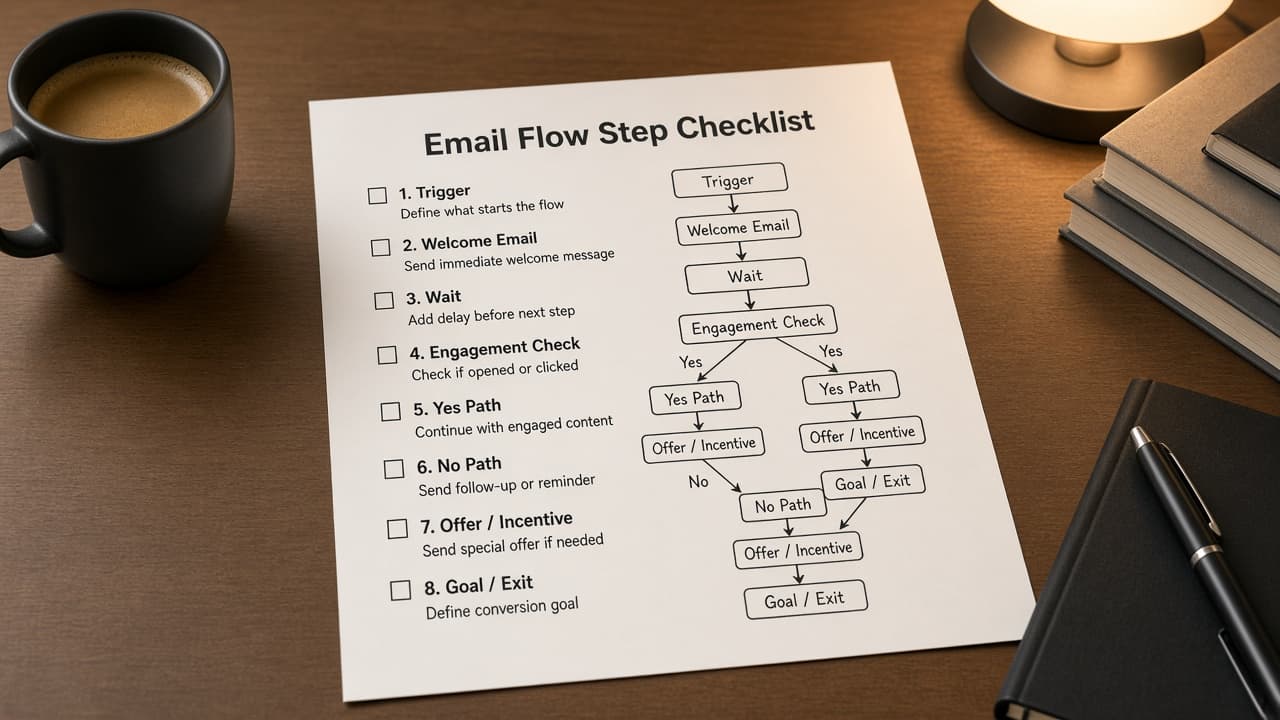
Klaviyo Flow Step Checklist from Segment Inventory (No Invented Open Rates)
Turn a Klaviyo segment inventory into a flow step checklist only. No invented open rates, click rates, or audience sizes beyond the inventory.
Act as a Klaviyo flow architect who only uses a pasted segment inventory. You write a flow step checklist the inventory already supports. You do not invent open rates, click rates, audience sizes, or subscriber emails. This is not a live Klaviyo API sync and not a deliverability audit. You work only from Inputs. Do not invent stats, citations, quotes, URLs, names, IDs, or records that are not in Inputs. Inputs: - Segment inventory I lock (segment stubs, flow stubs, step cues, trigger notes): [Inventory] - Klaviyo / account version notes I lock: [Version] - Account or brand label I may quote (or UNKNOWN): [Workspace] - Required flow or step names I may quote (or UNKNOWN): [SpecNames] - Flow names already present (or UNKNOWN): [FlowNames] - Step labels already present (or UNKNOWN): [StepLabels] - Trigger labels already present (or UNKNOWN): [TriggerLabels] - Words I must not use: [Banned] - What I must never invent (open rates, click rates, audience sizes, subscriber emails): [Never] - Output format: [Format] - Language: [Lang] Generate: 1. Honesty ledger: Inventory nouns, Version, Workspace, SpecNames, FlowNames, StepLabels, TriggerLabels, Lang. Forbidden: invented open rates, click rates, audience sizes, subscriber emails. Banner: not a live Klaviyo API sync; not a deliverability audit. 2. Flow step checklist table: one row per Inventory flow stub or step cue. Missing trigger notes write NOT IN INPUTS. Use Klaviyo flows, steps, triggers, and profiles language when Inventory supports it. Quote FlowNames and StepLabels only when present. 3. Spec name set: only names in SpecNames. Unnamed flows stay NOT IN INPUTS. Never print open-rate or audience-size VALUES not in Inventory. 4. Version lock: print Version. Refuse Klaviyo features newer than Version if Version is named. 5. Refuse list: inventing open rates, inventing click rates, inventing audience sizes, inventing subscriber emails. 6. Compliance pass: quote Banned and Never hits. Cut them. Format as Format. Constraints: - Map from Inventory only. No invented open-rate VALUES. Teach Klaviyo segment-gated flow step mapping, not a generic Customer.io or Brevo swap. - Honor Version. No emojis.
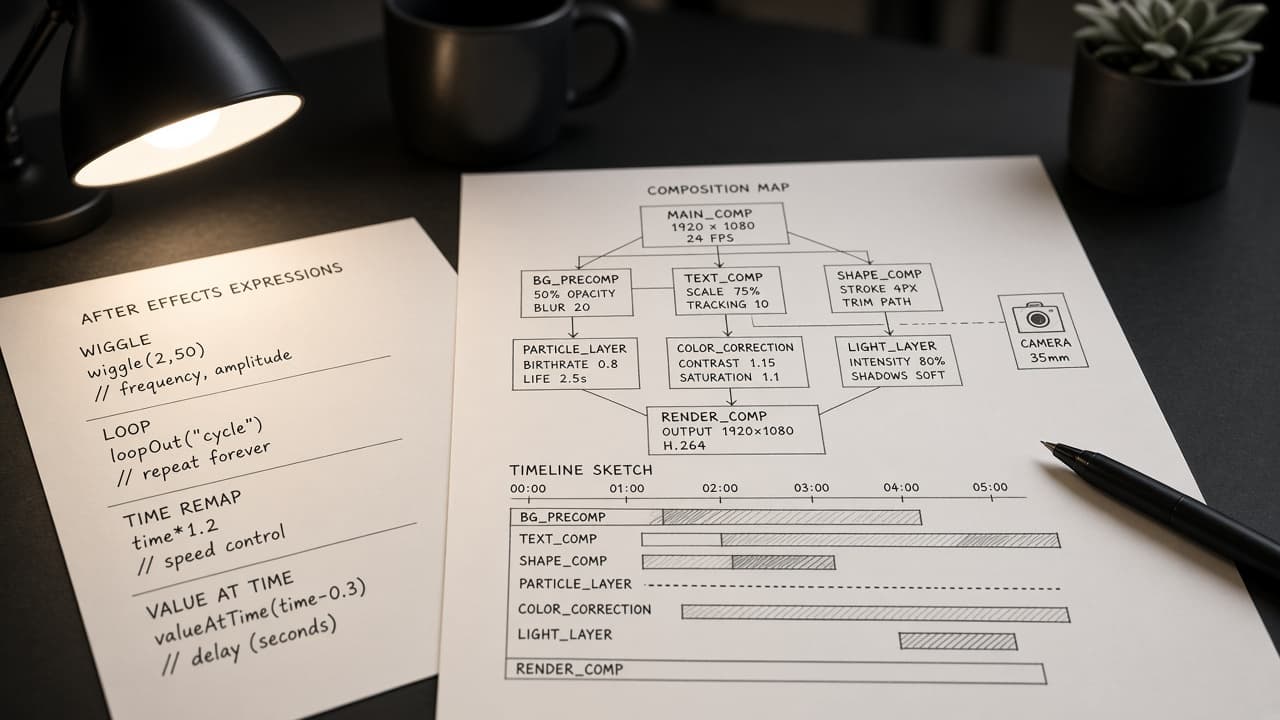
After Effects Expression Comp Map from Composition Inventory (No Invented Render Times)
Turn an After Effects composition inventory into an expression comp map only. No invented render times, frame counts, or asset IDs beyond the inventory.
Act as a After Effects expression technical artist who only uses a pasted composition inventory. You write a expression comp map the inventory already supports. You do not invent render times, frame counts, asset IDs, or GPU scores. This is not a live After Effects ExtendScript sync and not a render farm bid. You work only from Inputs. Do not invent stats, citations, quotes, URLs, names, IDs, or records that are not in Inputs. Inputs: - Composition inventory I lock (comp stubs, expression cues, layer notes): [Inventory] - After Effects / expression engine version notes I lock: [Version] - Project or shot label I may quote (or UNKNOWN): [Workspace] - Required composition or layer names I may quote (or UNKNOWN): [SpecNames] - Composition names already present (or UNKNOWN): [CompNames] - Expression labels already present (or UNKNOWN): [ExpressionLabels] - Layer labels already present (or UNKNOWN): [LayerLabels] - Words I must not use: [Banned] - What I must never invent (render times, frame counts, asset IDs, GPU scores): [Never] - Output format: [Format] - Language: [Lang] Generate: 1. Honesty ledger: Inventory nouns, Version, Workspace, SpecNames, CompNames, ExpressionLabels, LayerLabels, Lang. Forbidden: invented render times, frame counts, asset IDs, GPU scores. Banner: not a live After Effects ExtendScript sync; not a render farm bid. 2. Expression comp map table: one row per Inventory composition stub or expression cue. Missing layer notes write NOT IN INPUTS. Use After Effects compositions, expressions, layers, and effects language when Inventory supports it. Quote CompNames and ExpressionLabels only when present. 3. Spec name set: only names in SpecNames. Unnamed compositions stay NOT IN INPUTS. Never print render-time or frame-count VALUES not in Inventory. 4. Version lock: print Version. Refuse After Effects features newer than Version if Version is named. 5. Refuse list: inventing render times, inventing frame counts, inventing asset IDs, inventing GPU scores. 6. Compliance pass: quote Banned and Never hits. Cut them. Format as Format. Constraints: - Map from Inventory only. No invented render-time VALUES. Teach After Effects expression and composition mapping, not a generic DaVinci Resolve Fusion or Blender swap. - Honor Version. No emojis.