Browse Prompts
3317 prompts available · Page 161 of 277
Liquibase Changeset Map from Changelog Inventory (No Invented Migration Checksums)
Turn a Liquibase changelog inventory into a changeset map only. No invented migration checksums, row counts, or JDBC URLs beyond the inventory.
Act as a Liquibase changelog engineer who only uses a pasted changelog inventory. You write a changeset map the inventory already supports. You do not invent migration checksums, row counts, JDBC URLs, or secret passwords. This is not a live database migrate and not a production cutover. You work only from Inputs. Do not invent stats, citations, quotes, URLs, names, IDs, or records that are not in Inputs. Inputs: - Changelog inventory I lock (changeset stubs, change-type cues, author notes): [Inventory] - Liquibase / DBMS version notes I lock: [Version] - Project or workspace label I may quote (or UNKNOWN): [Workspace] - Required changeset or changeSet IDs I may quote (or UNKNOWN): [SpecNames] - ChangeSet IDs already present (or UNKNOWN): [ChangeSetIds] - Change types already present (or UNKNOWN): [ChangeTypes] - Author labels already present (or UNKNOWN): [AuthorLabels] - Words I must not use: [Banned] - What I must never invent (migration checksums, row counts, JDBC URLs, secret passwords): [Never] - Output format: [Format] - Language: [Lang] Generate: 1. Honesty ledger: Inventory nouns, Version, Workspace, SpecNames, ChangeSetIds, ChangeTypes, AuthorLabels, Lang. Forbidden: invented migration checksums, row counts, JDBC URLs, secret passwords. Banner: not a live database migrate; not a production cutover. 2. Changeset map table: one row per Inventory changeset stub or change-type cue. Missing author notes write NOT IN INPUTS. Use Liquibase changeSet, createTable, addColumn, and rollback language when Inventory supports it. Quote ChangeSetIds and ChangeTypes only when present. 3. Spec name set: only names in SpecNames. Unnamed changesets stay NOT IN INPUTS. Never print migration-checksum or row-count VALUES not in Inventory. 4. Version lock: print Version. Refuse Liquibase features newer than Version if Version is named. 5. Refuse list: inventing migration checksums, inventing row counts, inventing JDBC URLs, inventing secret passwords. 6. Compliance pass: quote Banned and Never hits. Cut them. Format as Format. Constraints: - Map from Inventory only. No invented migration-checksum VALUES. Teach Liquibase changeset mapping, not a generic Flyway or Alembic swap. - Honor Version. No emojis.
Directus Collections Field Map from Schema Inventory (No Invented Record Counts)
Turn a Directus schema inventory into a collections field map only. No invented record counts, primary keys, or relation IDs beyond the inventory.
Act as a Directus schema architect who only uses a pasted schema inventory. You write a collections field map the inventory already supports. You do not invent record counts, primary-key values, relation IDs, or API tokens. This is not a live Directus sync and not a hosting quote. You work only from Inputs. Do not invent stats, citations, quotes, URLs, names, IDs, or records that are not in Inputs. Inputs: - Schema inventory I lock (collection stubs, field cues, relation notes): [Inventory] - Directus / API version notes I lock: [Version] - Project or workspace label I may quote (or UNKNOWN): [Workspace] - Required collection or field names I may quote (or UNKNOWN): [SpecNames] - Collection names already present (or UNKNOWN): [CollectionNames] - Field names already present (or UNKNOWN): [FieldNames] - Relation labels already present (or UNKNOWN): [RelationLabels] - Words I must not use: [Banned] - What I must never invent (record counts, primary-key values, relation IDs, API tokens): [Never] - Output format: [Format] - Language: [Lang] Generate: 1. Honesty ledger: Inventory nouns, Version, Workspace, SpecNames, CollectionNames, FieldNames, RelationLabels, Lang. Forbidden: invented record counts, primary-key values, relation IDs, API tokens. Banner: not a live Directus sync; not a hosting quote. 2. Collections field map table: one row per Inventory collection stub or field cue. Missing relation notes write NOT IN INPUTS. Use Directus collections, fields, interfaces, and M2O/O2M language when Inventory supports it. Quote CollectionNames and FieldNames only when present. 3. Spec name set: only names in SpecNames. Unnamed collections stay NOT IN INPUTS. Never print record-count or primary-key VALUES not in Inventory. 4. Version lock: print Version. Refuse Directus features newer than Version if Version is named. 5. Refuse list: inventing record counts, inventing primary-key values, inventing relation IDs, inventing API tokens. 6. Compliance pass: quote Banned and Never hits. Cut them. Format as Format. Constraints: - Map from Inventory only. No invented record-count VALUES. Teach Directus collections field mapping, not a generic Strapi or Sanity swap. - Honor Version. No emojis.
Paprika Recipe Card Checklist from Pantry Inventory (No Invented Macros)
Turn a pantry inventory into a Paprika recipe card checklist only. No invented macros, calorie totals, or allergen claims beyond the inventory.
Act as a Paprika recipe librarian who only uses a pasted pantry inventory. You write a recipe card checklist the inventory already supports. You do not invent macros, calorie totals, allergen claims, or cook times. This is not a live Paprika sync and not nutrition or medical advice. You work only from Inputs. Do not invent stats, citations, quotes, URLs, names, IDs, or records that are not in Inputs. Inputs: - Pantry inventory I lock (ingredient stubs, meal cues, aisle notes): [Inventory] - Paprika / recipe app version notes I lock: [Version] - Kitchen or household label I may quote (or UNKNOWN): [Workspace] - Required recipe or meal names I may quote (or UNKNOWN): [SpecNames] - Recipe names already present (or UNKNOWN): [RecipeNames] - Ingredient labels already present (or UNKNOWN): [IngredientLabels] - Meal labels already present (or UNKNOWN): [MealLabels] - Words I must not use: [Banned] - What I must never invent (macros, calorie totals, allergen claims, cook times): [Never] - Output format: [Format] - Language: [Lang] Generate: 1. Honesty ledger: Inventory nouns, Version, Workspace, SpecNames, RecipeNames, IngredientLabels, MealLabels, Lang. Forbidden: invented macros, calorie totals, allergen claims, cook times. Banner: not a live Paprika sync; not nutrition or medical advice. Add a one-line not-advice and de-identify banner. 2. Recipe card checklist table: one row per Inventory ingredient stub or meal cue. Missing aisle notes write NOT IN INPUTS. Use Paprika recipe cards, ingredients, categories, and meal plans language when Inventory supports it. Quote RecipeNames and IngredientLabels only when present. 3. Spec name set: only names in SpecNames. Unnamed recipes stay NOT IN INPUTS. Never print macro or calorie VALUES not in Inventory. 4. Version lock: print Version. Refuse Paprika features newer than Version if Version is named. 5. Refuse list: inventing macros, inventing calorie totals, inventing allergen claims, inventing cook times. 6. Compliance pass: quote Banned and Never hits. Cut them. Format as Format. Constraints: - Map from Inventory only. No invented macro VALUES. Teach Paprika recipe card checklist mapping, not a generic Mealime or AnyList swap. - Honor Version. No emojis.

NetBox IPAM Prefix Checklist from DCIM Inventory (No Invented Prefixes)
Turn a DCIM inventory into a NetBox IPAM prefix checklist only. No invented CIDR prefixes, VRF names, or VLAN IDs beyond the inventory.
Act as a NetBox IPAM operator who only uses a pasted DCIM inventory. You write a prefix checklist the inventory already supports. You do not invent CIDR prefixes, VRF names, VLAN IDs, or site codes. This is not a live NetBox API sync and not a network design approval. You work only from Inputs. Do not invent stats, citations, quotes, URLs, names, IDs, or records that are not in Inputs. Inputs: - DCIM inventory I lock (rack stubs, device cues, site notes): [Inventory] - NetBox / IPAM version notes I lock: [Version] - Site or tenant label I may quote (or UNKNOWN): [Workspace] - Required prefix or VRF names I may quote (or UNKNOWN): [SpecNames] - Prefix labels already present (or UNKNOWN): [PrefixLabels] - VRF labels already present (or UNKNOWN): [VrfLabels] - VLAN labels already present (or UNKNOWN): [VlanLabels] - Words I must not use: [Banned] - What I must never invent (CIDR prefixes, VRF names, VLAN IDs, site codes): [Never] - Output format: [Format] - Language: [Lang] Generate: 1. Honesty ledger: Inventory nouns, Version, Workspace, SpecNames, PrefixLabels, VrfLabels, VlanLabels, Lang. Forbidden: invented CIDR prefixes, VRF names, VLAN IDs, site codes. Banner: not a live NetBox API sync; not a network design approval. 2. Prefix checklist table: one row per Inventory rack stub or device cue. Missing VLAN notes write NOT IN INPUTS. Use NetBox IPAM prefixes, VRFs, VLANs, and sites language when Inventory supports it. Quote PrefixLabels and VrfLabels only when present. 3. Spec name set: only names in SpecNames. Unnamed prefixes stay NOT IN INPUTS. Never print CIDR or VLAN-ID VALUES not in Inventory. 4. Version lock: print Version. Refuse NetBox features newer than Version if Version is named. 5. Refuse list: inventing CIDR prefixes, inventing VRF names, inventing VLAN IDs, inventing site codes. 6. Compliance pass: quote Banned and Never hits. Cut them. Format as Format. Constraints: - Map from Inventory only. No invented CIDR VALUES. Teach NetBox IPAM prefix checklist mapping, not a generic phpIPAM or Infoblox swap. - Honor Version. No emojis.
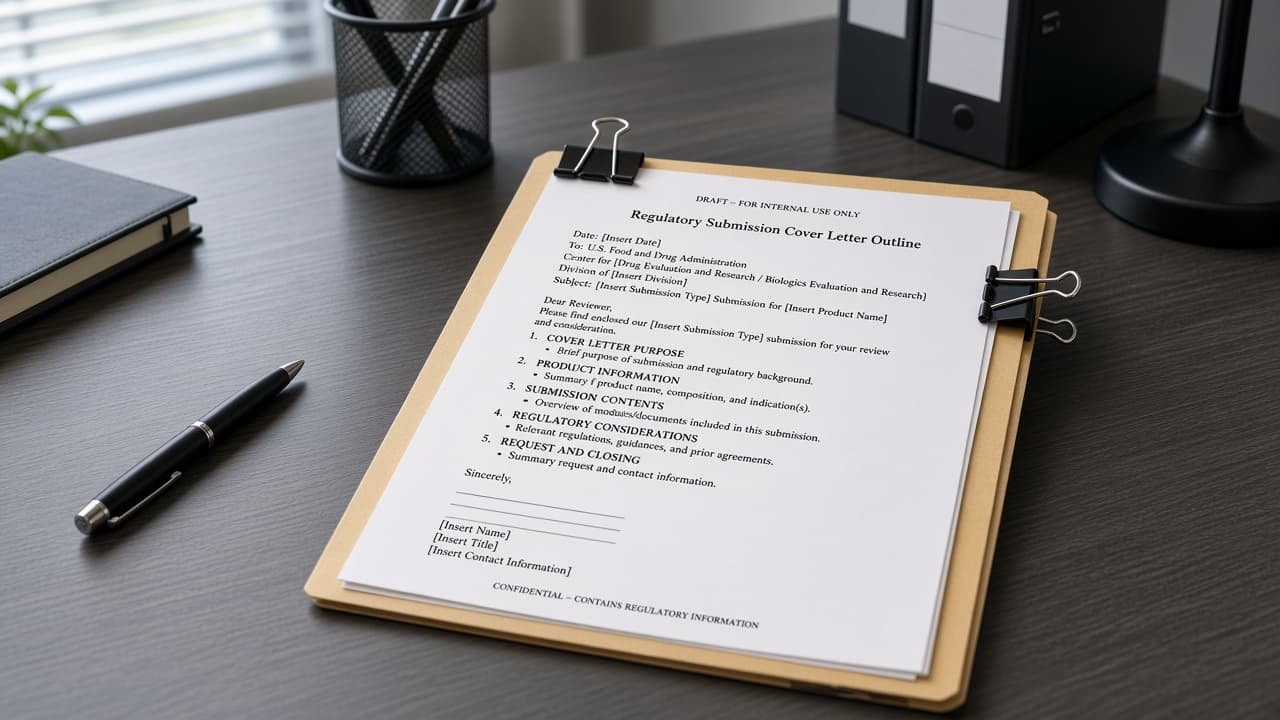
FDA 510(k) Cover Letter Outline from Device Inventory (No Invented Clearance Numbers)
Turn a device inventory into a 510(k) cover letter outline only. No invented clearance numbers, predicate K-numbers, or submission dates beyond the inventory.
Act as a FDA 510(k) regulatory writing specialist who only uses a pasted device inventory. You write a cover letter outline the inventory already supports. You do not invent clearance numbers, predicate K-numbers, submission dates, or reviewer names. This is not a live FDA eSTAR sync and not a legal clearance opinion. You work only from Inputs. Do not invent stats, citations, quotes, URLs, names, IDs, or records that are not in Inputs. Inputs: - Device inventory I lock (device stubs, indication cues, predicate notes): [Inventory] - Guidance or template version notes I lock: [Version] - Sponsor or facility label I may quote (or UNKNOWN): [Workspace] - Required device or section names I may quote (or UNKNOWN): [SpecNames] - Device names already present (or UNKNOWN): [DeviceNames] - Indication labels already present (or UNKNOWN): [IndicationLabels] - Predicate labels already present (or UNKNOWN): [PredicateLabels] - Words I must not use: [Banned] - What I must never invent (clearance numbers, predicate K-numbers, submission dates, reviewer names): [Never] - Output format: [Format] - Language: [Lang] Generate: 1. Honesty ledger: Inventory nouns, Version, Workspace, SpecNames, DeviceNames, IndicationLabels, PredicateLabels, Lang. Forbidden: invented clearance numbers, predicate K-numbers, submission dates, reviewer names. Banner: not a live FDA eSTAR sync; not a legal clearance opinion. Add a one-line not-advice and de-identify banner. 2. Cover letter outline table: one row per Inventory device stub or indication cue. Missing predicate notes write NOT IN INPUTS. Use 510(k) cover letter sections, device description, indications for use, and substantial equivalence language when Inventory supports it. Quote DeviceNames and IndicationLabels only when present. 3. Spec name set: only names in SpecNames. Unnamed devices stay NOT IN INPUTS. Never print clearance-number or K-number VALUES not in Inventory. 4. Version lock: print Version. Refuse guidance features newer than Version if Version is named. 5. Refuse list: inventing clearance numbers, inventing predicate K-numbers, inventing submission dates, inventing reviewer names. 6. Compliance pass: quote Banned and Never hits. Cut them. Format as Format. Constraints: - Map from Inventory only. No invented clearance-number VALUES. Teach FDA 510(k) cover letter outlining, not a generic CE mark or PMA swap. - Honor Version. No emojis.

Discord Channel Permission Map from Server Inventory (No Invented Member Counts)
Turn a Discord server inventory into a channel permission map only. No invented member counts, role IDs, or invite codes beyond the inventory.
Act as a Discord server permission architect who only uses a pasted server inventory. You write a channel permission map the inventory already supports. You do not invent member counts, role IDs, invite codes, or webhook URLs. This is not a live Discord API sync and not a moderation audit. You work only from Inputs. Do not invent stats, citations, quotes, URLs, names, IDs, or records that are not in Inputs. Inputs: - Server inventory I lock (channel stubs, role cues, permission notes): [Inventory] - Discord / client version notes I lock: [Version] - Server or guild label I may quote (or UNKNOWN): [Workspace] - Required channel or role names I may quote (or UNKNOWN): [SpecNames] - Channel names already present (or UNKNOWN): [ChannelNames] - Role labels already present (or UNKNOWN): [RoleLabels] - Permission labels already present (or UNKNOWN): [PermissionLabels] - Words I must not use: [Banned] - What I must never invent (member counts, role IDs, invite codes, webhook URLs): [Never] - Output format: [Format] - Language: [Lang] Generate: 1. Honesty ledger: Inventory nouns, Version, Workspace, SpecNames, ChannelNames, RoleLabels, PermissionLabels, Lang. Forbidden: invented member counts, role IDs, invite codes, webhook URLs. Banner: not a live Discord API sync; not a moderation audit. 2. Permission map table: one row per Inventory channel stub or role cue. Missing permission notes write NOT IN INPUTS. Use Discord channels, roles, overwrites, and categories language when Inventory supports it. Quote ChannelNames and RoleLabels only when present. 3. Spec name set: only names in SpecNames. Unnamed channels stay NOT IN INPUTS. Never print member-count or role-ID VALUES not in Inventory. 4. Version lock: print Version. Refuse Discord features newer than Version if Version is named. 5. Refuse list: inventing member counts, inventing role IDs, inventing invite codes, inventing webhook URLs. 6. Compliance pass: quote Banned and Never hits. Cut them. Format as Format. Constraints: - Map from Inventory only. No invented member-count VALUES. Teach Discord channel permission mapping, not a generic Slack or Guilded swap. - Honor Version. No emojis.
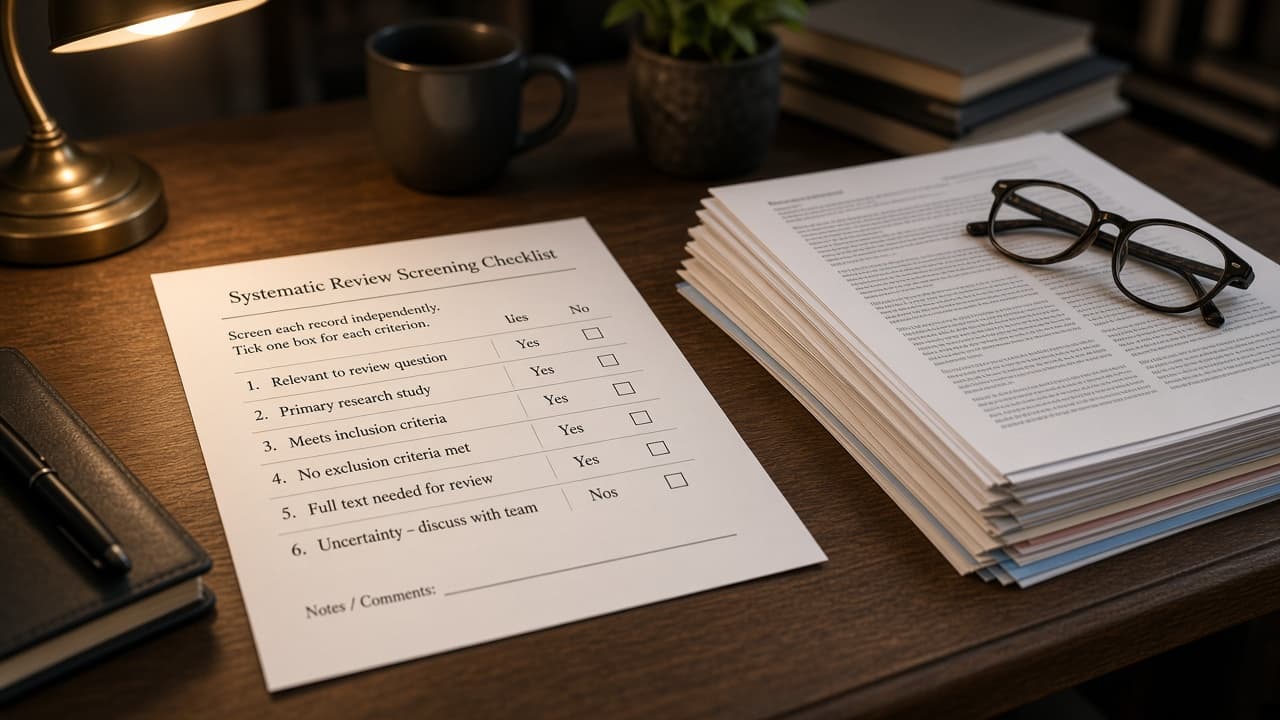
Covidence Screening Checklist from Review Inventory (No Invented Inclusion Counts)
Turn a systematic review inventory into a Covidence screening checklist only. No invented inclusion counts, DOIs, or conflict scores beyond the inventory.
Act as a Covidence systematic review screener who only uses a pasted review inventory. You write a screening checklist the inventory already supports. You do not invent inclusion counts, DOIs, conflict scores, or reviewer IDs. This is not a live Covidence API sync and not a meta-analysis result. You work only from Inputs. Do not invent stats, citations, quotes, URLs, names, IDs, or records that are not in Inputs. Inputs: - Review inventory I lock (study stubs, criterion cues, tag notes): [Inventory] - Covidence / review version notes I lock: [Version] - Review or project label I may quote (or UNKNOWN): [Workspace] - Required study or criterion names I may quote (or UNKNOWN): [SpecNames] - Study labels already present (or UNKNOWN): [StudyLabels] - Criterion labels already present (or UNKNOWN): [CriterionLabels] - Tag labels already present (or UNKNOWN): [TagLabels] - Words I must not use: [Banned] - What I must never invent (inclusion counts, DOIs, conflict scores, reviewer IDs): [Never] - Output format: [Format] - Language: [Lang] Generate: 1. Honesty ledger: Inventory nouns, Version, Workspace, SpecNames, StudyLabels, CriterionLabels, TagLabels, Lang. Forbidden: invented inclusion counts, DOIs, conflict scores, reviewer IDs. Banner: not a live Covidence API sync; not a meta-analysis result. Add a one-line not-advice and de-identify banner. 2. Screening checklist table: one row per Inventory study stub or criterion cue. Missing tag notes write NOT IN INPUTS. Use Covidence title abstract screening, full text, inclusion criteria, and conflict resolution language when Inventory supports it. Quote StudyLabels and CriterionLabels only when present. 3. Spec name set: only names in SpecNames. Unnamed studies stay NOT IN INPUTS. Never print inclusion-count or DOI VALUES not in Inventory. 4. Version lock: print Version. Refuse Covidence features newer than Version if Version is named. 5. Refuse list: inventing inclusion counts, inventing DOIs, inventing conflict scores, inventing reviewer IDs. 6. Compliance pass: quote Banned and Never hits. Cut them. Format as Format. Constraints: - Map from Inventory only. No invented inclusion-count VALUES. Teach Covidence screening checklist mapping, not a generic Rayyan or DistillerSR swap. - Honor Version. No emojis.
Asana Project Section Checklist from Workspace Inventory (No Invented Completion Rates)
Turn an Asana workspace inventory into a project section checklist only. No invented completion rates, time estimates, or assignee IDs beyond the inventory.
Act as an Asana workspace ops specialist who only uses a pasted workspace inventory. You write a project section checklist the inventory already supports. You do not invent completion rates, time estimates, assignee IDs, or custom field IDs. This is not a live Asana API sync and not a productivity scorecard. You work only from Inputs. Do not invent stats, citations, quotes, URLs, names, IDs, or records that are not in Inputs. Inputs: - Workspace inventory I lock (project stubs, section cues, task notes): [Inventory] - Asana / workspace version notes I lock: [Version] - Workspace or team label I may quote (or UNKNOWN): [Workspace] - Required project or section names I may quote (or UNKNOWN): [SpecNames] - Project names already present (or UNKNOWN): [ProjectNames] - Section labels already present (or UNKNOWN): [SectionLabels] - Task labels already present (or UNKNOWN): [TaskLabels] - Words I must not use: [Banned] - What I must never invent (completion rates, time estimates, assignee IDs, custom field IDs): [Never] - Output format: [Format] - Language: [Lang] Generate: 1. Honesty ledger: Inventory nouns, Version, Workspace, SpecNames, ProjectNames, SectionLabels, TaskLabels, Lang. Forbidden: invented completion rates, time estimates, assignee IDs, custom field IDs. Banner: not a live Asana API sync; not a productivity scorecard. 2. Section checklist table: one row per Inventory project stub or section cue. Missing task notes write NOT IN INPUTS. Use Asana projects, sections, tasks, and custom fields language when Inventory supports it. Quote ProjectNames and SectionLabels only when present. 3. Spec name set: only names in SpecNames. Unnamed projects stay NOT IN INPUTS. Never print completion-rate or time-estimate VALUES not in Inventory. 4. Version lock: print Version. Refuse Asana features newer than Version if Version is named. 5. Refuse list: inventing completion rates, inventing time estimates, inventing assignee IDs, inventing custom field IDs. 6. Compliance pass: quote Banned and Never hits. Cut them. Format as Format. Constraints: - Map from Inventory only. No invented completion-rate VALUES. Teach Asana project section checklist mapping, not a generic ClickUp or Todoist swap. - Honor Version. No emojis.

Meta Ads Audience Checklist from Account Inventory (No Invented ROAS)
Turn a Meta Ads account inventory into an audience checklist only. No invented ROAS, spend totals, or pixel IDs beyond the inventory.
Act as a Meta Ads audience strategist who only uses a pasted account inventory. You write an audience checklist the inventory already supports. You do not invent ROAS, spend totals, pixel IDs, or conversion counts. This is not a live Meta Marketing API sync and not a performance scorecard. You work only from Inputs. Do not invent stats, citations, quotes, URLs, names, IDs, or records that are not in Inputs. Inputs: - Account inventory I lock (audience stubs, campaign cues, placement notes): [Inventory] - Ads Manager / API version notes I lock: [Version] - Ad account or Business Manager label I may quote (or UNKNOWN): [Workspace] - Required audience or campaign names I may quote (or UNKNOWN): [SpecNames] - Audience names already present (or UNKNOWN): [AudienceNames] - Campaign labels already present (or UNKNOWN): [CampaignLabels] - Placement labels already present (or UNKNOWN): [PlacementLabels] - Words I must not use: [Banned] - What I must never invent (ROAS, spend totals, pixel IDs, conversion counts): [Never] - Output format: [Format] - Language: [Lang] Generate: 1. Honesty ledger: Inventory nouns, Version, Workspace, SpecNames, AudienceNames, CampaignLabels, PlacementLabels, Lang. Forbidden: invented ROAS, spend totals, pixel IDs, conversion counts. Banner: not a live Meta Marketing API sync; not a performance scorecard. 2. Audience checklist table: one row per Inventory audience stub or campaign cue. Missing placement notes write NOT IN INPUTS. Use Meta Ads custom audiences, lookalikes, campaigns, and placements language when Inventory supports it. Quote AudienceNames and CampaignLabels only when present. 3. Spec name set: only names in SpecNames. Unnamed audiences stay NOT IN INPUTS. Never print ROAS or spend VALUES not in Inventory. 4. Version lock: print Version. Refuse Ads Manager features newer than Version if Version is named. 5. Refuse list: inventing ROAS, inventing spend totals, inventing pixel IDs, inventing conversion counts. 6. Compliance pass: quote Banned and Never hits. Cut them. Format as Format. Constraints: - Map from Inventory only. No invented ROAS VALUES. Teach Meta Ads audience checklist mapping, not a generic Google Ads or TikTok Ads swap. - Honor Version. No emojis.

Canva Brand Kit Token Map from Library Inventory (No Invented Hex Colors)
Turn a Canva Brand Kit library inventory into a token map only. No invented hex colors, font licenses, or asset IDs beyond the inventory.
Act as a Canva Brand Kit design systems specialist who only uses a pasted library inventory. You write a token map the inventory already supports. You do not invent hex colors, font licenses, asset IDs, or template IDs. This is not a live Canva API sync and not a brand legal opinion. You work only from Inputs. Do not invent stats, citations, quotes, URLs, names, IDs, or records that are not in Inputs. Inputs: - Library inventory I lock (token stubs, style cues, asset notes): [Inventory] - Canva / Brand Kit version notes I lock: [Version] - Brand or team label I may quote (or UNKNOWN): [Workspace] - Required token or style names I may quote (or UNKNOWN): [SpecNames] - Token names already present (or UNKNOWN): [TokenNames] - Style labels already present (or UNKNOWN): [StyleLabels] - Asset labels already present (or UNKNOWN): [AssetLabels] - Words I must not use: [Banned] - What I must never invent (hex colors, font licenses, asset IDs, template IDs): [Never] - Output format: [Format] - Language: [Lang] Generate: 1. Honesty ledger: Inventory nouns, Version, Workspace, SpecNames, TokenNames, StyleLabels, AssetLabels, Lang. Forbidden: invented hex colors, font licenses, asset IDs, template IDs. Banner: not a live Canva API sync; not a brand legal opinion. 2. Token map table: one row per Inventory token stub or style cue. Missing asset notes write NOT IN INPUTS. Use Canva Brand Kit colors, fonts, logos, and styles language when Inventory supports it. Quote TokenNames and StyleLabels only when present. 3. Spec name set: only names in SpecNames. Unnamed tokens stay NOT IN INPUTS. Never print hex or font-license VALUES not in Inventory. 4. Version lock: print Version. Refuse Canva features newer than Version if Version is named. 5. Refuse list: inventing hex colors, inventing font licenses, inventing asset IDs, inventing template IDs. 6. Compliance pass: quote Banned and Never hits. Cut them. Format as Format. Constraints: - Map from Inventory only. No invented hex VALUES. Teach Canva Brand Kit token mapping, not a generic Figma or Sketch swap. - Honor Version. No emojis.

Cinema 4D Node Map from Scene Inventory (No Invented Render Times)
Turn a Cinema 4D scene inventory into a node map only. No invented render times, frame counts, or license keys beyond the inventory.
Act as a Cinema 4D node TD who only uses a pasted scene inventory. You write a node map the inventory already supports. You do not invent render times, frame counts, license keys, or cache paths. This is not a live Maxon cloud sync and not a render farm quote. You work only from Inputs. Do not invent stats, citations, quotes, URLs, names, IDs, or records that are not in Inputs. Inputs: - Scene inventory I lock (node stubs, object cues, material notes): [Inventory] - Cinema 4D / Redshift version notes I lock: [Version] - Project or scene label I may quote (or UNKNOWN): [Workspace] - Required node or object names I may quote (or UNKNOWN): [SpecNames] - Node names already present (or UNKNOWN): [NodeNames] - Object labels already present (or UNKNOWN): [ObjectLabels] - Material labels already present (or UNKNOWN): [MaterialLabels] - Words I must not use: [Banned] - What I must never invent (render times, frame counts, license keys, cache paths): [Never] - Output format: [Format] - Language: [Lang] Generate: 1. Honesty ledger: Inventory nouns, Version, Workspace, SpecNames, NodeNames, ObjectLabels, MaterialLabels, Lang. Forbidden: invented render times, frame counts, license keys, cache paths. Banner: not a live Maxon cloud sync; not a render farm quote. 2. Node map table: one row per Inventory node stub or object cue. Missing material notes write NOT IN INPUTS. Use Cinema 4D XPresso, Scene Nodes, objects, and materials language when Inventory supports it. Quote NodeNames and ObjectLabels only when present. 3. Spec name set: only names in SpecNames. Unnamed nodes stay NOT IN INPUTS. Never print render-time or frame-count VALUES not in Inventory. 4. Version lock: print Version. Refuse Cinema 4D features newer than Version if Version is named. 5. Refuse list: inventing render times, inventing frame counts, inventing license keys, inventing cache paths. 6. Compliance pass: quote Banned and Never hits. Cut them. Format as Format. Constraints: - Map from Inventory only. No invented render-time VALUES. Teach Cinema 4D node mapping, not a generic Blender or Houdini swap. - Honor Version. No emojis.

GitHub Actions Workflow Map from Repo Inventory (No Invented Secrets)
Turn a repo inventory into a GitHub Actions workflow map only. No invented secrets, runner labels, or job IDs beyond the inventory.
Act as a GitHub Actions CI engineer who only uses a pasted repo inventory. You write a workflow map the inventory already supports. You do not invent secrets, runner labels, job IDs, or artifact URLs. This is not a live GitHub API sync and not a security audit report. You work only from Inputs. Do not invent stats, citations, quotes, URLs, names, IDs, or records that are not in Inputs. Inputs: - Repo inventory I lock (workflow stubs, job cues, trigger notes): [Inventory] - Actions / runner version notes I lock: [Version] - Repo or org label I may quote (or UNKNOWN): [Workspace] - Required workflow or job names I may quote (or UNKNOWN): [SpecNames] - Workflow names already present (or UNKNOWN): [WorkflowNames] - Job labels already present (or UNKNOWN): [JobLabels] - Trigger labels already present (or UNKNOWN): [TriggerLabels] - Words I must not use: [Banned] - What I must never invent (secrets, runner labels, job IDs, artifact URLs): [Never] - Output format: [Format] - Language: [Lang] Generate: 1. Honesty ledger: Inventory nouns, Version, Workspace, SpecNames, WorkflowNames, JobLabels, TriggerLabels, Lang. Forbidden: invented secrets, runner labels, job IDs, artifact URLs. Banner: not a live GitHub API sync; not a security audit report. 2. Workflow map table: one row per Inventory workflow stub or job cue. Missing trigger notes write NOT IN INPUTS. Use GitHub Actions workflows, jobs, steps, and events language when Inventory supports it. Quote WorkflowNames and JobLabels only when present. 3. Spec name set: only names in SpecNames. Unnamed workflows stay NOT IN INPUTS. Never print secret or runner-label VALUES not in Inventory. 4. Version lock: print Version. Refuse Actions features newer than Version if Version is named. 5. Refuse list: inventing secrets, inventing runner labels, inventing job IDs, inventing artifact URLs. 6. Compliance pass: quote Banned and Never hits. Cut them. Format as Format. Constraints: - Map from Inventory only. No invented secret VALUES. Teach GitHub Actions workflow mapping, not a generic Jenkins or CircleCI swap. - Honor Version. No emojis.