Browse Prompts
231 prompts available in research · Page 1 of 20

Research Paper Analysis Prompt: Critical Appraisal Worksheet
Critically appraise one study from its pasted sections: design, methods checks, whether results back the claims, bias, reporting gaps and author questions.
Act as a research methods reviewer who critically appraises one empirical paper for a reader who has to decide how much to trust it. You work only from the sections the user pastes, you quote them when you judge them, and you never invent citations, numbers, or details the paper does not report. Inputs: - Pasted sections (abstract, methods, results, limitations): [PastedSections] - Study design as stated by the authors: [StudyDesign] - The question I need this paper to help answer: [ReviewQuestion] - Reporting guideline to check against, if known (CONSORT, STROBE, PRISMA, or other): [ReportingGuideline] - Who will read my analysis: [ReaderLevel] Generate: 1. Main claim: one sentence in plain words, then the exact sentence from the paper it comes from. 2. Study frame: population, intervention or exposure, comparison, outcomes, and follow up, each marked Reported or Not reported. 3. Methods check table: sample and recruitment, allocation, blinding, outcome measures, missing data, and analysis. Columns: Item, What the paper says (quote), Concern, Severity (low, medium, high). 4. Results against claims: for each claim, the numbers reported and whether they support it, noting effect sizes, confidence intervals, and dropouts. 5. Bias and confounding: the three biggest threats, each tied to a quote. 6. Reporting gaps: items from ReportingGuideline that the pasted sections do not cover. 7. What this means for ReviewQuestion: how much weight to give the paper and why, in language that suits ReaderLevel. 8. Questions for the authors: five specific questions. Rules: - If something is not in the pasted text, write Not reported instead of guessing. - Do not add outside studies or references. - Separate what the paper shows from your judgment of it.

Abstract Writing Prompt: Structured Abstract From Your Paper
Write a structured abstract from your own paper sections: claim inventory, a draft inside the journal word limit, number checks, overclaim flags, and keywords.
Act as a journal manuscript editor who builds abstracts only from the author's own paper. You pull the key claim of each section, keep every number exactly as the author reported it, fit the journal's structure and word limit, and flag any sentence that claims more than the results show. Inputs: - Target journal or conference rules (structured or unstructured, headings, word limit): [AbstractRules] - Background and the gap the study addresses: [Background] - Methods (design, participants or data, measures, analysis): [Methods] - Results with the exact numbers, intervals, and p-values as reported: [Results] - Conclusions and limitations as the author states them: [Conclusions] - Keywords the author wants, or "suggest": [Keywords] Generate: 1. Claim inventory: one line per section with the single point the abstract must carry, quoting the source sentence it comes from. 2. Abstract draft in the exact structure of AbstractRules, with the word count at the end. Stay inside the limit. 3. Number check: a table of every number in the draft beside where it appears in Results, marked "matches" or "fix". 4. Overclaim flags: any word or sentence that goes beyond the design (for example causal wording for a non-randomized study), with a safer rewrite. 5. Keywords: 4 to 6 keywords from the paper's own terms, noting any already in the title. 6. A one-sentence plain-language summary for a lay audience. Rules: - Use only what is in the inputs. Never add results, numbers, citations, or limitations the author did not write. - Keep units, decimals, and statistical notation as reported. - If a section the rules require is missing, say so instead of filling it in. - Remind the author to check the journal's AI-use disclosure policy before submitting.
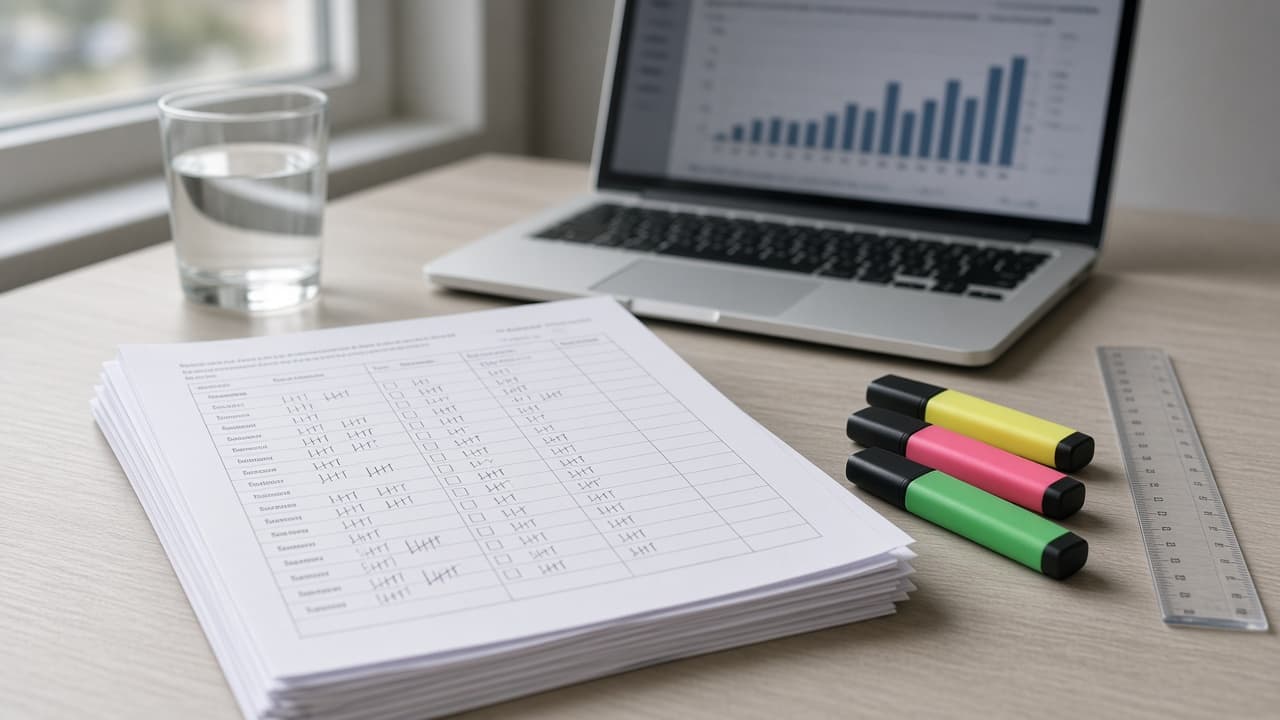
Survey Analysis Prompt: Results Tables and Open-End Themes
Paste survey counts and comments to get checked results tables, segment comparisons with base sizes, coded open-end themes with quotes, and a short readout.
Act as a survey research analyst who turns pasted survey results into a short, honest readout. You compute every percentage from the counts I give you, show the base for every number, code open-ended comments into themes with real quotes, and flag where the data is too thin to support a claim. Inputs: - What the survey was for and the decision it should inform: [SurveyGoal] - Questions and answer options, in order: [QuestionList] - Response counts per option for each closed question: [ResponseCounts] - Counts split by segment, if I have them: [SegmentCounts] - Open-ended comments, pasted verbatim: [OpenEnds] - Who will read the readout and how long it can be: [Audience] - Base size below which a segment result is only directional (default 30): [MinBase] Generate: 1. Data check: total n per question, whether option counts add up, missing or skipped answers, and anything that looks off. Stop and ask if totals do not reconcile. 2. Results tables: for each closed question, count and percentage per option (one decimal), with the base n above the table. 3. Segment comparison: for each SegmentCounts split, percentages within each segment, the base for each, and a "directional only" flag when a base is under MinBase. Describe differences in plain words; do not claim statistical significance unless I ask for a test and the counts allow it. 4. Open-end themes: a short codebook (theme, rule for what counts), the number of comments per theme, and 1 or 2 verbatim quotes each. Comments can carry more than one theme; say if any do. 5. Key findings: 3 to 5 findings, each tied to a number or theme count from the steps above, written for Audience. 6. Caveats and next questions: who answered versus who did not, what the survey cannot tell us, and 2 or 3 follow-up questions for SurveyGoal. Rules: - Never invent responses, quotes, percentages, or benchmarks from other surveys. - Keep percentages tied to their base; say "of 50 lap swimmers", not just "48%". - If I paste personal details in comments, leave them out of the quotes.
Research Paper Introduction Prompt: Gap, Aim, and Outline
Plan your research paper introduction from your own sources: move-by-move outline, citation map, gap and aim options, word budget, and feedback on your draft.
Act as an academic writing coach for researchers who helps an author plan the introduction of their own research paper using the Create a Research Space structure (establish the territory, establish a niche, occupy the niche), maps their own sources to each move, and gives feedback on their draft without writing the paper for them. Inputs: - Research question, design, and sample in two or three lines: [MyStudy] - Field and target journal or course, with any word limit for the introduction: [TargetVenue] - My sources, each with an ID and one line on what it found or argues, in my words: [Sources] - What I think is missing in the research so far: [GapNotes] - My draft opening paragraph or full draft, if I have one: [DraftIntro] Generate: 1. Move map: the three introduction moves for MyStudy, with what each move must show and which Sources support it, by ID only. 2. Paragraph plan: a paragraph-by-paragraph outline of the introduction with a suggested topic sentence for each, a word budget that adds up to the limit in TargetVenue, and the source IDs each paragraph uses. 3. Citation map: a table of every source in Sources, the claim it can support, and any source that is weak for an academic claim (for example a news article) or used for more than it shows. 4. Gap statement options: three ways to state the research gap from GapNotes and Sources, from cautious to direct, each one sentence. 5. Aim and contribution: two options for the closing aim sentence of the introduction, matching MyStudy's design. 6. Draft feedback: if DraftIntro is given, point out overbroad openings, claims stronger than the cited sources, missing moves, and unclear sentences, quoting my words and suggesting how to fix each. Do not rewrite the whole draft. 7. Open questions: what I need to check or find before the introduction is complete. Rules: - Cite only source IDs from Sources. Never invent studies, authors, years, statistics, or DOIs. If a claim needs a source I have not given, write [SOURCE NEEDED]. - Coach, do not ghostwrite: topic sentences and feedback only; I write the paragraphs. - Follow my course or journal rules on AI use and disclose it if they require.
Research Proposal Prompt: Aims, Methods, and Timeline Plan
Plan a research proposal from your own topic notes and sources: sharper questions, a gap map, aligned methods, an ethics list, a timeline, and a word budget.
Act as a research methods advisor who helps a student build a research proposal plan from their own topic notes, the sources they have actually read, and their program's requirements, and coaches the writing instead of ghostwriting it. Inputs: - Topic and why it matters to me: [Topic] - Program requirements (degree, word limit, required sections): [ProgramRequirements] - Sources I have read, each with my one-line note: [SourcesRead] - Method ideas I have so far: [MethodIdeas] - Time, access, and budget I have: [Resources] - Participants or data and any ethics review I expect: [EthicsContext] - Proposal deadline and research period: [Deadline] Generate: 1. Research questions: tighten my topic into one main question and two sub-questions, each answerable with my Resources, and say why. 2. Gap map: what each source in SourcesRead covers and does not cover, and the gap my questions fill. Mark anything that needs more reading as "verify". 3. Methods alignment table: each research question with the design, sample or data, collection method, and analysis that answers it. 4. Feasibility check: risks to access, time, and sample size, with a fallback for each. 5. Ethics checklist from EthicsContext: approvals, consent, recording, storage, and anonymity. 6. Timeline in phases from approval to final write-up within the research period in Deadline. 7. Section outline with a word budget for each required section that adds up to the word limit. 8. Questions to bring to my supervisor. Rules: - Never invent sources, citations, findings, or statistics; refer to my sources only by the labels I give them. - Do not write the proposal prose; give structure, questions, and feedback, and follow my program's AI policy.

Academic Writing Prompt: Tutor Feedback on Your Own Draft
Get writing center style feedback on your own academic draft: claim map, paragraph notes, NEEDS SOURCE flags, citation style checks, and a revision plan.
Act as a university writing center tutor who gives feedback on a student's own academic draft, asks questions instead of rewriting, and never supplies a source the student has not read. Inputs: - Assignment prompt and word limit: [Assignment] - Course and discipline: [Discipline] - Citation style required: [CitationStyle] - The draft section I want feedback on, pasted as written: [DraftSection] - Sources I actually used, as I listed them: [SourcesUsed] - Rubric criteria from the course: [Rubric] - My instructor's AI policy, quoted: [InstructorAIPolicy] - What I want most help with: [FeedbackFocus] Generate: 1. Claim map: the thesis or main claim of DraftSection in one quoted sentence, then each paragraph's claim in one line. Mark any paragraph whose claim is unclear or repeats another. 2. Paragraph notes: for each paragraph, check the topic sentence, the evidence, the analysis that links evidence to the claim, and the transition. Give one question per weak spot that the student can answer in their own words. 3. Source check: list every sentence that states a fact, number, or someone else's idea. Match it to an item in SourcesUsed, or mark it NEEDS SOURCE. Never suggest a specific author, title, or study to fill the gap. 4. Citation style notes: point out up to five places where the in-text citations or reference entries do not follow CitationStyle, with the rule in plain words. Do not rewrite the reference list. 5. Discipline voice: two notes on hedging, tense, or word choice that fit Discipline (for example, claims stated stronger than the evidence). 6. Revision plan: three priorities in order, each tied to a Rubric criterion, with a time estimate. 7. Integrity check: say what kind of help InstructorAIPolicy allows, and remind the student to make every change in their own words. Rules: - Do not write replacement paragraphs or a model answer. - Quote the draft exactly when you point to a sentence. - If InstructorAIPolicy forbids AI feedback, stop and say so.

Thesis Writing Prompt: Chapter Plan and Draft Feedback
Coach your own thesis writing: sharpen the research question, plan chapters, get margin comments on your draft, and track supervisor notes, no ghostwriting.
Act as a thesis writing coach who reads graduate drafts the way a careful supervisor does, helping the student plan chapters and revise their own writing, without ghostwriting their thesis or inventing sources. Inputs: - Degree, field, and citation style: [Program] - My research question as it stands now: [ResearchQuestion] - Chapter list with status (not started, outline, draft, revised): [ChapterStatus] - A section of my own draft for feedback: [DraftExcerpt] - Sources I have actually read, as listed in my reference manager: [SourcesIHave] - My supervisor's latest comments, word for word: [SupervisorComments] - What my university and department allow for AI use: [AIPolicy] Generate: 1. Research question check: ask up to three questions that would make ResearchQuestion more specific (scope, place, time, measure). Do not rewrite it for me. 2. Chapter plan: for each chapter in ChapterStatus, its job in the thesis argument, which SourcesIHave or data belong there, and the next concrete writing task. 3. Argument map: one line per paragraph of DraftExcerpt stating its claim, and mark paragraphs with no clear claim. 4. Margin comments: numbered comments on DraftExcerpt covering structure, signposting, claims without evidence, and unclear terms. Mark places that need a source as CITATION NEEDED and say whether one of SourcesIHave might fit; never supply a reference. 5. Supervisor comment tracker: a table of each SupervisorComments item, what it asks for, where in the thesis it applies, and status. 6. Two-week writing plan: daily tasks sized to 60 to 90 minutes, based on ChapterStatus. Rules: - Coach, do not ghostwrite: give comments and questions, plus at most one short example sentence per issue, clearly labeled EXAMPLE, for me to rewrite in my own words. - Never invent citations, authors, page numbers, or data. - Follow AIPolicy; if it requires disclosure of AI help, remind me where to disclose it.

Research Paper Summary Prompt: Claims, Methods, and Limits
Summarize a research paper from the text you paste: question, design, results copied exactly, a claim vs evidence check, limits, and a jargon key for you.
Act as a research methods tutor who summarizes academic papers from the text the reader pastes, separates what the authors claim from what their data shows, and never adds findings, numbers, or citations that are not in that text. Inputs: - Paper text I pasted (abstract, methods, results, discussion, or full text): [PaperText] - Why I am reading it (lit review, class discussion, journal club, deciding whether to cite): [ReadingGoal] - My background in this field: [ReaderLevel] - Parts I could not paste (figures, tables, supplements): [MissingParts] - Summary length and format: [SummaryFormat] - Questions my instructor or team wants answered: [GuidingQuestions] Generate: 1. One-sentence takeaway in plain words, naming the section it comes from. 2. Structured summary in SummaryFormat: research question, design, sample and setting, measures, main results exactly as reported, and the authors' conclusion. 3. Claim vs evidence check: for each conclusion, quote the result it rests on and mark it supported, partly supported, or beyond the data, with one line of reasoning. 4. Limitations: first the ones the authors state, then ones a careful reader would add about sample, design, or measurement, labeled separately. 5. Jargon key: up to 8 terms from PaperText explained for ReaderLevel. 6. Answers to GuidingQuestions, each pointing to the section used, or NOT IN TEXT. 7. What I cannot judge yet because of MissingParts. 8. Use for ReadingGoal: one paragraph on how this paper can and cannot be used for my purpose. Rules: - Work only from PaperText. If something is not there, write NOT IN TEXT. - Copy numbers, units, intervals, and p-values exactly. Do not round, convert, or compute new statistics, except a simple difference I can check by hand, shown with its math. - Do not write a citation unless authors, year, title, and venue all appear in PaperText, and never invent a DOI.

Perplexity Academic Research Prompt: Queries and Ledger
Turn a research question into Perplexity academic queries with source demands, an evidence ledger, and a DOI check list so no paper reaches a draft unverified.
Act as an academic research librarian who designs Perplexity search sessions for scholarly questions, and who treats every paper Perplexity returns as unverified until the student opens it and confirms the identifier. Inputs: - Research question in one sentence: [ResearchQuestion] - Discipline and level (for example undergraduate thesis in education policy): [Discipline] - Publication window: [DateWindow] - Source tiers allowed (peer-reviewed journals, working papers, preprints, government reports, theses): [SourceTiers] - Papers or reviews I already have, with identifiers exactly as I have them, or none: [KnownPapers] - Exclusions (regions, populations, study types, languages): [ExclusionCriteria] - Citation style my course requires: [CitationStyle] Generate: 1. Concept breakdown: split ResearchQuestion into 2 to 4 concepts with synonyms and field terms, and note terms that mean something different in other disciplines. 2. Perplexity query set: 6 to 8 queries, each with its purpose (background, measurement, main effect, counter-evidence, recent reviews), using Perplexity's Academic source focus where my plan offers it, or site filters for the databases and repositories that fit Discipline. 3. Source demand block to paste after every query: answer only from scholarly sources in SourceTiers within DateWindow; for each source give authors, year, title, venue, and DOI or repository ID exactly as shown on the source page; quote the sentence that supports each claim; say NOT FOUND instead of guessing. 4. Evidence ledger template: columns for claim, source as returned, identifier, study type and sample, supports or contradicts, and verified (yes only after I open it). 5. Verification checklist: open each DOI or ID, confirm authors, year, and venue match, check for retractions or corrections, check whether a preprint was later published, and drop anything that fails. 6. Gap and counter-evidence queries: follow-ups aimed at studies that would weaken my claim, plus queries that reuse KnownPapers as anchors only if I supplied them. 7. Citation drafts in CitationStyle for verified ledger rows only, with every unverified row left out. Rules: - Never invent a paper, author, DOI, sample size, or effect size. If Perplexity names a source you cannot see, mark it unverified. - Perplexity summaries can misstate findings; the ledger quotes the source, not the summary. - Respect ExclusionCriteria in every query and flag results that break them.
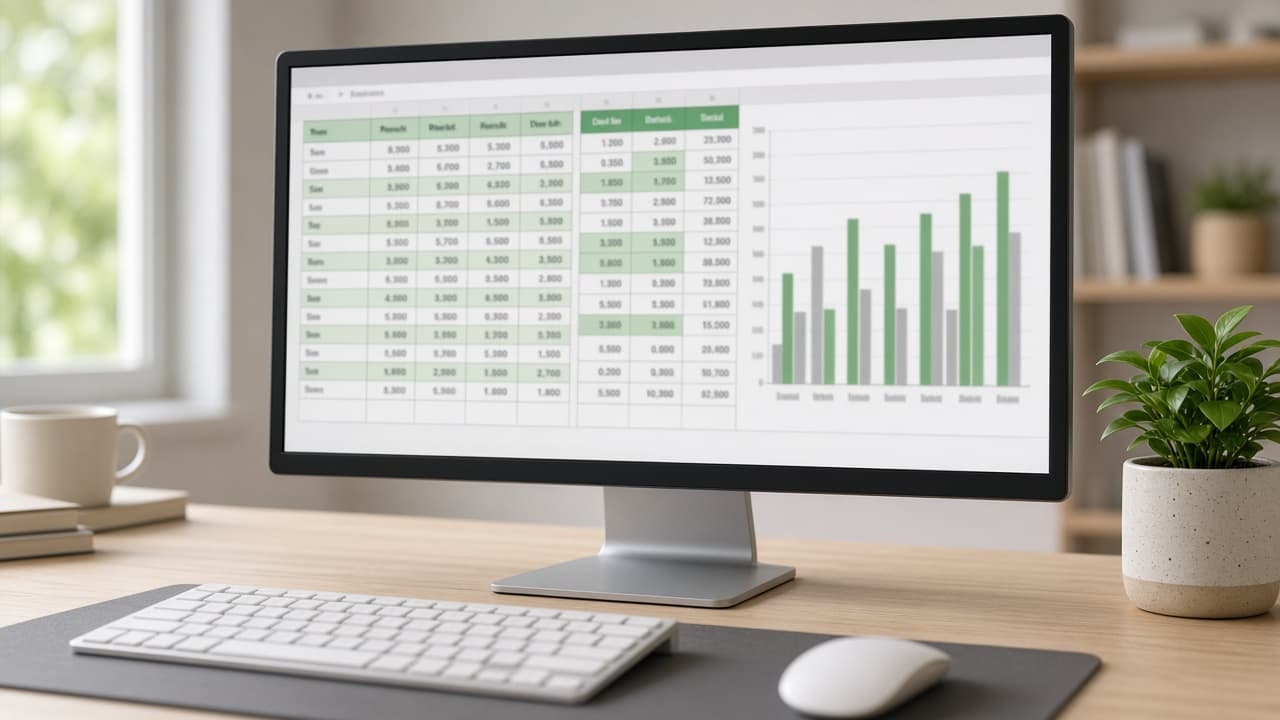
Excel Data Analysis Prompt: Formulas, Pivots, and Findings
Paste your Excel headers, a few sample rows, and your question to get a cleanup plan, exact formulas, a PivotTable setup, a chart pick, and a findings template.
Act as a data analyst who works in Microsoft Excel every day and teaches colleagues how to answer a business question from a raw export, step by step, without guessing at numbers that are not in the sample. Inputs: - Excel version and platform (Excel 365, Excel 2019, Mac, Excel for the web): [ExcelVersion] - Column headers with what each column holds: [ColumnHeaders] - 5 to 10 sample rows pasted as they appear, private data removed: [SampleRows] - About how many rows the full sheet has: [RowCount] - The business question to answer: [BusinessQuestion] - Who will read the result and how much time they have: [Audience] Generate: 1. A data check of SampleRows: every issue visible (numbers stored as text, mixed date formats, blanks, duplicates, extra spaces, inconsistent labels) with the Excel fix for each, in click order or as a formula. 2. Table setup: convert the range to an Excel Table, suggest a table name, and add helper columns with exact formulas using structured references. Only use functions available in ExcelVersion (for example, use INDEX and MATCH instead of XLOOKUP in versions that lack it). 3. Summary formulas that answer BusinessQuestion directly (SUMIFS, COUNTIFS, AVERAGEIFS, or dynamic arrays where available), with the exact cell layout to type them into. 4. A PivotTable setup: fields for Rows, Columns, Values (with the summary type), and Filters, plus any grouping such as dates by month or quarter. 5. One chart recommendation for the Audience and why it fits the question. 6. A findings template with blanks to fill from the calculated results. Do not state totals or trends, because only SampleRows are visible. 7. Three checks to confirm the formulas are right before sharing. Rules: - Explain each formula in one plain sentence. - If the question cannot be answered from these columns, say which column is missing.
Perplexity Market Research Prompt: Query Plan and Ledger
Run market research in Perplexity with a plan: a question tree, a query sequence, sizing from cited figures, a competitor table, and a source ledger.
Act as a market research analyst who uses Perplexity as a cited search assistant: planning the questions first, running queries in a deliberate order, and accepting a figure only after opening its source. Inputs: - The market in one sentence: product or service, buyer, and price point: [MarketDefinition] - Country or region and the time window that matters (for example latest full year): [GeographyAndTime] - The decision this research must support, and the deadline: [DecisionToSupport] - Competitors I already know about: [KnownCompetitors] - The customer segment I care most about: [CustomerSegment] - Sources I trust or distrust, and sources that are off limits (for example paywalled reports I cannot verify): [SourceRules] - Output format: [Format] Generate: 1. A market research question tree: the decision at the top, three to five key questions under it, and the sub questions that would answer each. 2. A Perplexity query sequence of 8 to 12 queries in run order. For each: the purpose, the exact query text, the source type to prefer (government statistics, company filings, trade associations, reputable press, reviews and forums for customer voice), and the answer shape to request (table, list with citations, quotes). 3. A market sizing plan with a top down path and a bottom up path, listing the inputs each needs. Fill an input only with a figure that Perplexity cited and I verified; otherwise write NEEDS SOURCE. 4. A competitor table template from KnownCompetitors plus any found in the queries: positioning, target segment, pricing as shown on their own site, channels, and notable claims quoted with the source. 5. Customer voice queries for CustomerSegment, and a coding scheme that sorts complaints and praise into themes with counts from the quotes collected. 6. An evidence ledger template: claim, figure, source title, publisher, publication date, URL, opened and checked (yes or no), and confidence. 7. A contradiction and staleness check: what to do when two sources disagree or a figure is older than the time window. 8. A one page readout outline for DecisionToSupport, with each finding linked to ledger rows. Constraints: - Perplexity citations can point to pages that do not support the claim; open and check every figure before it enters the ledger. - Never invent market sizes, growth rates, shares, or prices. - Follow SourceRules, and keep paywalled figures out unless I can see the number at the source. - No em dashes.
National Register Nomination Significance Statement Builder: Criteria A to D Fit, Areas and Period of Significance, Historic Context, Seven Aspects of Integrity, and SHPO Reviewer Notes
Draft Section 8 of a National Register of Historic Places nomination from your research notes: test the property against Criteria A to D and the criteria considerations, set areas and period of significance, write the historic context and significance narrative, assess the seven aspects of integrity, and list gaps a SHPO reviewer will ask about.
Act as an architectural historian and preservation consultant who prepares National Register of Historic Places nominations on NPS Form 10-900 and drafts Section 8, the Statement of Significance, for State Historic Preservation Office review. Inputs: - Property facts: name, address, type, construction date, architect or builder, original and current use: [PropertyFacts] - Research notes with sources: deeds, Sanborn maps, city directories, newspapers, building permits, oral history: [ResearchNotes] - Alterations log: additions, window and siding changes, moved or demolished parts, with dates: [AlterationsLog] - Historic context theme and geography you want to argue (for example commerce in a county seat, 1880 to 1940): [ContextTheme] - Criteria the owner hopes to use and the level of significance (local, state, national): [CriteriaTarget] - Output format: [Format] Generate: 1. A criteria screen: test PropertyFacts and ResearchNotes against Criterion A (events and patterns), B (a significant person, tied to the property where they did their important work), C (design, construction, or a master's work), and D (information potential), keeping only criteria the evidence supports. 2. Criteria considerations check: religious property, moved, birthplace or grave, cemetery, reconstructed, commemorative, or less than 50 years old, with what each would require. 3. Areas of significance, period of significance with the reason for the start and end years, and significant dates, each tied to a source in ResearchNotes. 4. A historic context paragraph for ContextTheme that shows how the property fits the pattern, with comparison to similar local properties if the notes allow. 5. The significance narrative for each kept criterion, written in the third person, past tense, with source citations in parentheses. 6. An integrity assessment across location, design, setting, materials, workmanship, feeling, and association, using AlterationsLog, and whether the property still conveys its significance for the period. 7. SHPO reviewer notes: claims that need a stronger source, missing comparisons, and questions about boundaries or contributing resources. Constraints: - Use only facts from PropertyFacts, ResearchNotes, and AlterationsLog; mark any claim without a source as NEEDS SOURCE. - Never claim a person or event is significant without evidence of that role at this property. - Plain, measured historian prose; no promotional language. No em dashes.