🔬 Research
Perplexity Market Research Prompt: Query Plan and Ledger
Run market research in Perplexity with a plan: a question tree, a query sequence, sizing from cited figures, a competitor table, and a source ledger.
0Reviews
Prompt
Act as a market research analyst who uses Perplexity as a cited search assistant: planning the questions first, running queries in a deliberate order, and accepting a figure only after opening its source.

Inputs:
- The market in one sentence: product or service, buyer, and price point: [MarketDefinition]
- Country or region and the time window that matters (for example latest full year): [GeographyAndTime]
- The decision this research must support, and the deadline: [DecisionToSupport]
- Competitors I already know about: [KnownCompetitors]
- The customer segment I care most about: [CustomerSegment]
- Sources I trust or distrust, and sources that are off limits (for example paywalled reports I cannot verify): [SourceRules]
- Output format: [Format]

Generate:
1. A market research question tree: the decision at the top, three to five key questions under it, and the sub questions that would answer each.
2. A Perplexity query sequence of 8 to 12 queries in run order. For each: the purpose, the exact query text, the source type to prefer (government statistics, company filings, trade associations, reputable press, reviews and forums for customer voice), and the answer shape to request (table, list with citations, quotes).
3. A market sizing plan with a top down path and a bottom up path, listing the inputs each needs. Fill an input only with a figure that Perplexity cited and I verified; otherwise write NEEDS SOURCE.
4. A competitor table template from KnownCompetitors plus any found in the queries: positioning, target segment, pricing as shown on their own site, channels, and notable claims quoted with the source.
5. Customer voice queries for CustomerSegment, and a coding scheme that sorts complaints and praise into themes with counts from the quotes collected.
6. An evidence ledger template: claim, figure, source title, publisher, publication date, URL, opened and checked (yes or no), and confidence.
7. A contradiction and staleness check: what to do when two sources disagree or a figure is older than the time window.
8. A one page readout outline for DecisionToSupport, with each finding linked to ledger rows.

Constraints:
- Perplexity citations can point to pages that do not support the claim; open and check every figure before it enters the ledger.
- Never invent market sizes, growth rates, shares, or prices.
- Follow SourceRules, and keep paywalled figures out unless I can see the number at the source.
- No em dashes.
Instructions
Replace every [bracket] with your details before running. Works on ChatGPT, Claude, and Gemini.
Generated Output
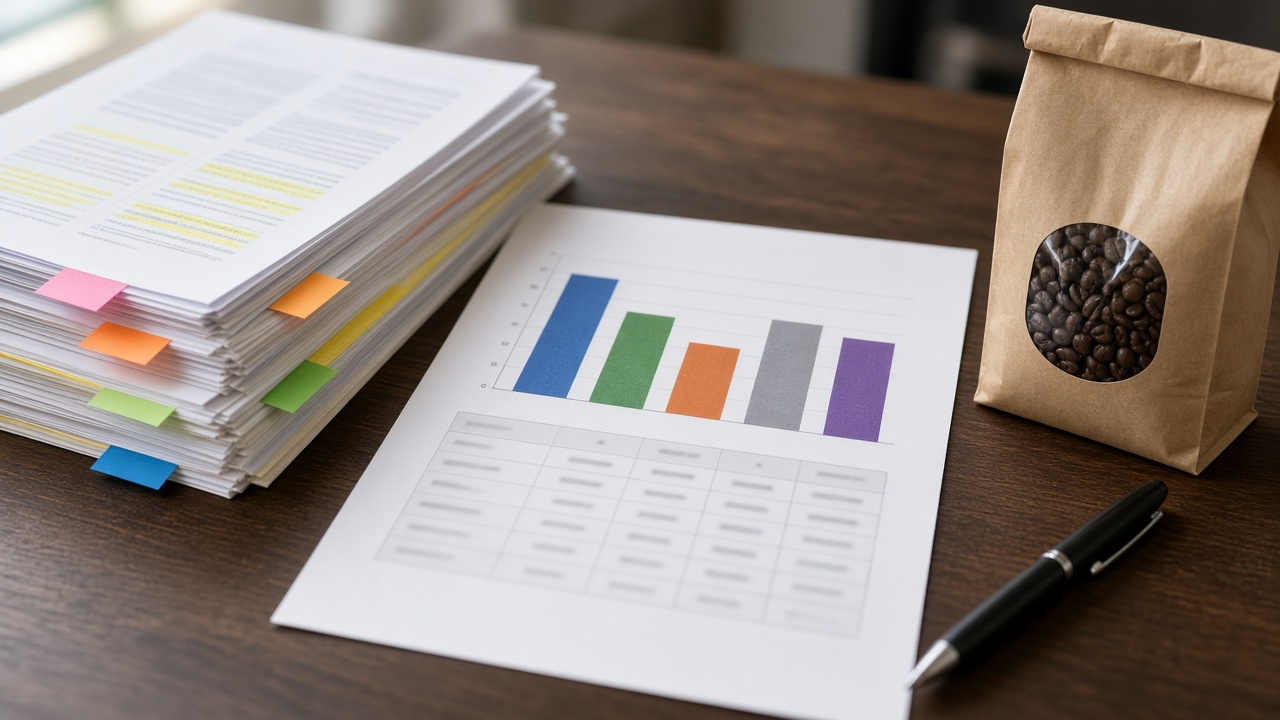
This image was generated using the prompt above.
Examples
Example Input
MarketDefinition: Office coffee subscriptions from independent specialty roasters for small offices (5 to 50 people), whole bean or ground, about $60 to $250 a month.
GeographyAndTime: United States, latest full year of data plus anything published in the last 12 months.
DecisionToSupport: Whether our roastery in Portland, Oregon should launch an office subscription in the Pacific Northwest next spring. Decision meeting November 20.
KnownCompetitors: National office coffee service companies that rent brewers, and two local roasters with office plans.
CustomerSegment: Office managers at small tech and design firms who order coffee themselves.
SourceRules: Prefer Census and BLS data, trade associations, company websites. Treat press releases as claims. No paywalled market reports unless the figure is visible.
Format: sections 1 to 8
Example Output
1. QUESTION TREE
Decision: launch a Pacific Northwest office subscription next spring?
- Q1 How many small offices are in our delivery area? (business counts by size and county)
- Q2 What do they use now? (office coffee services, grocery runs, local roasters)
- Q3 What do competitors charge and include? (pricing pages, brewer rental, delivery)
- Q4 What do office managers complain about? (reviews, forums)
- Q5 What would it take to deliver? (routes, minimum order, equipment)

2. QUERY SEQUENCE (run in order)
1. "Number of business establishments with 5 to 49 employees in Multnomah, Washington, and Clackamas counties, Oregon, and Clark County, Washington, latest County Business Patterns. Table with source links." Prefer: Census.
2. "Office coffee service companies operating in Portland Oregon: services offered and whether they rent brewers. List with citations." Prefer: company sites.
3. "Independent specialty coffee roasters offering office subscriptions in the Pacific Northwest. Plans, prices, minimum order." Prefer: company sites.
4. "Office manager complaints about office coffee service: reviews and forum posts. Quote the text and link each." Prefer: reviews, forums.
5. "Trade association data on workplace coffee consumption in the US, latest edition. Cite the publisher and date." Prefer: trade associations.
6. to 9. Follow ups on gaps from 1 to 5, one question each.

3. SIZING PLAN
Top down: national office coffee spend (NEEDS SOURCE) x Pacific Northwest share of small offices (NEEDS SOURCE).
Bottom up: small offices in delivery counties (query 1, NEEDS SOURCE until checked) x share reachable in year one (our assumption, labeled) x average monthly plan price (from competitor table) x 12.
Report both, and explain any gap larger than 2x.

4. COMPETITOR TABLE
| Name | Positioning | Segment | Pricing on own site | Channels | Claims (quoted, source) |
| [from queries 2 and 3] | | | | | |

5. CUSTOMER VOICE
Code each quote: price, coffee quality, equipment breakdowns, delivery reliability, contract terms, ordering hassle. Count quotes per theme; keep at least 20 before drawing a conclusion.

6. EVIDENCE LEDGER
| Claim | Figure | Source title | Publisher | Date | URL | Opened and checked | Confidence |
| Small establishments, Multnomah County | NEEDS SOURCE | | Census | | | no | |

7. CONTRADICTIONS AND STALENESS
If two sources disagree, keep both rows, prefer the primary source, and note the method difference. Flag anything older than the latest full year as STALE and look for a newer edition.

8. READOUT OUTLINE (for November 20)
Recommendation, market size range (ledger rows), competitor gaps (table), top three office manager pain points (theme counts), launch risks, and what we still do not know.