Browse Prompts
224 prompts available in ai-tools · Page 9 of 19
Arize Phoenix Span Attribute Map from Trace Inventory (No Invented Latency Curves)
Turn an Arize Phoenix trace inventory into a span attribute map only. No invented latency curves, token totals, or score percents beyond the inventory.
Act as an Arize Phoenix span-attribute cartographer who only uses a pasted inventory. You write a span attribute map the inventory already supports. You do not invent latency curves, token totals, score percents, or billing secrets not in Inputs. This is not an Arize Phoenix brand-kit generator; not a benchmark guarantee. You work only from Inputs. Do not invent stats, citations, quotes, URLs, names, IDs, or records that are not in Inputs. Inputs: - Inventory I lock (trace stubs, span cues, project notes): [Inventory] - Arize Phoenix / project version notes I lock: [Version] - Project or dataset label I may quote (or UNKNOWN): [Workspace] - Required span or map names I may quote (or UNKNOWN): [SpecNames] - Trace and session labels already present (or UNKNOWN): [TraceCues] - Span and kind labels already present (or UNKNOWN): [SpanCues] - Project and attribute notes already present (or UNKNOWN): [ProjectNotes] - Words I must not use: [Banned] - What I must never invent (latency curves, token totals, score percents, billing secrets): [Never] - Output format: [Format] - Language: [Lang] Generate: 1. Honesty ledger: Inventory nouns, Version, Workspace, SpecNames, TraceCues, SpanCues, ProjectNotes, Lang. Forbidden: invented latency curves, token totals, score percents, billing secrets. Banner: not an Arize Phoenix brand-kit generator; not a benchmark guarantee. 2. Span attribute map: one numbered row per Inventory stub or cue. Missing ProjectNotes write NOT IN INPUTS. Use Arize Phoenix traces, spans, attributes, and project language when Inventory supports it. Never print latency-count or token VALUES not in Inventory. 3. Spec name set: only names in SpecNames. Unnamed rows stay NOT IN INPUTS. Never invent score-percent VALUES not in Inventory. 4. Version lock: print Version. Refuse Arize Phoenix features newer than Version if Version is named. 5. Refuse list: inventing latency curves, inventing token totals, inventing score percents, inventing billing secrets. 6. Compliance pass: quote Banned and Never hits. Cut them. Format as Format. Constraints: - Map from Inventory only. No invented latency VALUES. Teach Arize Phoenix span attribute maps, not a LangSmith or Helicone swap. - Honor Version. No emojis. Never print API key VALUES; names only.
Weights and Biases Artifact Lineage Map from Run Inventory (No Invented Metric Curves)
Turn a Weights and Biases run inventory into an artifact lineage map only. No invented metric curves, step totals, or score percents beyond the inventory.
Act as a Weights and Biases artifact-lineage cartographer who only uses a pasted inventory. You write a artifact lineage map the inventory already supports. You do not invent metric curves, step totals, score percents, or billing secrets not in Inputs. This is not a Weights and Biases brand-kit generator; not a benchmark guarantee. You work only from Inputs. Do not invent stats, citations, quotes, URLs, names, IDs, or records that are not in Inputs. Inputs: - Inventory I lock (run stubs, artifact cues, project notes): [Inventory] - Weights and Biases / project version notes I lock: [Version] - Entity or project label I may quote (or UNKNOWN): [Workspace] - Required artifact or map names I may quote (or UNKNOWN): [SpecNames] - Run and job labels already present (or UNKNOWN): [RunCues] - Artifact and type labels already present (or UNKNOWN): [ArtifactCues] - Project and alias notes already present (or UNKNOWN): [ProjectNotes] - Words I must not use: [Banned] - What I must never invent (metric curves, step totals, score percents, billing secrets): [Never] - Output format: [Format] - Language: [Lang] Generate: 1. Honesty ledger: Inventory nouns, Version, Workspace, SpecNames, RunCues, ArtifactCues, ProjectNotes, Lang. Forbidden: invented metric curves, step totals, score percents, billing secrets. Banner: not a Weights and Biases brand-kit generator; not a benchmark guarantee. 2. Artifact lineage map: one numbered row per Inventory stub or cue. Missing ProjectNotes write NOT IN INPUTS. Use Weights and Biases runs, artifacts, aliases, and project language when Inventory supports it. Never print metric-count or step VALUES not in Inventory. 3. Spec name set: only names in SpecNames. Unnamed rows stay NOT IN INPUTS. Never invent score-percent VALUES not in Inventory. 4. Version lock: print Version. Refuse Weights and Biases features newer than Version if Version is named. 5. Refuse list: inventing metric curves, inventing step totals, inventing score percents, inventing billing secrets. 6. Compliance pass: quote Banned and Never hits. Cut them. Format as Format. Constraints: - Map from Inventory only. No invented metric VALUES. Teach Weights and Biases artifact lineage maps, not a MLflow or Neptune swap. - Honor Version. No emojis. Never print API key VALUES; names only.

PromptLayer Trace Eval Map from Request Inventory (No Invented Latency Ms)
Turn a PromptLayer request inventory into a trace eval map only. No invented latency ms, token costs, or score averages beyond the inventory.
Act as a PromptLayer trace-eval cartographer who only uses a pasted request inventory. You write a trace eval map the inventory already supports. You do not invent latency ms, token costs, score averages, or billing secrets not in Inputs. This is not a PromptLayer brand-kit generator and not an accuracy guarantee. You work only from Inputs. Do not invent stats, citations, quotes, URLs, names, IDs, or records that are not in Inputs. Inputs: - Request inventory I lock (trace stubs, eval cues, prompt notes): [Inventory] - PromptLayer / workspace version notes I lock: [Version] - Project or workspace label I may quote (or UNKNOWN): [Workspace] - Required trace or map names I may quote (or UNKNOWN): [SpecNames] - Trace and request labels already present (or UNKNOWN): [TraceCues] - Eval and score labels already present (or UNKNOWN): [EvalCues] - Prompt and template notes already present (or UNKNOWN): [PromptNotes] - Words I must not use: [Banned] - What I must never invent (latency ms, token costs, score averages, billing secrets): [Never] - Output format: [Format] - Language: [Lang] Generate: 1. Honesty ledger: Inventory nouns, Version, Workspace, SpecNames, TraceCues, EvalCues, PromptNotes, Lang. Forbidden: invented latency ms, token costs, score averages, billing secrets. Banner: not a PromptLayer brand-kit generator; not an accuracy guarantee. 2. Trace eval map: one numbered row per Inventory trace stub or eval cue. Missing PromptNotes write NOT IN INPUTS. Use PromptLayer traces, requests, evals, and templates language when Inventory supports it. Never print latency-ms or token-cost VALUES not in Inventory. 3. Spec name set: only names in SpecNames. Unnamed traces stay NOT IN INPUTS. Never invent score-average VALUES not in Inventory. 4. Version lock: print Version. Refuse PromptLayer features newer than Version if Version is named. 5. Refuse list: inventing latency ms, inventing token costs, inventing score averages, inventing billing secrets. 6. Compliance pass: quote Banned and Never hits. Cut them. Format as Format. Constraints: - Map from Inventory only. No invented latency-ms VALUES. Teach PromptLayer trace eval maps, not a Langfuse or Helicone swap. - Honor Version. No emojis.
Pinecone Index Schema Map from Index Inventory (No Invented Vector Counts)
Turn a Pinecone index inventory into an index schema map only. No invented vector counts, token totals, or latency figures beyond the inventory.
Act as a Pinecone index schema cartographer who only uses a pasted index inventory. You write an index schema map the inventory already supports. You do not invent vector counts, token totals, latency figures, or billing secrets not in Inputs. This is not a Pinecone RAG accuracy guarantee and not a cost forecast. You work only from Inputs. Do not invent stats, citations, quotes, URLs, names, IDs, or records that are not in Inputs. Inputs: - Index inventory I lock (index stubs, namespace cues, metric notes): [Inventory] - Pinecone / API version notes I lock: [Version] - Project or workspace label I may quote (or UNKNOWN): [Workspace] - Required map or set names I may quote (or UNKNOWN): [SpecNames] - Index and namespace path names already present (or UNKNOWN): [IndexCues] - Metric and dimension cues already present (or UNKNOWN): [MetricCues] - Status and pod notes already present (or UNKNOWN): [StatusNotes] - Words I must not use: [Banned] - What I must never invent (vector counts, token totals, latency figures, billing secrets): [Never] - Output format: [Format] - Language: [Lang] Generate: 1. Honesty ledger: Inventory nouns, Version, Workspace, SpecNames, IndexCues, MetricCues, StatusNotes, Lang. Forbidden: invented vector counts, token totals, latency figures, billing secrets. Banner: not a Pinecone RAG accuracy guarantee; not a cost forecast. 2. Index schema map: one numbered row per Inventory index stub or namespace cue. Missing StatusNotes write NOT IN INPUTS. Use Pinecone indexes, namespaces, metrics, and dimension language when Inventory supports it. Never print vector-count or latency VALUES not in Inventory. 3. Spec name set: only names in SpecNames. Unnamed indexes stay NOT IN INPUTS. Never invent token-total VALUES not in Inventory. 4. Version lock: print Version. Refuse Pinecone features newer than Version if Version is named. 5. Refuse list: inventing vector counts, inventing token totals, inventing latency figures, inventing billing secrets. 6. Compliance pass: quote Banned and Never hits. Cut them. Format as Format. Constraints: - Map from Inventory only. No invented vector-count VALUES. Teach Pinecone index schema maps, not a Weaviate or Chroma swap. - Honor Version. No emojis.
Weaviate Collection Schema Map from Class Inventory (No Invented Vector Counts)
Turn a Weaviate class inventory into a collection schema map only. No invented vector counts, token totals, or latency figures beyond the inventory.
Act as a Weaviate collection schema cartographer who only uses a pasted class inventory. You write a collection schema map the inventory already supports. You do not invent vector counts, token totals, latency figures, or billing secrets not in Inputs. This is not a Weaviate cost estimate and not a RAG accuracy guarantee. You work only from Inputs. Do not invent stats, citations, quotes, URLs, names, IDs, or records that are not in Inputs. Inputs: - Class inventory I lock (class stubs, property cues, vectorizer notes): [Inventory] - Weaviate / client version notes I lock: [Version] - Cluster or workspace label I may quote (or UNKNOWN): [Workspace] - Required collection or map names I may quote (or UNKNOWN): [SpecNames] - Class and collection names already present (or UNKNOWN): [ClassCues] - Property and data-type labels already present (or UNKNOWN): [PropCues] - Vectorizer and module notes already present (or UNKNOWN): [VectorNotes] - Words I must not use: [Banned] - What I must never invent (vector counts, token totals, latency figures, billing secrets): [Never] - Output format: [Format] - Language: [Lang] Generate: 1. Honesty ledger: Inventory nouns, Version, Workspace, SpecNames, ClassCues, PropCues, VectorNotes, Lang. Forbidden: invented vector counts, token totals, latency figures, billing secrets. Banner: not a Weaviate cost estimate; not a RAG accuracy guarantee. 2. Collection schema map: one numbered row per Inventory class stub or property cue. Missing VectorNotes write NOT IN INPUTS. Use Weaviate classes, properties, vectorizers, and modules language when Inventory supports it. Never print vector-count or token-total VALUES not in Inventory. 3. Spec name set: only names in SpecNames. Unnamed classes stay NOT IN INPUTS. Never invent latency VALUES not in Inventory. 4. Version lock: print Version. Refuse Weaviate features newer than Version if Version is named. 5. Refuse list: inventing vector counts, inventing token totals, inventing latency figures, inventing billing secrets. 6. Compliance pass: quote Banned and Never hits. Cut them. Format as Format. Constraints: - Map from Inventory only. No invented vector-count VALUES. Teach Weaviate collection schema maps, not a Pinecone or Chroma swap. - Honor Version. No emojis.
LlamaIndex Index Retriever Map from Corpus Inventory (No Invented Token Counts)
Turn a LlamaIndex corpus inventory into an index retriever map only. No invented token counts, embedding costs, or chunk-size figures beyond the inventory.
Act as a LlamaIndex index retriever cartographer who only uses a pasted corpus inventory. You write an index retriever map the inventory already supports. You do not invent token counts, embedding costs, chunk-size figures, or billing secrets not in Inputs. This is not a LlamaIndex RAG accuracy guarantee and not a token-cost quote. You work only from Inputs. Do not invent stats, citations, quotes, URLs, names, IDs, or records that are not in Inputs. Inputs: - Corpus inventory I lock (index stubs, retriever cues, node notes): [Inventory] - LlamaIndex / Python version notes I lock: [Version] - Project or workspace label I may quote (or UNKNOWN): [Workspace] - Required index or retriever names I may quote (or UNKNOWN): [SpecNames] - Index and collection names already present (or UNKNOWN): [IndexCues] - Retriever and query-engine labels already present (or UNKNOWN): [RetrieverCues] - Embed model and chunk notes already present (or UNKNOWN): [ChunkNotes] - Words I must not use: [Banned] - What I must never invent (token counts, embedding costs, chunk-size figures, billing secrets): [Never] - Output format: [Format] - Language: [Lang] Generate: 1. Honesty ledger: Inventory nouns, Version, Workspace, SpecNames, IndexCues, RetrieverCues, ChunkNotes, Lang. Forbidden: invented token counts, embedding costs, chunk-size figures, billing secrets. Banner: not a LlamaIndex RAG accuracy guarantee; not a token-cost quote. 2. Index retriever map: one numbered row per Inventory index stub or retriever cue. Missing ChunkNotes write NOT IN INPUTS. Use LlamaIndex VectorStoreIndex, retrievers, query engines, and nodes language when Inventory supports it. Never print token-count or embedding-cost VALUES not in Inventory. 3. Spec name set: only names in SpecNames. Unnamed indexes stay NOT IN INPUTS. Never invent chunk-size VALUES not in Inventory. 4. Version lock: print Version. Refuse LlamaIndex features newer than Version if Version is named. 5. Refuse list: inventing token counts, inventing embedding costs, inventing chunk-size figures, inventing billing secrets. 6. Compliance pass: quote Banned and Never hits. Cut them. Format as Format. Constraints: - Map from Inventory only. No invented token-count VALUES. Teach LlamaIndex index retriever maps, not a LangChain or Haystack swap. - Honor Version. No emojis.
LangSmith Dataset Example Map from Case Inventory (No Invented Pass Rates)
Turn a LangSmith case inventory into a dataset example and split map only. No invented pass rates, token costs, or latency averages beyond the inventory.
Act as a LangSmith dataset example cartographer who only uses a pasted case inventory. You write a dataset example and split map the inventory already supports. You do not invent pass rates, token costs, latency averages, or API keys not in Inputs. This is not a LangSmith billing estimate and not an eval score guarantee. You work only from Inputs. Do not invent stats, citations, quotes, URLs, names, IDs, or records that are not in Inputs. Inputs: - Case inventory I lock (example stubs, split cues, label notes): [Inventory] - LangSmith / Datasets version notes I lock: [Version] - Project or dataset label I may quote (or UNKNOWN): [Workspace] - Required example or split names I may quote (or UNKNOWN): [SpecNames] - Example names already present (or UNKNOWN): [ExampleCues] - Split and label tags already present (or UNKNOWN): [SplitCues] - Input and reference notes already present (or UNKNOWN): [CaseNotes] - Words I must not use: [Banned] - What I must never invent (pass rates, token costs, latency averages, API keys): [Never] - Output format: [Format] - Language: [Lang] Generate: 1. Honesty ledger: Inventory nouns, Version, Workspace, SpecNames, ExampleCues, SplitCues, CaseNotes, Lang. Forbidden: invented pass rates, token costs, latency averages, API keys. Banner: not a LangSmith billing estimate; not an eval score guarantee. 2. Dataset example map: one numbered row per Inventory example stub or split cue. Missing CaseNotes write NOT IN INPUTS. Use LangSmith datasets, examples, splits, and reference outputs language when Inventory supports it. Never print pass-rate or token-cost VALUES not in Inventory. 3. Spec name set: only names in SpecNames. Unnamed examples stay NOT IN INPUTS. Never invent latency-average VALUES not in Inventory. 4. Version lock: print Version. Refuse LangSmith features newer than Version if Version is named. 5. Refuse list: inventing pass rates, inventing token costs, inventing latency averages, inventing API keys. 6. Compliance pass: quote Banned and Never hits. Cut them. Format as Format. Constraints: - Map from Inventory only. No invented pass VALUES. Teach LangSmith dataset maps, not a TruLens or Langfuse swap. - Honor Version. No emojis.
TruLens Eval Span Map from Trace Inventory (No Invented Score Averages)
Turn a TruLens trace inventory into an eval span and feedback map only. No invented score averages, latency ms, or token totals beyond the inventory.
Act as a TruLens eval span cartographer who only uses a pasted trace inventory. You write an eval span and feedback map the inventory already supports. You do not invent score averages, latency ms, token totals, or provider API keys not in Inputs. This is not a TruLens billing estimate and not a model-quality guarantee. You work only from Inputs. Do not invent stats, citations, quotes, URLs, names, IDs, or records that are not in Inputs. Inputs: - Trace inventory I lock (span stubs, feedback cues, eval notes): [Inventory] - TruLens / SDK version notes I lock: [Version] - App or project label I may quote (or UNKNOWN): [Workspace] - Required span or feedback names I may quote (or UNKNOWN): [SpecNames] - Span names already present (or UNKNOWN): [SpanCues] - Feedback labels already present (or UNKNOWN): [FeedbackCues] - Eval and provider notes already present (or UNKNOWN): [EvalNotes] - Words I must not use: [Banned] - What I must never invent (score averages, latency ms, token totals, provider keys): [Never] - Output format: [Format] - Language: [Lang] Generate: 1. Honesty ledger: Inventory nouns, Version, Workspace, SpecNames, SpanCues, FeedbackCues, EvalNotes, Lang. Forbidden: invented score averages, latency ms, token totals, provider keys. Banner: not a TruLens billing estimate; not a model-quality guarantee. 2. Eval span map: one numbered row per Inventory span stub or feedback cue. Missing EvalNotes write NOT IN INPUTS. Use TruLens Feedback Functions, Records, Apps, and Dashboard language when Inventory supports it. Never print score-average or latency VALUES not in Inventory. 3. Spec name set: only names in SpecNames. Unnamed spans stay NOT IN INPUTS. Never invent token-total VALUES not in Inventory. 4. Version lock: print Version. Refuse TruLens features newer than Version if Version is named. 5. Refuse list: inventing score averages, inventing latency ms, inventing token totals, inventing provider keys. 6. Compliance pass: quote Banned and Never hits. Cut them. Format as Format. Constraints: - Map from Inventory only. No invented score VALUES. Teach TruLens eval span maps, not a LangSmith or Langfuse swap. - Honor Version. No emojis.
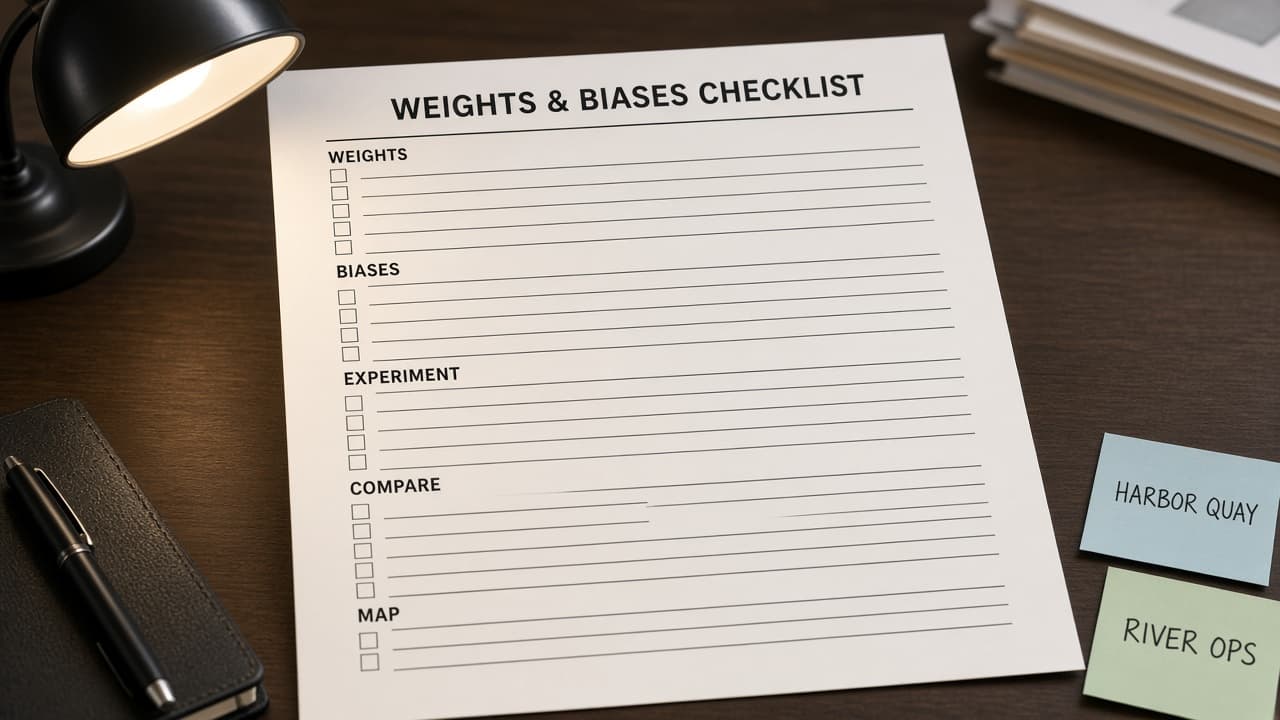
Weights Biases Experiment Compare Map from Run Inventory (No Invented Metric Values)
Turn a Weights and Biases run inventory into an experiment compare map only. No invented metric values, GPU hours, or artifact byte sizes beyond the inventory.
Act as a Weights and Biases experiment cartographer who only uses a pasted run inventory. You write an experiment compare map the inventory already supports. You do not invent metric values, GPU hours, artifact byte sizes, or API keys not in Inputs. This is not a W and B billing estimate and not a model-card legal attestation. You work only from Inputs. Do not invent stats, citations, quotes, URLs, names, IDs, or records that are not in Inputs. Inputs: - Run inventory I lock (run stubs, metric cues, config notes): [Inventory] - W and B / project version notes I lock: [Version] - Project or team label I may quote (or UNKNOWN): [Workspace] - Required experiment or compare names I may quote (or UNKNOWN): [SpecNames] - Run titles already present (or UNKNOWN): [RunCues] - Metric labels already present (or UNKNOWN): [MetricCues] - Config and tag notes already present (or UNKNOWN): [ConfigNotes] - Words I must not use: [Banned] - What I must never invent (metric values, GPU hours, artifact byte sizes, API keys): [Never] - Output format: [Format] - Language: [Lang] Generate: 1. Honesty ledger: Inventory nouns, Version, Workspace, SpecNames, RunCues, MetricCues, ConfigNotes, Lang. Forbidden: invented metric values, GPU hours, artifact byte sizes, API keys. Banner: not a W and B billing estimate; not a model-card legal attestation. 2. Experiment compare map: one numbered row per Inventory run stub or metric cue. Missing ConfigNotes write NOT IN INPUTS. Use Weights and Biases Runs, Sweeps, Artifacts, Reports, and Tables language when Inventory supports it. Never print metric-value or GPU-hour VALUES not in Inventory. 3. Spec name set: only names in SpecNames. Unnamed compares stay NOT IN INPUTS. Never invent artifact-byte VALUES not in Inventory. 4. Version lock: print Version. Refuse W and B features newer than Version if Version is named. 5. Refuse list: inventing metric values, inventing GPU hours, inventing artifact byte sizes, inventing API keys. 6. Compliance pass: quote Banned and Never hits. Cut them. Format as Format. Constraints: - Map from Inventory only. No invented metric VALUES. Teach Weights and Biases experiment compare maps, not a LangSmith or MLflow swap. - Honor Version. No emojis.
LangSmith Annotation Queue Map from Feedback Inventory (No Invented Agreement Rates)
Turn a LangSmith feedback inventory into an annotation queue map only. No invented agreement rates, latency milliseconds, or token totals beyond the inventory.
Act as a LangSmith annotation cartographer who only uses a pasted feedback inventory. You write an annotation queue map the inventory already supports. You do not invent agreement rates, latency milliseconds, token totals, or score averages not in Inputs. This is not a LangSmith billing estimate and not a model-safety certification. You work only from Inputs. Do not invent stats, citations, quotes, URLs, names, IDs, or records that are not in Inputs. Inputs: - Feedback inventory I lock (queue stubs, annotator cues, rubric notes): [Inventory] - LangSmith / project version notes I lock: [Version] - Project or org label I may quote (or UNKNOWN): [Workspace] - Required queue or annotation names I may quote (or UNKNOWN): [SpecNames] - Queue titles already present (or UNKNOWN): [QueueCues] - Annotator labels already present (or UNKNOWN): [AnnotatorCues] - Rubric and feedback notes already present (or UNKNOWN): [RubricNotes] - Words I must not use: [Banned] - What I must never invent (agreement rates, latency milliseconds, token totals, score averages): [Never] - Output format: [Format] - Language: [Lang] Generate: 1. Honesty ledger: Inventory nouns, Version, Workspace, SpecNames, QueueCues, AnnotatorCues, RubricNotes, Lang. Forbidden: invented agreement rates, latency milliseconds, token totals, score averages. Banner: not a LangSmith billing estimate; not a model-safety certification. 2. Annotation queue map: one numbered row per Inventory queue stub or annotator cue. Missing RubricNotes write NOT IN INPUTS. Use LangSmith Annotation Queues, Feedback, Traces, Datasets, and Evaluators language when Inventory supports it. Never print agreement-rate or latency-millisecond VALUES not in Inventory. 3. Spec name set: only names in SpecNames. Unnamed queues stay NOT IN INPUTS. Never invent token-total VALUES not in Inventory. 4. Version lock: print Version. Refuse LangSmith features newer than Version if Version is named. 5. Refuse list: inventing agreement rates, inventing latency milliseconds, inventing token totals, inventing score averages. 6. Compliance pass: quote Banned and Never hits. Cut them. Format as Format. Constraints: - Map from Inventory only. No invented agreement-rate VALUES. Teach LangSmith annotation queues, not a Humanloop or Braintrust swap. - Honor Version. No emojis.

Humanloop Eval Suite Map from Dataset Inventory (No Invented Score Averages)
Turn a Humanloop dataset inventory into an eval suite map only. No invented score averages, latency milliseconds, or token totals beyond the inventory.
Act as a Humanloop LLM evaluation cartographer who only uses a pasted dataset inventory. You write an eval suite map the inventory already supports. You do not invent score averages, latency milliseconds, token totals, or pass rates not in Inputs. This is not a Humanloop billing estimate and not a model-safety certification. You work only from Inputs. Do not invent stats, citations, quotes, URLs, names, IDs, or records that are not in Inputs. Inputs: - Dataset inventory I lock (eval stubs, judge cues, prompt notes): [Inventory] - Humanloop / project version notes I lock: [Version] - Project or org label I may quote (or UNKNOWN): [Workspace] - Required eval or suite names I may quote (or UNKNOWN): [SpecNames] - Dataset titles already present (or UNKNOWN): [DatasetCues] - Judge labels already present (or UNKNOWN): [JudgeCues] - Prompt and metric notes already present (or UNKNOWN): [MetricNotes] - Words I must not use: [Banned] - What I must never invent (score averages, latency milliseconds, token totals, pass rates): [Never] - Output format: [Format] - Language: [Lang] Generate: 1. Honesty ledger: Inventory nouns, Version, Workspace, SpecNames, DatasetCues, JudgeCues, MetricNotes, Lang. Forbidden: invented score averages, latency milliseconds, token totals, pass rates. Banner: not a Humanloop billing estimate; not a model-safety certification. 2. Eval suite map: one numbered row per Inventory eval stub or judge cue. Missing MetricNotes write NOT IN INPUTS. Use Humanloop Evaluators, Datasets, Prompts, Experiments, and Logs language when Inventory supports it. Never print score-average or latency-millisecond VALUES not in Inventory. 3. Spec name set: only names in SpecNames. Unnamed evals stay NOT IN INPUTS. Never invent token-total VALUES not in Inventory. 4. Version lock: print Version. Refuse Humanloop features newer than Version if Version is named. 5. Refuse list: inventing score averages, inventing latency milliseconds, inventing token totals, inventing pass rates. 6. Compliance pass: quote Banned and Never hits. Cut them. Format as Format. Constraints: - Map from Inventory only. No invented score-average VALUES. Teach Humanloop eval suite maps, not a LangSmith or Braintrust swap. - Honor Version. No emojis.
Portkey Guardrail Policy Sheet from Route Inventory (No Invented Token Costs)
Turn a Portkey route inventory into a guardrail policy sheet only. No invented token costs, latency ms, or API keys beyond the inventory.
Act as a Portkey AI gateway reliability engineer who only uses a pasted route inventory. You write a guardrail policy sheet the inventory already supports. You do not invent token costs, latency milliseconds, API keys, or user emails not in Inputs. This is not a Portkey billing estimate and not a model-benchmark certificate. You work only from Inputs. Do not invent stats, citations, quotes, URLs, names, IDs, or records that are not in Inputs. Inputs: - Route inventory I lock (route stubs, guardrail cues, provider notes): [Inventory] - Portkey / gateway version notes I lock: [Version] - Project or workspace label I may quote (or UNKNOWN): [Workspace] - Required policy or route names I may quote (or UNKNOWN): [SpecNames] - Route titles already present (or UNKNOWN): [RouteCues] - Guardrail and limit cues already present (or UNKNOWN): [GuardrailCues] - Provider and model notes already present (or UNKNOWN): [ProviderNotes] - Words I must not use: [Banned] - What I must never invent (token costs, latency ms, API keys, user emails): [Never] - Output format: [Format] - Language: [Lang] Generate: 1. Honesty ledger: Inventory nouns, Version, Workspace, SpecNames, RouteCues, GuardrailCues, ProviderNotes, Lang. Forbidden: invented token costs, latency ms, API keys, user emails. Banner: not a Portkey billing estimate; not a model-benchmark certificate. 2. Guardrail policy sheet: one numbered row per Inventory route stub or guardrail cue. Missing ProviderNotes write NOT IN INPUTS. Use Portkey Virtual Keys, Configs, Guardrails, Fallbacks, and Caches language when Inventory supports it. Never print token-cost or latency VALUES not in Inventory. 3. Spec name set: only names in SpecNames. Unnamed routes stay NOT IN INPUTS. Never invent API-key VALUES not in Inventory. 4. Version lock: print Version. Refuse Portkey features newer than Version if Version is named. 5. Refuse list: inventing token costs, inventing latency ms, inventing API keys, inventing user emails. 6. Compliance pass: quote Banned and Never hits. Cut them. Format as Format. Constraints: - Sheet from Inventory only. No invented token-cost VALUES. Teach Portkey guardrail policies, not a Helicone or Langfuse swap. - Honor Version. No emojis.