How to Use the Cone 6 Glaze Recipe Adjuster Prompt to Fix Crazing and Replace Discontinued Materials
Fix a mid fire glaze the way a glaze technician would: read the Unity Molecular Formula from Glazy, tie the fired defect to the chemistry, substitute discontinued materials without drifting the formula, write revised recipes that change one thing at a time, plan a line blend with labeled test tiles and a craze test, and treat liner glazes with a lab leach test instead of a guess.
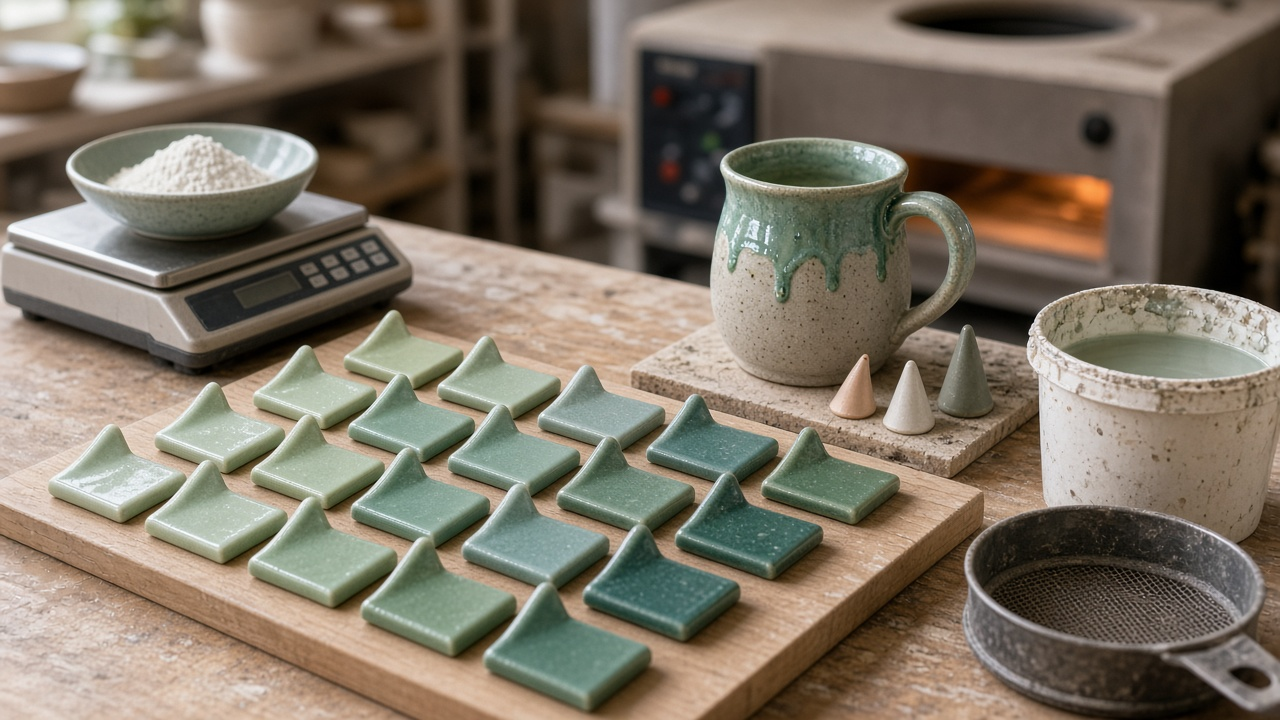
Every studio potter eventually hits the same wall. A glaze that looked perfect starts crazing on mug interiors, or a feldspar in the recipe is suddenly sold out. Guessing at fixes wastes kiln loads. The reliable way is to read the glaze's Unity Molecular Formula in Glazy, change one thing at a time, and prove each change on test tiles. The Cone 6 Glaze Recipe Adjuster Using Glazy UMF: Silica to Alumina Ratio, Crazing Fixes, Discontinued Material Substitutions, Line Blend Test Tiles, and Liner Safety Checks prompt does that reasoning with you: it reads the chemistry, diagnoses the defect, plans substitutions, writes revised recipes, lays out a line blend, and treats food surfaces with appropriate caution.
What the prompt produces
- A reading of the UMF that compares the alkali fluxes with the alkaline earth fluxes, checks boron, and places the glaze on a Stull chart style map.
- A diagnosis that separates chemistry causes from application or firing schedule causes.
- Substitutions for missing materials, with the recalculation step in Glazy and the oxides that will shift.
- Two or three revised recipes that each change one thing, plus what to compare in Glazy before mixing.
- A test plan with a line blend, tile count, labels, witness cones, and a craze test.
- A liner safety section that recommends a lab leach test instead of calling anything food safe.
How to fill the inputs
Recipe is the full recipe in percentages, with each material named as it appears on the bag. Frit numbers and feldspar names matter because similar sounding materials have very different chemistry.
UMFReadout is the formula and calculated expansion you copy from Glazy. The prompt works from these numbers and will not invent oxide values.
Firing covers cone, atmosphere, kiln type, and schedule. Include any hold or slow cool.
ClayBody names the clay and its cone range and absorption. Glaze fit is always a relationship between glaze and body.
Defect describes what you see on fired ware, such as crazing, shivering, pinholing, or running.
MaterialStock lists what you can no longer buy and what is on the shelf now.
FoodContact says whether the glaze will touch food or drink. This changes the safety advice.
Reading the example output
The example fixes a green cone 6 glossy glaze that crazes on mug interiors and uses a feldspar that is sold out:
- The weak spot is found in the formula. Sodium and potassium make up a large share of the flux, and those are the high expansion oxides in this recipe.
- The schedule is cleared. Crazing that shows up within days is a fit problem, so a slow cool will not fix it.
- The right substitute is chosen by chemistry. A potash feldspar replaces the old one. The soda feldspar on the shelf would raise sodium and make crazing worse.
- Each revision changes one thing. Recipe A is the substitution alone, B adds silica and cuts feldspar, and C swaps some calcium and alkali for magnesium using talc.
- The test plan is concrete. A five step line blend plus recipe C, two tiles each, labeled on the back, with cone 5, 6, and 7 witness cones and freezer to boiling water craze cycles.
- The liner gets an honest answer. Copper can leach, and crazing gives liquid more surface to work on, so the prompt suggests a clear liner inside and a lab leach test before selling.
Tips for better results
- Enter your recipe in Glazy first and paste the readout exactly. Small typos in material names change the formula.
- Mix small test batches, around 100 grams, and keep notes on dip time and thickness.
- Fire tests in the same kiln and shelf position you use for production work.
- Keep a test tile library with labels that match your notebook so you can compare results months later.
Mistakes to avoid
- Do not swap materials by name or type alone. Two feldspars can behave very differently.
- Do not change several things at once. If the result improves, you will not know which change helped.
- Do not assume a glaze is food safe because the calculation looks stable. Only lab testing of fired ware can tell you about leaching.
- Do not mix dry materials without a respirator rated for silica dust.
Who it is for
Studio potters, ceramics teachers, community studio technicians, and small production potters who mix their own mid fire glazes and want a methodical way to solve fit problems and material shortages.
Related PromptDig links
Start with the Cone 6 Glaze Recipe Adjuster Using Glazy UMF: Silica to Alumina Ratio, Crazing Fixes, Discontinued Material Substitutions, Line Blend Test Tiles, and Liner Safety Checks prompt and paste your recipe and Glazy readout. For more prompts for makers and artists, Browse more prompts. If you have a studio or craft prompt that saves you test firings, Share a prompt.