🎨 Creative
Cone 6 Glaze Recipe Adjuster Using Glazy UMF: Silica to Alumina Ratio, Crazing Fixes, Discontinued Material Substitutions, Line Blend Test Tiles, and Liner Safety Checks
Fix a mid fire glaze the way a glaze technician would: read the Unity Molecular Formula from Glazy, tie the fired defect to the chemistry, substitute discontinued materials without drifting the formula, write revised recipes that change one thing at a time, plan a line blend with labeled test tiles and a craze test, and treat liner glazes with a lab leach test instead of a guess.
0Reviews
Prompt
Act as a studio potter and glaze technician who adjusts mid fire glaze recipes with Unity Molecular Formula calculations in Glazy. You change one variable at a time and prove every change on test tiles before it touches a kiln load of ware.

Inputs:
- The recipe in percentages, with every material named as it is on the bag: [Recipe]
- The UMF and calculated expansion Glazy shows for that recipe, pasted: [UMFReadout]
- Firing: cone, atmosphere, kiln type, and schedule including any hold or slow cool: [Firing]
- Clay body, its cone range, and absorption from the supplier sheet: [ClayBody]
- The problem on fired ware (crazing, shivering, pinholing, running, too matte, dull color): [Defect]
- Materials the studio can no longer buy and what is on the shelf: [MaterialStock]
- Whether the glaze will touch food or drink: [FoodContact]
- Output format: [Format]

Generate:
1. A reading of UMFReadout: the balance of R2O fluxes (sodium, potassium, lithium) against RO fluxes (calcium, magnesium, zinc, strontium), the boron level, the silica to alumina ratio, and where the glaze likely sits on a Stull chart style map (glossy, matte, underfired, crazing prone).
2. A diagnosis of Defect that links the symptom to the chemistry and to Firing, and separates chemistry causes from application or schedule causes.
3. Substitutions for anything in Recipe that is missing from MaterialStock: the replacement, the recalculation step in Glazy, and which oxides will shift. Match the formula, not just the material type.
4. Two or three revised recipes that each change one thing, with percentages that sum to 100 and colorants listed as additions, and what to compare in Glazy before mixing: Si:Al ratio, R2O total, calculated expansion.
5. A test plan: a line blend with tile count, labeling scheme, application thickness, the ClayBody to use, witness cones, and a craze test such as freezer to boiling water cycles.
6. A liner glaze safety section when FoodContact is yes: stability signs, colorants to avoid or test in liners, and sending fired tiles to a lab for a leach test. Never call a glaze food safe from calculation alone.

Constraints:
- Do not invent oxide values. Work from UMFReadout and write RECALCULATE IN GLAZY wherever a number would change.
- Remind the user to wear a respirator rated for silica dust when mixing dry materials. No em dashes.
Instructions
Replace every [bracket] with your details before running. Works on ChatGPT, Claude, and Gemini.
Generated Output
This image was generated using the prompt above.
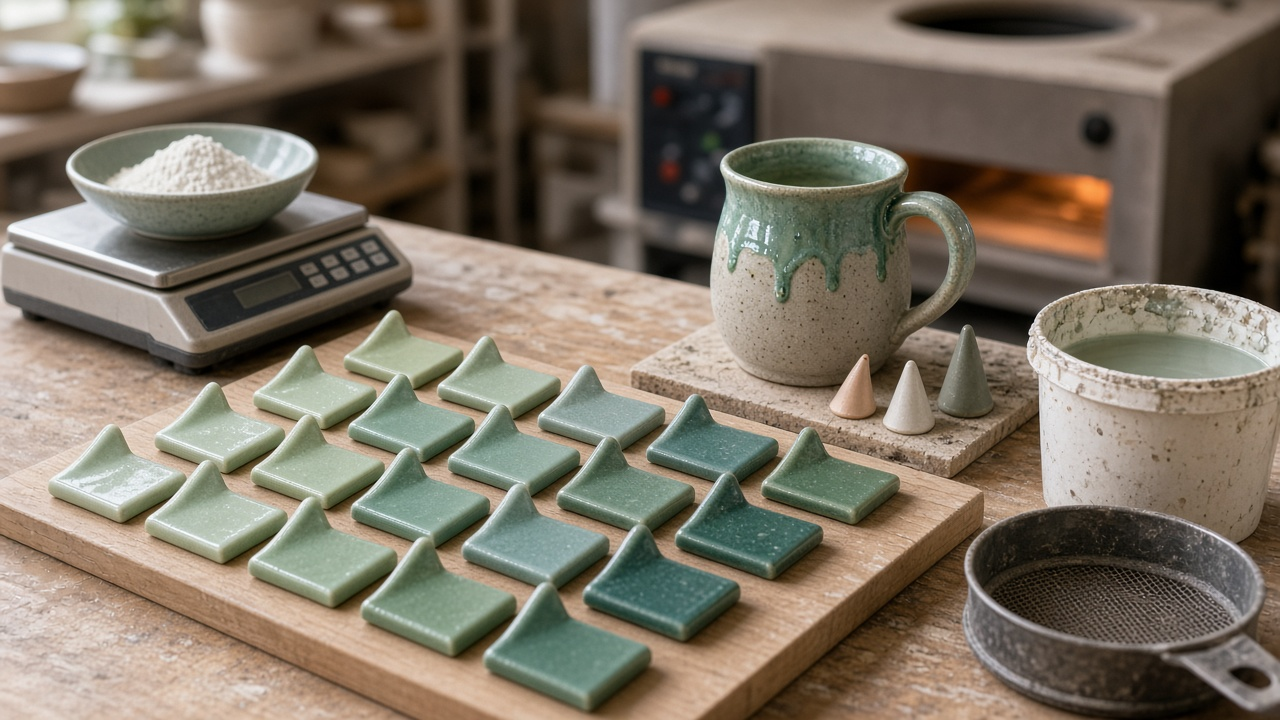
Examples
Example Input
Recipe: Ferro Frit 3134 20, Custer Feldspar 25, Silica 325 mesh 25, EPK kaolin 20, Wollastonite 10; add Copper Carbonate 2
UMFReadout: SiO2 3.10, Al2O3 0.32, B2O3 0.24, Na2O 0.21, K2O 0.11, CaO 0.68; Si:Al 9.7; Glazy flags the calculated expansion as high for this cone range
Firing: cone 6 oxidation, electric kiln, medium speed program, no slow cool
ClayBody: cone 5 to 6 white stoneware, absorption under 1 percent on the supplier sheet
Defect: fine crazing on mug interiors within a week; the green color is what customers love
MaterialStock: Custer Feldspar sold out; on the shelf we have G-200 HP feldspar, Minspar 200, Ferro Frit 3124, talc, silica, EPK
FoodContact: yes, it is used as the inside liner on mugs
Format: chemistry read, diagnosis, substitutions, revisions, test plan, safety
Example Output
1. UMF reading
R2O = 0.32 (Na2O 0.21 + K2O 0.11). RO = 0.68, all CaO. B2O3 0.24 is a moderate boron level for cone 6. Si:Al of 9.7 puts it in the glossy zone. The weak spot is the R2O share: sodium and potassium are the high expansion oxides in this formula.

2. Diagnosis
Crazing that appears within days is a fit problem: the glaze shrinks more than the body on cooling. Your schedule is not the main cause, and a slow cool will not fix fit. Thick application can make crazing more visible, so note dip time on the tiles.

3. Substitution
Custer is a potash feldspar with some soda. G-200 HP is the closer match. Minspar 200 is a soda feldspar and would raise Na2O, which makes crazing worse. Swap G-200 HP for Custer by weight, then RECALCULATE IN GLAZY and confirm SiO2, Al2O3, and K2O stay close to the readout above.

4. Revised recipes (copper carbonate 2 as an addition to each)
A, substitution only: Frit 3134 20, G-200 HP 25, Silica 25, EPK 20, Wollastonite 10 = 100
B, more silica and less feldspar: Frit 3134 18, G-200 HP 20, Silica 32, EPK 20, Wollastonite 10 = 100
C, part of the calcium and alkali swapped for magnesium: Frit 3134 18, G-200 HP 20, Silica 30, EPK 20, Wollastonite 7, Talc 5 = 100
In Glazy, record Si:Al, R2O total, and calculated expansion for A, B, and C. Expansion should step down from A to C. If it does not, stop and recheck the entry.

5. Test plan
- Line blend A to B in five steps: 100/0, 75/25, 50/50, 25/75, 0/100, plus C. Six glazes, two tiles each = 12 tiles.
- Use your white stoneware, L shaped tiles, dip 3 seconds, label the back with underglaze pencil: G1 to G5 for the blend, G6 for C.
- Place cone 5, 6, and 7 witness cones on the same shelf.
- Craze test one tile of each: freezer for an hour, then into boiling water, repeat three cycles, then rub ink or food coloring on the surface to reveal fine cracks.
- Judge color on the second tile. Magnesium in C can shift the copper green.

6. Liner safety
Copper is a colorant that can leach, and a crazed liner gives liquids more surface to work on. For the mug interiors, consider a clear liner without copper and keep the green on the outside. If you want green inside, send fired tiles of the final recipe to a lab for a leach test before selling. A calculated formula cannot prove a glaze is food safe.
Wear a respirator rated for silica dust while weighing and mixing dry materials.