How to Use the Home Espresso Dial-In Coach Prompt to Get a Good Shot From a New Bag in a Few Tries
Dial in a new bag of espresso beans at home in a few shots: compute brew ratio and flow for every shot you pulled, diagnose sour, bitter, and channeling by taste, get exactly one grind or yield change in your grinder's own clicks, fix puck prep, plan the next three shots with a stop rule, and keep a shot log for the bag.
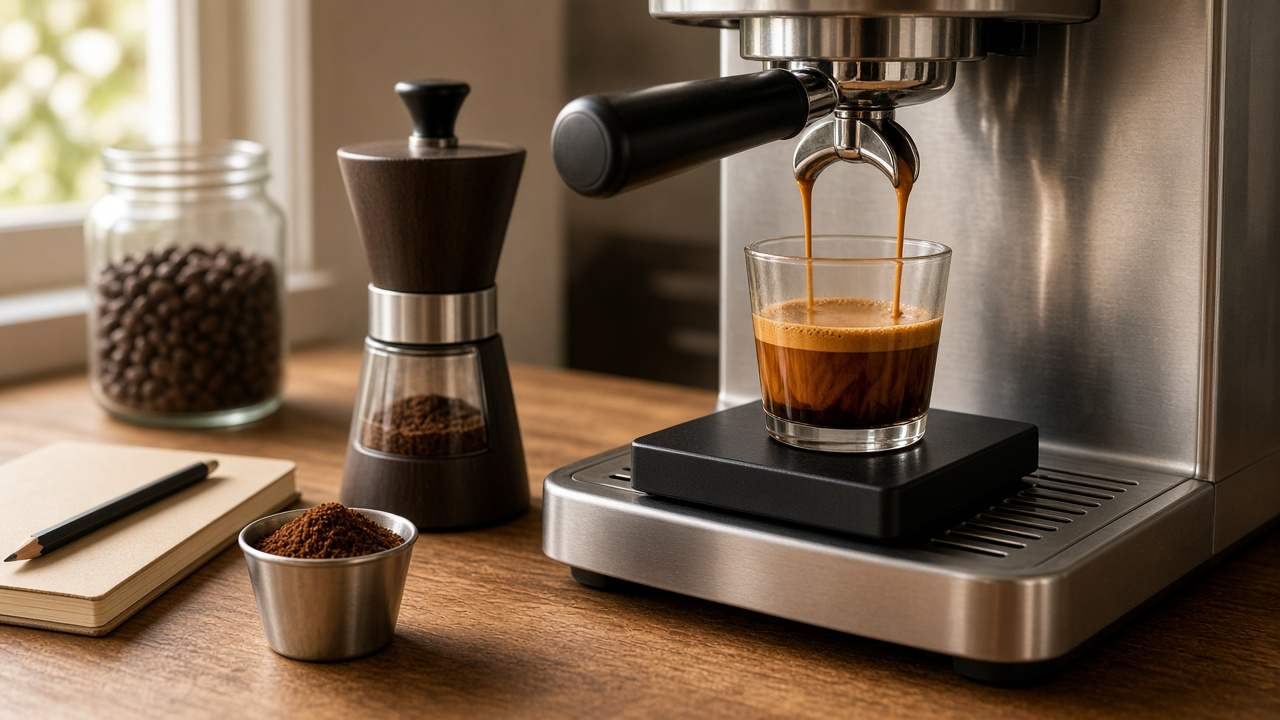
Opening a new bag of beans at home usually starts the same way. The first shot runs fast and tastes sour, so you grind finer, change the dose, and pull a longer shot all at once. Now it tastes bitter and you do not know which change caused it. A cafe barista trainer would slow you down: change one thing, taste, and write it down. The Home Espresso Dial-In Coach: Dose, Yield and Brew Ratio, Shot Time, One Variable Grind Changes by Taste, Puck Prep, and a Shot Log for a New Bag of Beans prompt does exactly that. It reads the shots you already pulled, works out ratio and flow, tells you what the taste means, and gives you one change to make next in your own grinder's clicks.
What the prompt produces
- A starting recipe with a dose matched to your basket, a brew ratio that fits the roast, and a time window treated as a guide rather than a rule.
- A shot by shot diagnosis that calculates brew ratio and flow rate and reads sour, bitter, thin, and harsh notes.
- One recommended change for the next shot, written in your grinder's own units, such as two clicks finer.
- A puck prep check for distribution, tamping, basket headspace, and how long the beans have rested since roasting.
- A milk drink adjustment for when the coffee disappears in a latte or flat white.
- A three shot plan with what taste should trigger each next move, plus a stop rule.
- A shot log template you can keep for the whole bag.
How to fill the inputs
MachineBasket describes your machine and basket. The basket's rated size in grams matters most, along with whether it is pressurized. Pressurized baskets react very differently to grind changes, and the prompt will tell you so.
GrinderSetting is where your grinder sits now and how it adjusts. Stepped clicks, a stepless dial, or numbered marks all work. This is how the prompt turns "finer" into a real move.
BeanInfo covers roast level, how many days since the roast date, origin or blend, and process. Lighter roasts usually want a longer ratio than darker ones.
ShotLog is the most important input. For every shot, give grams in, grams out, seconds, and a few honest words about the taste.
DrinkTarget says whether you drink espresso straight or in milk, and the cup size.
Tools lists what you have, such as a 0.1 gram scale, a timer, a WDT tool, your tamper size, and a puck screen.
Reading the example output
The example dials in a medium light washed Ethiopian coffee on a single boiler machine with an 18 gram basket and a stepped hand grinder:
- The math comes first. Shot one ran at about 1:2.3 in 19 seconds, and shot two at 1:2.0 in 22 seconds. Both tasted sour, which points to under extraction.
- The real clue is in the sprays. Small sprays from the edge of the basket in a bottomless portafilter suggest channeling, so the prompt adds a distribution fix with the WDT tool.
- Only one recipe change is made. The grind moves from 14 clicks to 12 while dose and yield stay the same, so you can see what grind alone does.
- The next shots have clear triggers. If shot three is still sour, go one click finer. If it turns bitter, go back one. Once the time is in range, small yield changes fine tune sweetness.
- There is a stop rule. When a shot tastes balanced, you lock the recipe and stop changing things.
- The weekend flat white gets its own note. A slightly shorter ratio keeps the coffee from getting lost in the milk.
- Unknowns stay unknown. The machine's brew pressure is marked UNKNOWN, with a note that you do not need it to dial in by taste.
Tips for better results
- Weigh every dose and every shot. Volume guesses make the math useless.
- Taste each shot on its own before deciding anything. Write the first word that comes to mind.
- Keep the same cup, the same scale, and the same routine while you dial in.
- When you open the next bag of the same coffee, start from the locked recipe in your log.
Mistakes to avoid
- Do not change grind and yield on the same shot.
- Do not judge a shot only by time. A shot can hit the window and still taste sour.
- Do not keep grinding finer to fix channeling. Fix distribution and tamping first.
- Do not throw out notes from bad shots. They tell you which direction not to go.
Who it is for
New home espresso owners, people who just upgraded their grinder or machine, and anyone who buys different beans every few weeks and wants a calm, repeatable way to get a good shot without wasting half the bag.
Related PromptDig links
Start with the Home Espresso Dial-In Coach: Dose, Yield and Brew Ratio, Shot Time, One Variable Grind Changes by Taste, Puck Prep, and a Shot Log for a New Bag of Beans prompt and paste your last two or three shots. For more prompts for everyday life at home, Browse more prompts. If you have a kitchen or hobby prompt that saves you time and coffee, Share a prompt.