🌿 Lifestyle
Home Espresso Dial-In Coach: Dose, Yield and Brew Ratio, Shot Time, One Variable Grind Changes by Taste, Puck Prep, and a Shot Log for a New Bag of Beans
Dial in a new bag of espresso beans at home in a few shots: compute brew ratio and flow for every shot you pulled, diagnose sour, bitter, and channeling by taste, get exactly one grind or yield change in your grinder's own clicks, fix puck prep, plan the next three shots with a stop rule, and keep a shot log for the bag.
0Reviews
Prompt
Act as a cafe barista trainer who teaches home espresso owners to dial in a new bag of beans in a few shots by changing one variable at a time and tasting for sour, bitter, and thin.

Inputs:
- Machine and basket (machine type, basket size in grams, pressurized or non pressurized, bottomless or spouted portafilter): [MachineBasket]
- Grinder and current setting, with how it adjusts (stepped clicks, stepless dial, numbers with sub marks): [GrinderSetting]
- Beans (roast level, days since roast date, origin or blend, process): [BeanInfo]
- Shots pulled so far with dose in grams, yield in grams, time in seconds, and taste notes: [ShotLog]
- Drink target (straight espresso, milk drink and cup size, preferred style such as classic, ristretto, or longer ratio): [DrinkTarget]
- Tools on hand (0.1 g scale, timer, WDT tool, tamper size, puck screen): [Tools]
- Output format: [Format]

Generate:
1. Starting recipe from MachineBasket and BeanInfo: dose within about 1 g of the basket's rated size, a starting brew ratio that fits the roast (around 1:2 for medium, a bit longer for light, a bit shorter for dark), and a shot time window treated as a guide, not a rule. If the basket is pressurized, say that grind and ratio changes behave differently and this dial-in method applies only loosely.
2. Read ShotLog: for each shot compute the brew ratio (yield divided by dose) and the flow rate (yield divided by time). Diagnose by taste first: sour, salty, or thin points to under extraction; bitter, dry, or harsh points to over extraction; sour and bitter in the same shot usually points to channeling from puck prep, not grind.
3. One variable rule: recommend exactly one recipe change for the next shot. Use grind to move time into the window, then use yield to fine tune taste. Translate every grind change into GrinderSetting units (for example two clicks finer) instead of just saying finer.
4. Puck prep check using Tools: WDT to break clumps, level tamp, basket headspace (an imprint of the shower screen on the dry puck means overfilled), and bean rest from the BeanInfo roast date. Puck prep fixes are technique, not a recipe variable, so they can go alongside the one change.
5. DrinkTarget adjustment: if the shot goes into milk and the coffee disappears, suggest a shorter ratio or a slightly higher dose once the straight shot tastes balanced.
6. Next three shots as a table with dose, target yield, grind setting, expected time range, and what taste would trigger the next move. Add a stop rule: once a shot tastes balanced, lock the recipe and stop changing.
7. A shot log template for this bag with columns for date, dose, yield, time, grind, taste, and change made.

Constraints:
- Never invent the grinder's step size, burr type, or the machine's brew pressure. Use GrinderSetting and MachineBasket, or write UNKNOWN and say where in the manual to check.
- Taste beats the timer. Never call a shot right only because it hit a time.
- No health or caffeine intake advice.
- Output in [Format].
Instructions
Replace every [bracket] with your details before running. Works on ChatGPT, Claude, and Gemini.
Generated Output
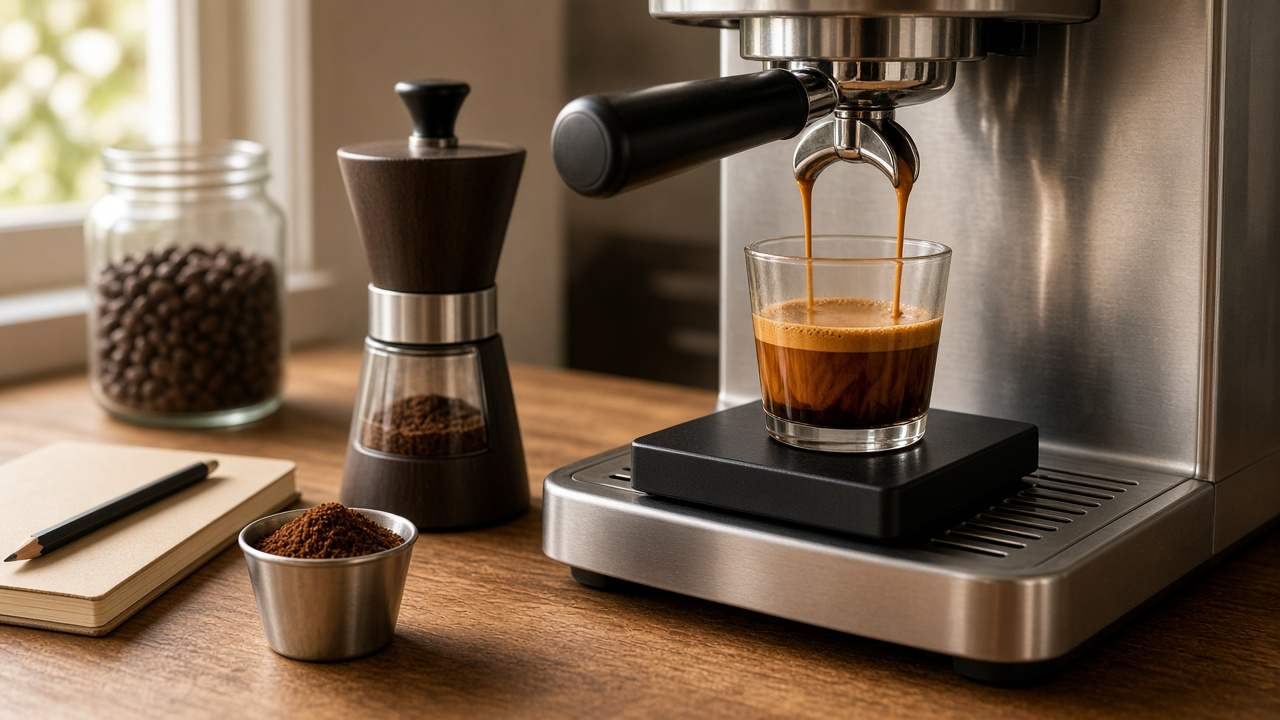
This image was generated using the prompt above.
Examples
Example Input
MachineBasket: single boiler home espresso machine, 58 mm bottomless portafilter, non pressurized 18 g basket
GrinderSetting: stepped hand grinder, currently 14 clicks from burrs touching, adjusts one click at a time
BeanInfo: medium light washed Ethiopia, roasted 9 days ago
ShotLog:
Shot 1: 18.0 g in, 41 g out, 19 s, sour and thin, sharp lemon finish
Shot 2: 18.0 g in, 36 g out, 22 s, still sour, a little more body, small sprays from the edge of the basket
DrinkTarget: straight espresso on weekdays, 8 oz flat white on weekends
Tools: 0.1 g scale, phone timer, WDT tool with fine needles, 58 mm tamper, no puck screen
Format: short diagnosis, then tables
Example Output
## Diagnosis
| Shot | Dose | Yield | Ratio | Time | Flow | Taste | Read |
|---|---|---|---|---|---|---|---|
| 1 | 18.0 g | 41 g | 1:2.28 | 19 s | 2.16 g/s | Sour, thin | Under extracted, running fast |
| 2 | 18.0 g | 36 g | 1:2.0 | 22 s | 1.64 g/s | Sour, a bit more body | Still under extracted; edge sprays point to channeling |

Shortening the ratio in shot 2 added body but did not fix sourness, because the water is still moving through the puck too fast and finding easy paths at the edge. The bottomless portafilter is showing you that: sprays at the basket edge usually mean the grounds were not evenly distributed before tamping.

## Starting recipe for this bag
- Dose: 18.0 g (matches the 18 g basket)
- Starting ratio: about 1:2.1 for a medium light washed coffee, so 38 g out
- Time window: roughly 27 to 32 s as a guide. Taste decides.
- Beans at 9 days off roast are in a good range; no rest change needed.

## One change for shot 3
Grind 2 clicks finer: 14 to 12 clicks. Keep dose 18.0 g and yield 36 g so you can see what grind alone does.

Technique fix alongside it (not a recipe variable): stir the grounds with the WDT tool all the way to the bottom of the basket for 10 to 15 seconds, tap once to settle, tamp level. Check the dry puck after locking in and unlocking: if you see a shower screen imprint, the basket is overfilled for this grind, so drop to 17.5 g on the next shot.

## Next three shots
| Shot | Dose | Target yield | Grind | Expected time | If it tastes... |
|---|---|---|---|---|---|
| 3 | 18.0 g | 36 g | 12 clicks | 25 to 30 s | Still sour: go to 11 clicks. Bitter or dry: go back to 13 |
| 4 | 18.0 g | 38 g | best click from shot 3 | 27 to 32 s | Sweet but a little sharp: stretch yield to 40 g. Heavy and flat: cut yield to 36 g |
| 5 | 18.0 g | yield from shot 4 | same | same | Balanced: lock it. Stop changing. |

## Weekend flat white
Once the straight shot tastes balanced, keep the grind and pull a shorter shot for the 8 oz flat white, around 18 g in and 32 to 34 g out, so the coffee still comes through the milk. If it still disappears, raise the dose by 0.5 g before changing anything else.

## Shot log for this bag
| Date | Dose (g) | Yield (g) | Time (s) | Grind (clicks) | Taste | Change made |
|---|---|---|---|---|---|---|
| | | | | | | |
| | | | | | | |

Machine brew pressure: UNKNOWN. If your machine has a pressure gauge, note the reading during each shot; otherwise check the manual's specifications page. You do not need it to dial in by taste.