How to Use the ACX Audiobook Narration Prep Prompt to Get a Novel Ready for Recording
Prepare a novel for narration before you record a word: a pronunciation guide with sound it out spellings, a character voice sheet with pitch, pace, and accent notes, a chapter by chapter file plan with opening and closing credits and a retail sample pick, a finished hours estimate, and a mastering checklist against the ACX audio submission requirements.
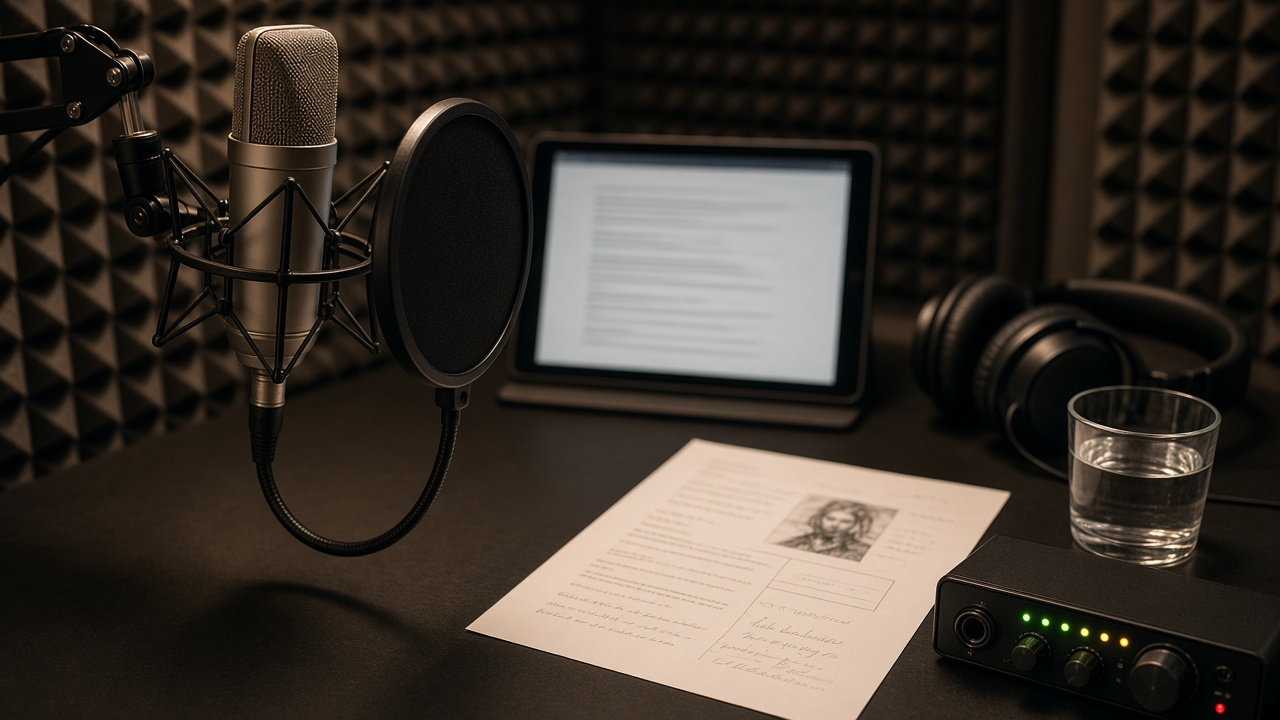
Recording an audiobook is mostly preparation. Narrators who stop mid chapter to look up a place name, or who realize in chapter twenty that two characters sound the same, lose hours to retakes. Then the files have to pass the ACX audio submission requirements for levels, noise, room tone, and format. The ACX Audiobook Narration Prep: Pronunciation Guide, Character Voice Sheet, and Chapter File Plan That Meets ACX Audio Submission Requirements prompt prepares a novel before the first take: a pronunciation guide, a character voice sheet, a file plan with credits, a retail sample pick, a time estimate, and a mastering checklist.
What the prompt produces
- A pronunciation guide with sound it out spellings, sources, and flags for anything to confirm with the author.
- A character voice sheet with pitch, pace, texture, accent notes, and a warm up line for each character.
- A chapter file plan with one chapter or section per file, opening and closing credits, and spoken section headers.
- A retail sample pick of one to five minutes with start and end lines.
- A finished hours estimate and a recording and editing time budget.
- A mastering checklist against the ACX requirements for your recording setup.
How to fill the inputs
BookDetails gives the title, author, narrator, word count, genre, and point of view. Word count drives the time estimate.
CharacterNotes lists each speaking character with age, background, role, and any notes from the author about how they sound. The more specific you are, the more distinct the voices.
PronunciationList includes names, places, foreign words, and invented terms. Do not leave out the ones you think you know. Local place names are often said differently from how they look.
ChapterList covers front matter, part titles, chapters, and back matter so the file plan is complete. RecordingSetup describes your mic, space, editing software, and any noise problems. RightsHolderNotes captures the author's or publisher's preferences, such as accents to avoid or scenes to keep out of the sample.
Reading the example output
The example preps a cozy mystery set on the Maine coast, written and narrated by the author:
- Local names get local sounds. A Maine town that shares its spelling with a French city is flagged, because local usage differs and the author should confirm.
- Similar voices are separated on purpose. A brother and sister share family warmth, but one is slow with long pauses while the other is higher and cuts in quickly.
- The file plan is complete. It includes opening credits, dedication, epigraph, all chapters with headers read aloud, back matter, and closing credits.
- The sample avoids spoilers. It starts in the story, shows the two lead voices, and leaves out a character the author asked to keep hidden.
- The checklist targets the real problem. A fridge hum in the next room threatens the noise floor, so the first step is turning it off and measuring silence.
Tips for better results
- Send the pronunciation guide to the author before recording. One email can save a full chapter of retakes.
- Record a short test with every character voice and listen the next day.
- Check levels on a finished chapter before recording the rest, so problems do not repeat across the whole book.
- Keep the voice sheet open while recording. Characters drift over long sessions.
Mistakes to avoid
- Do not guess pronunciations and present them as fact. Keep the confirm flags until they are resolved.
- Do not push accents into caricature. Light touches usually serve the story better.
- Do not start the retail sample with credits. Listeners want the story.
Who it is for
Author narrators, independent audiobook narrators, small presses producing their own audiobooks, and producers who prep manuscripts for talent.
Related PromptDig links
Open the ACX Audiobook Narration Prep: Pronunciation Guide, Character Voice Sheet, and Chapter File Plan That Meets ACX Audio Submission Requirements prompt and paste your book details and character notes. For more creative writing and production prompts, Browse more prompts. If you have a narration or production prompt you rely on, Share a prompt.