ChatGPT Prompt for Oil Painting: 12 Studio Prompts
12 ChatGPT prompts for oil painting: build a subject, light, palette and brushwork brief, then paste a ready image prompt without naming living artists.
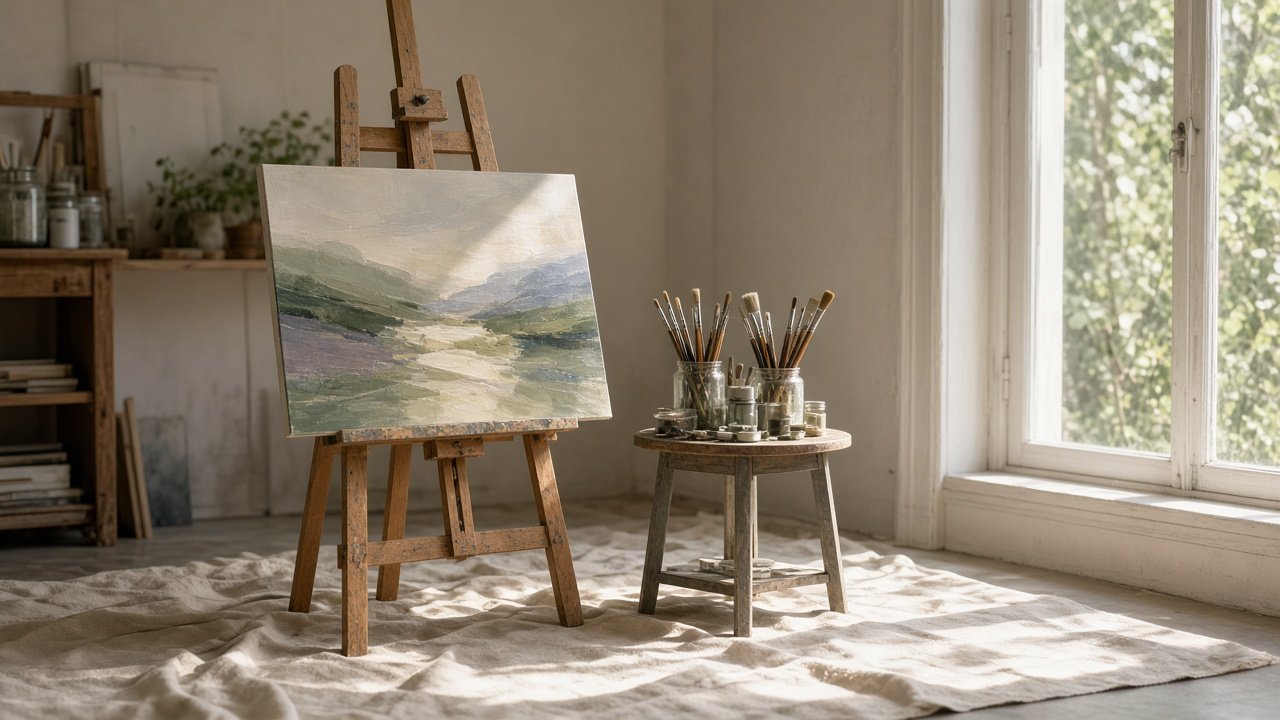
A ChatGPT prompt for oil painting should turn your subject, light and palette into a brief a generator can paint: canvas tooth, brush energy, edges and color mixes. It should not name living artists or copy a famous museum painting. The 12 prompts below cover still life, landscape, portrait studies and revisions.
The flagship is the oil painting prompt for subject, light, palette and brush plan. Paste the scene, window light, pigments and brush notes, and it returns a ready image prompt plus mixes and three variations.
What to put in the brief
Say what is on the table or in the landscape, where the light comes from, which pigments you care about and whether you want thick impasto or soft blends. If you start from a photo, use one you own or have consent to use. Describe brushwork in plain words instead of naming a living painter.
Still life setups
1. Bowl and fruit
Write an oil-painting image prompt for [fruit or objects] in a [bowl or plate] on [surface]. Light from [direction]. Palette: [pigments]. Visible brushstrokes, [aspect ratio]. No text.
2. Limited earth palette
Same subject: [subject]. Rebuild the prompt using only yellow ochre, burnt sienna, burnt umber, ultramarine and titanium white. Keep the light direction.
3. Edge control drill
For this still life prompt: [prompt], mark which edges should be lost and which should stay sharp, then rewrite the prompt.
Landscape and interior
4. Window landscape
Oil painting of [outdoor view] seen through a studio window, [time of day] light, atmospheric perspective, soft distant trees, thicker paint in the foreground sill objects: [objects], [aspect ratio].
5. Alla prima sky study
Write a quick sky study prompt: [cloud type], [sun position], broken color in the clouds, thin washes near the horizon, [palette].
6. Interior corner
Oil study of a quiet room corner with [chair / lamp / plant], single lamp light, long cast shadows, muted walls, [aspect ratio]. No people unless I add them.
Portrait studies from your photo
7. Head study from your photo
I own this description of my photo: [notes]. Write an oil head-study prompt with [light], keep likeness cues I listed, painterly skin, no beauty-filter look.
8. Hands and object
Oil painting prompt of hands holding [object], warm key light from [side], careful finger count, soft background, [palette].
Revise the paint handling
9. Impasto pass
Take this prompt: [prompt]. Increase thick paint only on the highlights and keep shadows thin and transparent.
10. Soft blend pass
Rewrite [prompt] with quieter transitions and fewer visible bristle marks, still reading as oil on canvas.
11. Color remix
Keep the composition of [prompt] but shift the palette to [new pigments]. List 5 mixes before the final prompt.
12. Critique against reference
Here is my reference note: [notes]. Here is the generated description: [desc]. What drifted, and what one change should I make next?
Worked example
A painter pasted three lemons and a pear in a cream bowl, north window light, a seven-pigment palette with a touch of alizarin and a request for hog-bristle impasto on the highlights. The flagship prompt returned a single paste-ready paragraph, seven mixes, a lost-and-found edge plan and three variations that changed only light, crop or brush energy. It kept the rim chip and cool-gray napkin from the reference notes and refused living artist names.
Variations
- From a photo: describe the photo; do not upload faces you do not have rights to use.
- Grisaille first: ask for a value-only underpainting prompt, then a color pass.
- Teaching mode: ask the model to quiz you on warm vs cool shadows before it writes the prompt.
- Other media: switch to watercolor with the watercolor illustration prompt.
Practical tips
- Name pigments and brush behavior instead of living artists.
- One light direction per prompt keeps form readable.
- Compare fruit counts, hand counts and light side against your reference after every generate.
- Iterate with one change at a time: light, crop or brush energy.
- If you paint the study for real, work fat over lean: each layer should hold a little more oil than the one below it so upper layers stay flexible and do not crack.
- Oils dry by oxidation, so thin layers are often touch dry in a few days while thick impasto can take weeks; let underlayers set before you glaze.
- Use odorless mineral spirits sparingly, keep the jar lidded, ventilate the room and never pour solvent down the drain. Dispose of oily rags in a sealed metal can or water, since they can self-heat.
Related prompts
For wet media and style sheets, try the watercolor illustration prompt, the ChatGPT prompt for watercolor illustration, the Ghibli style art prompt, the ChatGPT prompt for Ghibli art, the illustration style sheet prompt, AI prompts for illustration styles, the sketch drawing prompt and the ChatGPT image prompt builder.
Find more art prompts in the Illustration prompts hub, browse every prompt on PromptDig, or share a prompt that helped you.