How to Use the Reverb Used Gear Listing Writer Prompt to Sell a Used Guitar Honestly
Write a Reverb listing for a used guitar or pedal that sets honest expectations: a title in Year Make Model Finish order, a condition grade argued from your notes, a spec block, disclosed mods, a photo shot list, shipping and offer settings, and a pricing check against the Reverb Price Guide.
Selling a used guitar on Reverb is mostly about trust. Buyers cannot pick the instrument up, so they judge it by your photos, your condition grade, and how clearly you describe flaws. A listing graded one step too generously is the fastest way to a return or a bad review. The Reverb Used Gear Listing Writer: Condition Grade, Title, Specs, and Shipping Notes for a Used Electric Guitar prompt turns your inspection notes into a complete, honest listing.
Why structure matters on Reverb
Reverb listings have structured fields for make, model, year, finish, category, and condition. When those fields match your title, the listing lands next to the right comparable sales and shows up for buyers searching that exact model. The description then does the persuading: what shape it is in, what has been changed, what comes with it, and how it ships. A clean, consistent structure answers the questions buyers would otherwise message you about.
What the prompt produces
- A condition grade chosen from Reverb's scale, argued against the next grade up so you can see the reasoning.
- A listing title in Year Make Model Finish order, plus the one detail buyers search for.
- Structured fields that match the title exactly.
- A description in short sections: overview, condition, mods, specs, what is included, and shipping.
- A photo shot list that lines up with every flaw mentioned in the description.
- A pricing check against the Reverb Price Guide, with an offer floor from your own numbers.
- Packing notes for shipping a guitar safely.
How to fill the inputs
GearDetails covers make, model, year, finish, where the serial is, and country of manufacture if you know it. The prompt writes UNKNOWN for anything you leave out rather than inventing a spec. ConditionNotes should come from a real close look under good light: finish, frets, electronics, neck, and hardware. Be specific about where each flaw is and whether it goes through the finish.
Mods lists anything changed from stock and which original parts you still have. Included covers the case or gig bag and any paperwork. ShippingSetup says where you ship from, which regions, and what box you will use. PriceTarget is your hoped for price and the lowest offer you would accept. The prompt never states a market value on its own.
Walking through the example
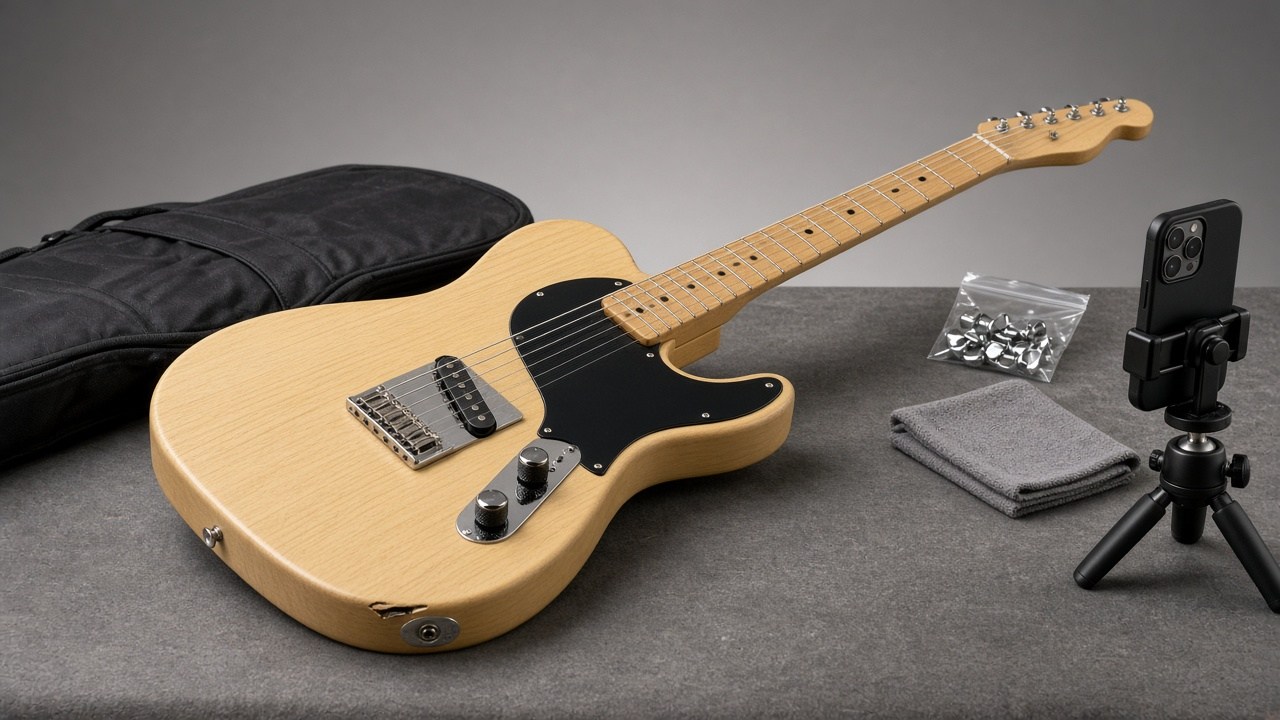
The sample is a 2021 Squier Classic Vibe '50s Telecaster in Butterscotch Blonde with locking tuners. The output shows how a careful seller thinks:
- The grade is Very Good, not Excellent, because one ding goes through the finish to the wood and there is visible pick wear. Strong frets, neck, and electronics keep it above Good.
- The title includes the mod and the gig bag, the two details that set it apart from other listings of the same model.
- Every flaw has a photo number, so buyers can match the words to the pictures.
- The original tuners are included and called out, which tells buyers the guitar can go back to stock.
- Weight is UNKNOWN with an offer to weigh it, instead of a made up number.
- Offers are on with an auto-decline floor, set from the seller's own lowest acceptable price.
Getting the price right
The prompt sends you to the Reverb Price Guide for the same model, a sensible year range, and the same condition. Compare recent sales to your target. If similar instruments in the same condition have been selling below your goal, list closer to what is actually selling instead of waiting for a buyer who may not come. Setting an offer floor saves you from replying to every lowball message.
Mistakes to avoid
- Grading from memory. Inspect the instrument right before you list it.
- Hiding flaws in the last line. Put them in the condition section where buyers look.
- Hype words. Unless you can prove something is rare, leave the word out.
- Mismatched fields and title. If the year in the title and the year field differ, buyers lose trust.
- Weak packing. Loosen the strings, support the neck, pad the headstock, and fill every gap in the box.
Who it is for
This prompt fits musicians clearing out gear, small used gear shops, and anyone who sells instruments on Reverb now and then. The same approach works for pedals, amps, and keyboards once you swap in the right details. Always check Reverb's own condition definitions before you publish.
Related PromptDig links
- Prompt: Reverb Used Gear Listing Writer: Condition Grade, Title, Specs, and Shipping Notes for a Used Electric Guitar
- More marketplace prompts: Browse more prompts
- Have a selling prompt that works for you? Share a prompt