How to Use the Quilt Pattern Writer Prompt to Turn a Block Idea Into a Pattern With Math That Checks Out
Turn a quilt idea into a pattern someone else can cut and sew: block math that separates finished and unfinished sizes, half square triangle cut sizes for the method you choose, a cutting chart by fabric, yardage worked out from strips at your usable width of fabric, backing and binding math, assembly and pressing steps, and a tech edit that checks every count.
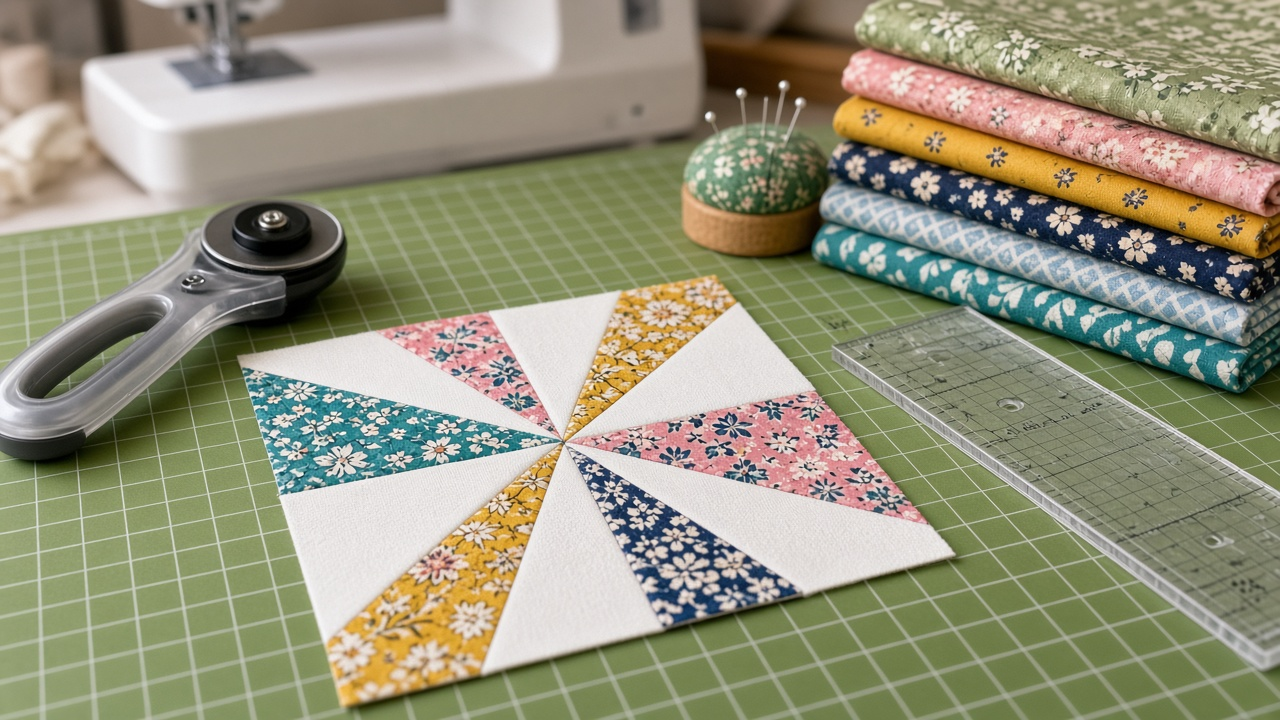
Designing a quilt is the fun part. Writing the pattern so someone else can cut and sew it is where mistakes creep in: a half square triangle cut 1/2 inch too small, a cutting chart that assumes 44 inches of fabric when you only have 40, or a backing that comes up short. The Quilt Pattern Writer: Finished and Unfinished Block Math, Half Square Triangle Cut Sizes, Cutting Charts by Fabric, Yardage at Your Usable Width of Fabric, Backing, Binding, and a Tech Edit Check prompt works through the math step by step, from finished and unfinished sizes to yardage and binding, and then runs a tech edit to make sure every number agrees.
What the prompt produces
- Block math showing finished and unfinished sizes for every unit and the whole block.
- Unit cut sizes for the method you chose, such as half square triangles made 2 at a time or 8 at a time.
- Unit counts per block and per quilt, and total pieces per fabric.
- A cutting chart by fabric with strip widths, strip counts, and pieces per strip.
- Yardage worked out from strips and rounded up to the next 1/4 yard.
- Backing, batting, and binding math, including the cheaper backing layout.
- Assembly and pressing steps written for your buyer's skill level.
- A tech edit that recomputes every total and lists anything that does not match.
How to fill the inputs
QuiltSize gives the layout: blocks across and down, plus any sashing or borders.
BlockDesign names the block and the units inside it. Traditional blocks like pinwheels, nine patches, and flying geese are all public domain.
FinishedBlockSize is the size after the block is sewn into the quilt, not the size you cut.
FabricPlan describes how fabric is used: yardage, fat quarters, a scrappy mix, or one background.
UsableWidth is the width after you trim selvages. This matters more than most people expect, because one less piece per strip can add a quarter yard.
ConstructionMethod picks how units are made, which changes the cut sizes.
SkillLevel shapes how much detail goes into the steps.
Reading the example output
The example writes a pinwheel lap quilt with twenty 12 inch blocks, scrappy prints from fat quarters, and one background:
- Finished and unfinished sizes are separate. Each half square triangle finishes at 6 inches and is 6 1/2 inches before it is sewn in.
- The cut size uses the right rule. Two at a time triangles are cut at the finished size plus 7/8 inch, so the squares are 6 7/8 inches.
- Counts add up. Twenty blocks of four triangles need 80 triangles, which means 40 pairs of print and background squares.
- Fat quarters are planned. Each fat quarter gives four squares, so ten fat quarters cover the quilt.
- Usable width changes the answer. At 42 inches the background needs 1 1/2 yards, but at 40 inches only five squares fit per strip and the answer becomes 1 3/4 yards.
- The backing layout saves fabric. Two 56 inch lengths seamed together use less fabric than two 68 inch lengths.
- The tech edit closes the loop. Quilt size, units, and pieces are all recomputed and confirmed.
Tips for better results
- Measure your usable width on the actual fabric before you cut. Different bolts vary.
- Make one test block before cutting everything, and measure it against the unfinished size.
- If you prefer to trim triangles, ask for oversized cut sizes and a trim size.
- Ask the prompt for alternate sizes, such as a twin or queen layout, with the yardage recalculated.
- Keep the pressing plan. Seams that nest make sharp points much easier.
Mistakes to avoid
- Do not cut from a decimal like 6.875. Use quilter's fractions, which the prompt provides.
- Do not assume every fat quarter is the same size. Check before relying on four squares per piece.
- Do not skip the tech edit when you change the layout. One changed number affects everything downstream.
- Do not copy another designer's published pattern. Write your own instructions, even for a traditional block.
Who it is for
Quilters writing their first pattern, designers selling patterns online or through quilt shops, guild members preparing a group project, and teachers writing class handouts.
Related PromptDig links
Open the Quilt Pattern Writer: Finished and Unfinished Block Math, Half Square Triangle Cut Sizes, Cutting Charts by Fabric, Yardage at Your Usable Width of Fabric, Backing, Binding, and a Tech Edit Check prompt and describe your block and fabric plan. For more creative and craft prompts, Browse more prompts. If you have a sewing, quilting, or craft prompt you trust, Share a prompt.