How to Use the Small Claims Court Prep Packet Prompt to Organize Your Case Before You File
Get a small claims case organized before you file: a firm demand letter with a deadline, a damages worksheet where every dollar maps to a receipt or record, an evidence index, a witness list, a dated timeline, a filing checklist that has you confirm your own state's dollar limit, fees, and service rules, and a 2 minute script for the hearing. Not legal advice.
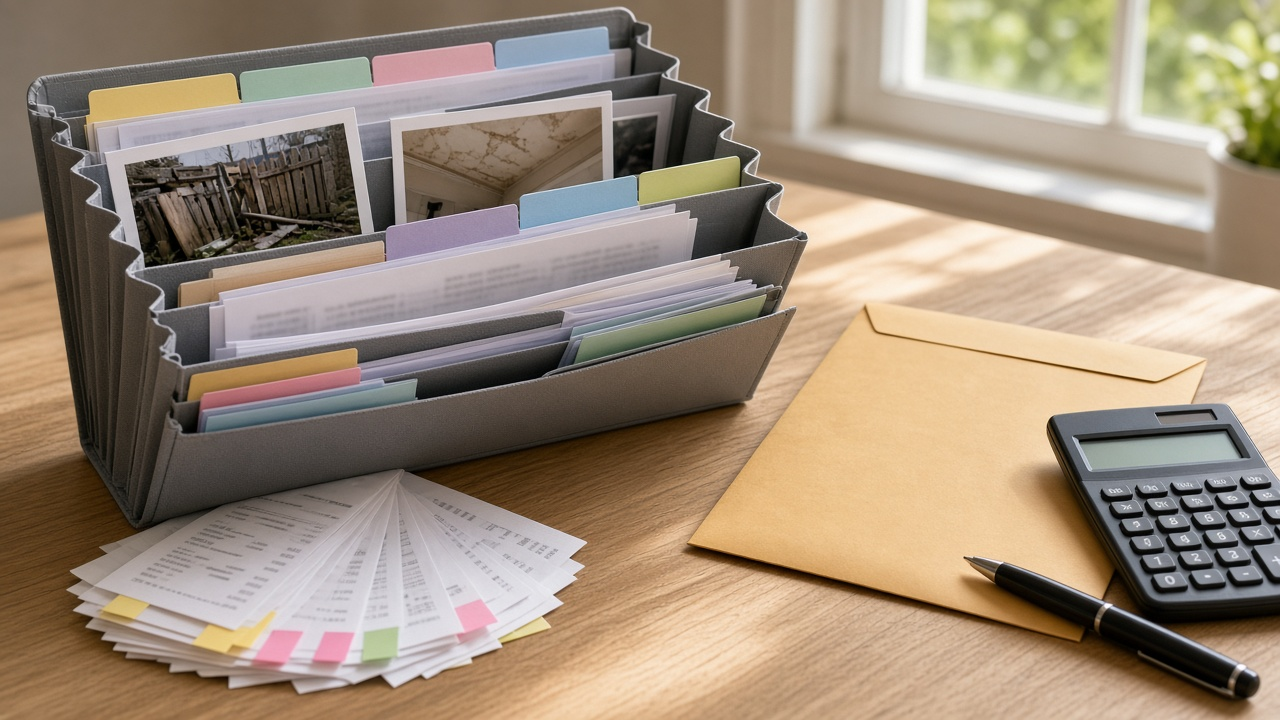
Small claims court is built for people without lawyers, but the hearing is short and the judge sees many cases in one session. The strongest cases usually arrive with a clear timeline, an itemized amount, and a document for every item. The Small Claims Court Case Prep Packet: Demand Letter, Itemized Damages Worksheet Mapped to Receipts, Evidence Index, Witness List, Timeline, Filing Checklist for Your State's Limits and Service Rules, and a 2 Minute Hearing Script prompt builds that packet from your notes: a demand letter, a damages worksheet mapped to receipts, an evidence index, a witness list, a timeline, a filing checklist, and a two minute hearing script. It is not legal advice, and it never states your state's limits or rules as fact unless you supply them with a source.
What the prompt produces
- A timeline with dates, events, and the exhibit that proves each one.
- A damages worksheet listing each item, its amount, how it was calculated, and the exhibit behind it, with weak items marked.
- A demand letter with facts in date order, the amount, a specific deadline, and a statement that you will file if it is not resolved.
- An evidence index in the order you will present it.
- A witness list with what each person saw and whether they will attend.
- A filing checklist that tells you to confirm your state's dollar limit, the filing fee, the correct court, the defendant's legal name, and the service rules.
- A two minute hearing script that walks through your exhibits in order.
- Likely questions from the judge and the other side, with short answers.
How to fill the inputs
DisputeSummary is your side in plain words: what was agreed, what happened, and what you want.
OtherParty needs the full legal name, business type, and address. For a business, look up the exact name in your state's business search. Suing the wrong name can delay or derail a case.
DamagesItems lists each amount you lost with its record, like a cleared check or a replacement contract.
EvidenceList covers contracts, texts, emails, photos, and estimates, with dates.
Witnesses names people who saw something and what they can say.
CourtInfo holds your state and county and anything you already know about limits, fees, and service, with where you found it. If you have not checked yet, say so.
ContactHistory records your attempts to resolve the dispute and any replies.
Reading the example output
The example is a homeowner who paid a landscaping company a deposit for a patio that was never started:
- The timeline links every date to an exhibit, from the signed contract to the last unanswered text.
- The damages total has two lines: the deposit, and the extra cost of hiring another company for the same work.
- The worksheet flags the extra cost as weaker, because it depends on the second contract matching the first, and says to bring both.
- The demand letter is firm and polite, with a fourteen day deadline and no threats beyond filing.
- The filing checklist marks the dollar limit, fee, and service rules as items to confirm with the court, instead of guessing them.
- The defendant is the LLC, using the legal name from the state business search.
- The hearing script is about 250 words, enough for roughly two minutes at a steady pace, and names each exhibit as it goes.
Tips for better results
- Write your timeline before anything else. It exposes missing documents early.
- Bring copies of every exhibit for the judge and the other side, as your court requires.
- Practice the hearing script with a timer, and stop when the judge asks a question.
- Keep proof that you sent the demand letter, such as tracking.
- Call or visit the clerk's office with your checklist. Clerks cannot give legal advice, but they can explain procedures.
Mistakes to avoid
- Do not add penalties or interest unless a law or your contract allows them, and you can cite it.
- Do not include insults or accusations in the demand letter.
- Do not assume your state's dollar limit or service rules. Confirm them.
- Do not overload the judge with every text message. Pick the ones that prove each point.
Who it is for
Consumers, tenants, homeowners, and small business owners preparing to file or defend a small claims case on their own, and the friends or relatives helping them get organized.
Related PromptDig links
Open the Small Claims Court Case Prep Packet: Demand Letter, Itemized Damages Worksheet Mapped to Receipts, Evidence Index, Witness List, Timeline, Filing Checklist for Your State's Limits and Service Rules, and a 2 Minute Hearing Script prompt and paste your timeline notes. For more practical prompts, Browse more prompts. If you have a self help prompt that made a hard task easier, Share a prompt.