How to Use the Home Pressure Canning Batch Planner Prompt to Plan a Safe Canning Day
Plan a safe home pressure canning day for low acid vegetables using only tested USDA processes: pack style, headspace, process time by jar size, gauge pressure adjusted for your altitude and canner type, a step by step canner run sheet with venting and cool down, a refusal list for untested recipes, and a jar seal log for the pantry.
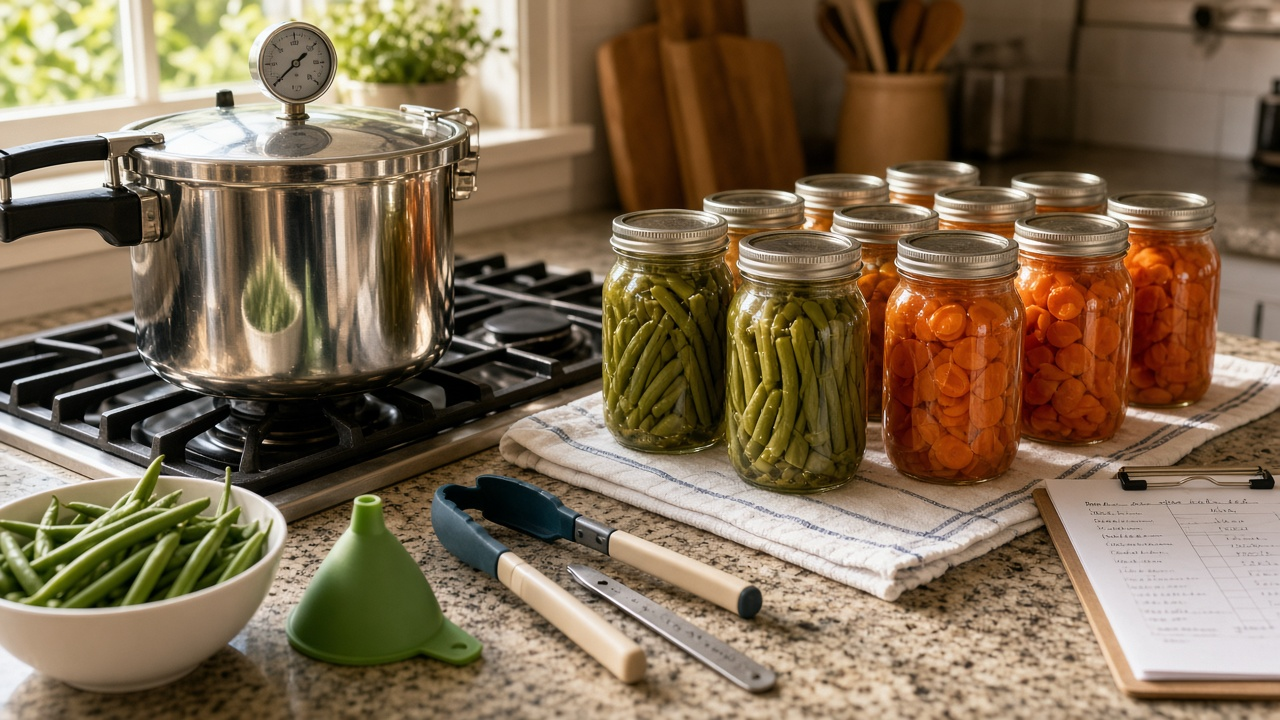
Pressure canning is the only safe home method for low acid foods like green beans, carrots, and corn. It is also a hobby full of inherited advice, some of it unsafe: water bath carrots, a little bacon in the beans, or pumpkin butter in jars on the shelf. The safe path is to follow tested processes from the USDA Complete Guide to Home Canning or extension publications based on it. The Home Pressure Canning Batch Planner: USDA Tested Process Times, Altitude Pressure Adjustments, Headspace, and a Jar Seal Log prompt plans your canning day from those tested processes, adjusts pressure for your altitude and canner type, and says no clearly when a recipe has no tested process.
What the prompt produces
- A safety screen that approves foods with a tested process and refuses changes that are not tested, each with a safe alternative.
- A process table with pack style, headspace, process time by jar size, and gauge pressure for your altitude.
- A load plan for the day.
- A canner run sheet covering packing, venting, timing, cool down, and opening.
- An equipment check for the gauge, gasket, and vent.
- A jar seal log for the pantry, plus guidance for unsealed jars and spoilage signs.
How to fill the inputs
Produce lists what you want to can and roughly how much. JarSizes lists the jars you have. Process times depend on jar size, so include every size you plan to use.
CannerType is especially important. A dial gauge canner and a weighted gauge canner use different pressures at the same altitude, and dial gauges should be tested for accuracy each year. Include the date of the last test.
Altitude is your elevation in feet. Water boils at a lower temperature as altitude rises, so pressure must go up to compensate.
RecipeChanges is where you list any family twists or shortcuts. The prompt checks each against tested guidance. CanningDay tells it how much time and how many canner loads you have.
Reading the example output
The example plans green beans and carrots at 3,400 feet with a dial gauge canner:
- Three requests are refused. Pumpkin butter has no tested home canning process, so the prompt suggests canning cubes or freezing. Bacon in the beans changes the tested recipe, so it suggests adding bacon when serving. Carrots in a water bath are low acid, so pressure canning is required.
- Pressure matches altitude and canner. At 3,400 feet a dial gauge canner runs at 12 pounds, and the table notes that a weighted gauge canner would use 15.
- Times come from the tested process. Pints of green beans process for 20 minutes and pints of carrots for 25, both with 1 inch headspace.
- One food per load. Mixing would force the beans to run at the carrot time and overcook them.
- The run sheet includes the steps people skip. It covers ten minutes of venting, restarting the time if pressure drops, and letting pressure fall on its own.
Tips for better results
- Get your dial gauge tested before canning season. Many county extension offices offer testing.
- Read your canner manual alongside the run sheet. Water levels and venting details vary by model.
- Label every jar with food, date, and load number so the seal log matches the shelf.
- Prepare everything before you start the first load. Pressure canning days run long.
Mistakes to avoid
- Do not adjust tested recipes by adding fat, flour, or puree.
- Do not start timing before the canner reaches full pressure.
- Do not taste food from a jar with a bulging lid, leaks, mold, or an off smell. Discard it.
- Do not treat this as a replacement for the USDA Guide. It is a planning aid built on it.
Who it is for
Home gardeners, new canners who just bought a pressure canner, experienced canners at higher altitudes, and anyone updating family recipes to tested methods.
Related PromptDig links
Open the Home Pressure Canning Batch Planner: USDA Tested Process Times, Altitude Pressure Adjustments, Headspace, and a Jar Seal Log prompt and enter your produce, jars, canner, and altitude. For more home and lifestyle prompts, Browse more prompts. If you have a kitchen planning prompt that works, Share a prompt.