How to Use the Brewfather Recipe Build Sheet Prompt for a BJCP Style Homebrew
Plan an all grain homebrew in Brewfather against the BJCP style ranges you paste in: equipment profile settings, grain bill, hop schedule, water salt additions from your water report, mash steps, a fermentation profile, and a brew day checklist.
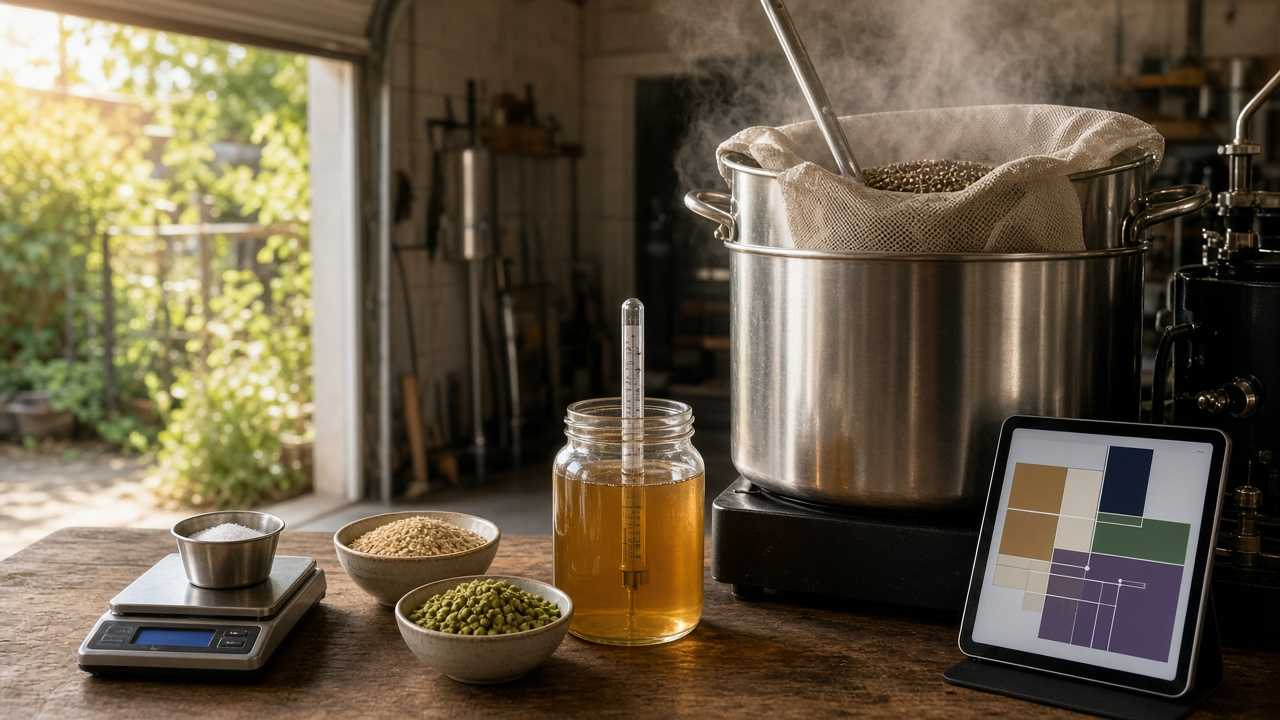
Brewfather does a lot of the math in homebrewing for you, but it still needs a sensible recipe to start from. Newer brewers often open a blank recipe, add grains until the gravity looks right, and end up with a beer that is off style, oddly bitter, or brewed with water that fights the hops. The Brewfather Recipe Build Sheet for a BJCP Style Homebrew: Grain Bill, Water Additions, Mash Steps, and Fermentation Profile prompt plans the whole recipe against the style ranges you choose and shows the arithmetic so you can check it.
Why plan before you open Brewfather
Brewfather is excellent at calculating gravity, bitterness, color, and water chemistry, but it calculates whatever you enter. A build sheet gives you a starting point that already fits the style: grain percentages that make sense, a hop schedule with a purpose for each addition, water salts matched to your report, and a fermentation plan your equipment can hold. You enter it, then let Brewfather fine tune the numbers.
What the prompt produces
- Equipment profile values to enter first, since every recipe number depends on them.
- A grain bill with weights and percentages, plus estimated original gravity and color with the arithmetic shown.
- A hop schedule by addition type, with an estimated bitterness for the boil additions and the formula named.
- Water additions of gypsum and calcium chloride calculated from your water report, with the resulting ion levels.
- A mash profile written as Brewfather steps, with the reason for the temperature.
- A fermentation profile with temperatures and days, including dry hop and cold crash timing, plus estimated final gravity and alcohol.
- A brew day log of the readings to record in your batch.
How to fill the inputs
StyleTarget should include the style and the ranges you are designing to, copied from your own BJCP guidelines. The prompt uses only the ranges you provide, so it never quotes style numbers from memory. Equipment covers your system type, batch size into the fermenter, boil time, boil off rate, and the brewhouse efficiency you have actually measured.
Ingredients lists what you have or can buy, and the prompt marks any substitution clearly. WaterReport gives your calcium, magnesium, sodium, chloride, sulfate, and bicarbonate. YeastPlan names the yeast and its listed attenuation. FermControl says whether you can hold a temperature, which shapes the fermentation steps.
Walking through the example
The sample is an American Pale Ale brewed in a bag, 23 liters into the fermenter at 72 percent efficiency, with a clean American ale dry yeast and a chest freezer for temperature control. The output shows the reasoning a mentor would share:
- The grain bill is simple: mostly pale malt, a little Munich, and a little crystal, giving an estimated gravity near the middle of the range.
- The gravity arithmetic is written out, so you can see how efficiency and batch size drive the number.
- Bitterness comes mostly from one clean bittering hop, with late Cascade, a whirlpool, and a Centennial dry hop for aroma.
- Water leans toward sulfate to make the hops crisp, with salt amounts and resulting ions listed.
- The mash is a single rest chosen to keep the beer fairly dry.
- Fermentation starts cool, then rises, with the dry hop near the end and a short cold crash.
- Every number is labeled as an estimate, and the prompt tells you to confirm in Brewfather's own tools.
Use your measurements
The last section is a brew day log. Record mash pH, pre-boil volume and gravity, post-boil volume, and original gravity, then enter them in your Brewfather batch. Your measured efficiency becomes more accurate over time, and the next recipe the prompt builds for you starts from better numbers.
Mistakes to avoid
- Skipping the equipment profile. Recipes scaled to the wrong efficiency miss their targets.
- Adding water salts without a report. Guessing chemistry can make things worse.
- Dry hopping too early. Wait until fermentation is nearly done.
- Trusting estimates over readings. Measure and log.
Who it is for
This prompt fits newer all grain brewers, club mentors helping members, and anyone moving from extract kits to their own recipes in Brewfather. Please brew and enjoy responsibly, and follow local rules for homebrewing.
Related PromptDig links
- Prompt: Brewfather Recipe Build Sheet for a BJCP Style Homebrew: Grain Bill, Water Additions, Mash Steps, and Fermentation Profile
- More lifestyle prompts: Browse more prompts
- Have a hobby prompt worth sharing? Share a prompt