How to Use the Backyard Beekeeper Varroa Mite Plan Prompt to Monitor and Treat Your Hives on Schedule
Build a season by season varroa plan for a few backyard hives: when and how to run an alcohol wash or sugar roll, how to convert the count to mites per 100 bees, which treatment fits the current brood status, temperature, and honey supers according to the product label, how to rotate modes of action, and a simple record log so every hive has a sample and treatment history.
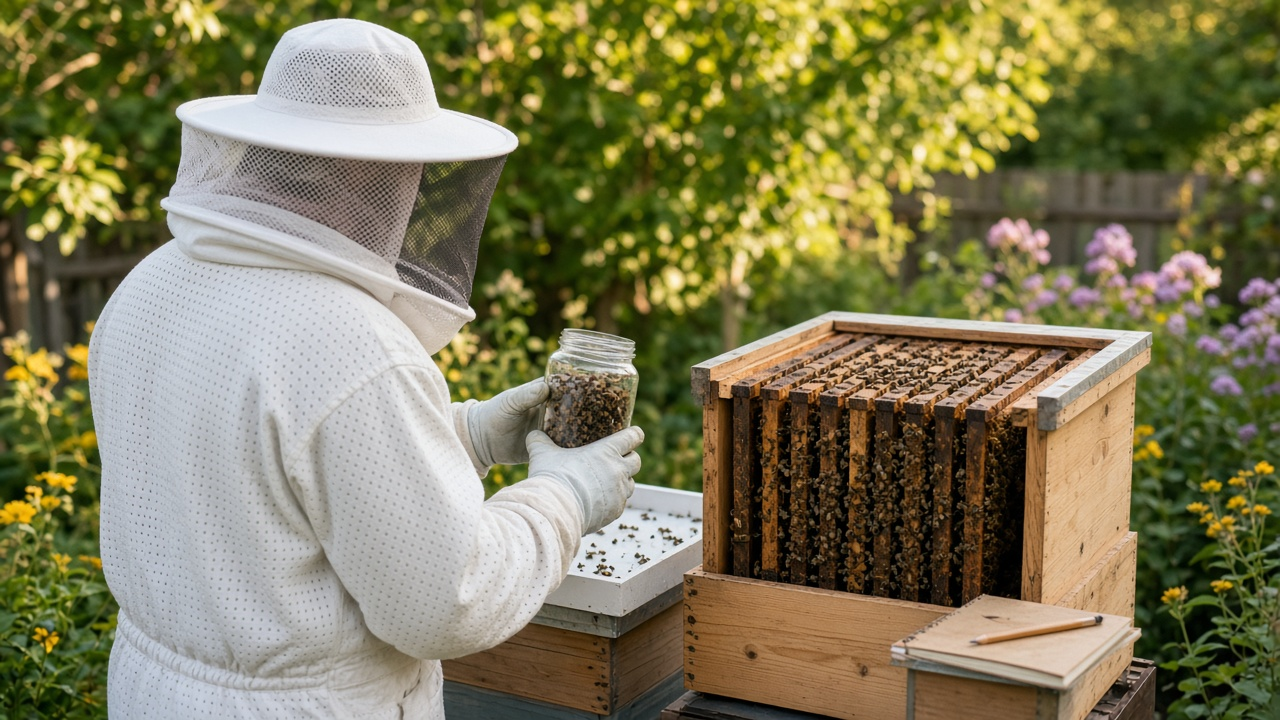
Varroa mites are the problem every beekeeper has to manage, and new beekeepers often find out too late that a hive which looked busy in August had a serious mite load. The answer is regular counting, a clear action threshold, and a treatment choice that fits the season, the brood, the weather, and whether honey supers are on. The Backyard Beekeeper Varroa Mite Plan: Alcohol Wash Sampling, Mites per 100 Bees, Label Directed Treatment Choice by Season and Temperature, and a Hive Record Log prompt builds that plan for your own hives. It converts your counts to mites per 100 bees, compares them with the threshold you follow, checks which of your treatments fit current conditions according to their labels, and gives you a dated plan and a record log.
What the prompt produces
- Sampling steps for an alcohol wash or sugar roll, with the math that converts each count to mites per 100 bees.
- Hive by hive status labeled monitor, treat soon, or treat now, based on your threshold.
- A treatment fit table that checks each product you own against brood status, temperature, and supers, with label rules flagged for you to confirm.
- A rotation note that groups products by active ingredient so you avoid relying on the same mode of action.
- An eight week plan with sample dates, treatment windows, and a follow up wash.
- A safety and equipment list based on what the labels require.
- A hive record log template with columns for every sample and treatment.
How to fill the inputs
HiveList describes each hive: type, strength, and queen status. A recent split or a new queen changes the picture, because a brood break lowers mite reproduction.
ClimateWindow gives your location and expected daytime highs and lows. Several treatments have temperature limits on their labels.
BroodStatus says whether hives have heavy brood, shrinking brood, or almost none. Some treatments reach mites under cappings and some only reach mites on adult bees.
HoneySupers tells the prompt whether supers are on and when you plan to harvest. Label rules about supers are strict.
MiteCounts lists recent counts, the method used, and how many bees you sampled. Include every hive, even the ones that look fine.
TreatmentOptions lists what you own or will buy and what you used in the past year, which helps with rotation.
ActionThreshold is the number you follow and where it comes from, such as your club, your extension service, or a published varroa guide. The prompt uses your threshold rather than inventing one.
Reading the example output
The example covers three backyard hives in early September:
- The math is shown. Each wash count is divided by the bees sampled and multiplied by 100, so you can check it yourself.
- Only one hive needs treatment now. The strongest hive meets the threshold, while the other two are scheduled for a retest.
- The fit table respects the label. Each product's temperature range and supers rules are marked for confirmation on the package.
- Rotation is planned. Since one product was used last fall, a different class is recommended now, with another saved for the broodless window in late fall.
- The plan includes a follow up. A wash after treatment confirms whether the count actually dropped.
Tips for better results
- Sample from a brood frame with nurse bees, and always confirm the queen is not in your scoop.
- Wash every hive on the same day so you can compare them fairly.
- Write the lot number of each treatment in your log.
- Check the weather forecast before starting any temperature sensitive treatment.
Mistakes to avoid
- Do not treat by the calendar alone without counting first and after.
- Do not use homemade mixes or off label doses. The label is the legal standard for pesticide use.
- Do not put supers back on until the label says it is safe.
- Do not skip protective gear. Some treatments require a respirator and acid resistant gloves.
Who it is for
First and second year beekeepers, hobbyists with a few backyard hives, club mentors who want a consistent plan to share, and anyone who lost a colony to mites and wants a better system next season.
Related PromptDig links
Start with the Backyard Beekeeper Varroa Mite Plan: Alcohol Wash Sampling, Mites per 100 Bees, Label Directed Treatment Choice by Season and Temperature, and a Hive Record Log prompt and paste your latest counts and the threshold you follow. To find more prompts for hobbies and home projects, Browse more prompts. If you have a seasonal planning prompt that keeps your hives healthy, Share a prompt.