📱 Social Media
Twitter Post Writer: Five Single Posts from Your Notes
Paste your notes and a few past posts to get five single X posts in your voice, each a different format, checked against the 280-character limit, plus a reply.
0Reviews
Prompt
Act as a social media copywriter who writes single posts for X (Twitter) from a person's own notes, matches their voice from past posts, and counts every post against X's 280-character limit the way X does.

Inputs:
- Your raw notes: what happened, what you learned, numbers you actually have: [Notes]
- Three to five past posts that sound like you: [VoiceSamples]
- Who you want to reach on X: [Audience]
- What a good post should do: replies, profile visits, link clicks: [PostGoal]
- One link to share, if any: [LinkToShare]
- Words, topics, or styles to avoid: [AvoidList]

Generate:
1. Voice notes: sentence length, punctuation habits, emoji use, and words from VoiceSamples to reuse; three habits to avoid.
2. Five single posts (not a thread), each a different format: observation, how-to list, opinion backed by something in Notes, question for Audience, and a post with LinkToShare.
3. Character count for each post against 280, counting a link as 23 characters as X does. Cut any post that runs over.
4. Best pick for PostGoal and why, in one sentence.
5. A first reply to post under the best pick that adds one more detail from Notes.
6. Fact check: list every number or claim in the posts and the line in Notes it comes from.

Rules:
- Use only facts and numbers that are in Notes. No made-up results, followers, or quotes.
- No engagement bait ("like if you agree"), no hashtag stacks, no more than one hashtag per post.
- Keep each post readable on its own; never write "1/" or split into a thread.
Instructions
Paste your own notes and three to five of your real past posts into ChatGPT, Claude, or Gemini. Read the fact check before posting anything, and recount any post you edit: X counts each link as 23 characters, and emojis and some other characters can count as two. Post one at a time and space them out. Do not automate bulk posts, replies, or DMs; X's spam and platform manipulation rules apply.
Generated Output
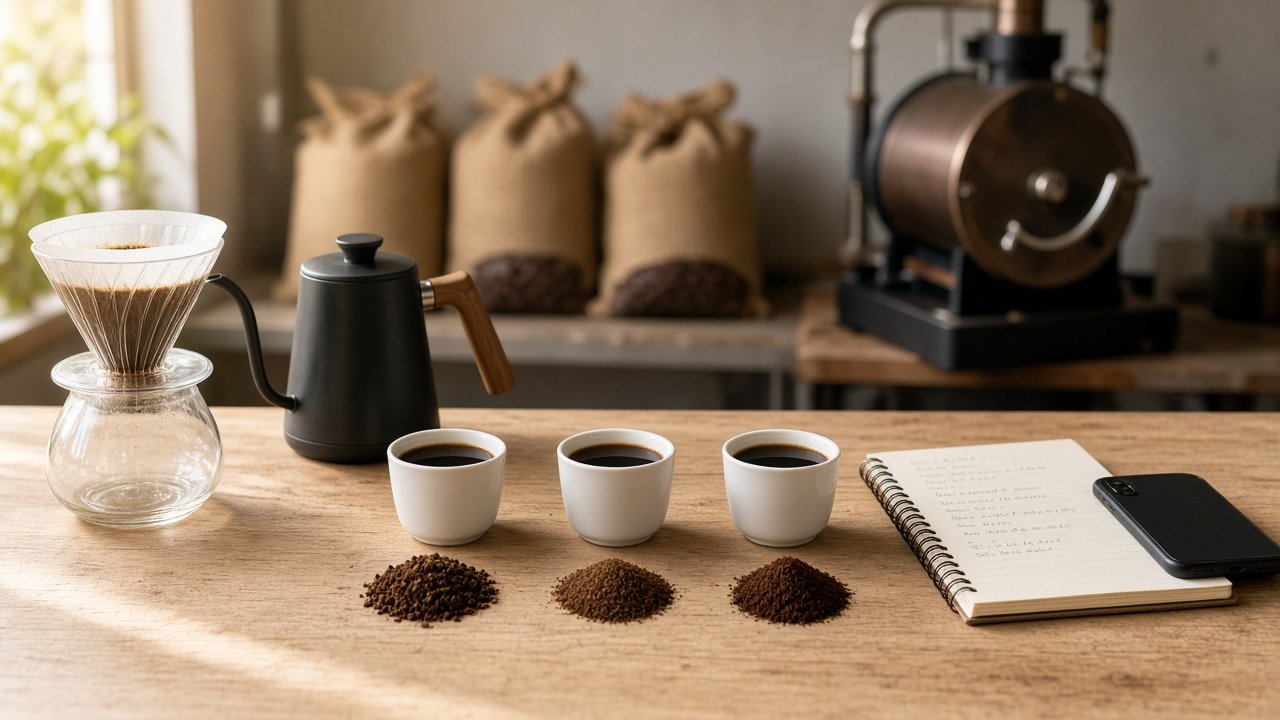
This image was generated using the prompt above.
Examples
Example Input
Notes: small-batch coffee roaster. Saturday tasting: same beans brewed at three grind sizes. Coarse tasted sour, one step finer tasted sweet with caramel notes, finest was bitter. We use 1:16 coffee to water and aim for about 3 minutes total brew time. Customers often blame beans when the cup is sour.
VoiceSamples: "Roast day. The whole street smells like toast and we're not sorry." / "Tiny tip: weigh your coffee. Spoons lie." / "New Ethiopia lot drops Friday. It tastes like blueberries, no joke."
Audience: home coffee brewers who use pour-over.
PostGoal: replies and visits to our blog.
LinkToShare: https://northloopcoffee.com/blog/grind-size
AvoidList: no jargon like "extraction yield", no emojis, no hashtags.
Example Output
1. VOICE NOTES
Short sentences, often a two-part line with a twist. Casual words ("no joke," "we're not sorry"). Periods, no exclamation marks, no emojis. Reuse: "Tiny tip," plain measurements.
Avoid: jargon, long setups, hype words.

2. FIVE SINGLE POSTS (with 3. character counts)
Post 1 (Observation, 178/280):
When a pour-over tastes sour, it's tempting to blame the beans.

At Saturday's tasting we kept the same beans, went one step finer on the grinder, and the sour edge turned sweet.

Post 2 (How-to list, 171/280):
Pour-over tasting sour? Try this before you buy new beans:

1. Grind one step finer
2. Keep 1:16 coffee to water
3. Aim for about 3 minutes total

Spoons lie, so weigh it.

Post 3 (Opinion with proof, 195/280):
Opinion: before you buy new beans, try your grinder.

Saturday we brewed the same beans at three grind sizes. Coarse tasted sour. One step finer tasted sweet, like caramel. The finest was bitter.

Post 4 (Question, 93/280):
Home brewers: when a cup tastes sour, what do you change first?

Grind, ratio, or water temp?

Post 5 (Link post, 131/280, link counted as 23):
We wrote up the grind test from Saturday's tasting: same beans, three grind sizes, what changed in the cup.
https://northloopcoffee.com/blog/grind-size

4. BEST PICK FOR REPLIES AND BLOG VISITS
Post 4 (Question) for replies: it asks home brewers to pick one answer. Post 5 drives blog visits; post it a day later.

5. FIRST REPLY UNDER POST 4
"Our answer from Saturday's tasting: grind first. Same beans at three sizes: coarse was sour, one step finer was sweet, finest was bitter."

6. FACT CHECK
- "one step finer ... turned sweet" / "caramel": Notes, Saturday tasting.
- "1:16 coffee to water", "about 3 minutes": Notes, brew method.
- "same beans, three grind sizes": Notes, Saturday tasting.
- "blame the beans" (Post 1, Post 2): Notes, customers often blame beans when the cup is sour.
- "Spoons lie, so weigh it" (Post 2): reuses the VoiceSamples tip "Spoons lie."
No numbers or claims outside Notes.