🔬 Research
NSF Annual Project Report Writer for Research.gov: Accomplishments by Goal, Significant Results, Training and Dissemination, Products and Public Access Check, Participants Over One Person Month, Impacts, and Changes or Problems
Draft an NSF annual project report from a PI's notes, section by section as Research.gov asks for it: goals and what was done under each, significant results without overclaiming, training and dissemination, products with a public access check, participants and partners, impacts written for the right audience, changes or problems, and a submission checklist that keeps future funding from being held up.
0Reviews
Prompt
Act as a research development officer who helps NSF principal investigators write annual project reports in Research.gov, knows what program officers skim for, and keeps every claim traceable to the PI's own notes.

Inputs:
- Award basics: award number, title, directorate or program, reporting period, and whether this is year 1, 2, or later: [AwardBasics]
- Major goals exactly as written in the proposal or last report: [ProjectGoals]
- What the team did this period: experiments, fieldwork, analyses, software, with dates and who did it: [ActivityNotes]
- Results and products: papers (with status and whether deposited in the NSF public access repository), talks, data sets, code, theses: [ProductsList]
- People: names, roles, institutions, and roughly how many person months each worked; partner organizations: [ParticipantsList]
- Broader impacts activities, students trained, outreach, and any changes, delays, or spending shifts: [ImpactsAndChanges]
- Output format: [Format]

Generate:
1. Accomplishments: restate each item in ProjectGoals, then under each goal write major activities, specific objectives, significant results, and key outcomes from ActivityNotes. Mark a goal "no activity this period" rather than inventing progress.
2. Significant results written for a scientist outside the subfield: what was found, how sure the team is, and what it means for the next period. Separate preliminary findings from published ones.
3. Training and professional development: who was mentored, what skills, and what they did, from ParticipantsList and ImpactsAndChanges.
4. Dissemination: talks, workshops, outreach, and data or code releases with venues and dates.
5. Plans for the next reporting period, one short paragraph per goal.
6. Products table from ProductsList: type, citation or name, status, and a public access column. Flag every journal article or juried paper not yet deposited so it can be added before submitting.
7. Participants table: name, role, nearest person month, and contribution; include only people who worked at least one person month, and list partner organizations with the type of partnership.
8. Impacts written separately for the principal discipline, other disciplines, human resources, infrastructure, and society, leaving "nothing to report" where true.
9. Changes or problems: changes in approach, delays and the plan to resolve them, and expenditure shifts, from ImpactsAndChanges.
10. Submission checklist: due date reminder (annual reports are generally due 90 days before the end of the budget period; confirm in Research.gov), co-PI review, and the note that an overdue report can delay funding actions.

Constraints:
- Never invent results, citations, DOIs, or people; use [PI to add].
- Past tense for completed work, plain language, no em dashes.
Instructions
Replace every [bracket] with your details before running. Works on ChatGPT, Claude, and Gemini.
Generated Output
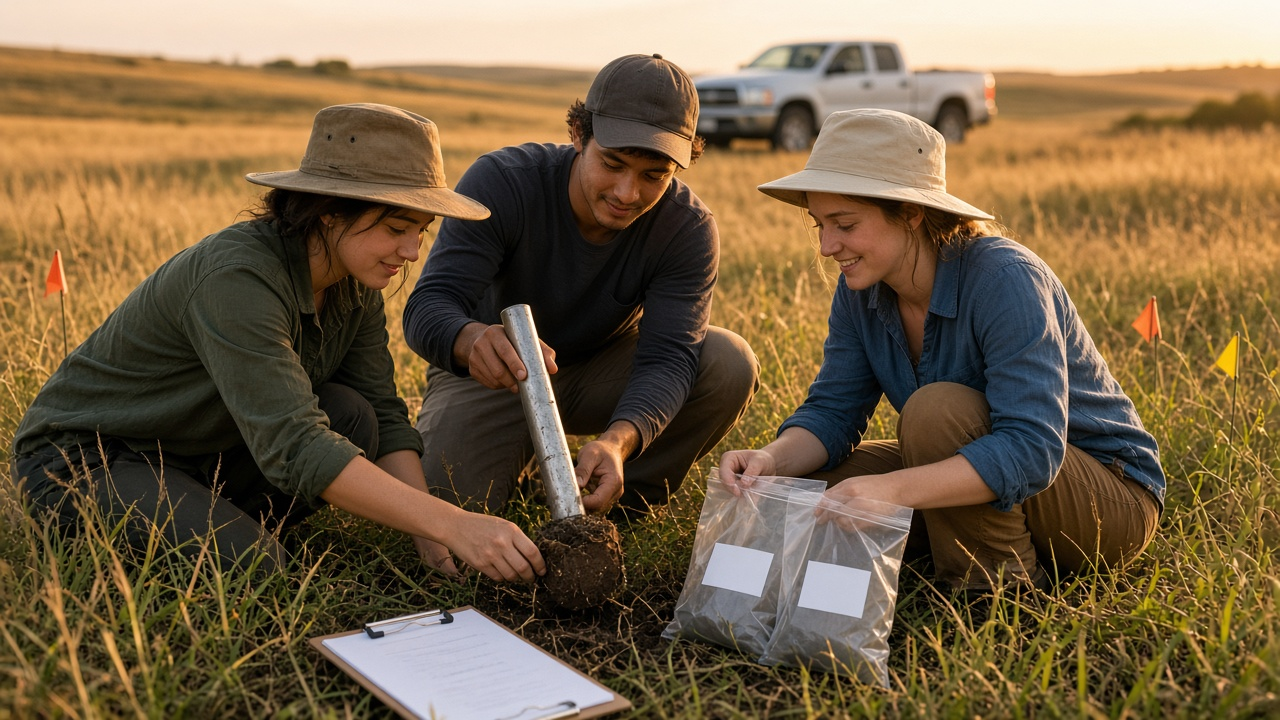
This image was generated using the prompt above.
Examples
Example Input
AwardBasics: NSF DEB award 2214XXX, "Drought legacy effects on grassland soil microbes", year 2 report, period Sept 1 to Aug 31
ProjectGoals: (1) Measure microbial community shifts after experimental drought at two sites; (2) Link shifts to nitrogen cycling rates; (3) Train undergraduates in field ecology
ActivityNotes: second field season at both sites June to July; 240 soil cores sequenced; nitrogen mineralization assays done for site A only (site B incubator failed in July)
ProductsList: one paper accepted in Soil Biology and Biochemistry in May, not yet in the public access repository; poster at ESA August; sequence data in SRA pending release
ParticipantsList: PI 1 month; postdoc Dr. Lin 12 months; PhD student Ruiz 12 months; 3 REU undergraduates about 2 months each; partner: county land trust (site access)
ImpactsAndChanges: REU students presented at the campus symposium; site B assays delayed to spring; $6,000 moved from travel to incubator repair
Format: Research.gov sections
Example Output
ACCOMPLISHMENTS
Goal 1. Measure microbial community shifts after experimental drought at two sites.
- Major activities: Completed the second field season at sites A and B (June to July) and sequenced 240 soil cores.
- Significant results: [PI to add the main community shift observed, with effect size from the analysis].
- Key outcomes: Two years of paired drought and control data now exist for both sites.

Goal 2. Link shifts to nitrogen cycling rates.
- Major activities: Ran nitrogen mineralization assays for site A. Site B assays were delayed when the incubator failed in July.
- Significant results: Site A results are preliminary and not yet published [PI to add direction of change].

Goal 3. Train undergraduates in field ecology.
- Three REU students joined the field season, learned core sampling and DNA extraction, and presented posters at the campus symposium.

TRAINING AND PROFESSIONAL DEVELOPMENT
Dr. Lin led field logistics and mentored the REU students. Ruiz learned amplicon analysis and drafted a thesis chapter [PI to confirm].

DISSEMINATION
Poster at the Ecological Society of America annual meeting, August. Sequence data submitted to SRA, release pending.

PLANS FOR NEXT PERIOD
Goal 1: Third field season and a combined two year analysis. Goal 2: Complete site B assays in spring. Goal 3: Recruit a new REU cohort.

PRODUCTS
| Type | Product | Status | Public access |
| Journal article | [authors], Soil Biology and Biochemistry | Accepted May | NOT DEPOSITED: add before submitting |
| Poster | ESA annual meeting | Presented August | n/a |
| Data set | 240 core amplicon sequences, SRA | Pending release | add accession [PI to add] |

PARTICIPANTS
| Name | Role | Person months | Contribution |
| [PI] | PI | 1 | Design, supervision |
| Dr. Lin | Postdoc | 12 | Field lead, analysis |
| Ruiz | Graduate student | 12 | Sequencing, analysis |
| REU students (3) | Undergraduates | 2 each | Field and lab work |
Partner: county land trust, in kind support (site access).

IMPACTS
- Principal discipline: Paired multi year drought data at two grassland sites [PI to add one sentence on what it shows].
- Human resources: Three undergraduates trained in field and molecular methods.
- Other disciplines, infrastructure, society: nothing to report.

CHANGES OR PROBLEMS
Site B nitrogen assays were delayed by an incubator failure; they will run in spring with no change to aims. $6,000 was moved from travel to incubator repair.

CHECKLIST
- Deposit the accepted article in the public access repository.
- Send the draft to co-PIs for review.
- Confirm the due date in Research.gov; an overdue report can hold up funding actions.