How to Use the Portable Generator Backup Prompt to Power Your Home Safely in an Outage
Plan how a portable generator will actually run your house in an outage: list the loads you need with running and starting watts, stage motor starts so the generator does not trip, choose an interlock kit or transfer switch installed with an inlet box instead of backfeeding, place the generator away from the house for carbon monoxide safety, estimate fuel, and write a step by step runbook.
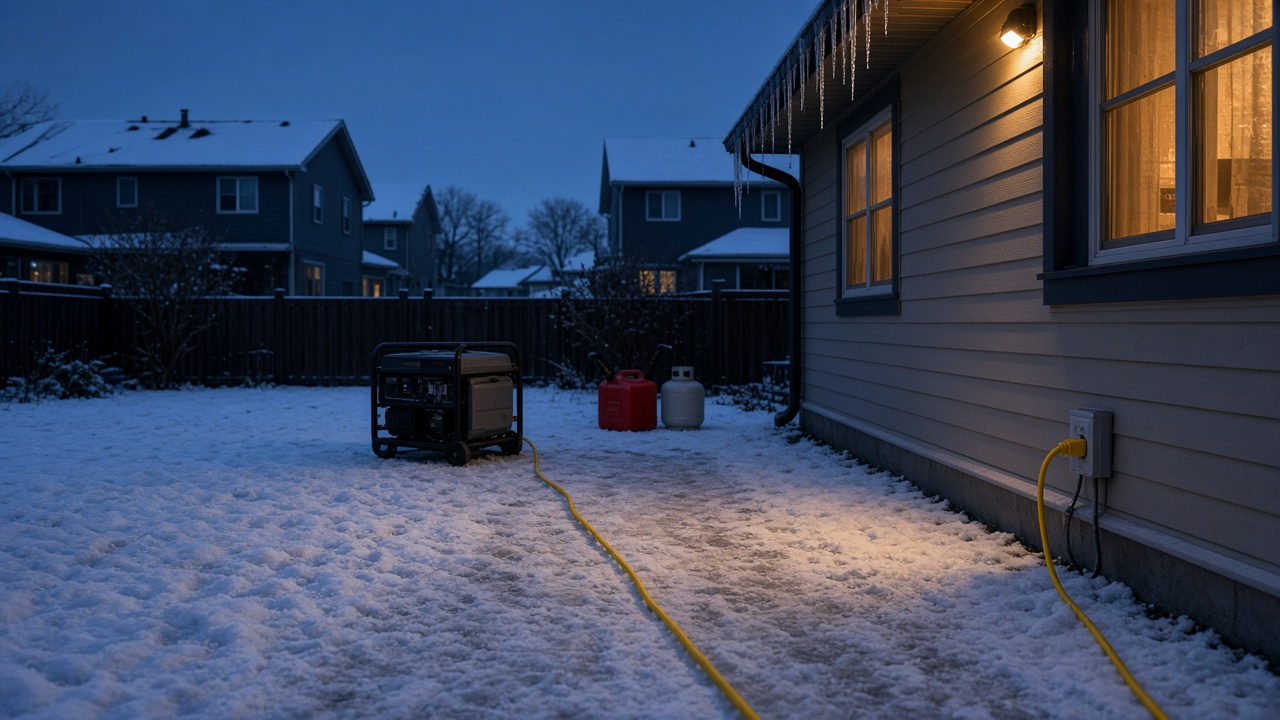
Buying a portable generator is the easy part. The hard part comes during a storm at night, when you need to know which loads it can carry, which motor to start first, how to connect it without backfeeding the grid, where to put it so carbon monoxide stays out of the house, and how much fuel you will burn in a multi day outage. The Portable Generator Home Backup Planner: Running vs Starting Watts Load Table, Motor Start Staging, Interlock Kit or Transfer Switch With an Inlet Box, No Backfeeding, Carbon Monoxide Placement, Fuel Math, and an Outage Runbook prompt turns your appliance list and generator specs into a written plan and a runbook anyone in the house can follow.
What the prompt produces
- A load table with volts, running watts, starting watts, and which loads are motors.
- Sizing math that checks total running watts and the worst case surge against your generator's rating on each fuel.
- A staging plan that starts the largest motor first and names loads that should never run together.
- A connection method using an interlock kit or transfer switch with an inlet box, installed by a licensed electrician.
- A neutral and grounding note to discuss with the electrician.
- Carbon monoxide placement rules for your actual yard or patio.
- Fuel math for your expected load and outage length.
- An outage runbook from the moment power goes out until it comes back.
- A test schedule so the plan still works when you need it.
How to fill the inputs
Loads lists what must run, with running and starting watts from nameplates or manuals where you have them. Note whether each load is 120 or 240 volt, since a well pump on 240 volts changes the connection plan.
HomeElectrical describes your panel, well, sump, heating, and other large loads.
Generator gives its running and starting watts on each fuel, the outlet type, tank size, and runtime from the manual.
OutageHistory says how long outages last and in what season, which drives fuel planning.
Site describes where the generator can sit and how far that spot is from doors, windows, and vents.
Reading the example output
The example is a house with a private well, a sump pump, a gas furnace, and a dual fuel portable generator, in an area with winter ice storms.
- The surge check matters more than the total. Everything running while the well pump starts is the worst case, and the plan compares that number with the starting rating on both gasoline and propane.
- Propane is tighter. With the microwave added, the margin on propane becomes too thin, so the staging plan keeps the microwave off unless the well pump breaker is off.
- Backfeeding is ruled out. The plan calls for an electrician installed interlock kit with an inlet box and explains why plugging into a dryer outlet can kill a line worker.
- The generator sits at the far side of the patio, not under the overhang by the back door, with carbon monoxide alarms on every level.
- Fuel math is honest. The expected load is above the manual's half load figure, so the runtime per tank is lower, and the plan shows why gasoline storage gets hard in a four day outage.
Tips for better results
- Read the nameplate on your well pump, fridge, and freezer instead of guessing.
- Practice the runbook once in daylight before you need it in the dark.
- Label the breakers you will turn on in the staging order.
- Store fuel safely and rotate it so it is fresh when an outage hits.
Mistakes to avoid
- Do not run a generator in a garage, basement, or shed, even with the door open.
- Do not plug a generator into a house outlet.
- Do not start every load at once after connecting.
- Do not refuel a hot, running generator.
Who it is for
Homeowners with wells or sump pumps, families in areas with long winter or hurricane outages, new generator owners, and anyone preparing to talk with an electrician about a safe connection.
Related PromptDig links
Open the Portable Generator Home Backup Planner: Running vs Starting Watts Load Table, Motor Start Staging, Interlock Kit or Transfer Switch With an Inlet Box, No Backfeeding, Carbon Monoxide Placement, Fuel Math, and an Outage Runbook prompt and add your loads and generator specs to build your outage plan. For more home and lifestyle prompts, Browse more prompts. If you have a home preparedness prompt that helped your family, Share a prompt.