How to Use the Library Storytime Puppet Show Script Writer Prompt to Stage Short Shows Kids Love
Write a short puppet show for preschool storytime: a simple story built around your book or theme, distinct puppet voices, entrances and hand swaps that work with your puppeteers and stage, call and response beats, a movement song, an early literacy tie-in, and a cue sheet to tape inside the stage.
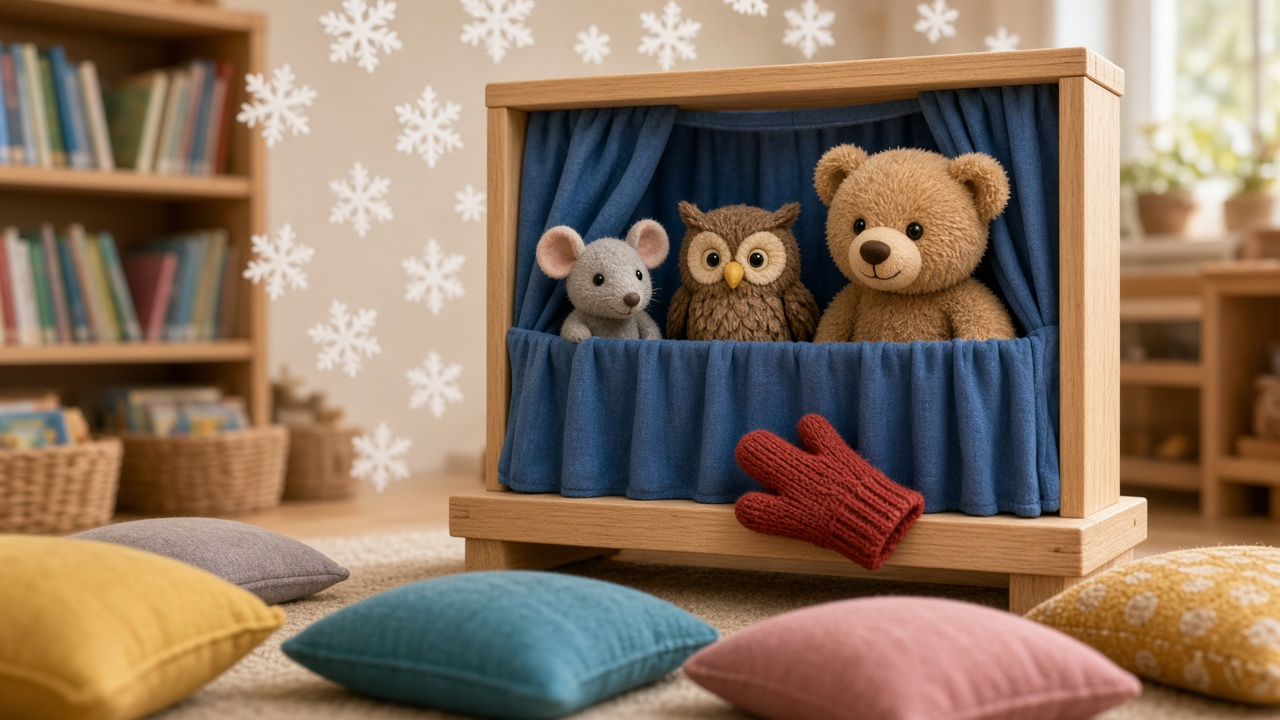
A puppet show can turn an ordinary storytime into the part kids remember all week. Writing one is harder than it looks. The story has to fit eight or ten minutes, every line has to be clear from behind a curtain, the puppets you own have to cover every role, and the hand swaps have to work for the number of people backstage. The Library Storytime Puppet Show Script Writer: Puppet Cast Voices, Stage Entrances and Hand Swaps, Call and Response Beats, a Movement Song, Early Literacy Tie-In, and a Puppeteer Cue Sheet prompt writes a short original show around your book or theme and gives you a cue sheet to tape inside the stage.
What the prompt produces
- A five beat story outline: hello, problem, two tries, solution, goodbye.
- Voice and movement cards for each puppet.
- A script with stage directions for entrances, exits, and hand swaps.
- Call and response beats where children answer, warn, or count.
- A short movement song set to a familiar public domain tune.
- An early literacy tie-in with a line to say to caregivers.
- A puppeteer cue sheet formatted for the inside of your stage.
- Sensory notes for young or sensitive audiences.
How to fill the inputs
StoryTheme names the picture book or theme the show pairs with and the early literacy skill you want to model, such as rhyming, sequencing, or new words.
PuppetCast lists the puppets you actually own, with their type and any personality ideas. The prompt never writes in a puppet you do not have.
StageSetup describes your theater: tabletop, doorway, or open, how many puppets fit at once, where props go, and any sightline problems.
Puppeteers says how many people are performing and whether a volunteer is reading from the script.
AudienceAge covers the age range, group size, and anything to avoid, such as loud sounds.
Runtime is your target length in minutes.
Reading the example output
The example pairs with a book about a lost mitten and models sequencing. The cast is a mouse finger puppet, an owl hand puppet, and a big sleepy bear. Pip the mouse finds a red mitten, Hazel the owl spots footprints, and the children help count first, next, and last until the tracks lead to Bruno the bear, whose cub lost the mitten.
Each puppet gets a voice card with a pitch, a catchphrase, and a way of moving, so the librarian can switch characters quickly. The script marks which hand holds which puppet, so one librarian can perform two characters while a teen volunteer handles the bear. The call and response beats include a whisper moment, so the bear yawns instead of roaring, which fits the request to avoid loud sounds for two to five year olds. The song uses a public domain tune with knee pats, and the cue sheet fits on one page.
Tips for better results
- List only the puppets you own, including their type. A finger puppet moves differently than a mouth puppet.
- Describe your stage honestly. If only two puppets fit at once, the script will respect that.
- Pick one literacy skill per show. It keeps the story simple.
- Rehearse once with the cue sheet taped in place before the first performance.
Mistakes to avoid
- Do not let the show run long. Young audiences do best with short, active stories.
- Do not skip the call and response beats. They keep the carpet engaged.
- Do not use copyrighted songs. Familiar public domain tunes work just as well.
Who it is for
Children's librarians, preschool teachers, homeschool co-op leaders, children's ministry volunteers, and parents planning a birthday party show.
A practical routine
Generate a new show each month around your storytime theme, keep the cue sheets in a binder by season, and reuse your best scripts with new books later in the year.
Related PromptDig links
Write your next storytime show with the Library Storytime Puppet Show Script Writer: Puppet Cast Voices, Stage Entrances and Hand Swaps, Call and Response Beats, a Movement Song, Early Literacy Tie-In, and a Puppeteer Cue Sheet prompt. For more creative prompts, Browse more prompts. If you have a storytime prompt that works for your library, Share a prompt.