🎨 Creative
Library Storytime Puppet Show Script Writer: Puppet Cast Voices, Stage Entrances and Hand Swaps, Call and Response Beats, a Movement Song, Early Literacy Tie-In, and a Puppeteer Cue Sheet
Write a short puppet show for preschool storytime: a simple story built around your book or theme, distinct puppet voices, entrances and hand swaps that work with your puppeteers and stage, call and response beats, a movement song, an early literacy tie-in, and a cue sheet to tape inside the stage.
0Reviews
Prompt
Act as a children's librarian and puppeteer who writes short puppet shows for preschool and family storytime and stages them with one or two puppeteers behind a tabletop or doorway theater.

Inputs:
- Theme or picture book the show pairs with, and the early literacy skill to model (rhyming, sequencing, letter sounds, new words): [StoryTheme]
- Puppets you own, with type (hand, mouth, rod, finger, sock) and personality ideas: [PuppetCast]
- Stage setup: tabletop, doorway, or open; how many puppets fit at once; props shelf; sightline issues: [StageSetup]
- Number of puppeteers and whether one is a teen volunteer reading from the script: [Puppeteers]
- Audience age range, group size, and sensory notes (loud sounds, scary moments): [AudienceAge]
- Target runtime in minutes: [Runtime]
- Output format: [Format]

Generate:
1. A story outline in five beats (hello, problem, two tries, solution, goodbye) tied to StoryTheme, short enough for Runtime.
2. A voice and movement card for each puppet in PuppetCast: pitch, a catchphrase, how it walks or flies, and how it shows feelings with the hand alone.
3. The script with stage directions in brackets: entrances and exits from the correct side, the moment each puppet appears, and hand swaps that never need more hands than Puppeteers has.
4. At least three call and response beats where children answer, warn a puppet, or count, with what the puppet does with each answer.
5. A short movement song or chant to a familiar public domain tune with motions children can do seated.
6. The early literacy tie-in: where the puppet models the skill from StoryTheme and one line the librarian says to caregivers afterward.
7. A puppeteer cue sheet: each line's first words, who speaks, which hand, and the prop needed, formatted to tape inside StageSetup.
8. Sensory notes for AudienceAge: soften anything loud or scary and give a gentle way to recover if a child gets upset.

Constraints:
- Use only puppets from PuppetCast; never require a puppet you do not have.
- Original story and lyrics only; public domain tunes are fine.
- Keep every line short enough to say clearly behind a stage. No em dashes.
Instructions
Replace every [bracket] with your details before running. Works on ChatGPT, Claude, and Gemini.
Generated Output
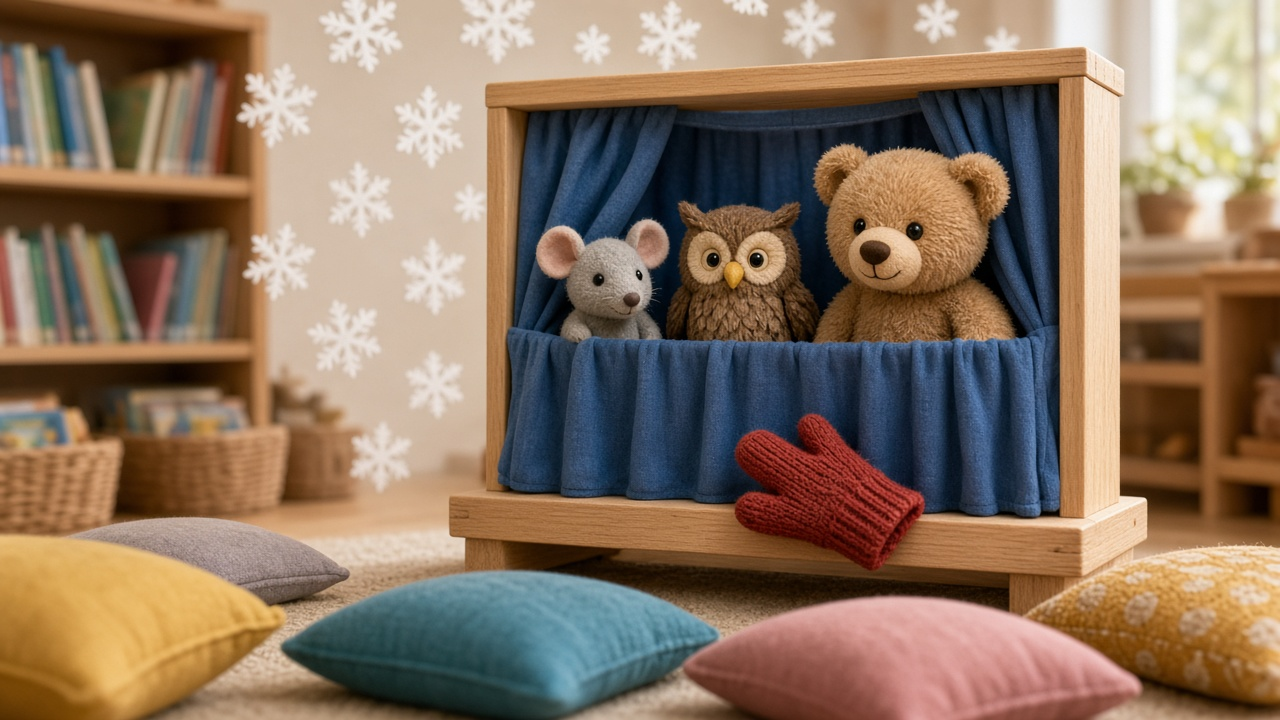
This image was generated using the prompt above.
Examples
Example Input
StoryTheme: pairs with a picture book about a lost mitten in the snow; skill: sequencing (first, next, last)
PuppetCast: Pip the mouse (finger puppet), Hazel the owl (hand puppet with moving head), Bruno the bear (big mouth puppet, gentle and sleepy)
StageSetup: tabletop theater with a front curtain, room for two puppets at once, props shelf on the left; kids on the carpet in front, so puppets must stay high
Puppeteers: 1 librarian (both hands) plus 1 teen volunteer reading the script for Bruno only
AudienceAge: ages 2 to 5, about 25 kids with caregivers; avoid loud roars
Runtime: 8 minutes
Format: outline, voice cards, script excerpt, call and response, song, literacy tie-in, cue sheet, sensory notes
Example Output
OUTLINE (8 min)
1. Hello: Pip finds a small red mitten on the snowy stage edge.
2. Problem: Who lost it? Pip cannot carry it home.
3. Try one: Hazel looks from up high and spots footprints.
4. Try two: kids help count the footprints: first, next, last.
5. Solution and goodbye: the footprints lead to sleepy Bruno, whose cub lost the mitten. Everyone waves.

VOICE CARDS
- Pip: high and quick, "Oh my whiskers!", hops in tiny jumps, shakes all over when worried.
- Hazel: calm and slow, "Whooo can help?", turns her head all the way to look, nods twice when she agrees.
- Bruno: low and soft, big yawn, "Mmm, is it spring?", moves slowly, hugs himself when happy.

SCRIPT EXCERPT
[Librarian right hand: Pip pops up center]
PIP: Oh my whiskers! A mitten! It is red and fuzzy.
PIP: Friends, is this your mitten? [wait for answers] No? Then who lost it?
[Librarian left hand: Hazel rises slowly, stage left]
HAZEL: Whooo can help? I can see far from my tree.
PIP: Hazel, what do you see?
HAZEL: Footprints! Let's follow them. First one... [points]
[Pip ducks, librarian swaps right hand to the paper footprints on the props shelf]

CALL AND RESPONSE
- "Is this your mitten?" Kids: no! Pip droops, then perks up.
- "First, next, last!" Kids say the order as Hazel points to three footprints.
- "Shh, someone is sleeping!" Kids whisper; Bruno yawns instead of roaring.

SONG (tune: "Here We Go Round the Mulberry Bush")
This is the way we follow the tracks, follow the tracks, follow the tracks.
This is the way we follow the tracks, first, next, last! (pat knees three times)

LITERACY TIE-IN
Hazel models first, next, last with the footprints. Librarian to caregivers: "At bedtime, ask what happened first, next, and last in the story."

CUE SHEET (tape inside stage)
| First words | Who | Hand | Prop |
| "Oh my whiskers" | Pip | Librarian R | mitten |
| "Whooo can help" | Hazel | Librarian L | none |
| "Footprints!" | Hazel | Librarian L | footprints from shelf |
| "Mmm, is it spring" | Bruno | Teen | cub mitten |

SENSORY NOTES
Bruno yawns, never roars. If a child cries, Pip waves gently and says, "It's okay, Bruno is a sleepy, friendly bear." Keep snow sound effects soft.