How to Use the Home EV Charger Planner Prompt Before You Call an Electrician
Plan a Level 2 charger at home before calling electricians: match charger amps to how you actually drive, check whether your panel can take the load or needs load management, size the circuit at 125 percent of the charger rating, choose hardwired or a NEMA 14-50 outlet, plan the location and permit, find rebate rules, and compare quotes on the same scope.
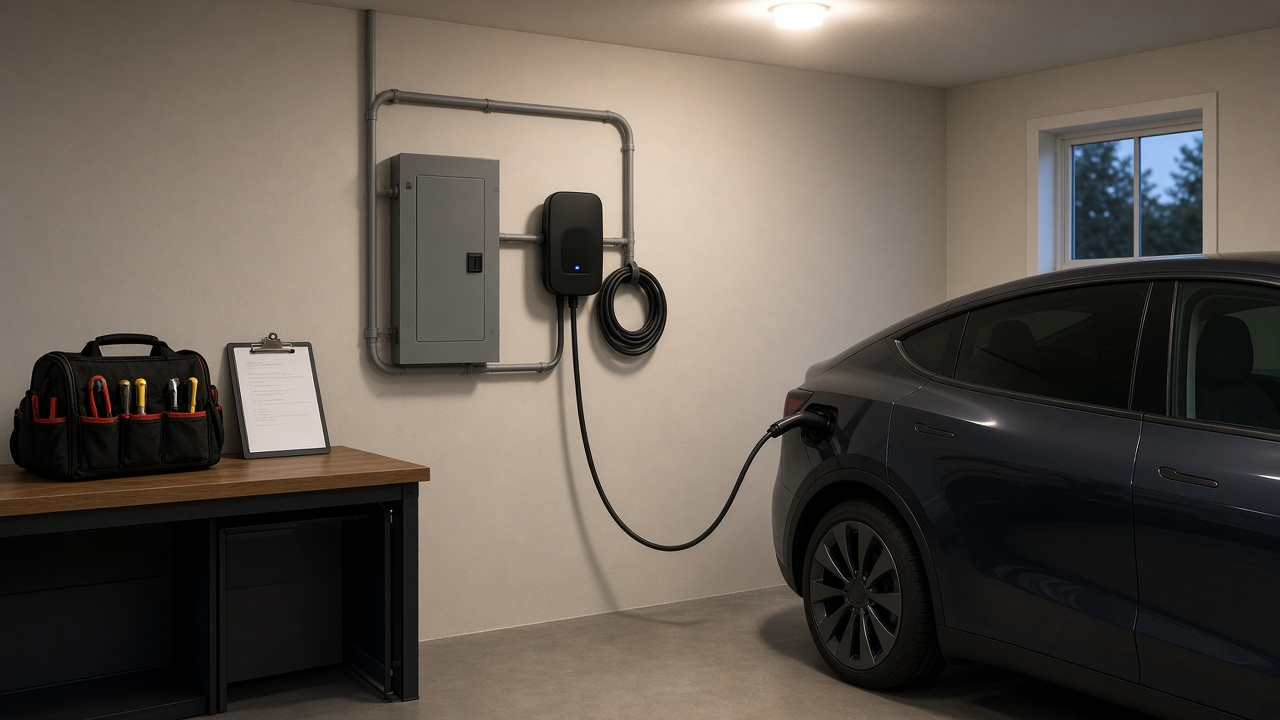
Buying a Level 2 charger is easy. Getting it installed at the right size for your panel, your car, and your rebate is where most homeowners get surprised. One quote says the job is simple, another says you need a new service, and a third does not mention the permit at all. The Home Level 2 EV Charger Installation Planner: Panel Capacity and NEC 220.83 or 220.87 Load Check, 125 Percent Continuous Load Circuit Sizing, Hardwired vs NEMA 14-50, GFCI, Permit, Utility Rebate, and Electrician Quote Questions prompt helps you understand what you actually need, what your electrician will check, and which questions make every quote cover the same scope.
What the prompt produces
- A charging need check that compares your daily miles and parking hours with what different charger settings deliver.
- A panel capacity plan that explains the two common ways electricians confirm capacity: a load calculation for an existing home, or measured peak demand from a year of utility data.
- Circuit sizing based on the rule that EV charging is a continuous load, so the breaker is at least 125 percent of the charger's output.
- A hardwired versus outlet decision for a NEMA 14-50 receptacle or a hardwired unit.
- Options when capacity is short, from lowering the charger setting to load management or a service upgrade.
- Location and install details such as cable reach, conduit route, outdoor rating, and Wi Fi.
- Permit and inspection notes.
- A rebate and rate checklist.
- Quote questions so you can compare electricians fairly.
How to fill the inputs
DrivingPattern includes your car, its onboard charger rating if you know it, daily miles, and when the car sits at home. This is what tells you whether you need a big circuit at all.
PanelInfo lists your service size, open breaker spaces, panel age, and the large electric loads in the house, such as an electric range, dryer, water heater, or heat pump.
UtilityData says whether you can download twelve months of usage or demand data. Interval data is more useful than monthly totals.
ParkingSpot describes where the car parks, the distance from the panel, and whether it is indoors or outside.
ChargerAndRebates names the charger you bought or are considering and any rebate programs you have heard of.
Reading the example output
The example is a homeowner with a 150 amp panel, several electric appliances, and a 48 amp charger already bought:
- The need check shows 45 miles a day is light charging, so even a smaller circuit covers it overnight.
- The car limits the benefit of 48 amps, since its onboard charger tops out a bit lower.
- The capacity plan asks for a written load calculation and explains what data the electrician needs.
- A sizing table maps charger settings to breaker sizes.
- Hardwiring is recommended because the charger is hardwire only at full output and the run is short.
- Three fallback options are priced against each other, with a clear recommendation to quote two of them.
- The rebate checklist marks every amount and rate as something to confirm with the utility.
Tips for better results
- Take a clear photo of your panel label and the nameplates on large appliances before the first site visit.
- Ask your utility how to download interval data. It can be the difference between a simple install and a service upgrade.
- Check rebate rules before buying hardware. Some programs require pre approval or a specific charger list.
- Think about a second EV or a heat pump in the next few years before choosing between load management and an upgrade.
Mistakes to avoid
- Do not assume a bigger charger is better. Your car and schedule may not use it.
- Do not skip the permit. Rebates, insurers, and future buyers may ask for the inspection record.
- Do not compare quotes that leave out the load calculation, permit, or patching.
- Do not attempt the wiring yourself. This plan is for working with a licensed electrician.
Who it is for
New EV owners, homeowners planning ahead for an electric car, landlords adding a charger to a rental, and anyone comparing electrician quotes for a home charging install.
Related PromptDig links
Open the Home Level 2 EV Charger Installation Planner: Panel Capacity and NEC 220.83 or 220.87 Load Check, 125 Percent Continuous Load Circuit Sizing, Hardwired vs NEMA 14-50, GFCI, Permit, Utility Rebate, and Electrician Quote Questions prompt and add your car, panel, and parking details to plan your install. For more home and lifestyle prompts, Browse more prompts. If you have a home project prompt that worked for you, Share a prompt.