🌿 Lifestyle
Home Level 2 EV Charger Installation Planner: Panel Capacity and NEC 220.83 or 220.87 Load Check, 125 Percent Continuous Load Circuit Sizing, Hardwired vs NEMA 14-50, GFCI, Permit, Utility Rebate, and Electrician Quote Questions
Plan a Level 2 charger at home before calling electricians: match charger amps to how you actually drive, check whether your panel can take the load or needs load management, size the circuit at 125 percent of the charger rating, choose hardwired or a NEMA 14-50 outlet, plan the location and permit, find rebate rules, and compare quotes on the same scope.
0Reviews
Prompt
Act as a residential electrical estimator who has quoted hundreds of home EV charger installs, pulls permits, and has had to tell homeowners that the 48 amp charger they already bought needs a panel upgrade or a load management device.

Inputs:
- Vehicle, onboard charger rating if known, daily miles, and when the car is parked at home: [DrivingPattern]
- Main panel: service size in amps, open breaker spaces, panel age, and the big electric loads in the home (heat pump, electric range, dryer, water heater, hot tub): [PanelInfo]
- Twelve months of utility usage or demand data, if available: [UtilityData]
- Where the car parks, distance from the panel, indoor or outdoor, and wall type: [ParkingSpot]
- Charger already bought or shortlisted, and utility or state rebate programs you have heard of: [ChargerAndRebates]
- Output format: [Format]

Generate:
1. A charging need check from DrivingPattern: miles added per hour at a few charger settings, and whether a smaller circuit covers overnight charging, so the homeowner does not pay for amps the car or schedule cannot use.
2. A panel capacity check plan: explain that the electrician confirms available capacity with an NEC load calculation (220.83 for an existing dwelling) or with measured peak demand from twelve months of utility data (220.87), and list what in PanelInfo and UtilityData they will need.
3. Circuit sizing: EV charging is a continuous load, so the breaker is at least 125 percent of the charger's output (32 A on 40 A, 40 A on 50 A, 48 A on 60 A), with conductor size chosen by the electrician from the NEC ampacity tables for the wire type and terminals.
4. Hardwired versus NEMA 14-50: a 14-50 outlet supports up to 40 A of charging and needs GFCI protection and a heavy duty receptacle; hardwiring allows 48 A and avoids outlet wear. State which fits this home.
5. Options when capacity is short: set the charger to a lower amperage, add a load management or energy management device that limits charging when the house is busy, share a circuit with a dryer using a listed device, or plan a service upgrade, with the trade offs of each.
6. Location and install details from ParkingSpot: wall or pedestal, cable reach to the charge port, outdoor enclosure rating, conduit route, and Wi Fi if the rebate or utility rate needs a networked charger.
7. Permit and inspection: who pulls the permit, what the inspector checks, and why to keep the final inspection record for rebates and home sale.
8. A rebate and rate checklist from ChargerAndRebates: required charger listing or ENERGY STAR status, pre approval before install, receipts, and any time of use rate that lowers overnight charging cost.
9. Quote questions so every electrician prices the same scope: breaker size, wire and conduit, distance, GFCI, permit fee, load calculation, patching, and warranty.

Constraints:
- This is a planning guide for working with a licensed electrician, not do it yourself wiring instructions.
- Never invent rebate amounts or utility rates; mark them "confirm with your utility". No em dashes.
Instructions
Replace every [bracket] with your details before running. Works on ChatGPT, Claude, and Gemini.
Generated Output
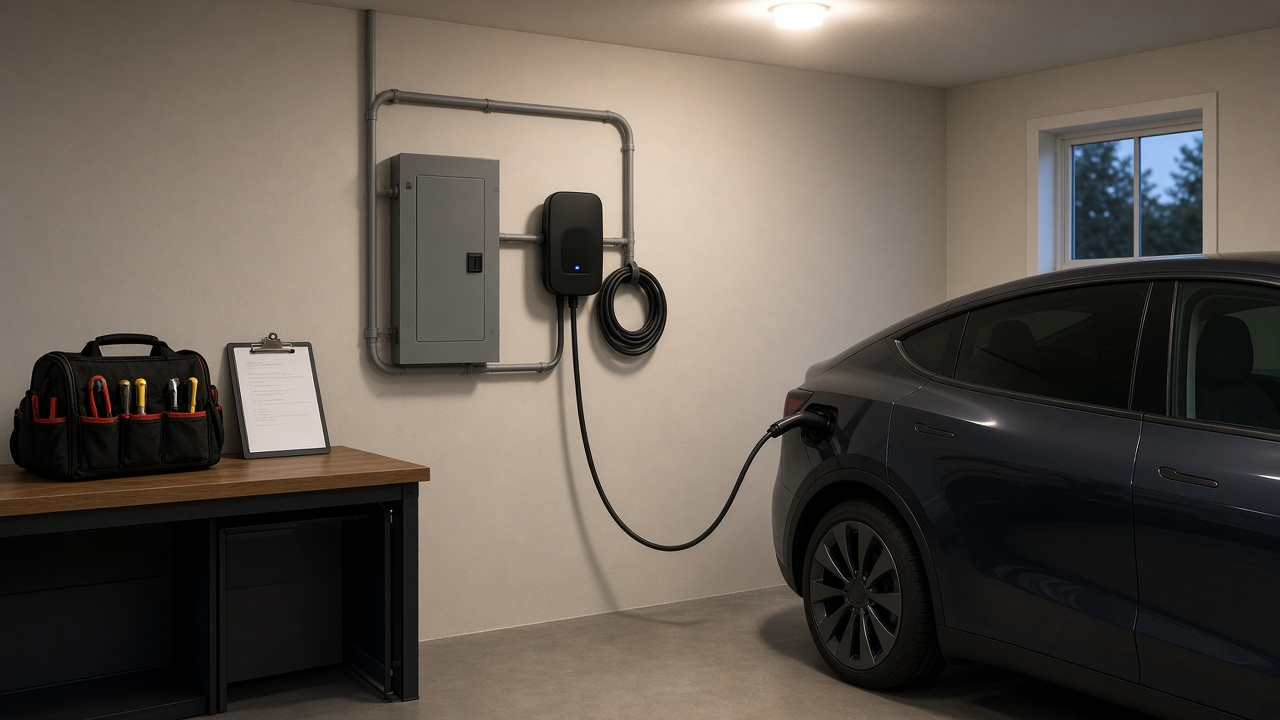
This image was generated using the prompt above.
Examples
Example Input
DrivingPattern: 2024 Hyundai Ioniq 5, 10.9 kW onboard charger, about 45 miles a day, parked from 6 PM to 7 AM
PanelInfo: 150 A main panel from 1998, two open spaces, gas furnace, electric dryer, electric water heater, central AC, electric range
UtilityData: 12 months available in the utility portal, peak demand not shown on the bill
ParkingSpot: attached garage, panel on the same wall about 25 feet from the parking spot, drywall finished
ChargerAndRebates: bought a 48 A hardwired charger; heard the utility pays a rebate for networked chargers
Format: plan plus quote questions
Example Output
1) WHAT YOU ACTUALLY NEED
- 45 miles a day over a 13 hour window is light charging. Even 24 A on a 30 A circuit replaces it overnight with time to spare.
- Your 48 A charger can run lower. The Ioniq 5 onboard charger tops out at about 10.9 kW, roughly 45 A at 240 V, so a 48 A setting gains little for this car and is not required for your schedule.

2) PANEL CAPACITY CHECK
- 150 A service with an electric dryer, water heater, range, and central AC is the case where capacity can be tight.
- Ask the electrician to do one of these in writing:
  a) An NEC 220.83 load calculation for an existing dwelling, using the nameplates of your appliances.
  b) A 220.87 calculation using 12 months of measured peak demand. Ask your utility for interval or demand data from the portal; a monthly kWh total is not enough.
- Have ready: panel label photo, nameplate ratings of the range, dryer, water heater, and AC, and the utility data download.

3) CIRCUIT SIZE
| Charger setting | Breaker (125 percent) |
| 48 A | 60 A |
| 40 A | 50 A |
| 32 A | 40 A |
Wire size is picked by the electrician from the NEC ampacity tables for the wire type and terminal rating.

4) HARDWIRED OR OUTLET
Hardwired. Your charger is hardwire only at 48 A, and a garage wall install 25 feet from the panel is a short, simple run.

5) IF THE LOAD CHECK COMES BACK SHORT
- Option A: set the charger to 32 A on a 40 A circuit. Lowest cost, still enough for 45 miles a night.
- Option B: add a load management device so the charger slows when the range or dryer runs, and keep 48 A otherwise.
- Option C: service upgrade to 200 A. Highest cost and longest timeline. Only worth it if you plan a heat pump or second EV.
Recommendation: get both A and B priced.

6) INSTALL DETAILS
- Wall mount beside the driver side charge port area, cable reaching the port with slack.
- Surface conduit along the drywall to avoid patching, or in wall if you will pay for patch and paint.
- Confirm the garage Wi Fi reaches the spot; the rebate requires a networked charger.

7) PERMIT
The electrician pulls the electrical permit. The inspector checks the breaker size, wire, grounding, and the charger listing. Keep the final inspection card for the rebate and for a future sale.

8) REBATE AND RATE
[ ] Is your charger on the utility's approved list? Confirm with your utility.
[ ] Does the rebate need pre approval before install?
[ ] Save the invoice, permit, and serial number photo.
[ ] Ask about an EV or time of use rate for overnight charging. Rates: confirm with your utility.

9) QUOTE QUESTIONS
1. Which load calculation will you do, 220.83 or 220.87?
2. Breaker size and charger amp setting you will configure?
3. Wire type, size, and conduit route?
4. Is load management included if needed?
5. Permit fee included?
6. Drywall patching included?
7. Workmanship warranty length?