How to Use the Backyard Chicken Coop Planner Prompt to Start a Small Flock the Right Way
Plan a small backyard flock before you buy chicks: confirm local rules and HOA limits, pick a flock size, size the coop and run using common rules of thumb, count roost space and nest boxes, plan ventilation and predator proofing with hardware cloth and a buried apron, set up the brooder schedule, choose feed by age, and map daily, weekly, and seasonal chores to a realistic egg timeline.
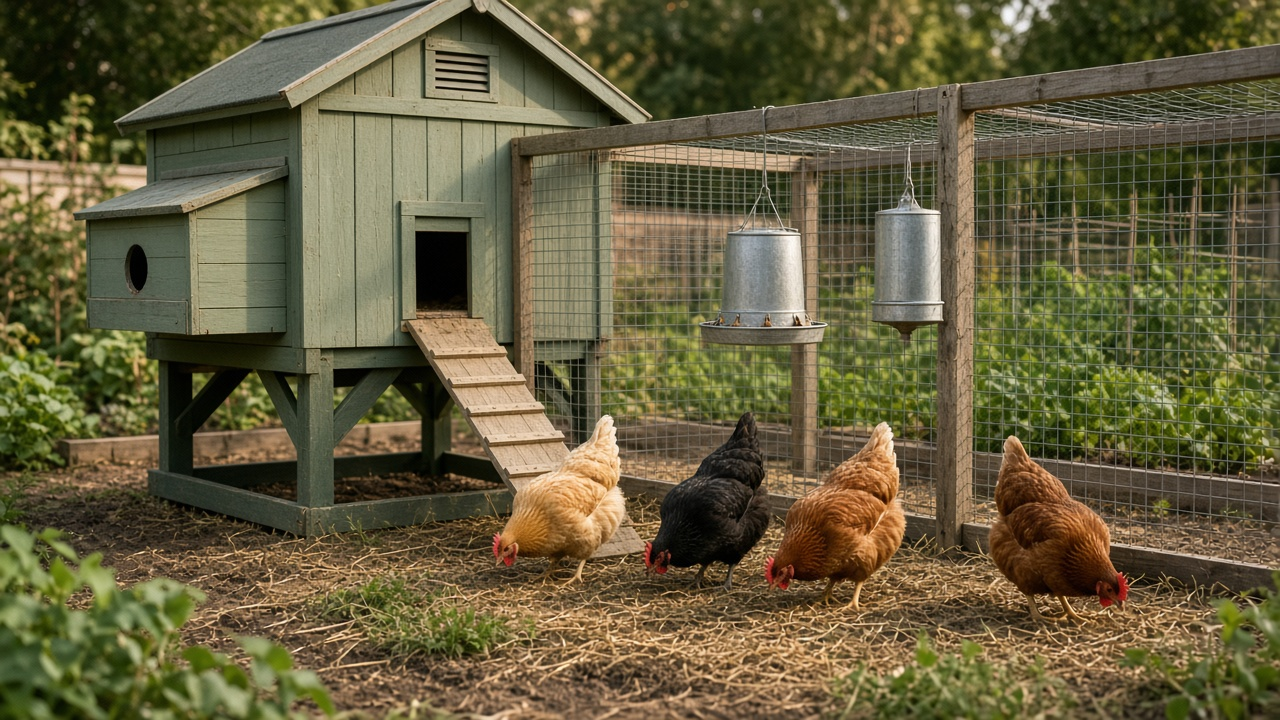
Fresh eggs from your own backyard sound simple until you start reading about coop sizes, brooder lamps, feed types, and predators. Many first time flocks run into the same problems: a coop that turns out to be against local rules, chicks that get too cold or too hot, and a raccoon that tears through chicken wire in one night. The Backyard Chicken Coop and Starter Flock Planner: Ordinance and HOA Check, Flock Size, Coop and Run Space, Roosts and Nest Boxes, Ventilation, Predator Proofing, Brooder Temperatures, Feed by Age, Chores, and an Egg Timeline prompt plans the whole start, from checking your city ordinance and HOA rules to sizing the coop and run, predator proofing, brooding chicks, feeding by age, and setting a realistic timeline for the first eggs.
What the prompt produces
- A rules checklist covering hen limits, rooster rules, setbacks, permits, and HOA approval, with anything unconfirmed marked to verify with the city.
- A flock size recommendation based on egg needs and the legal limit.
- Coop and run sizing using commonly cited rules of thumb for standard hens, about 4 square feet per bird inside and about 10 square feet per bird in the run, clearly labeled as guides.
- Roost and nest box counts, with roosts higher than nest boxes.
- Ventilation and climate notes for your winter lows and summer highs.
- A predator proofing plan with hardware cloth, a buried or skirted apron, secure latches, a covered run, and a nightly lock up routine.
- A brooder schedule starting around 90 to 95 F in week one and stepping down weekly, with behavior cues to watch.
- Feed by age, from chick starter to grower to layer feed, with oyster shell and grit notes.
- A chore calendar sized to the time your family has.
- An egg timeline from chick arrival to first eggs, given as a range.
How to fill the inputs
Location gives your city or county and typical winter low and summer high.
LocalRules is what you have found so far about hen limits, roosters, setbacks, permits, and HOA covenants. The prompt never treats guesses about the ordinance as fact.
YardSpace describes the area for the coop and run, shade, drainage, and distance from property lines.
EggGoal says how many eggs your household uses and how many birds you want.
BreedsAndStart lists the breeds you are considering and whether you will start with day old chicks or older pullets.
PredatorList names predators in your area, which shapes the build.
BudgetTime sets the setup budget and daily time available.
Reading the example output
The example is a suburban family planning four hens:
- The rules checklist flags two open items: the permit status and HOA architectural approval, both to settle before buying chicks.
- Sizing uses the rules of thumb: at least 16 square feet of coop and 40 square feet of run, with a note that more space helps.
- Roost length and nest boxes are calculated, with two boxes built so hens do not wait in line.
- Predator proofing matches the list: hardware cloth for raccoons, an apron for foxes and dogs, and a covered run for hawks.
- The brooder table steps down about 5 F per week, with huddling and panting as the cues that matter more than the thermometer.
- Feed changes are tied to age and the first egg, with oyster shell offered separately.
- The egg timeline is a range, with a note that fall chicks may wait for longer spring days.
Tips for better results
- Confirm the rules in writing with your city before spending money.
- Buy sexed pullets if roosters are not allowed, and have a plan if one turns out male.
- Build for the predators you have, not the ones in a catalog photo.
- Let kids own a daily task, like collecting eggs, to make the routine stick.
Mistakes to avoid
- Do not use chicken wire to keep predators out. It keeps chickens in.
- Do not keep a single hen. Chickens are flock animals.
- Do not feed layer feed to young chicks.
- Do not guess at illness. Find a veterinarian who sees poultry before you need one.
Who it is for
Families starting a first backyard flock, gardeners adding hens, homeschoolers planning a project, and anyone checking whether chickens fit their yard and schedule before committing.
Related PromptDig links
Open the Backyard Chicken Coop and Starter Flock Planner: Ordinance and HOA Check, Flock Size, Coop and Run Space, Roosts and Nest Boxes, Ventilation, Predator Proofing, Brooder Temperatures, Feed by Age, Chores, and an Egg Timeline prompt and describe your yard. For more lifestyle prompts, Browse more prompts. If you have a home or garden prompt that works for you, Share a prompt.