How to Use the Amigurumi Crochet Pattern Writer Prompt to Publish a Toy Pattern With Counts That Add Up
Turn a stuffed toy idea into a sellable amigurumi crochet pattern: a materials block, US term abbreviations with UK equivalents, round by round instructions for every part with verified stitch counts and staggered increases, color change and face placement notes, an assembly order, small parts and toy safety notes for buyers, and a checklist for recruiting pattern testers.
Selling an amigurumi pattern is mostly about trust. A buyer pays for a PDF, follows it round by round, and expects the counts in parentheses to match what is on their hook. When a round is off by two stitches, or the head turns out shaped like a hexagon, or the pattern says to add eyes after the head is already closed, the reviews and messages follow. The Amigurumi Crochet Pattern Writer for Etsy and Ravelry PDFs: US Terms, Magic Ring Starts, Staggered Increase Rounds with Stitch Counts, Part by Part Assembly, Safety Eye Warnings, and a Tester Call Checklist prompt writes the pattern the way an experienced designer does, with every round recounted and the safety notes buyers need.
What the prompt produces
- A materials and size block listing yarn weight and fiber per color, hook size in mm with the US letter, eyes or floss, fiberfill, and tools. Finished size and yardage are left for you to measure from your own sample.
- An abbreviations table in US terms, with the UK name where it differs, so a buyer used to UK patterns does not read sc as a taller stitch.
- Pattern notes on spiral rounds, the stitch marker, and how to count at the marker.
- Round by round instructions for every part, starting from a 6 stitch magic ring, with staggered increases, even rounds, mirrored decreases, and a stuffing cue.
- Face and color notes that place eyes by round and stitch spacing, before the piece is closed.
- An assembly order with pinning, attachment rounds, and seam stitches.
- Safety and use notes for small parts, baby toys, and buyers who sell finished toys.
- A tester call checklist so testers report the problems you actually need to hear about.
How to fill the inputs
ToyConcept is the toy in a sentence: the animal or character, the size you picture, and the face style. Say if it is meant for a baby, because that changes the eyes.
YarnAndHook names the yarn weight, fiber, colors, and hook in millimeters. Cotton and acrylic behave differently, so be specific.
PartsList lists every piece and how many of each. Two fins means two, written as make 2.
SkillLevel tells the prompt how much to explain. An advanced beginner pattern defines the invisible decrease; an intermediate one may not.
SalesChannel says where you sell and what buyers may do with finished toys, which shapes the copyright line.
Reading the example output
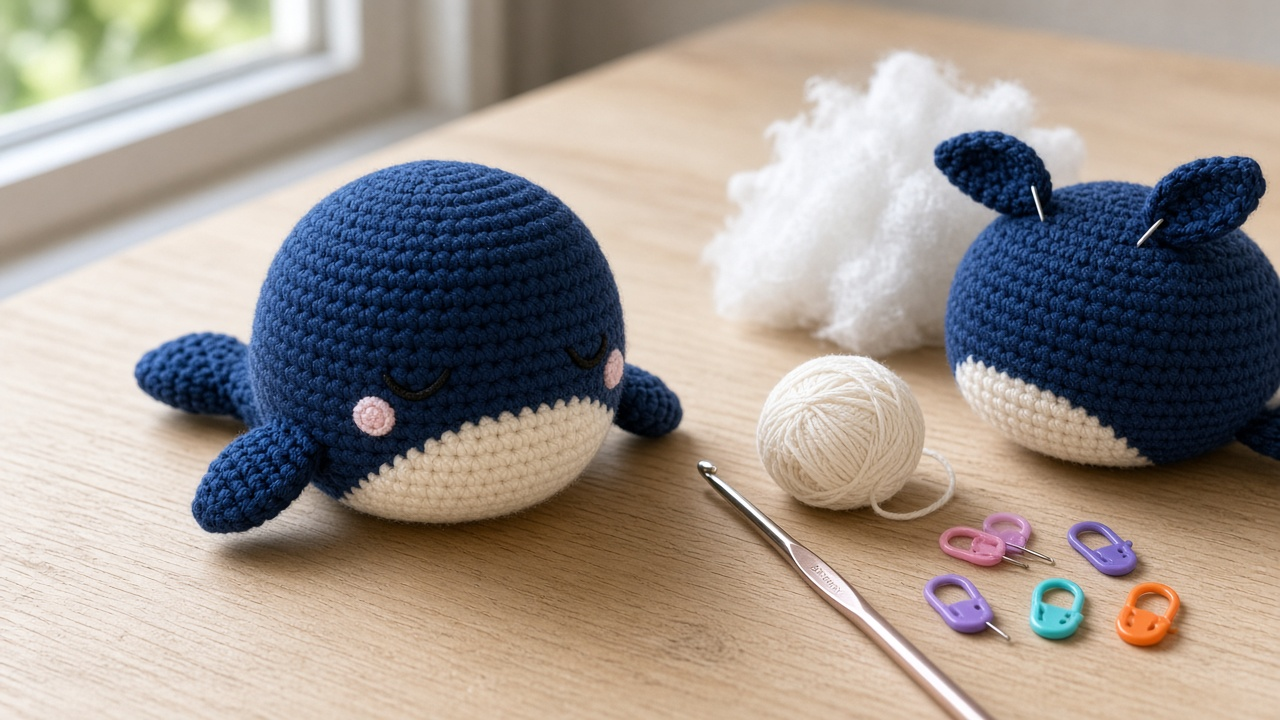
The example is a sleepy blue whale with an embroidered face, worked in worsted cotton on a 3.5 mm hook:
- The body grows by 6 stitches a round from 6 to 36, then holds for 8 even rounds before decreasing back to 6.
- Increases are staggered. Round 4 reads sc, inc, (sc 2, inc) x5, sc. The output shows the check: 18 stitches used and 24 made, so the round adds up.
- The face comes before closing. Embroidery happens after round 17, while the opening is still wide enough to reach inside.
- The belly is a flat oval worked around a chain, so it sews on as a patch instead of forcing color changes in the body.
- Size and yardage are blanks for the designer to fill after weighing and measuring the sample, rather than guesses.
- Safety notes are short and practical: embroidered eyes for babies, small parts warnings for safety eyes, and a pointer to US children's product rules for buyers who sell finished toys.
Tips for better results
- Crochet your own sample with the exact yarn and hook in the pattern, then fill in the measured size.
- Paste back any round you change by hand and ask the prompt to recheck the counts for the whole part.
- Keep one decrease method for the whole pattern. Mixing standard and invisible decreases confuses buyers.
- Ask for a photo plan for the PDF: a shot of each part, the face before closing, and the assembled toy from the side.
Mistakes to avoid
- Do not stack increases in the same spot every round. That is what makes the hexagon shape.
- Do not publish a finished size you have not measured.
- Do not tell buyers safety eyes are fine for babies. Embroider instead.
- Do not skip testers on a first pattern. Even careful designers miss a count.
Who it is for
Crochet designers selling their first PDF patterns on Etsy or Ravelry, makers turning a toy they improvised into a written pattern, tech editors who want a structured draft to check, and craft teachers building a simple pattern for a class.
Related PromptDig links
Open the Amigurumi Crochet Pattern Writer for Etsy and Ravelry PDFs: US Terms, Magic Ring Starts, Staggered Increase Rounds with Stitch Counts, Part by Part Assembly, Safety Eye Warnings, and a Tester Call Checklist prompt and describe your toy. For more craft and creative prompts, Browse more prompts. If you have a pattern or making prompt that works well for you, Share a prompt.