ChatGPT Prompts for Design Thinking: 12 for Every Phase
12 ChatGPT prompts for design thinking: interview guides, empathy maps, point-of-view and how might we questions, ideas, prototype plans and test scripts.
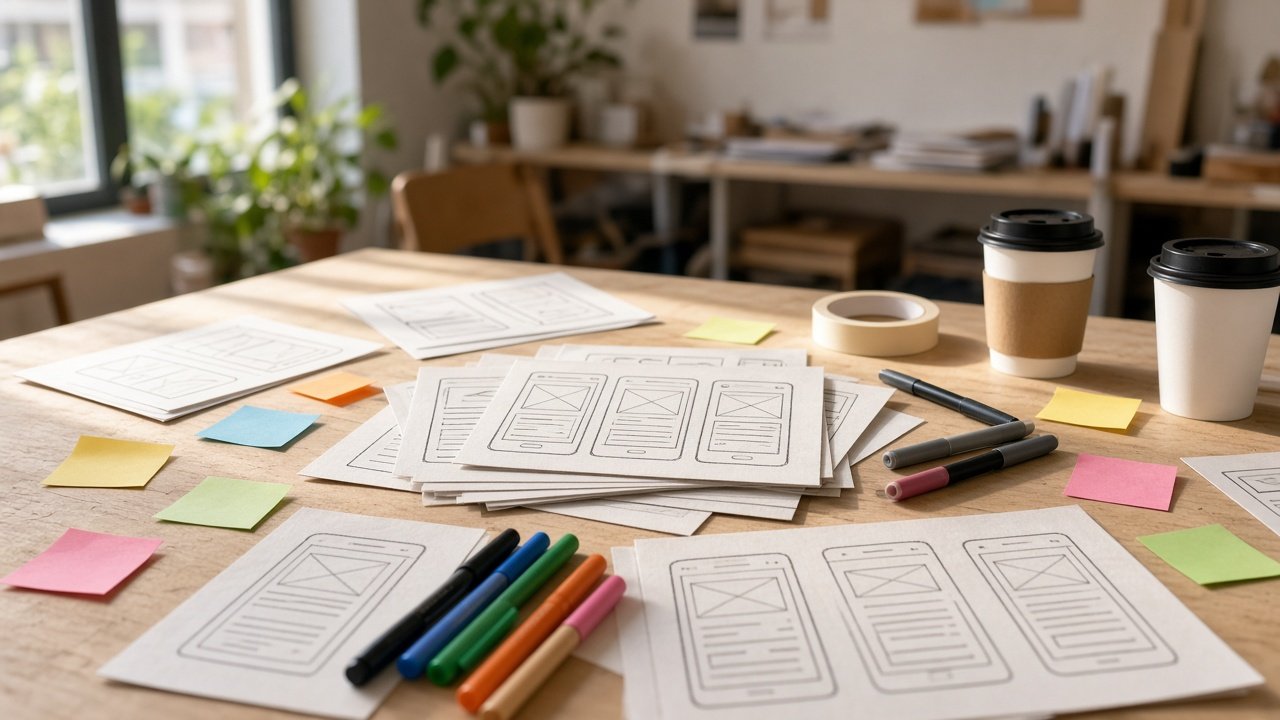
ChatGPT prompts for design thinking help a team move from raw research notes to a tested idea, one phase at a time: empathize, define, ideate, prototype and test, the five modes popularized by the Stanford d.school. The 12 prompts below give you one or two prompts per phase. Paste your own interview and observation notes, fill in the [bracketed] parts, and never let the model invent what users said.
The flagship is the design thinking prompt from research notes to a tested concept. You give it the challenge, research method, notes, recorded quotes, constraints, accessibility needs, team skills, prototype materials and your board's color key. It returns an empathy map, a point-of-view statement, how might we questions, ten ideas, two picks, prototype and test plans, and the assumptions to check.
Empathize
1. Interview guide
We are designing for [user group] around [challenge]. Write a 30-minute interview guide with a warm-up, five open questions about their last real experience of [situation], and probes that ask for stories, not opinions.
2. Empathy map from notes
From these notes [notes] and these exact quotes [quotes], build an empathy map with says, does, thinks and feels. Use the quotes word for word under says, and mark every thinks and feels line as inferred.
3. Journey map
Using [notes], map the steps a [user] goes through to [goal], from first need to finish. For each step give what they do, where it goes wrong, and which note shows it.
Define
4. Point-of-view statement
From this empathy map [map], write a point-of-view statement: [user] needs [need] because [insight]. Give three versions with different insights and say which note supports each.
5. How might we questions
Turn this point of view [statement] into six how might we questions, from narrow to broad. Avoid questions that already contain a solution.
Ideate
6. Idea burst within limits
For the question [HMW question], list 15 ideas that fit [budget], [time] and [tech limits]. Tag each by cost and by who on our team ([skills]) could build it.
7. Reverse brainstorm
List ten ways to make [problem] worse for [user]. Then flip each one into an idea that would make it better.
8. Idea scoring
Score these ideas [ideas] from 1 to 3 on user impact, effort and fit with [accessibility needs or other criteria]. Show the table and explain the top two in plain words.
Prototype
9. Prototype plan
For the idea [idea], plan the cheapest prototype we can build with [materials] in [time]. Say what a tester must be able to do with it and what we can leave out.
Test
10. Test script
Write a test script for [prototype] with [number] testers from [user group]: intro, three tasks, what to observe, what counts as success, and two questions after each task. Remind me to get consent before recording.
11. Feedback synthesis
Here are my test notes [notes]. Group what happened by task, separate what testers did from what they said, and list what to change before the next round.
All phases at once
12. Flagship: research notes to a tested concept
DesignChallenge [challenge], ResearchMethod [method], ResearchNotes [notes], RecordedQuotes [quotes], Constraints [limits], AccessibilityNeeds [needs], TeamSkills [team], PrototypeMaterials [materials], BoardKey [colors]. Take me from empathy map to test plan.
Worked example: a library holds shelf
In the flagship example, a team at an invented public library studies its holds pickup shelf with six interviews and two hours of Saturday observation. Four of the six patrons missed their item on the first try, and one parent with a stroller could not reach the top shelf. The output keeps the two recorded quotes word for word, marks feelings as inferred, and lists ten ideas that fit a 1,500 dollar budget with no new software. It picks color bands with large print labels and reachable bottom shelves, then plans a five-patron test where success means finding the item on the first try without asking staff. Its assumption list even flags that color alone will not work for colorblind patrons.
Variations
- Product teams: swap the library for an app flow and use screens as PrototypeMaterials.
- Workshops: run prompts 4 to 8 live while the team watches, then vote on the picks.
- Short on research: run only prompt 1 first; the flagship will tell you when notes are too thin.
Tips for design thinking with ChatGPT
- Never let the model write user quotes. Paste them exactly as recorded.
- Keep observations and inferences apart; it makes the define step honest.
- Put real limits in every ideation prompt, or you will get ideas you cannot build.
- Leave out names and personal details from research notes before you paste them.
- Test with real people. A model can plan a test but cannot be your tester.
- Maple Hollow is an invented library. PromptDig is independent of Stanford's d.school and OpenAI.
Related prompts
Planning interviews? Start with the user interview discussion guide writer. After testing, use the UX research prompt for usability notes to findings, and for survey results try the survey analysis prompt for results tables and open-end themes. Read ChatGPT prompts for UX research for more research prompts. Find more in the Design prompt category, browse the PromptDig prompt library, or share your own prompt on PromptDig.