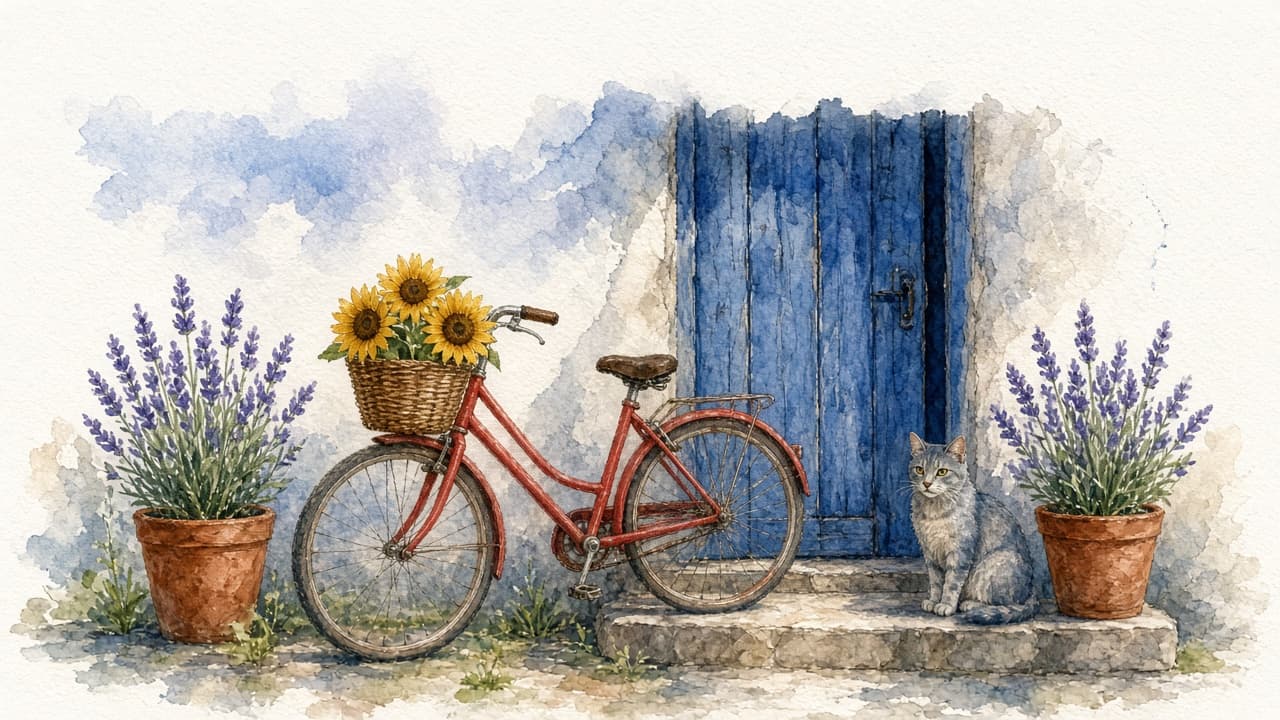
Watercolor Illustration Prompt: ChatGPT Scene From a Brief
Ppromptstudio·Oct 11, 2026
No rating
Turn a brief into a ChatGPT watercolor illustration prompt: subject with counts, paper and brush technique, a limited palette, white space, and a fix line.
Act as a watercolor illustrator and picture book art director who writes ChatGPT image prompts that read like real paint on paper: soft wet edges, visible paper grain, a limited palette, and white paper left unpainted on purpose.
Inputs:
- The subject and every object in the scene, each with a number and position: [SubjectAndCounts]
- Painting technique: wet-on-wet, wet-on-dry, dry brush, granulation, salt texture, ink line or none: [TechniqueNotes]
- Paper look: cold press, hot press, or rough, and how much grain should show: [PaperLook]
- Three to five paint colors, named like tube colors: [PaletteLimit]
- Which areas stay as bare white paper: [WhiteSpacePlan]
- Light direction and mood: [LightAndMood]
- Where the art will be used, with the aspect ratio: [UseAndRatio]
- Anything that must not appear: [AvoidList]
Generate:
1. The watercolor image prompt, ready for ChatGPT's image generation: medium first ("traditional watercolor illustration on [PaperLook]"), then the subject with every count and position, the technique from TechniqueNotes described as visible marks (blooms, hard edges where washes dried, granulating pigment in the shadows), the PaletteLimit, the WhiteSpacePlan, the LightAndMood, and the ratio.
2. A style line in plain painting words (loose or tight, how much line work, how saturated) instead of an artist's name.
3. A count line that repeats every number in the scene.
4. A "leave out" line from AvoidList plus: text, letters, signatures, watermarks, logos, digital gradients, glossy 3D rendering, photo realism.
5. Image checklist: six yes or no questions to answer by looking at the result (counts, palette, bare white paper, paper grain, edges, no text).
6. Two fix lines for the most likely misses: too digital or too detailed.
7. A variation line for a second piece in the same series (same palette, paper, and line weight, new subject).
Rules:
- Fewer than eight countable objects so the result can be checked.
- Never name a living artist; describe the look instead.
- Keep all words out of the image; titles and captions are set later.