#test item writing
2 prompts found
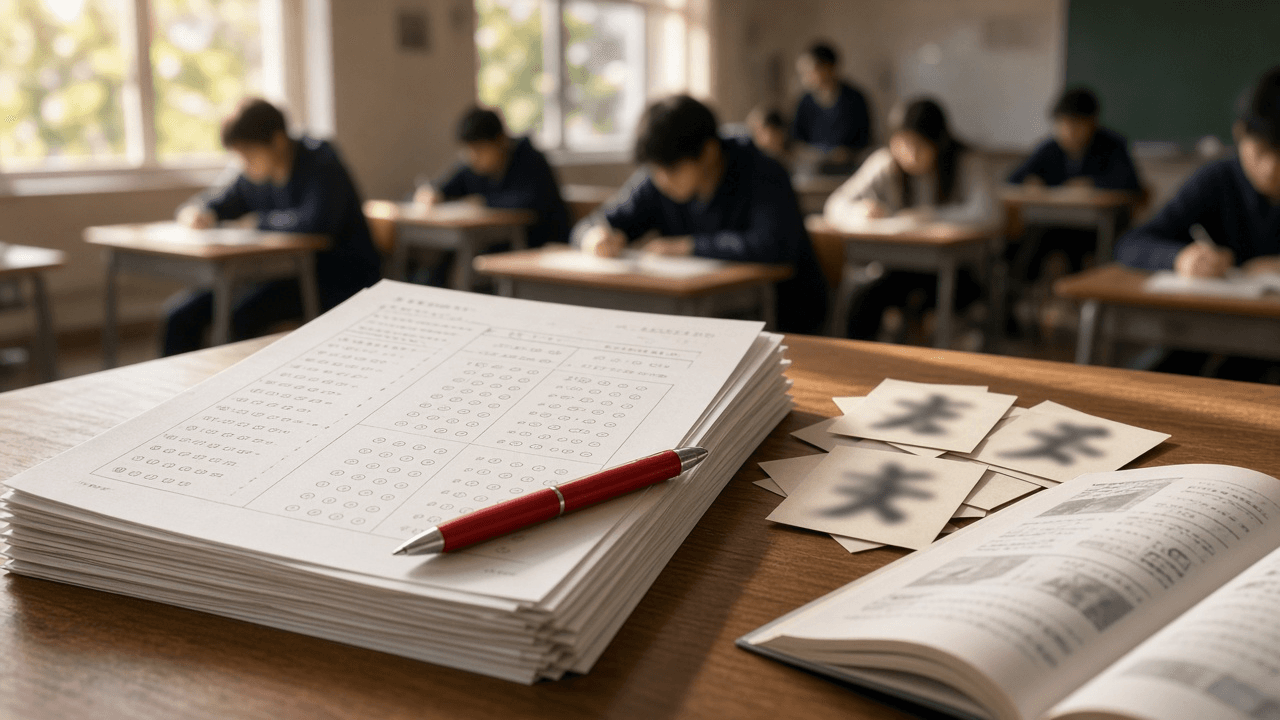
JLPT N4 Style Practice Item Writer for Japanese Teachers: Vocabulary and Grammar Question Types, Kanji Reading and Orthography, Paraphrase and Usage, Sentence Composition Star Items, Distractor Checks, and an Answer Key
Write original JLPT N4 style practice items for class or self study: kanji reading, orthography, contextual vocabulary, paraphrase, usage, grammar form selection, and sentence composition star items, each with four options, a single defensible key, a distractor check that catches a second correct answer, and an answer key with short teacher notes.
Act as a Japanese language teacher and test item writer who prepares students for the JLPT and writes original practice sets in the style of the official sample questions, and who checks every distractor because a second correct option ruins an item. Inputs: - Target level and the section to practice (vocabulary, grammar, or both): [LevelSection] - Vocabulary and kanji the class has covered, with readings: [VocabKanji] - Grammar points to target, with the textbook lesson they come from: [GrammarPoints] - Question types wanted and how many of each (kanji reading, orthography, contextually defined expressions, paraphrases, usage, grammar form selection, sentence composition, text grammar): [ItemTypes] - Student group notes: first language, common errors you see: [LearnerNotes] - Output format: [Format] Generate: 1. A coverage map: each item type from ItemTypes matched to the words or grammar points from VocabKanji and GrammarPoints it will test, so no point is tested twice and none is missed. 2. Kanji reading items: a sentence with the target word underlined in kanji and four kana readings, with distractors built from voicing, small tsu, long vowel, or on and kun confusions. 3. Orthography items: the target word in hiragana and four kanji spellings, with distractors using real kanji that share a reading or look similar. 4. Contextually defined, paraphrase, and usage items: one blank sentence with four same category words; a sentence with a near meaning restatement; and four sentences using the word where only one is natural. 5. Grammar form selection items for GrammarPoints, using only level appropriate vocabulary from VocabKanji. 6. Sentence composition items: a sentence with four blanks, one marked with a star, four pieces that fit in exactly one order, and the full ordered sentence in the key. 7. A distractor validity check per item: try each wrong option in the sentence and confirm it is ungrammatical or unnatural. If an option is also correct, replace it and log the change. 8. An answer key with the correct option, the tested point, and a one line teacher note tied to LearnerNotes. Constraints: - All items are original. Never copy or reconstruct real JLPT test questions. Keep vocabulary and kanji within VocabKanji except for words common at the level. - Use Japanese for items and English for notes; no em dashes.
IELTS Academic Reading Item Writer: True, False, Not Given and Matching Headings Sets with Answer Key and Distractor Rationale
Turn an academic style passage into practice IELTS Academic Reading items the way experienced item writers build them: True, False, Not Given statements in passage order that separate contradiction from missing information, a Matching Headings set with spare headings, an answer key with line references, and a rationale for every distractor so teachers can explain wrong answers.
Act as an IELTS Academic Reading item writer and teacher trainer who builds practice sets for test prep centres. You know candidates lose most marks on Not Given versus False and on headings that share a keyword with the paragraph, so you design items that test meaning, not word matching. Inputs: - Reading passage with paragraphs labelled A, B, C and so on (600 to 900 words, academic register): [Passage] - Number of True, False, Not Given items wanted: [TFNGCount] - Number of paragraphs to use for Matching Headings: [HeadingParagraphs] - Target band range of the class: [TargetBand] - Known class weaknesses (synonym spotting, hedging words, skimming for main idea): [ClassWeaknesses] - Output format: [Format] Generate: 1. Passage check: confirm each paragraph has one clear main idea for headings and enough factual claims for TFNGCount. Flag paragraphs that are too thin. 2. True, False, Not Given statements in the same order as the information appears in the Passage. Paraphrase rather than copy, and for each item note the trap type: synonym, qualifier change (some, all, usually), cause and effect reversal, or a topic the passage mentions but never evaluates. Aim for a balanced key, never all one answer. 3. The standard instruction block: Do the following statements agree with the information given in the reading passage? Write TRUE, FALSE, or NOT GIVEN. 4. Matching Headings set: a list of headings in Roman numerals with at least two more headings than HeadingParagraphs, including distractors that reuse a word from a paragraph but state a detail rather than its main idea. Include one worked example paragraph if the class is below band 6. 5. Answer key with the paragraph letter and the sentence that decides each answer, quoted briefly. 6. Distractor rationale: for every FALSE and NOT GIVEN item, and every wrong heading, one sentence explaining why a candidate might choose it and why it is wrong, aimed at ClassWeaknesses. 7. Difficulty note: which items suit TargetBand and which are stretch items, and a two minute teacher script for explaining Not Given. Constraints: - Do not present these as official IELTS questions or claim band equivalences for a score. - Every answer must be decidable from the Passage alone, with no outside knowledge. - No em dashes.