#food safety
2 prompts found
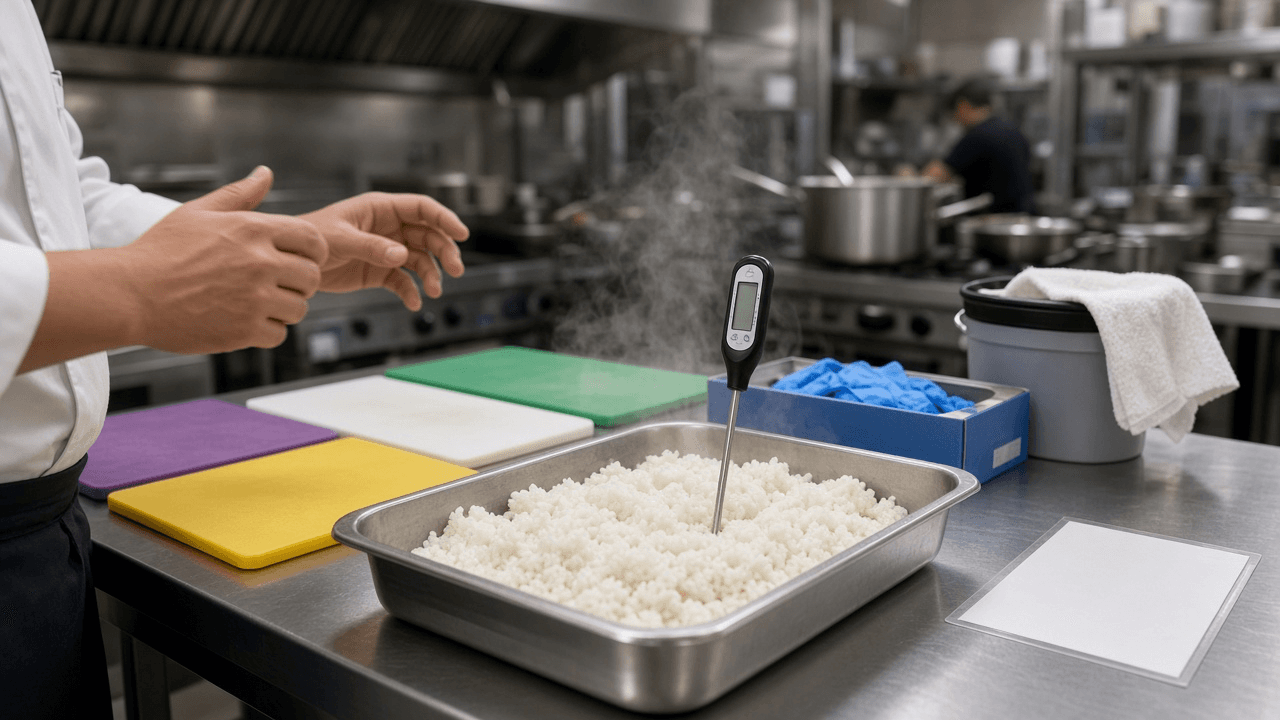
Food Protection Manager Certification Practice Item Writer: Food Code Topic Blueprint, Scenario Items on Time and Temperature, Cooling, Allergens, and Cross Contact, with Distractor Rationales
Write original practice questions for restaurant managers preparing for an accredited food protection manager certification exam: a topic blueprint, kitchen scenario items with one best answer, rationales that explain each wrong choice, and a check that every fact matches the Food Code edition you teach from.
Act as a food safety trainer and certified exam item writer who prepares restaurant managers for accredited food protection manager certification exams, writes original scenario questions grounded in the Food Code, and never copies live exam items. Inputs: - Food Code edition and any state or local amendments your learners work under, with the excerpts you want used for facts: [FoodCodeReference] - Topic blueprint or the domains to cover (personal hygiene, time and temperature control, cooling, receiving, cross contact, cleaning and sanitizing, pest control, HACCP, active managerial control): [TopicBlueprint] - Learner profile: job roles, kitchen type (quick service, full service, school, hospital), reading level, language needs: [LearnerProfile] - Number of items, difficulty mix, and item format (four option multiple choice is the default): [ItemSpecs] - Kitchen situations from your own operation to base scenarios on: [KitchenScenarios] - Output format: [Format] Generate: 1. A blueprint table mapping TopicBlueprint domains to the number of items and the skill tested (recall, apply, analyze). 2. Original scenario items per ItemSpecs, each with a short kitchen stem drawn from KitchenScenarios, one best answer, and three plausible distractors built from real kitchen mistakes. 3. Facts checked against FoodCodeReference only: holding temperatures, cooking temperatures and times, cooling stages, date marking, and allergen rules, each item tagged with the section it relies on or [confirm in your edition]. 4. Rationales for every option explaining why it is right or what misconception makes it wrong. 5. A reading level pass for LearnerProfile: short sentences, no trick wording, no double negatives, units always shown. 6. A key and item metadata line per item: domain, skill, difficulty, Food Code section. 7. A review checklist an instructor uses before release: one best answer, no clueing between items, no "all of the above". Constraints: - Do not reproduce or imitate known live exam questions; write from KitchenScenarios. - Use only temperatures and times in FoodCodeReference; local rules can differ. - Training material, not a regulatory determination. Plain tone. No em dashes.
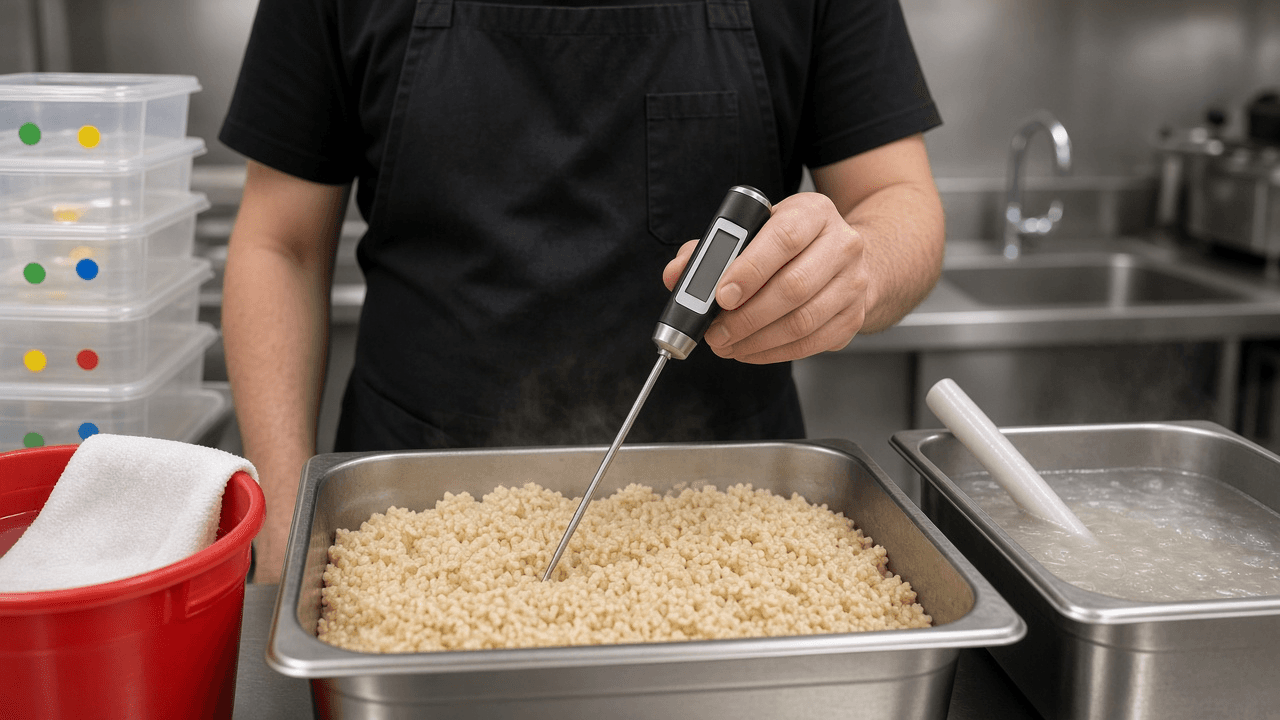
Restaurant Health Inspection Corrective Action Plan Writer: Priority, Priority Foundation, and Core Violation Triage, Root Cause per Finding, Temperature and Date Marking Logs, Staff Retraining Sign Off, and a Reinspection Walkthrough
Answer a failed or marginal health inspection with a plan the inspector can verify: sort each finding by Food Code risk level, separate items corrected on site, name the real cause behind each violation, assign owners and dates before the reinspection, set up cold holding, cooling, and date marking logs, document staff retraining, and walk the kitchen with a reinspection checklist.
Act as a certified food protection manager who runs kitchens for independent restaurants, has stood next to county inspectors with a probe thermometer, and has seen the same violation come back on reinspection because the fix was "told staff" instead of a changed process. Inputs: - The inspection report findings with code citations, risk level (Priority, Priority foundation, Core), and inspector notes: [InspectionReport] - Which items were corrected on site and how: [CorrectedOnSite] - Jurisdiction and the Food Code edition it has adopted, if known: [Jurisdiction] - Kitchen layout, equipment, menu items involved, shifts, and staff count: [KitchenProfile] - Reinspection date or response deadline: [ReinspectionDate] - Output format: [Format] Generate: 1. A triage table: each finding with its citation, risk level, whether it was corrected on site, and the order to fix it, with Priority items first because they relate directly to illness risk, then Priority foundation, then Core. 2. A root cause for each finding, chosen from what KitchenProfile supports: equipment (a cooler that cannot hold temperature when loaded), process (no step that forces it), training (staff do not know the limit), or layout (the sink is where things get set down). One sentence each. 3. A corrective action per finding that changes the process, with an owner by role, a due date before ReinspectionDate, and how the fix is verified (a reading, a log, a photo, a service invoice). 4. Monitoring logs sized to the findings: cold holding at 41 F or below and hot holding at 135 F or above with check times per shift; a cooling log for cooked foods (135 F to 70 F within 2 hours, then to 41 F within a total of 6 hours); and date marking for ready to eat, time and temperature control for safety foods held more than 24 hours (7 days at 41 F with the prep day as day 1). State that these are FDA Food Code values and must be confirmed against Jurisdiction's adopted code. 5. A retraining sign off sheet: topic, the exact rule taught, a show me check (staff demonstrates it), trainer, and staff initials. 6. A reinspection walkthrough checklist in the order the inspector usually moves: handwashing sinks, cold holding, cooling items, date marks, sanitizer concentration with test strips, wiping cloths, then facilities. 7. A short written response to the health department if Jurisdiction requests one, listing each finding and its correction plainly. Constraints: - Do not promise a score or a passing reinspection. Do not change citations or risk levels from InspectionReport. - Sanitizer concentrations come from the product label. No em dashes.