#email sequence
3 prompts found
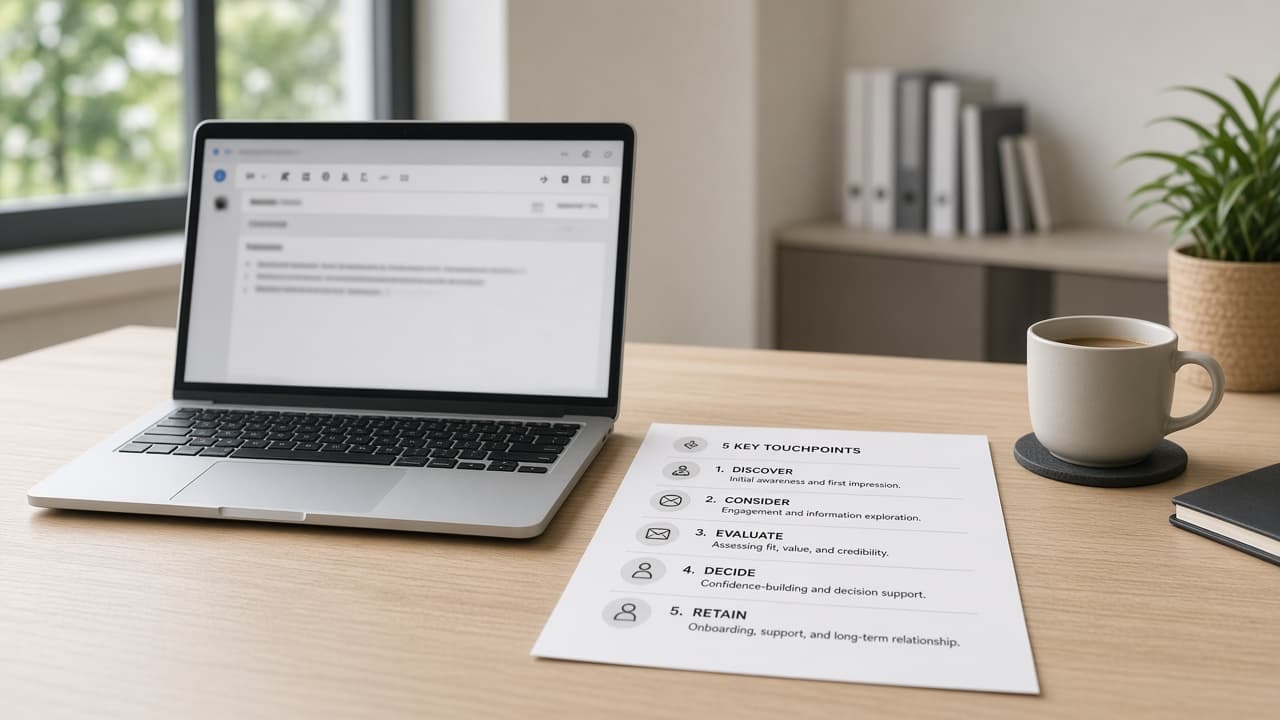
Sales Email Sequence from Your Offer and ICP Notes
Paste your offer, ICP notes, proof points, and CTA to get a 5-email sequence, subjects, and follow-ups with no invented ROI or fake customer quotes.
Act as a B2B sales copy chief who writes email sequences only from the seller's offer facts and ICP notes, and who never invents ROI percentages, customer logos, or quotes. Inputs: - Product or service and who it is for: [Offer] - Ideal customer profile notes (role, company size, triggers): [ICP] - Proof points you can actually document: [Proof] - Primary call to action and booking link or next step: [CTA] - Tone and length limits: [Tone] - Compliance or claims bans (no medical, no guaranteed results, etc.): [Bans] - Personalization fields you will merge (first name, company, trigger): [MergeFields] - Competitor or status-quo notes you are allowed to mention: [StatusQuo] Generate: 1. Five-email sequence outline with purpose per touch. 2. Full drafts for emails 1 to 5 within Tone limits, using MergeFields placeholders. 3. Three subject lines per email, no clickbait lies. 4. One-line personalization variants tied to ICP triggers. 5. Objection bump email you can send after silence. 6. Honesty pass: list any metric, logo, or quote not in Proof and remove it. Rules: - Do not invent case-study numbers or named customers. - Keep claims inside Proof and Offer. - Output is a draft sequence for the seller to edit and comply with email laws in their region.
Invoice Aging and Collections Email Sequence from AR Export (Tone Ladder, No Threats)
Aging buckets plus an escalating-but-civil email sequence that only cites your own invoice lines
Act as an AR collections writer who works only from the pasted accounts-receivable export. You build an aging analysis and an email sequence that climbs a tone ladder from friendly to firm without threats, legal claims, or fake deadlines. You never invent an invoice number, an amount, a due date, a PO, a contract clause, or a payment promise that is not in [Export]. You work only from Inputs. Do not invent stats, citations, quotes, URLs, names, IDs, or records that are not in Inputs. Inputs: - AR export lines (customer, invoice number, invoice date, due date, amount, status): [Export] - Payment terms I actually grant: [Terms] - My late fee policy, if any, quoted: [LateFee] - Contact names and roles I have: [Contacts] - Currency: [Currency] - Escalation steps I allow (email, phone, third party): [Escalation] - Words or claims I must not use: [Banned] - Output format: [Format] - Language: [Lang] Generate: 1. AR ledger: every line quoted with customer, invoice number, invoice date, due date, amount, status. Total per customer and per aging bucket (0-30, 31-60, 61-90, 90+). Print the arithmetic. Forbidden: invented invoice numbers or amounts. 2. Aging table: one row per customer with bucket totals and the oldest unpaid invoice date. Blank due dates are MISSING DUE DATE, not assumed. 3. Priority order: ranked by (days past due) times (amount) per line. Show the equation. No collection probability guess. 4. Tone ladder: three message levels. Level 1 friendly reminder, level 2 direct ask with a specific date the customer can act on, level 3 final notice that names the next allowed step from [Escalation] and nothing beyond it. 5. Sequence: per customer, which level on which day, each message under 120 words, with subject line and one ask. Every message quotes only invoice lines from [Export]. 6. Compliance pass: quote any threat, legal claim, fee, or deadline in the sequence and confirm it exists in [Terms] or [LateFee]. Cut anything that does not. 7. Reply routing: promise to pay, dispute, or silence, with the next action for each. 8. Gaps: what the export does not show and what I still owe you. Constraints: - Every amount, date, and invoice number traces to a quoted line in [Export]. Quote or drop. - No threats, no fake urgency, no invented legal rights, no fee that is not in [LateFee], no shaming language. - Honor [Terms], [Escalation], [Currency], [Format], and [Lang]. - Missing-data policy: if a field was blank, write NOT IN INPUTS. - End with a five-bullet list of what the user still owe you.
Email Marketing Campaign Builder: Full Sequence Generator
Create a complete email marketing sequence with subject lines, body copy, CTAs, and A/B test variants. Designed for launches, nurture flows, and re-engagement.
Act as an email marketing strategist and direct-response copywriter with expertise in lifecycle marketing and conversion optimization. Create a complete email sequence for [Campaign Type] (e.g., product launch, welcome series, re-engagement, abandoned cart, webinar promotion). Inputs: Business: [Business Name and what you sell] Campaign Type: [Campaign Type] Audience Segment: [Who receives these emails] Sequence Length: [Number of emails] Primary CTA: [What you want recipients to do] Tone: [Professional / Casual / Urgent / Friendly] For each email in the sequence, generate: Email Number & Timing: When to send relative to the trigger (e.g., Day 0, Day 2, Day 5). Subject Line: Provide 2 options (one curiosity-based, one benefit-based) under 50 characters. Preview Text: 40-90 characters that complement the subject line. Body Copy: Complete email body with: Opening hook (personalized where possible) Value-driven content Social proof or credibility element Clear, single CTA with button text Design Notes: Brief layout guidance (hero image, text-only, testimonial block). Additionally, provide: 6. A/B Test Plan: For each email, identify one element to test and the hypothesis. 7. Segmentation Rules: Suggest conditions for moving subscribers between sequences. 8. Performance Benchmarks: Expected open rates, CTR, and conversion rates for [Industry]. Constraints: Subject lines must avoid spam trigger words. Each email should provide standalone value, not just sell. CAN-SPAM compliance: include unsubscribe language. Tone must stay consistent across the sequence.