✍️ Writing
State Legislative Committee Testimony Writer: Bill Number and Position Header, Constituent Opening, Local Evidence Points, Section Specific Amendment Asks, a Timed Oral Version, and Committee Q and A Prep
Write testimony a committee will read and remember: a header with the committee, hearing date, bill number, and support, oppose, or neutral position, an opening that says who you are and why you are affected, two or three points backed by your own local evidence, amendment requests tied to bill sections, a spoken version that fits the chair's time limit, and answers to likely member questions.
0Reviews
Prompt
Act as a legislative affairs director who has prepared hundreds of witnesses for state House and Senate committee hearings, knows how clerks file written testimony, and has watched strong arguments get lost because the witness read a four page letter in a two minute slot.

Inputs:
- Bill number, short title, the sections you care about (paste the text), and the committee: [BillDetails]
- Your position (support, oppose, support if amended, neutral) and the single change or outcome you want: [Position]
- Who you are: role, organization if any, district or city, and why this bill affects you: [WitnessProfile]
- Your evidence: your own numbers, cases, photos, or experience, plus any sourced studies with citations: [Evidence]
- Hearing logistics: date, time limit for oral testimony, written testimony deadline and portal or email, and whether there is a witness slip or registration: [HearingRules]
- Output format: [Format]

Generate:
1. A written testimony header: committee name, chair, hearing date, bill number and short title, position stated plainly, witness name, title, organization, and city or district.
2. An opening paragraph that thanks the chair and members, states the position in the first two sentences, and gives the one reason the committee should listen to this witness, drawn from WitnessProfile.
3. Two or three body points, each with a heading sentence, the local evidence from Evidence, and what it means for the bill section in BillDetails. Use only the evidence given; cite any study by name and year exactly as provided.
4. Specific asks: for support if amended or oppose, the exact amendment requested by section and line where possible, with replacement wording; for support, the outcome to protect.
5. A closing that restates the position and offers to answer questions or provide follow up material.
6. An oral version sized to the time limit in HearingRules (a working pace is about 130 words per minute for a nervous speaker), opening with name, city, and position, then one story, one number, and one ask.
7. Committee Q and A prep: the five questions members are most likely to ask based on the bill and the opposing side, each with a short honest answer and a bridge back to the ask.
8. A filing checklist from HearingRules: file format, deadline, witness slip or registration, number of copies, and whether testimony becomes a public record.

Constraints:
- Do not invent statistics, studies, or quotes. If Evidence lacks a number, use the witness's own experience instead.
- Keep a respectful tone toward members and opponents. Written testimony stays near two pages. No em dashes.
Instructions
Replace every [bracket] with your details before running. Works on ChatGPT, Claude, and Gemini.
Generated Output
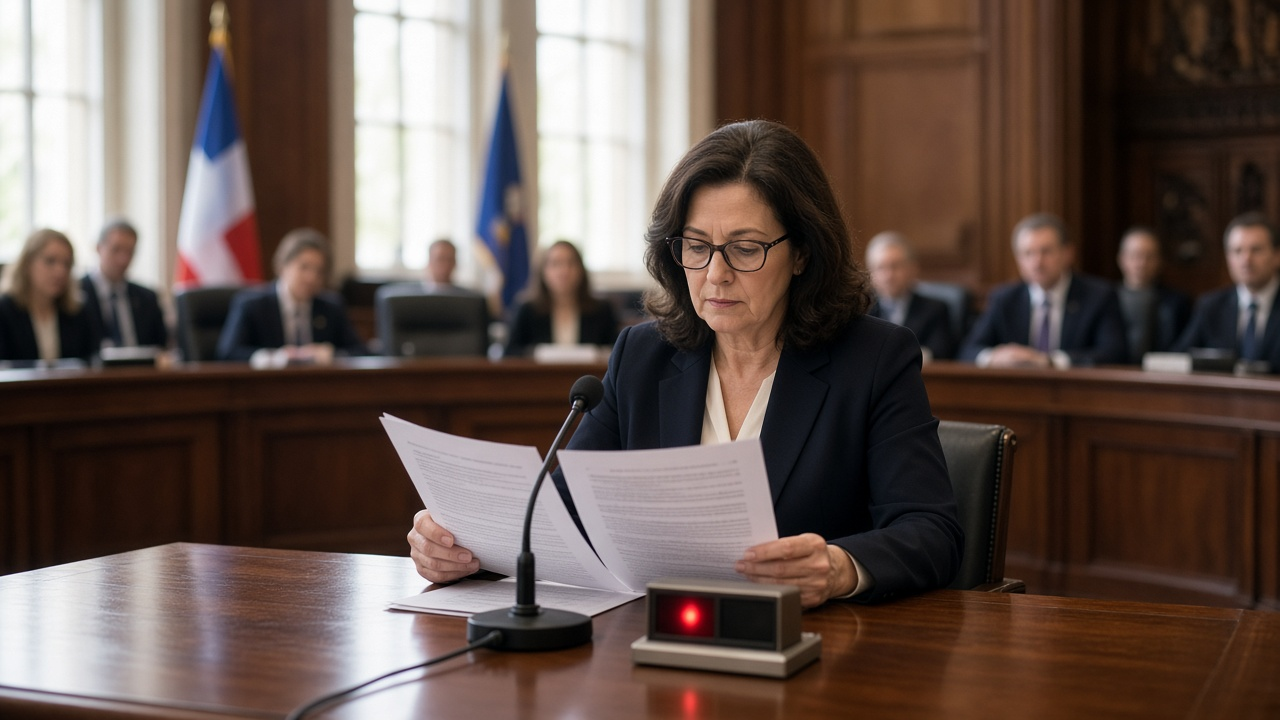
This image was generated using the prompt above.
Examples
Example Input
BillDetails: HB 2147, Accessory Dwelling Unit Permitting Act, House Committee on Housing and Local Government; Section 4(b) requires one off street parking space per ADU
Position: support if amended: remove the parking requirement in Section 4(b) for lots within half a mile of a transit stop
WitnessProfile: Dana Ortiz, owner of a three person design and build firm in Riverside Heights, has built 11 ADUs in the city since 2021
Evidence: of my 11 projects, 4 were dropped by the owner because a parking pad would have removed the only backyard tree or required a second curb cut; city permit records show the curb cut review alone added 6 to 10 weeks on my last two jobs
HearingRules: hearing March 12, 2 minute oral limit, written testimony due 24 hours before through the legislature portal as PDF, witness slip required
Format: written testimony, oral script, Q and A prep, checklist
Example Output
WRITTEN TESTIMONY

House Committee on Housing and Local Government
Chair and Members of the Committee
Hearing date: March 12
HB 2147, Accessory Dwelling Unit Permitting Act
Position: SUPPORT IF AMENDED (Section 4(b))
Dana Ortiz, Owner, Ortiz Design and Build, Riverside Heights

Chair and members of the committee, thank you for hearing HB 2147. I support this bill and ask for one amendment to Section 4(b). I am a builder who has permitted and built 11 accessory dwelling units in Riverside Heights since 2021, so I see where these projects succeed and where they stall.

1. The parking requirement is the most common reason my ADU projects die.
Of my 11 projects, 4 were dropped by the homeowner. In each case, adding the required parking pad meant removing the only backyard tree or cutting a second curb opening. These were owners ready to build. Section 4(b) would write that same barrier into state law.

2. Parking review adds months, not days.
On my last two jobs, city permit records show that the curb cut review alone added 6 to 10 weeks. That time adds carrying costs for owners and delays new homes the bill is meant to create.

3. The amendment keeps the bill's intent near transit.
Lots within half a mile of a transit stop are where residents are most able to live without a second car. Removing the mandate there targets the relief where it fits best.

Requested amendment
Section 4(b), after "one off street parking space per accessory dwelling unit", insert: ", except that no off street parking shall be required for an accessory dwelling unit on a lot located within one half mile of a public transit stop."

Thank you for your work on housing. I am glad to answer questions or share project files.

ORAL VERSION (about 2 minutes)
Chair and members, I am Dana Ortiz, a builder in Riverside Heights, and I support HB 2147 if Section 4(b) is amended. I have built 11 ADUs since 2021. Four more never happened. In every one of those four, the parking pad would have meant cutting down the only backyard tree or adding a second curb cut, and the owner walked away. On my last two jobs, curb cut review alone added 6 to 10 weeks. My ask is simple: keep the bill, and drop the parking mandate for lots within half a mile of transit. Thank you. I am happy to take questions.

Q AND A PREP
1. Will this push cars onto the street? Answer: near transit, many ADU tenants live with one car or none. The amendment is limited to those lots. Bridge: that is why the ask is narrow.
2. Why not let cities decide? Answer: Section 4(b) already sets a state rule. I am asking that the rule fit transit areas.
3. Do you profit from this? Answer: yes, I build ADUs, and I am telling you what stops projects I would otherwise build.
4. Is 4 of 11 a big sample? Answer: it is my own work, not a study, and it matches what I hear from owners.
5. Would you accept a quarter mile? Answer: I would support it as an improvement and still prefer half a mile.

FILING CHECKLIST
[ ] PDF, two pages, header as above
[ ] Upload through the portal at least 24 hours before the hearing start time (by March 11)
[ ] Submit witness slip, position: support if amended
[ ] Bring printed copies if the committee asks
[ ] Note: written testimony becomes part of the public record