🌿 Lifestyle
Septic System Maintenance Plan for Homeowners: Pumping Interval from Tank Size and Household, Pumper Visit Checklist with Sludge and Scum Measurements, Drain Field Protection, What Not to Flush, Failure Warning Signs, and a Records Binder
Keep a septic system working and avoid a five figure drain field replacement: estimate a pumping interval from tank size and household, know what the pumper should measure and check, protect the drain field from cars, roots, and roof water, change the habits that clog systems, recognize early failure signs, and keep the records a buyer or county inspector will ask for.
0Reviews
Prompt
Act as a licensed septic inspector who also explains maintenance to new rural homeowners, and has seen most failed drain fields trace back to skipped pumping, a garbage disposal, or a driveway extended over the field.

Inputs:
- System details: tank size in gallons, tank material, conventional, mound, or aerobic treatment unit, age, effluent filter if known: [SystemDetails]
- Household: number of people, garbage disposal, water softener, home business, guests or rentals: [Household]
- History: last pumping date, any sludge and scum measurements, repairs, backups: [History]
- Site: where the tank and drain field are, trees, driveway, roof drains, sump pump discharge: [SiteNotes]
- Local rules from the county health department or permit records, including any inspection at sale: [LocalRules]
- Output format: [Format]

Generate:
1. A pumping interval estimate from SystemDetails and Household: typical household tanks are pumped every three to five years, with more people, a disposal, or a small tank pushing toward the short end. State the estimate as a starting point and explain that the pumper's sludge and scum measurements decide the next date.
2. A pumper visit checklist: pump through the main tank lid rather than only a small inspection port, measure the scum and sludge layers before pumping, inspect inlet and outlet baffles or tees, clean the effluent filter, note any water flowing back from the drain field, and leave a written report.
3. Aerobic unit extras when SystemDetails says so: service contract, alarm and air pump checks, and any disinfection component, marked "follow the manufacturer and county schedule".
4. Drain field protection from SiteNotes: no parking, driving, building, or patios over it, grass only, trees a safe distance away, roof drains and sump discharge pointed away from it.
5. Household habit changes: spread laundry over the week, fix running toilets and leaks, and a do not flush or drain list (wipes even when marked flushable, grease, paint, solvents, medications, large amounts of harsh cleaners). Explain why a garbage disposal adds solids and shortens the interval.
6. Additives: explain that routine additives are not a substitute for pumping, and check LocalRules before using any.
7. Warning signs and actions: slow drains through the house, gurgling, sewage odor, soggy or very green patches over the field, backups in the lowest drain. Say who to call and what to stop doing while waiting.
8. A records binder: the as built drawing or site plan from the county, a sketch with measured distances to the tank lids, every pumping report, repairs and permits, and what LocalRules require at sale.
9. A 10 year calendar with pumping estimates, filter cleanings, and reminders.

Constraints:
- Do not invent county requirements or tank sizes; mark unknowns [ASK COUNTY HEALTH DEPARTMENT] or [CHECK TANK LID OR RECORDS].
- This is maintenance guidance, not a design or repair plan; repairs need a licensed installer and usually a permit. No em dashes.
Instructions
Replace every [bracket] with your details before running. Works on ChatGPT, Claude, and Gemini.
Generated Output
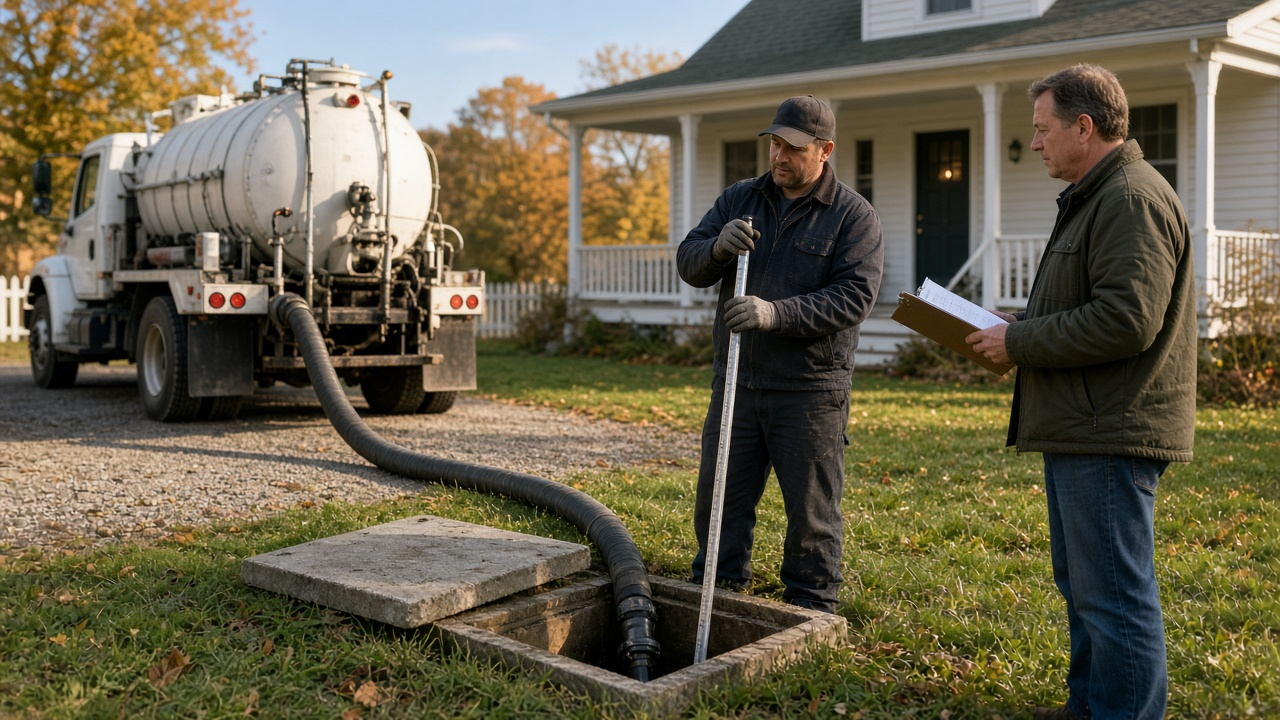
This image was generated using the prompt above.
Examples
Example Input
SystemDetails: 1,000 gallon concrete tank, conventional gravity drain field, house built 1998, effluent filter unknown
Household: 5 people, garbage disposal used daily, water softener, one partner works from home
History: bought the house in 2021, seller said pumped in 2020, no measurements, no backups
SiteNotes: tank in front yard near the porch, drain field in back yard, a weeping willow about 25 feet from the field, gutters drain toward the back yard, we want to widen the driveway along the side of the house
LocalRules: county requires a permit for any repair; we may sell in 2028 and do not know about inspection at sale
Format: plan with checklist and calendar
Example Output
1) PUMPING INTERVAL
A 1,000 gallon tank with 5 people and a daily garbage disposal sits at the short end of the usual three to five years. Starting estimate: every 2 to 3 years. The last known pumping was 2020, so schedule one now. After this visit, set the next date from the measurements, not the estimate.

2) PUMPER VISIT CHECKLIST
[ ] Pump through the main tank lid, not only the inspection pipe
[ ] Measure scum and sludge layers before pumping and write them down
[ ] Inspect inlet and outlet baffles or tees
[ ] Look for an effluent filter; if there is one, clean it; if not, ask about adding one
[ ] Note any backflow from the drain field line
[ ] Written report with tank size confirmed [CHECK TANK LID OR RECORDS]

3) AEROBIC EXTRAS
Not applicable; this is a conventional system.

4) DRAIN FIELD PROTECTION
- Driveway widening: locate the tank, pipe, and field first. Keep vehicles and pavement off every part of the system.
- Willow at 25 feet: willows have aggressive roots. Ask the inspector whether roots are reaching the field and plan to remove or replace it with a shallow rooted shrub.
- Gutters: extend downspouts so roof water flows away from the back yard field.

5) HABIT CHANGES
- Garbage disposal: food solids fill the tank faster. Scrape plates into the trash or compost and keep the disposal for small rinse scraps.
- Laundry: about one load a day instead of six loads on Saturday.
- Fix running toilets; a slow leak can send hundreds of gallons a day to the field.
- Do not flush or drain: wipes of any kind, grease, paint, solvents, medications, large amounts of bleach.
- Water softener: ask the inspector whether its discharge should be routed elsewhere [ASK COUNTY HEALTH DEPARTMENT].

6) ADDITIVES
Not a substitute for pumping. Skip them unless the county or inspector recommends one.

7) WARNING SIGNS
| Sign | Action |
| Slow drains everywhere, gurgling | Call the pumper, cut water use |
| Sewage smell outside | Call the pumper, keep kids and pets away |
| Soggy or bright green strips over the field | Call a licensed inspector |
| Backup in the basement floor drain | Stop all water use, call the pumper today |

8) RECORDS BINDER
- Site plan or as built drawing from the county [ASK COUNTY HEALTH DEPARTMENT]
- Sketch: tank lids measured from two house corners
- Every pumping report, starting with this year's
- Repairs and permits
- Inspection at sale rules for 2028 [ASK COUNTY HEALTH DEPARTMENT]

9) 10 YEAR CALENDAR
| Year | Task |
| 2026 | Pump, measure, locate lids, gutter extensions |
| 2027 | Willow decision, filter check |
| 2028 | Pump if measurements say so, records ready for sale |
| 2029 to 2035 | Pump on the interval set from measurements; filter check each year |