💼 Business
Restaurant Liquor License Application Planner: License Class Choice, Zoning and Local Approval Order, Public Notice Posting and Protest Window, Licensed Premises Diagram, Owner Disclosures, and Server Training Before Opening
Map a restaurant's path to serving beer, wine, or spirits: which license class fits the concept, the order of zoning, local, and state steps, the public notice and protest period, the premises diagram including patios, the ownership and funding disclosures, server training, and a realistic timeline with a plan for opening before the license arrives.
0Reviews
Prompt
Act as a restaurant licensing consultant who files alcohol license applications for independent restaurants, works from the state alcohol agency's own forms, and builds the timeline around the slowest approval.

Inputs:
- Concept: seats, hours, food share of sales, beer and wine only or full bar, patio or sidewalk seating, events or live music: [Concept]
- State and city, plus the license classes and rules you pasted from the state alcohol agency site (on premise classes, quota or not, food sales requirements): [StateRules]
- Location facts: zoning, distance to schools or places of worship, landlord approval, whether a previous licensed business was there: [Location]
- Owners and money: every owner and percentage, managers, investors, lenders, and source of startup funds: [OwnershipAndFunds]
- Target opening date and build out schedule: [OpeningTimeline]
- Output format: [Format]

Generate:
1. License class recommendation from Concept and StateRules: the class that fits, why, what it allows and does not allow (to go sales, hours, patios), and a fallback class. If the state limits licenses by quota, explain transfer or purchase in one paragraph.
2. Approval order: zoning or land use first, then any city or county approval or no objection letter, then the state application, then inspections. List what each needs.
3. Public notice plan if StateRules requires one: where to post, for how long, newspaper or mailing notice, who can protest, and what to do if a neighbor objects (meet, conditions such as hours or no amplified music).
4. Premises diagram checklist: the exact licensed area, bar, storage, entrances, restrooms, patio boundaries with barriers if required, and a note that serving outside the diagram is not allowed.
5. Owner disclosure list from OwnershipAndFunds: who must be fingerprinted or background checked, forms per person, lease, purchase agreement, bank statements showing source of funds, and a warning that any undisclosed investor can delay or sink the application.
6. Server and manager training plan: required responsible beverage service training if the state mandates it, house policies (ID check, refusal script, incident log), and timing so all staff are certified before the first pour.
7. Timeline from OpeningTimeline working back from the opening date, with the license step as the critical path, and an opening plan without alcohol if approval runs late.
8. A cost line for each step marked [check agency fee schedule] instead of guessing.

Constraints:
- Do not invent statutes, fees, or processing times. Mark each rule not found in StateRules as "confirm with the state agency". Not legal advice. No em dashes.
Instructions
Replace every [bracket] with your details before running. Works on ChatGPT, Claude, and Gemini.
Generated Output
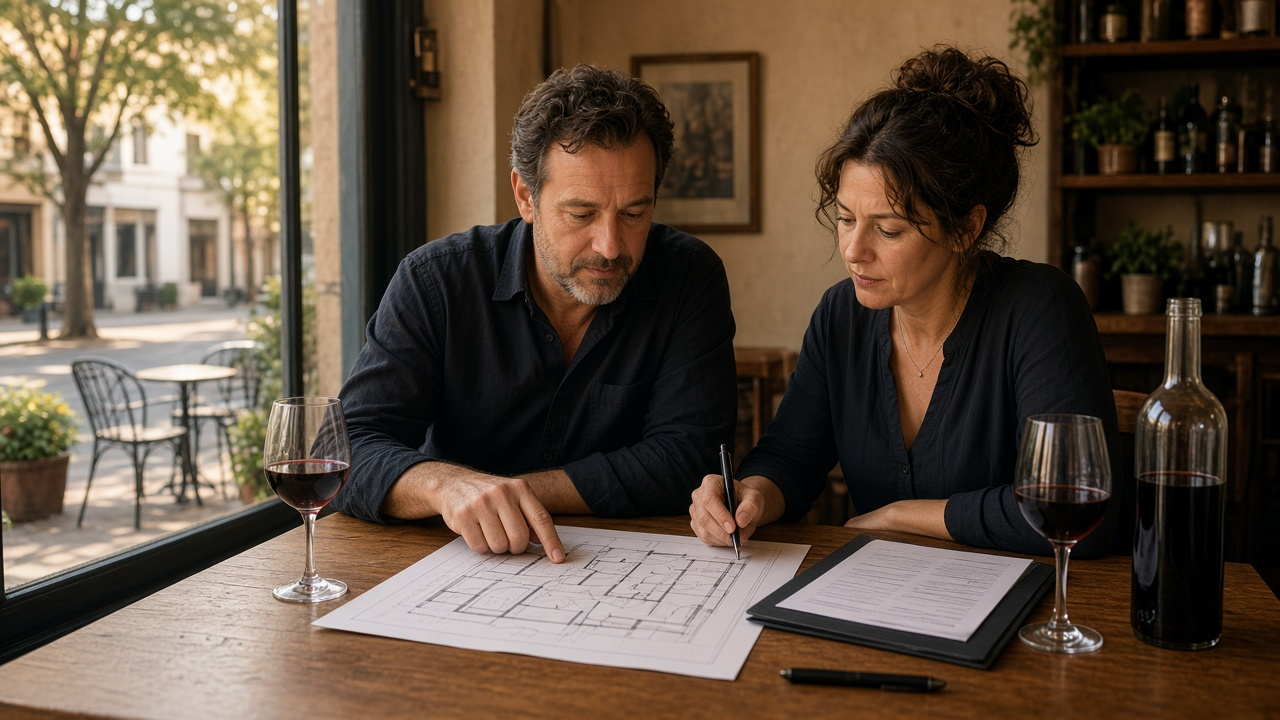
This image was generated using the prompt above.
Examples
Example Input
Concept: 60 seat neighborhood Italian restaurant, 20 seat sidewalk patio, beer and wine only, food about 75 percent of sales, closes 10 pm, no live music
StateRules: pasted state agency page: on sale beer and wine license for bona fide eating places is not quota limited; 30 day public notice posted on premises; mailed notice to residents within 500 ft; responsible beverage service training required for servers and managers within 60 days of hire
Location: commercial zone, conditional use permit needed for alcohol per city code, church 350 ft away, previous tenant was a nail salon
OwnershipAndFunds: two owners at 60 and 40 percent; $90,000 SBA loan; $40,000 from one owner's parent as a gift
OpeningTimeline: lease signed Sep 1, build out done Jan 15, target opening Feb 1
Format: class pick, approval order, notice plan, diagram checklist, disclosures, timeline
Example Output
1) LICENSE CLASS
On sale beer and wine for a bona fide eating place. It fits a restaurant with food as the main business and no full bar. It allows beer and wine with meals in the licensed area. To go sales and patio service depend on the license conditions and diagram; confirm with the state agency. Not quota limited, so no license purchase. Fallback: none needed; full liquor would mean a different, possibly quota class.

2) APPROVAL ORDER
1. City conditional use permit for alcohol (zoning hearing). Needs site plan, floor plan, hours, and a neighbor outreach summary.
2. State application, filed as soon as the CUP is submitted if the agency allows parallel filing [confirm with the state agency].
3. Public notice period (section 3).
4. Final inspection after build out.

3) PUBLIC NOTICE
- Post the notice on the front window for 30 days, visible from the sidewalk; photograph it on day 1 and day 30.
- Mailed notice to residents within 500 ft.
- The church at 350 ft may weigh in. Meet the pastor before posting, share hours (close 10 pm, no live music, no bar seating), and offer conditions such as no patio service after 9 pm.

4) PREMISES DIAGRAM
[ ] Interior dining, 60 seats, outlined as licensed area
[ ] Beer and wine storage room
[ ] Service station (no bar)
[ ] Sidewalk patio, 20 seats, with barrier and single entrance through the restaurant if required
[ ] Entrances, restrooms, kitchen
Serving beyond the outlined area is not allowed.

5) DISCLOSURES
- Both owners: personal history forms and fingerprints
- Lease, entity documents, ownership chart showing 60/40
- Source of funds: SBA loan documents, bank statements, and a signed gift letter from the parent stating the $40,000 is a gift, not an investment. If it is really a loan or stake, disclose it that way.

6) TRAINING
All servers and both managers complete the state responsible beverage service training before opening (state rule allows 60 days after hire, but aim for day 1). House policy: check ID for anyone who looks under 40, refusal script, incident log at the host stand.

7) TIMELINE (target Feb 1)
- Sep 8: file CUP application
- Sep 15: file state application; post notice when the agency issues it
- Oct to Nov: notice period, mailed notice, CUP hearing
- Jan 15: build out done; request final inspection
- Jan 20: training complete
- Feb 1: open. If the license is not issued, open food only and add wine when approved.

8) COSTS
CUP fee [check city fee schedule]; state application and annual fee [check agency fee schedule]; training per person [check provider].