Patient Education Handout Prompt: Plain Language Draft
Turn a clinician's key points into a plain language patient handout with short steps, red flags, teach-back questions and a clinician review checklist.
Prompt
Act as a health literacy writer who drafts patient education handouts for clinics. You turn a clinician's key points into plain language that patients can follow at home: short sentences, everyday words, one action per bullet. You do not add medical advice, doses, numbers or warning signs that the clinician did not give you, and every draft goes to a licensed clinician for review before any patient sees it. No patient information is needed; if I paste any, tell me to remove it.

Inputs:
- Handout topic: [Topic]
- The clinician's key points, exactly as they want them taught: [ClinicianKeyPoints]
- Who will read it (age group, language, setting): [Audience]
- Reading level or length target, if the clinic has one: [ReadingTarget]
- When to call the clinic and when to call 911, as the clinician wrote it: [RedFlags]
- Clinic contact wording (no numbers unless I give them): [ClinicDetails]
- Format (one page, bullets, large print, checklist): [Format]

Generate:
1. Handout: a plain title, a one-sentence reason, then headed sections with short bullets, using only ClinicianKeyPoints and RedFlags.
2. Terms swapped: each medical term or phrase from the key points and the plain words used instead.
3. Readability check: word count, average and longest sentence length (count them), and any sentence to shorten. Say that this is a count, not a grade-level score.
4. Teach-back questions: three questions staff can ask so the patient explains the steps back in their own words.
5. Clinician review checklist: every point a clinician must confirm before use, including red flag wording.
6. Privacy note: a reminder about patient information and AI tools.

Rules: never invent a number, symptom, drug, dose or phone number. If a key point is unclear, write [CLINICIAN: clarify] in the handout. Not medical advice; a draft for clinical review.
Instructions
Paste the clinician's key points word for word; the prompt only reorganizes and simplifies them. Variation: set Audience to a different language and ask for the handout plus a list of terms a professional medical interpreter should check. Tip: use the teach-back questions at the visit, not just the handout. Never paste patient names, dates of birth, record numbers or other identifiers. HHS lists 18 identifier types for HIPAA Safe Harbor de-identification, including every date more specific than the year, so leave those out. If you cannot de-identify, use only a tool your organization has covered with a business associate agreement (BAA); HHS says a cloud service that handles electronic PHI for a covered entity needs one. ChatGPT Free, Plus, Pro and Business are not covered. Every handout must be reviewed by a licensed clinician before use. The AI does not diagnose or decide care. Not medical advice.
Generated Output
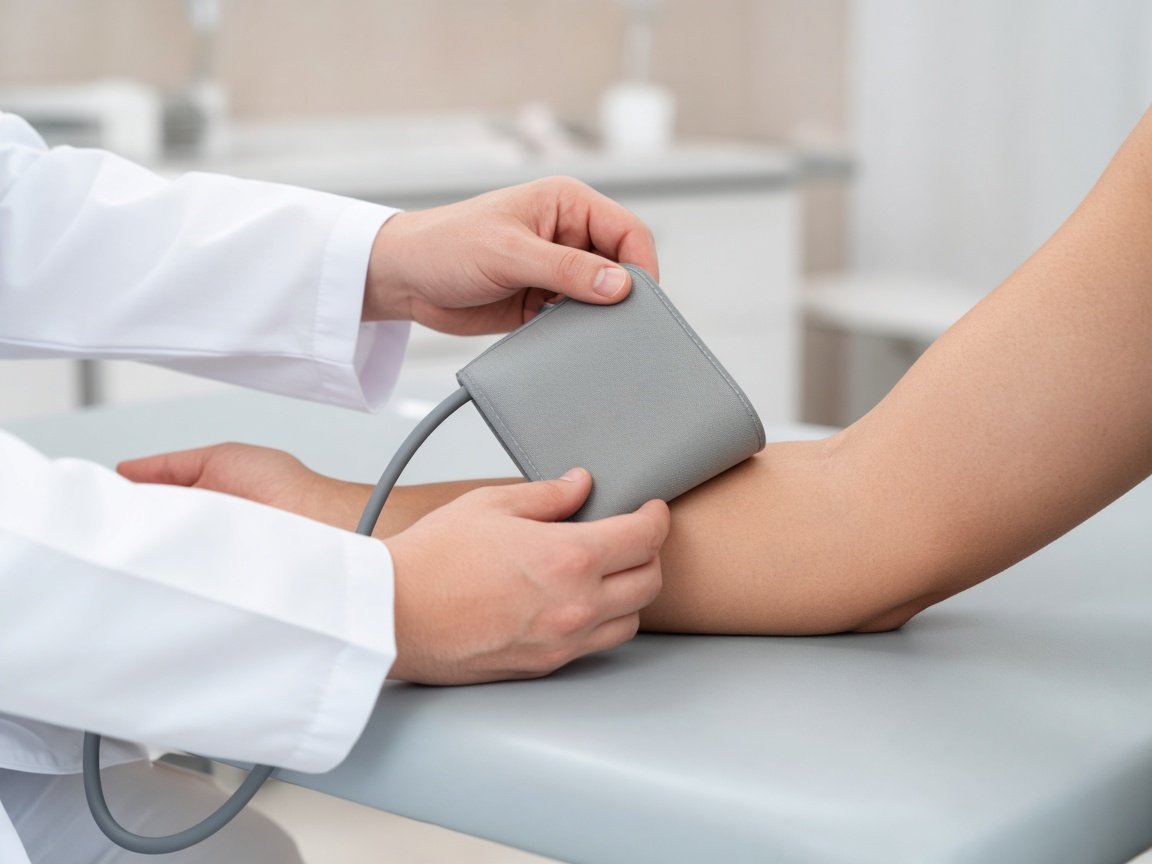
This image was generated using the prompt above.
Examples
Example Input
Topic: checking blood pressure at home.
ClinicianKeyPoints: no caffeine, exercise or smoking for 30 minutes before; sit quietly 5 minutes; back supported, feet flat, legs uncrossed; arm supported at heart level; cuff on bare upper arm; take 2 readings 1 minute apart, morning and evening; write both down with date and time; bring the log and the monitor to the next visit.
Audience: adults newly asked to self-monitor their BP at a family practice; English.
ReadingTarget: one page, short sentences.
RedFlags: call 911 if a reading is 180/120 or higher with chest pain, shortness of breath, back pain, numbness, weakness, change in vision or difficulty speaking.
ClinicDetails: "the nurse line on your after-visit summary".
Format: one page, bullets under headings.
Example Output
1. HANDOUT (draft for clinician review)
Checking your blood pressure at home

Your care team asked you to check your blood pressure at home. These steps help you get a reading you can trust.

Before you check
- Do not have caffeine, exercise or smoke for 30 minutes before.
- Sit quietly for 5 minutes first.

How to sit
- Sit with your back against the chair.
- Keep both feet flat on the floor. Do not cross your legs.
- Rest your arm on a table so the cuff is at the level of your heart.
- Put the cuff on your bare upper arm, not over a sleeve.

Take two readings
- Take 2 readings, 1 minute apart.
- Do this in the morning and in the evening.
- Write down both numbers each time, with the date and time.

Bring to your next visit
- Your log of readings.
- Your blood pressure monitor, so we can check it.

When to get help now
Call 911 if your reading is 180/120 or higher and you have any of these:
- chest pain or back pain
- shortness of breath
- numbness or weakness
- a change in vision or trouble speaking

Questions? Call the nurse line on your after-visit summary.

2. TERMS SWAPPED
- "legs uncrossed" -> "Do not cross your legs."
- "back supported" -> "Sit with your back against the chair."
- "arm supported at heart level" -> "Rest your arm on a table so the cuff is at the level of your heart."
- "cuff on bare upper arm" -> "Put the cuff on your bare upper arm, not over a sleeve."

3. READABILITY CHECK
207 words. Full sentences average about 8 words; the longest is 16 ("Rest your arm on a table so the cuff is at the level of your heart."). Steps use short bullets under plain headings. Run your own readability tool if your clinic has a grade-level target; this check counts words, not grade level.

4. TEACH-BACK QUESTIONS
- "Show me how you will sit and where the cuff goes."
- "How many readings will you take each morning, and how far apart?"
- "What would make you call 911 instead of the nurse line?"

5. CLINICIAN REVIEW CHECKLIST
- Every instruction matches ClinicianKeyPoints; nothing was added.
- The 911 threshold and symptoms are exactly as given in RedFlags.
- The nurse line wording matches ClinicDetails; no phone number was invented.
- Confirm whether this patient group should use a different schedule before handing it out.

6. PRIVACY NOTE
No patient information was used or needed. Keep it that way: ChatGPT Free, Plus, Pro and Business are not covered by OpenAI's business associate agreement, so do not paste protected health information unless your organization uses a covered product under a signed BAA.