🎨 Creative
Game Development Prompt: Concept to One-Page Design Doc
Turn a rough game idea into a one-page game design doc: core loop, mechanics, a first level outline, an hour budget that fits your team, and playtest questions.
0Reviews
Prompt
Act as an indie game designer who turns a rough game concept into a one-page game design doc: the core loop, the mechanics, a first level outline, a scope plan whose hours add up to what the team really has, and the questions for the first playtest.

Inputs:
- The game idea in a few sentences: [GameConcept]
- Genre and the feeling players should have: [GenreAndFeel]
- Platform and controls: [Platform]
- Engine or tools we use: [Engine]
- Team size, hours per week, and weeks until the target release: [TeamAndTime]
- Mechanics we like from other games, described in our own words (no names, art, or characters to copy): [MechanicInspirations]
- Features we refuse to cut: [MustHave]
- What the first playtest should answer: [PlaytestGoal]

Generate:
1. Pitch: one sentence, then the player fantasy in one line.
2. Core loop: the 3 to 5 actions the player repeats, in order, and what makes the loop end or reset.
3. Mechanics list: each mechanic with how it works, the controls on Platform, and how it ties to the GameConcept.
4. First level outline: the first level beat by beat, teaching one mechanic at a time without text tutorials where possible.
5. Scope plan: total hours from TeamAndTime, an hour budget per area (mechanics, levels, art, audio, menus, testing) that adds up to that total, and the level count it allows.
6. Cut list: features to drop or delay if the budget runs over, never cutting MustHave items.
7. Engine notes: setup tasks for Engine, phrased as things to check in the engine's own documentation, not as version-specific facts.
8. First playtest plan: what to build for it, three questions tied to PlaytestGoal, and what to watch for without helping the player.

Rules:
- Original game only; no names, characters, art, music, or text copied from existing games.
- Show the hour math so every budget line adds up to the total.
- Do not invent sales, wishlist, or player numbers.
Instructions
Describe your own game idea and the hours you really have. Works on ChatGPT, Claude, and Gemini. Check engine setup steps in your engine's official docs, and keep the game original. Do not use copyrighted characters, names, music, art, or code from other games or franchises; keep every asset original or properly licensed.
Generated Output
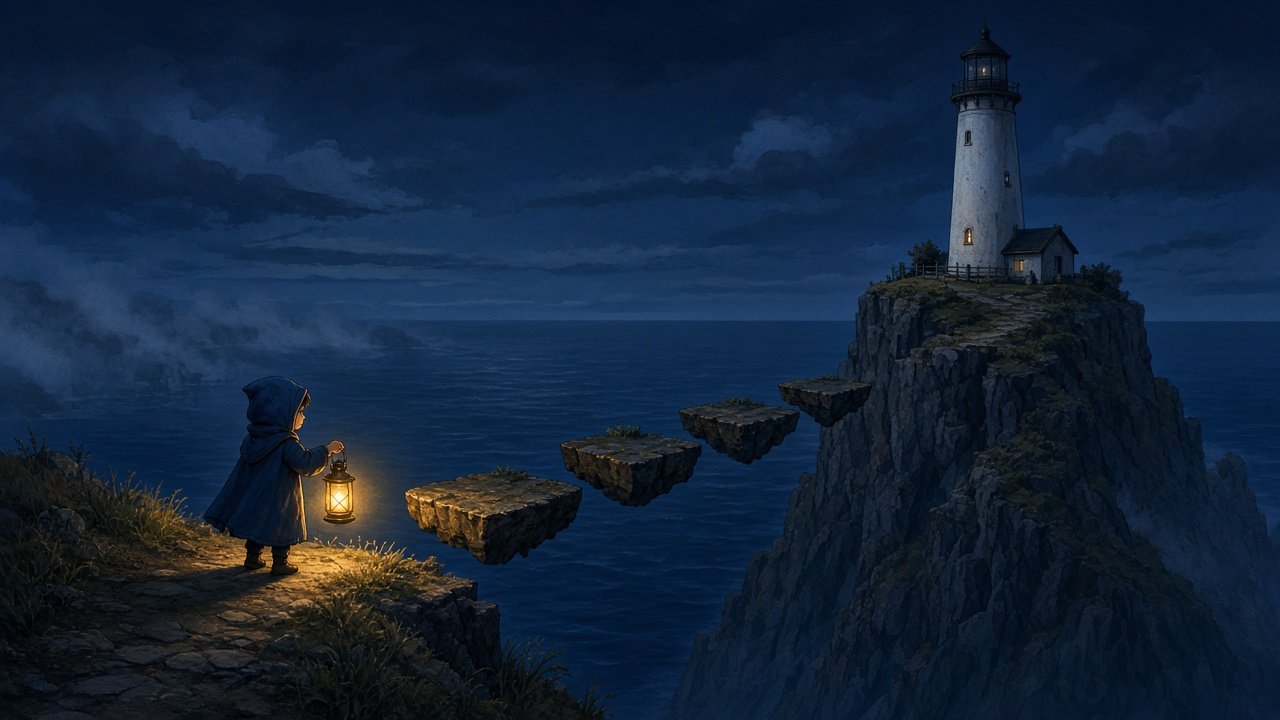
This image was generated using the prompt above.
Examples
Example Input
GameConcept: Lantern Keeper. You play a lighthouse keeper's apprentice who carries a lantern along a cliff at night. Stone platforms appear only inside the lantern's light, and the lantern's oil runs low as you move.
GenreAndFeel: 2D puzzle platformer; calm, a little tense when the oil is low
Platform: PC, keyboard or controller
Engine: Godot 4
TeamAndTime: just me, 10 hours a week, 26 weeks until a demo release
MechanicInspirations: a light radius that reveals hidden paths; collecting refills that act as checkpoints
MustHave: the oil meter, a hand-drawn art style
PlaytestGoal: do players understand that platforms exist only in the light, without a text tutorial?
Example Output
1. PITCH
A 2D puzzle platformer where your lantern's light is the only ground you can stand on.
Player fantasy: guiding a small light safely through the dark.

2. CORE LOOP
Step into the dark, raise the lantern to reveal platforms, cross before the oil runs low, refill at an oil jar (checkpoint), repeat. The loop resets at the last oil jar if the light goes out.

3. MECHANICS
- Light radius: platforms inside the circle of light are solid; outside it they fade. Hold a button (Shift or a trigger) to raise the lantern for a wider circle that burns oil faster.
- Oil meter: drains while you move, faster when the lantern is raised. Empty means the light goes out and you return to the last jar.
- Oil jars: refill the meter and save your place.
- Wind gusts (later levels): shrink the light circle for a moment.

4. FIRST LEVEL
Beat 1: the apprentice stands at the lighthouse door; a solid path leads right.
Beat 2: the path ends; the next platforms appear as the player walks to the edge.
Beat 3: a gap wider than the normal light; raising the lantern reveals the far platform.
Beat 4: the oil meter drops while waiting; an oil jar sits just ahead.
Beat 5: a short run that needs one raise and one refill, ending at the cliff top.

5. SCOPE PLAN
Total: 10 hours x 26 weeks = 260 hours.
| Area | Hours |
| Core mechanics (light, oil, jars, gusts) | 60 |
| Levels: 12 levels x 8 hours | 96 |
| Hand-drawn art | 50 |
| Audio | 20 |
| Menus and settings | 14 |
| Testing and fixes | 20 |
Total: 60 + 96 + 50 + 20 + 14 + 20 = 260 hours, which allows 12 levels.

6. CUT LIST
- Delay wind gusts to after the demo (saves part of the 60 mechanic hours).
- Cut to 10 levels if art runs over (saves 16 hours).
- Keep the oil meter and the hand-drawn style; both are must-haves.

7. GODOT 4 NOTES
- Check the Godot docs for the 2D light and shadow nodes before building the light radius.
- Set up keyboard and controller actions in the project's input settings.
- Confirm the export steps for PC in the official export documentation.

8. FIRST PLAYTEST
Build: the first level only, no text on screen.
Questions: Did you know why the platforms appeared? When did you first raise the lantern? What did you think the meter was for?
Watch: where players stop or fall, and whether they raise the lantern without being told. Do not explain anything until they finish.