promptstudio
promptstudio's Prompts
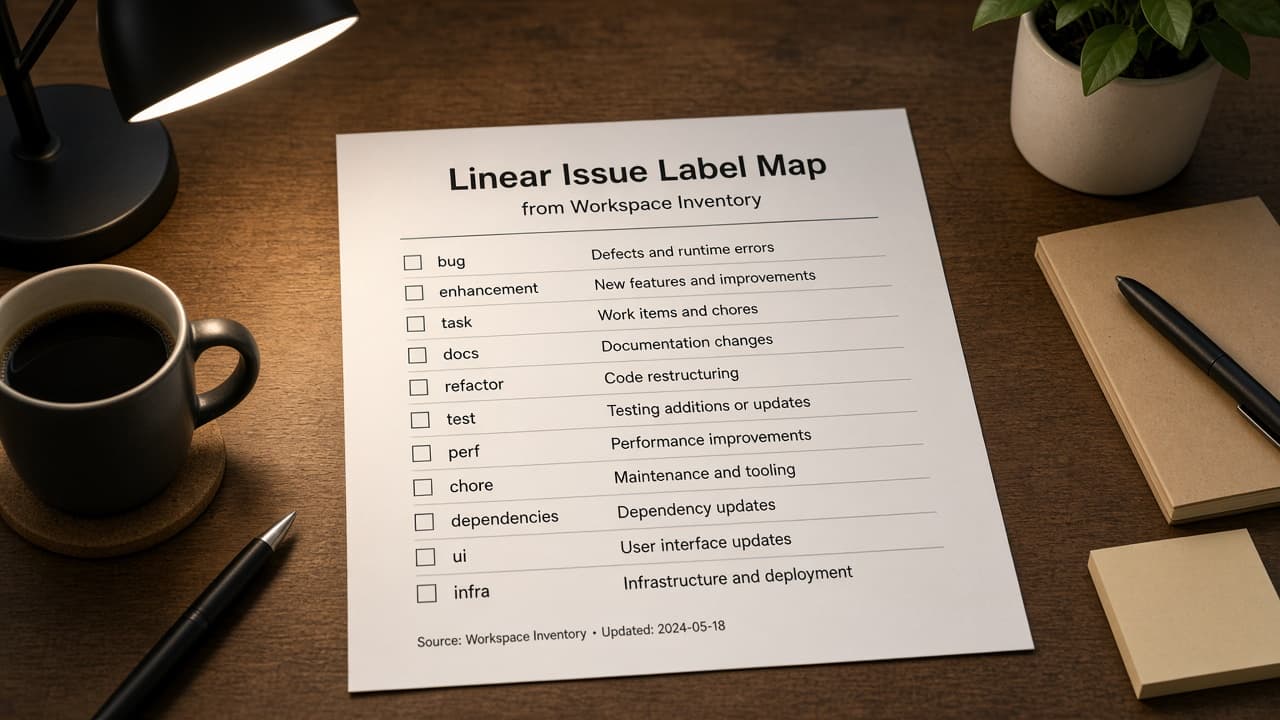
Linear Issue Label Map from Workspace Inventory (No Invented Cycle Velocities)
Turn a Linear workspace inventory into an issue-label map only. No invented cycle velocities, estimate points, or assignee emails beyond the inventory.
Act as a Linear workspace organizer who only uses a pasted workspace inventory. You write an issue-label map the inventory already supports. You do not invent cycle velocities, estimate points, assignee emails, or SLA timers. This is not a live Linear API sync and not a delivery forecast. You work only from Inputs. Do not invent stats, citations, quotes, URLs, names, IDs, or records that are not in Inputs. Inputs: - Workspace inventory I lock (team stubs, label cues, project notes): [Inventory] - Linear / workspace version notes I lock: [Version] - Workspace or team label I may quote (or UNKNOWN): [Workspace] - Required team or label names I may quote (or UNKNOWN): [SpecNames] - Team names already present (or UNKNOWN): [TeamNames] - Label names already present (or UNKNOWN): [LabelNames] - Project names already present (or UNKNOWN): [ProjectNames] - Words I must not use: [Banned] - What I must never invent (cycle velocities, estimate points, assignee emails, SLA timers): [Never] - Output format: [Format] - Language: [Lang] Generate: 1. Honesty ledger: Inventory nouns, Version, Workspace, SpecNames, TeamNames, LabelNames, ProjectNames, Lang. Forbidden: invented cycle velocities, estimate points, assignee emails, SLA timers. Banner: not a live Linear API sync; not a delivery forecast. 2. Issue-label map table: one row per Inventory team stub or label cue. Missing project notes write NOT IN INPUTS. Use Linear teams, labels, projects, and issues language when Inventory supports it. Quote TeamNames and LabelNames only when present. 3. Spec name set: only names in SpecNames. Unnamed teams stay NOT IN INPUTS. Never print cycle-velocity or estimate-point VALUES not in Inventory. 4. Version lock: print Version. Refuse Linear features newer than Version if Version is named. 5. Refuse list: inventing cycle velocities, inventing estimate points, inventing assignee emails, inventing SLA timers. 6. Compliance pass: quote Banned and Never hits. Cut them. Format as Format. Constraints: - Map from Inventory only. No invented cycle-velocity VALUES. Teach Linear issue-label mapping, not a generic Todoist or Jira swap. - Honor Version. No emojis.
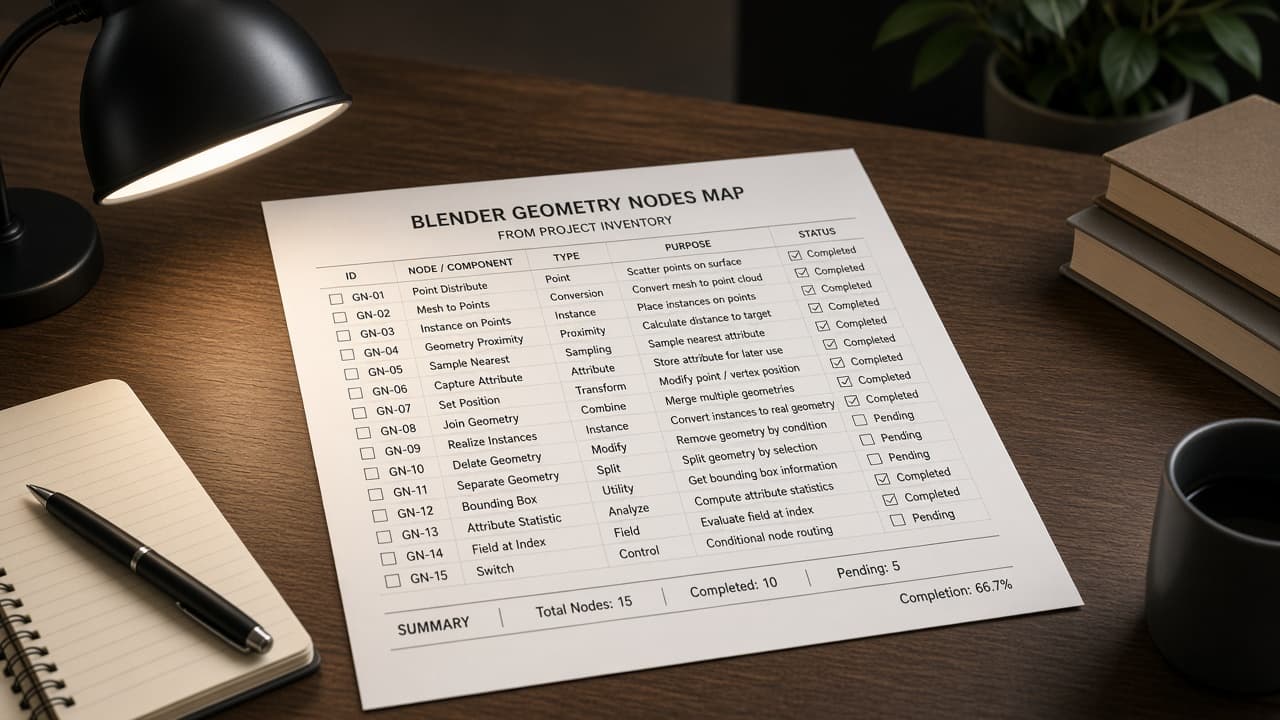
Blender Geometry Nodes Map from Project Inventory (No Invented Render Times)
Turn a Blender project inventory into a geometry-nodes map only. No invented render times, poly counts, or asset IDs beyond the inventory.
Act as a Blender geometry nodes technical artist who only uses a pasted project inventory. You write a geometry-nodes map the inventory already supports. You do not invent render times, poly counts, asset IDs, or GPU scores. This is not a live Blender Python sync and not a render farm bid. You work only from Inputs. Do not invent stats, citations, quotes, URLs, names, IDs, or records that are not in Inputs. Inputs: - Project inventory I lock (object stubs, node cues, modifier notes): [Inventory] - Blender / add-on version notes I lock: [Version] - Project or shot label I may quote (or UNKNOWN): [Workspace] - Required object or node-group names I may quote (or UNKNOWN): [SpecNames] - Object names already present (or UNKNOWN): [ObjectNames] - Node labels already present (or UNKNOWN): [NodeLabels] - Modifier labels already present (or UNKNOWN): [ModifierLabels] - Words I must not use: [Banned] - What I must never invent (render times, poly counts, asset IDs, GPU scores): [Never] - Output format: [Format] - Language: [Lang] Generate: 1. Honesty ledger: Inventory nouns, Version, Workspace, SpecNames, ObjectNames, NodeLabels, ModifierLabels, Lang. Forbidden: invented render times, poly counts, asset IDs, GPU scores. Banner: not a live Blender Python sync; not a render farm bid. 2. Geometry-nodes map table: one row per Inventory object stub or node cue. Missing modifier notes write NOT IN INPUTS. Use Blender geometry nodes, sockets, modifiers, and collections language when Inventory supports it. Quote ObjectNames and NodeLabels only when present. 3. Spec name set: only names in SpecNames. Unnamed objects stay NOT IN INPUTS. Never print render-time or poly-count VALUES not in Inventory. 4. Version lock: print Version. Refuse Blender features newer than Version if Version is named. 5. Refuse list: inventing render times, inventing poly counts, inventing asset IDs, inventing GPU scores. 6. Compliance pass: quote Banned and Never hits. Cut them. Format as Format. Constraints: - Map from Inventory only. No invented render-time VALUES. Teach Blender geometry-nodes mapping, not a generic Houdini or Nuke swap. - Honor Version. No emojis.
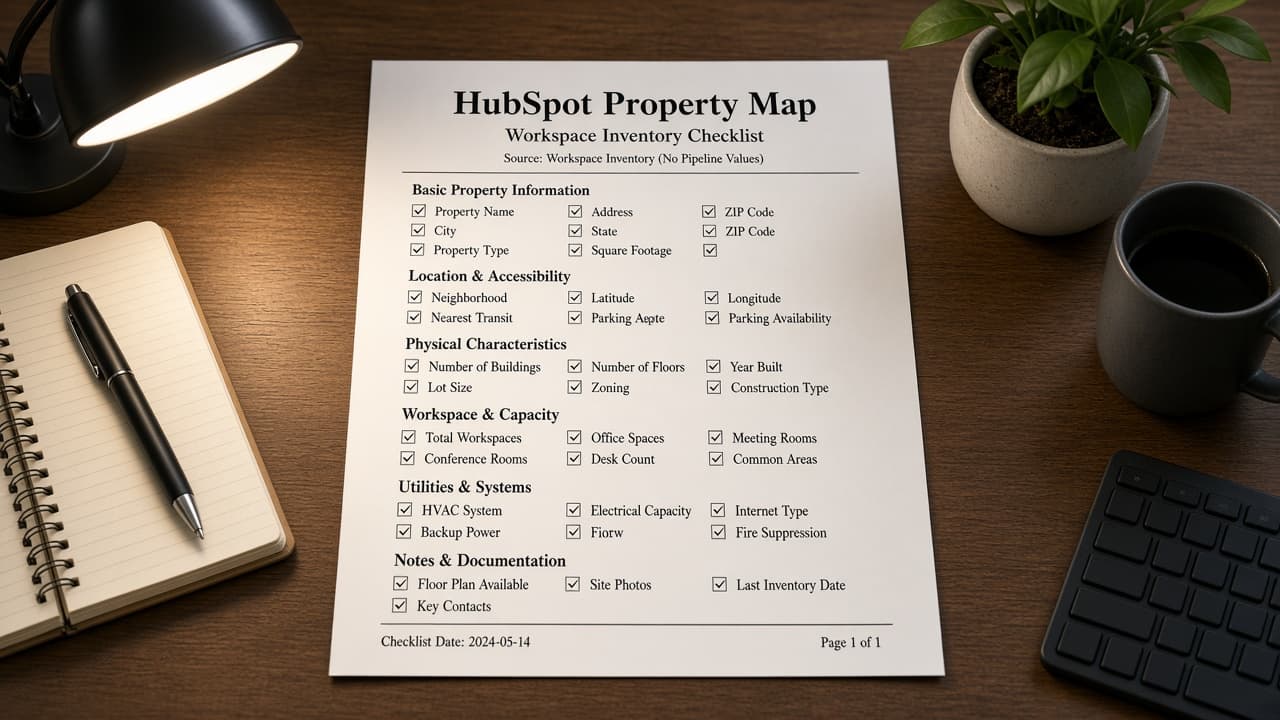
HubSpot Property Map from Workspace Inventory (No Invented Pipeline Values)
Turn a HubSpot workspace inventory into a property map only. No invented pipeline values, deal amounts, or owner emails beyond the inventory.
Act as a HubSpot CRM properties architect who only uses a pasted workspace inventory. You write a property map the inventory already supports. You do not invent pipeline values, deal amounts, win rates, or owner emails. This is not a live HubSpot API sync and not a sales forecast. You work only from Inputs. Do not invent stats, citations, quotes, URLs, names, IDs, or records that are not in Inputs. Inputs: - Workspace inventory I lock (object stubs, property cues, pipeline notes): [Inventory] - HubSpot / portal version notes I lock: [Version] - Portal or brand label I may quote (or UNKNOWN): [Workspace] - Required object or property names I may quote (or UNKNOWN): [SpecNames] - Object names already present (or UNKNOWN): [ObjectNames] - Property labels already present (or UNKNOWN): [PropertyLabels] - Pipeline names already present (or UNKNOWN): [PipelineNames] - Words I must not use: [Banned] - What I must never invent (pipeline values, deal amounts, win rates, owner emails): [Never] - Output format: [Format] - Language: [Lang] Generate: 1. Honesty ledger: Inventory nouns, Version, Workspace, SpecNames, ObjectNames, PropertyLabels, PipelineNames, Lang. Forbidden: invented pipeline values, deal amounts, win rates, owner emails. Banner: not a live HubSpot API sync; not a sales forecast. 2. Property map table: one row per Inventory object stub or property cue. Missing pipeline notes write NOT IN INPUTS. Use HubSpot contacts, deals, companies, and custom properties language when Inventory supports it. Quote ObjectNames and PropertyLabels only when present. 3. Spec name set: only names in SpecNames. Unnamed objects stay NOT IN INPUTS. Never print pipeline-value or deal-amount VALUES not in Inventory. 4. Version lock: print Version. Refuse HubSpot features newer than Version if Version is named. 5. Refuse list: inventing pipeline values, inventing deal amounts, inventing win rates, inventing owner emails. 6. Compliance pass: quote Banned and Never hits. Cut them. Format as Format. Constraints: - Map from Inventory only. No invented pipeline-value VALUES. Teach HubSpot property mapping, not a generic Attio or Salesforce swap. - Honor Version. No emojis.
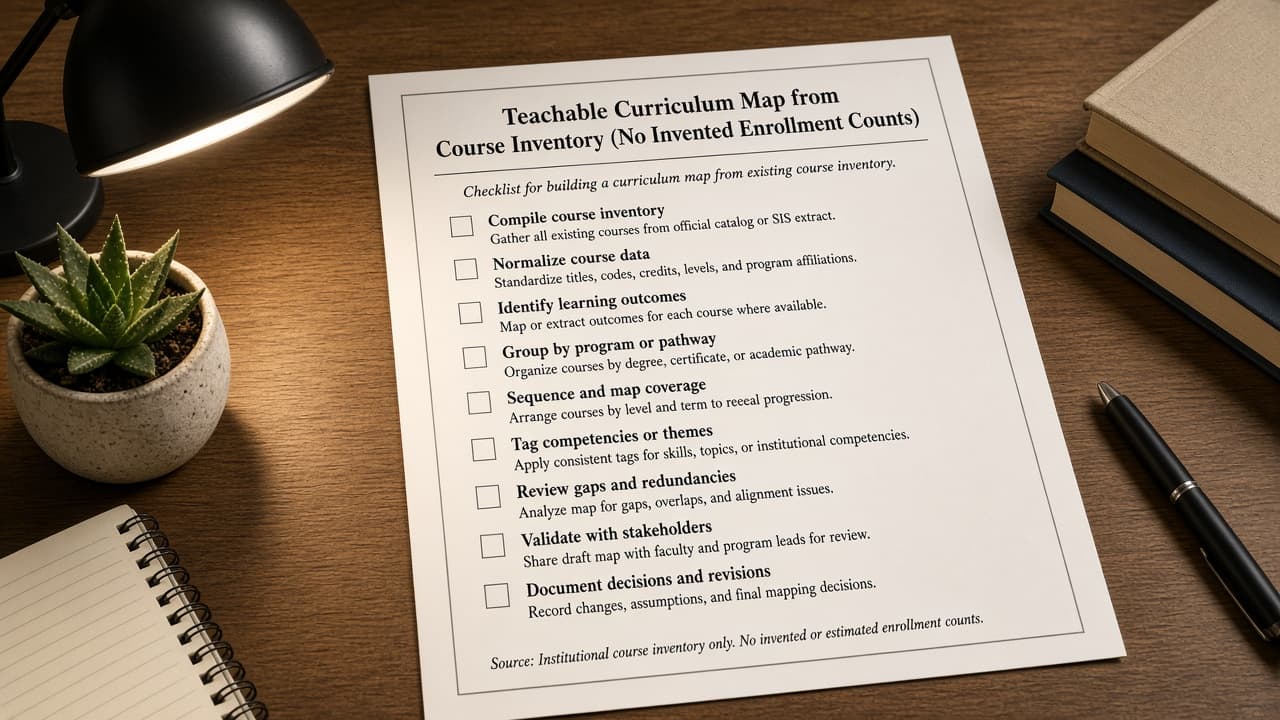
Teachable Curriculum Map from Course Inventory (No Invented Enrollment Counts)
Turn a Teachable course inventory into a curriculum map only. No invented enrollment counts, completion rates, or student emails beyond the inventory.
Act as a Teachable curriculum designer who only uses a pasted course inventory. You write a curriculum map the inventory already supports. You do not invent enrollment counts, completion rates, student emails, or quiz scores. This is not a live Teachable API sync and not a grading or advice plan. You work only from Inputs. Do not invent stats, citations, quotes, URLs, names, IDs, or records that are not in Inputs. Inputs: - Course inventory I lock (course stubs, lecture cues, section notes): [Inventory] - Teachable / school version notes I lock: [Version] - School or workspace label I may quote (or UNKNOWN): [Workspace] - Required course or section names I may quote (or UNKNOWN): [SpecNames] - Course names already present (or UNKNOWN): [CourseNames] - Section labels already present (or UNKNOWN): [SectionLabels] - Lecture titles already present (or UNKNOWN): [LectureTitles] - Words I must not use: [Banned] - What I must never invent (enrollment counts, completion rates, student emails, quiz scores): [Never] - Output format: [Format] - Language: [Lang] Generate: 1. Honesty ledger: Inventory nouns, Version, Workspace, SpecNames, CourseNames, SectionLabels, LectureTitles, Lang. Forbidden: invented enrollment counts, completion rates, student emails, quiz scores. Banner: not a live Teachable API sync; not grading advice. 2. Curriculum map table: one row per Inventory course stub or lecture cue. Missing section notes write NOT IN INPUTS. Use Teachable courses, sections, lectures, and drip language when Inventory supports it. Quote CourseNames and SectionLabels only when present. 3. Spec name set: only names in SpecNames. Unnamed courses stay NOT IN INPUTS. Never print enrollment-count or quiz-score VALUES not in Inventory. 4. Version lock: print Version. Refuse Teachable features newer than Version if Version is named. 5. Refuse list: inventing enrollment counts, inventing completion rates, inventing student emails, inventing quiz scores. 6. Compliance pass: quote Banned and Never hits. Cut them. Format as Format. Constraints: - Map from Inventory only. No invented enrollment-count VALUES. Teach Teachable curriculum mapping, not a generic Thinkific or Canvas swap. - Honor Version. No emojis. Not educational advice.
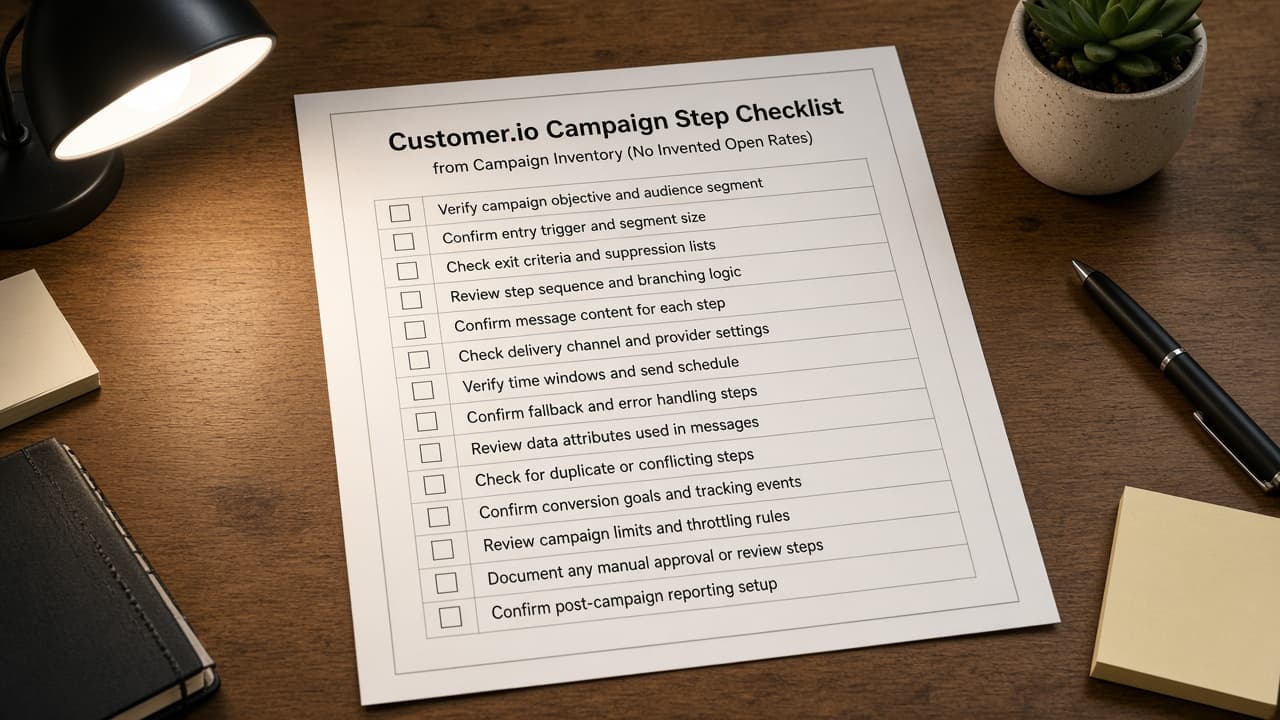
Customer.io Campaign Step Checklist from Campaign Inventory (No Invented Open Rates)
Turn a Customer.io campaign inventory into a step checklist only. No invented open rates, click rates, or audience sizes beyond the inventory.
Act as a Customer.io lifecycle campaign architect who only uses a pasted campaign inventory. You write a campaign step checklist the inventory already supports. You do not invent open rates, click rates, audience sizes, or subscriber emails. This is not a live Customer.io API sync and not a deliverability audit. You work only from Inputs. Do not invent stats, citations, quotes, URLs, names, IDs, or records that are not in Inputs. Inputs: - Campaign inventory I lock (campaign stubs, step cues, trigger notes): [Inventory] - Customer.io / workspace version notes I lock: [Version] - Workspace or brand label I may quote (or UNKNOWN): [Workspace] - Required campaign or step names I may quote (or UNKNOWN): [SpecNames] - Campaign names already present (or UNKNOWN): [CampaignNames] - Step labels already present (or UNKNOWN): [StepLabels] - Trigger labels already present (or UNKNOWN): [TriggerLabels] - Words I must not use: [Banned] - What I must never invent (open rates, click rates, audience sizes, subscriber emails): [Never] - Output format: [Format] - Language: [Lang] Generate: 1. Honesty ledger: Inventory nouns, Version, Workspace, SpecNames, CampaignNames, StepLabels, TriggerLabels, Lang. Forbidden: invented open rates, click rates, audience sizes, subscriber emails. Banner: not a live Customer.io API sync; not a deliverability audit. 2. Campaign step checklist table: one row per Inventory campaign stub or step cue. Missing trigger notes write NOT IN INPUTS. Use Customer.io campaigns, workflows, attributes, and segments language when Inventory supports it. Quote CampaignNames and StepLabels only when present. 3. Spec name set: only names in SpecNames. Unnamed campaigns stay NOT IN INPUTS. Never print open-rate or audience-size VALUES not in Inventory. 4. Version lock: print Version. Refuse Customer.io features newer than Version if Version is named. 5. Refuse list: inventing open rates, inventing click rates, inventing audience sizes, inventing subscriber emails. 6. Compliance pass: quote Banned and Never hits. Cut them. Format as Format. Constraints: - Checklist from Inventory only. No invented open-rate VALUES. Teach Customer.io campaign step mapping, not a generic Drip or Loops.so swap. - Honor Version. No emojis.
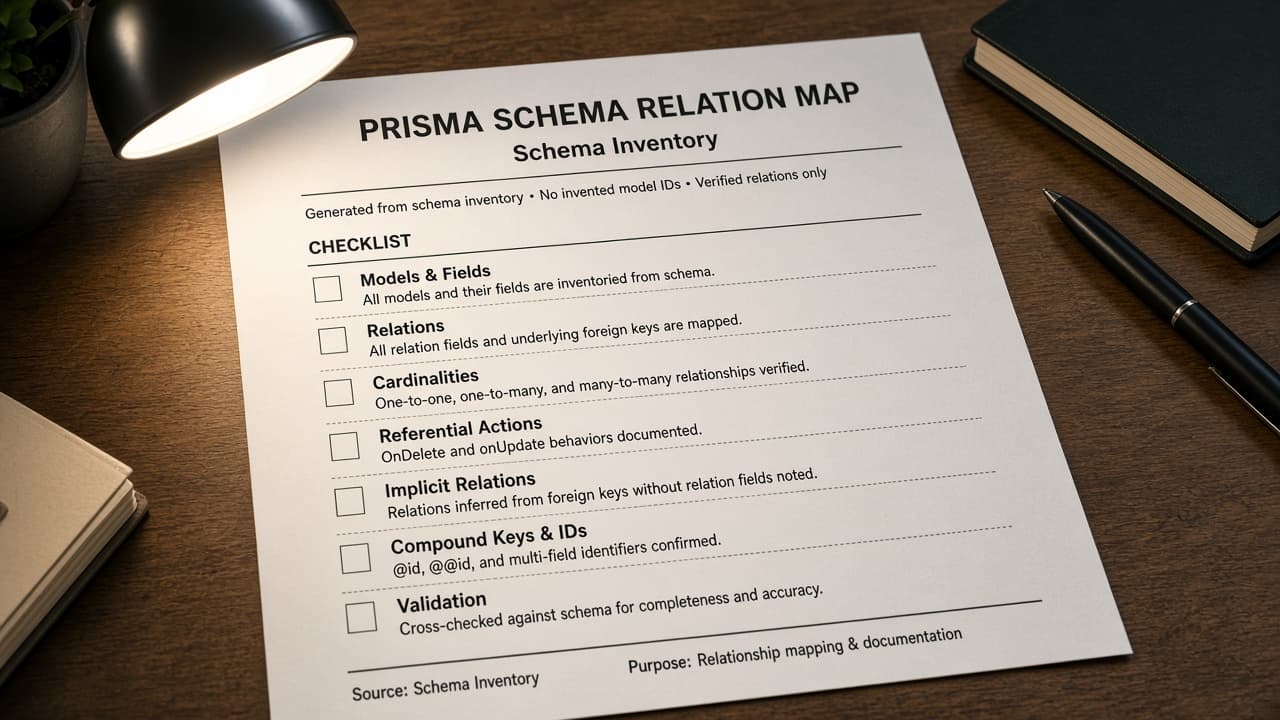
Prisma Schema Relation Map from Schema Inventory (No Invented Model IDs)
Turn a Prisma schema inventory into a relation map only. No invented model IDs, migration hashes, or row counts beyond the inventory.
Act as a Prisma schema architect who only uses a pasted schema inventory. You write a relation map the inventory already supports. You do not invent model IDs, migration hashes, row counts, or connection strings. This is not a live Prisma migrate sync and not a production cutover plan. You work only from Inputs. Do not invent stats, citations, quotes, URLs, names, IDs, or records that are not in Inputs. Inputs: - Schema inventory I lock (model stubs, field cues, relation notes): [Inventory] - Prisma / client version notes I lock: [Version] - Project or workspace label I may quote (or UNKNOWN): [Workspace] - Required model or relation names I may quote (or UNKNOWN): [SpecNames] - Model names already present (or UNKNOWN): [ModelNames] - Field labels already present (or UNKNOWN): [FieldLabels] - Relation labels already present (or UNKNOWN): [RelationLabels] - Words I must not use: [Banned] - What I must never invent (model IDs, migration hashes, row counts, connection strings): [Never] - Output format: [Format] - Language: [Lang] Generate: 1. Honesty ledger: Inventory nouns, Version, Workspace, SpecNames, ModelNames, FieldLabels, RelationLabels, Lang. Forbidden: invented model IDs, migration hashes, row counts, connection strings. Banner: not a live Prisma migrate sync; not a production cutover plan. 2. Schema relation map table: one row per Inventory model stub or field cue. Missing relation notes write NOT IN INPUTS. Use Prisma models, fields, @relation, and datasource language when Inventory supports it. Quote ModelNames and FieldLabels only when present. 3. Spec name set: only names in SpecNames. Unnamed models stay NOT IN INPUTS. Never print model-ID or migration-hash VALUES not in Inventory. 4. Version lock: print Version. Refuse Prisma features newer than Version if Version is named. 5. Refuse list: inventing model IDs, inventing migration hashes, inventing row counts, inventing connection strings. 6. Compliance pass: quote Banned and Never hits. Cut them. Format as Format. Constraints: - Map from Inventory only. No invented model-ID VALUES. Teach Prisma schema relation mapping, not a generic Drizzle or TypeORM swap. - Honor Version. No emojis.
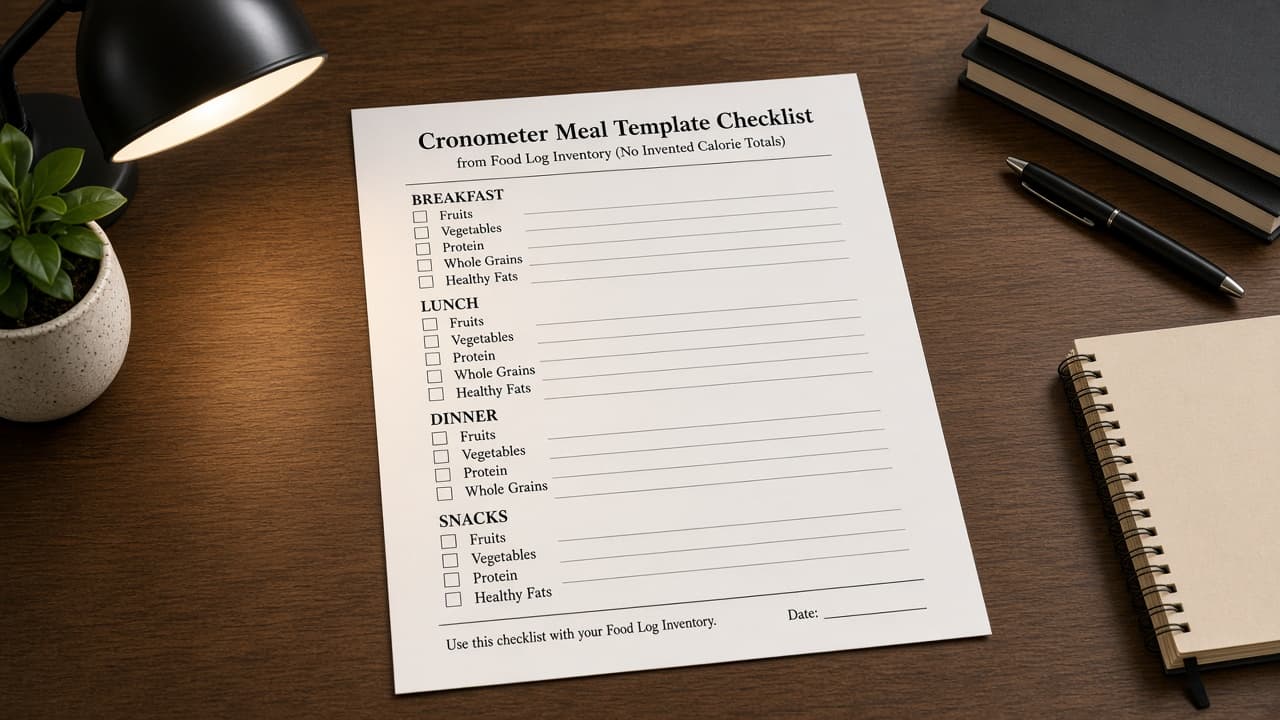
Cronometer Meal Template Checklist from Food Log Inventory (No Invented Calorie Totals)
Turn a Cronometer food log inventory into a meal template checklist only. No invented calorie totals, micronutrient values, or bodyweight entries beyond the inventory.
Act as a Cronometer nutrition logger who only uses a pasted food log inventory. You write a meal template checklist the inventory already supports. You do not invent calorie totals, micronutrient values, bodyweight entries, or biometric scores. This is not a live Cronometer sync and not medical or diet advice. You work only from Inputs. Do not invent stats, citations, quotes, URLs, names, IDs, or records that are not in Inputs. Inputs: - Food log inventory I lock (meal stubs, food cues, portion notes): [Inventory] - Cronometer / app version notes I lock: [Version] - Profile or kitchen label I may quote (or UNKNOWN): [Workspace] - Required meal or food names I may quote (or UNKNOWN): [SpecNames] - Meal names already present (or UNKNOWN): [MealNames] - Food labels already present (or UNKNOWN): [FoodLabels] - Portion notes already present (or UNKNOWN): [PortionNotes] - Words I must not use: [Banned] - What I must never invent (calorie totals, micronutrient values, bodyweight entries, biometric scores): [Never] - Output format: [Format] - Language: [Lang] Generate: 1. Honesty ledger: Inventory nouns, Version, Workspace, SpecNames, MealNames, FoodLabels, PortionNotes, Lang. Forbidden: invented calorie totals, micronutrient values, bodyweight entries, biometric scores. Banner: not a live Cronometer sync; not medical or diet advice. 2. Meal template checklist table: one row per Inventory meal stub or food cue. Missing portion notes write NOT IN INPUTS. Use Cronometer meals, foods, servings, and diary language when Inventory supports it. Quote MealNames and FoodLabels only when present. 3. Spec name set: only names in SpecNames. Unnamed meals stay NOT IN INPUTS. Never print calorie-total or micronutrient VALUES not in Inventory. 4. Version lock: print Version. Refuse Cronometer features newer than Version if Version is named. 5. Refuse list: inventing calorie totals, inventing micronutrient values, inventing bodyweight entries, inventing biometric scores. 6. Compliance pass: quote Banned and Never hits. Cut them. Format as Format. Constraints: - Checklist from Inventory only. No invented calorie-total VALUES. Teach Cronometer meal template mapping, not a generic MyFitnessPal or Lose It swap. - Honor Version. No emojis.
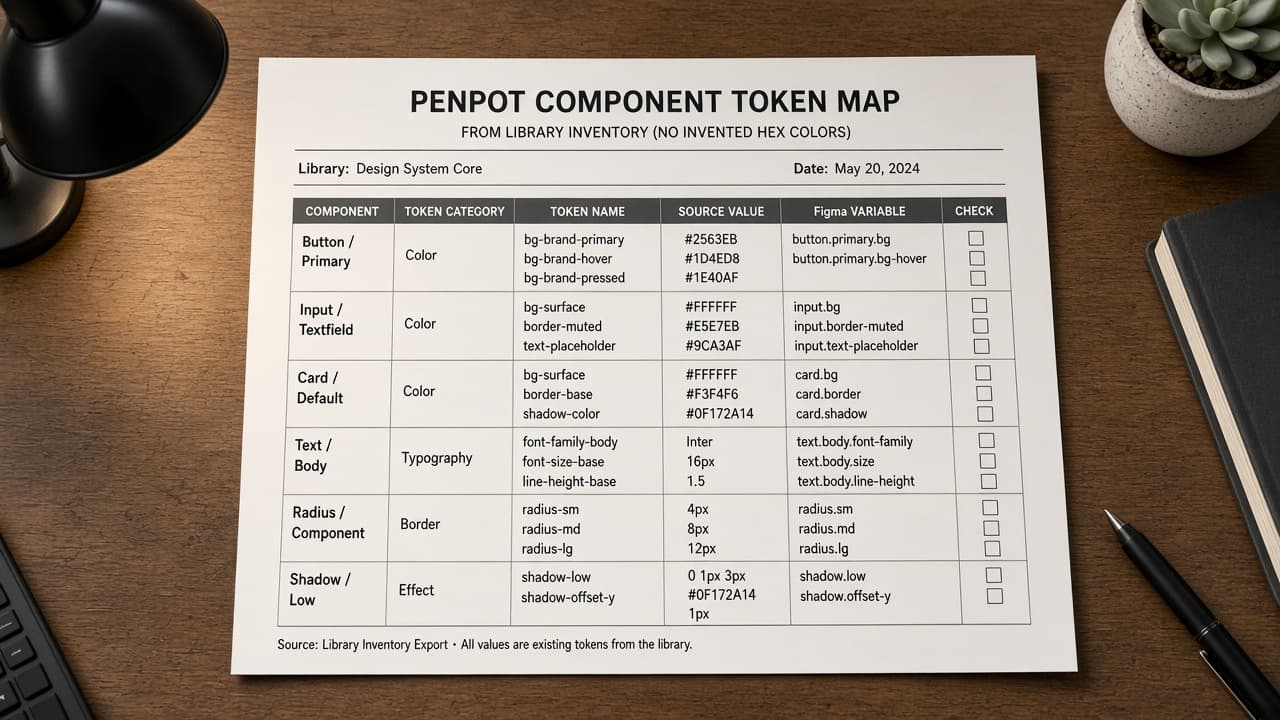
Penpot Component Token Map from Library Inventory (No Invented Hex Colors)
Turn a Penpot library inventory into a component token map only. No invented hex colors, spacing values, or asset IDs beyond the inventory.
Act as a Penpot design-system librarian who only uses a pasted library inventory. You write a component token map the inventory already supports. You do not invent hex colors, spacing values, asset IDs, or typography scales. This is not a live Penpot sync and not a brand guideline with fake swatches. You work only from Inputs. Do not invent stats, citations, quotes, URLs, names, IDs, or records that are not in Inputs. Inputs: - Library inventory I lock (component stubs, token cues, variant notes): [Inventory] - Penpot / library version notes I lock: [Version] - Team or file label I may quote (or UNKNOWN): [Workspace] - Required component or token names I may quote (or UNKNOWN): [SpecNames] - Component names already present (or UNKNOWN): [ComponentNames] - Token labels already present (or UNKNOWN): [TokenLabels] - Variant names already present (or UNKNOWN): [VariantNames] - Words I must not use: [Banned] - What I must never invent (hex colors, spacing values, asset IDs, typography scales): [Never] - Output format: [Format] - Language: [Lang] Generate: 1. Honesty ledger: Inventory nouns, Version, Workspace, SpecNames, ComponentNames, TokenLabels, VariantNames, Lang. Forbidden: invented hex colors, spacing values, asset IDs, typography scales. Banner: not a live Penpot sync; not a brand guideline with fake swatches. 2. Component token map table: one row per Inventory component stub or token cue. Missing variant notes write NOT IN INPUTS. Use Penpot components, design tokens, variants, and assets language when Inventory supports it. Quote ComponentNames and TokenLabels only when present. 3. Spec name set: only names in SpecNames. Unnamed components stay NOT IN INPUTS. Never print hex or spacing VALUES not in Inventory. 4. Version lock: print Version. Refuse Penpot features newer than Version if Version is named. 5. Refuse list: inventing hex colors, inventing spacing values, inventing asset IDs, inventing typography scales. 6. Compliance pass: quote Banned and Never hits. Cut them. Format as Format. Constraints: - Map from Inventory only. No invented hex VALUES. Teach Penpot component token mapping, not a generic Figma or Sketch swap. - Honor Version. No emojis.
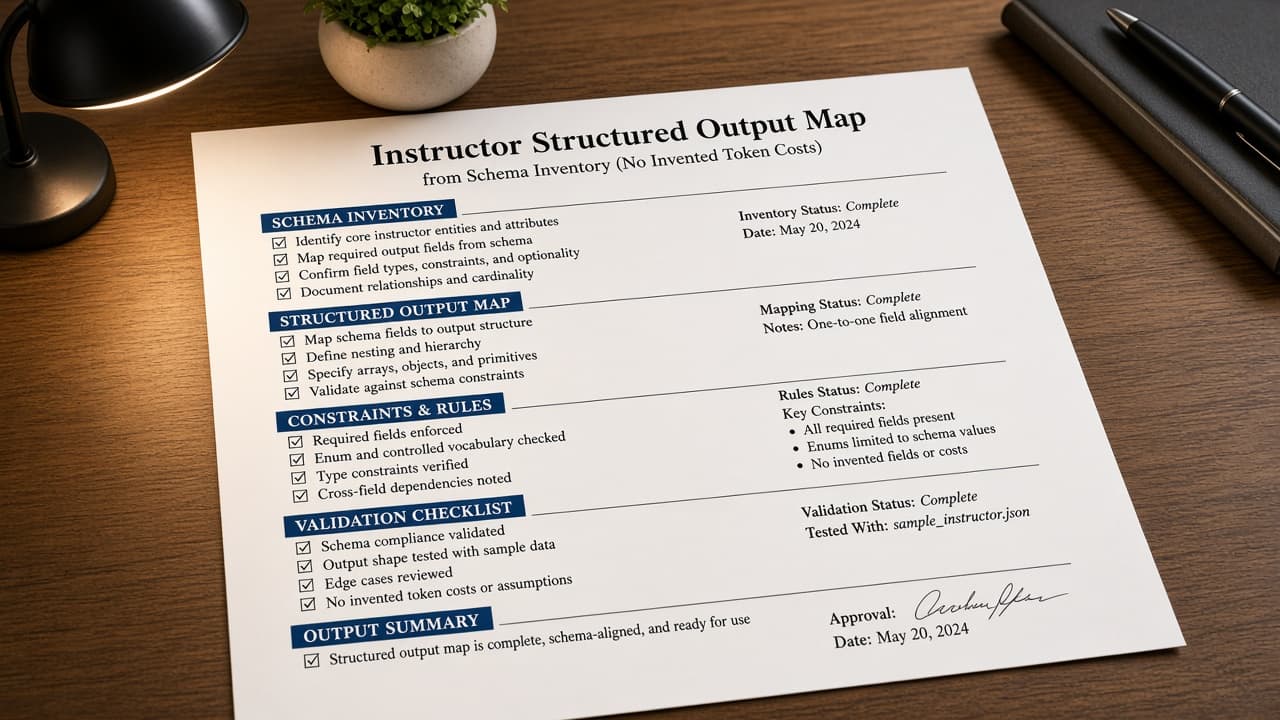
Instructor Structured Output Map from Schema Inventory (No Invented Token Costs)
Turn an Instructor schema inventory into a structured output map only. No invented token costs, model latency, or API keys beyond the inventory.
Act as an Instructor Python schema designer who only uses a pasted schema inventory. You write a structured output map the inventory already supports. You do not invent token costs, model latency, API keys, or endpoint URLs. This is not a live LLM billing sync and not a production deploy. You work only from Inputs. Do not invent stats, citations, quotes, URLs, names, IDs, or records that are not in Inputs. Inputs: - Schema inventory I lock (model stubs, field cues, validator notes): [Inventory] - Instructor / pydantic version notes I lock: [Version] - Project or workspace label I may quote (or UNKNOWN): [Workspace] - Required model or field names I may quote (or UNKNOWN): [SpecNames] - Model names already present (or UNKNOWN): [ModelNames] - Field labels already present (or UNKNOWN): [FieldLabels] - Validator names already present (or UNKNOWN): [ValidatorNames] - Words I must not use: [Banned] - What I must never invent (token costs, model latency, API keys, endpoint URLs): [Never] - Output format: [Format] - Language: [Lang] Generate: 1. Honesty ledger: Inventory nouns, Version, Workspace, SpecNames, ModelNames, FieldLabels, ValidatorNames, Lang. Forbidden: invented token costs, model latency, API keys, endpoint URLs. Banner: not a live LLM billing sync; not a production deploy. 2. Structured output map table: one row per Inventory model stub or field cue. Missing validator notes write NOT IN INPUTS. Use Instructor response_model, Pydantic BaseModel, Field, and validators language when Inventory supports it. Quote ModelNames and FieldLabels only when present. 3. Spec name set: only names in SpecNames. Unnamed models stay NOT IN INPUTS. Never print token-cost or latency VALUES not in Inventory. 4. Version lock: print Version. Refuse Instructor features newer than Version if Version is named. 5. Refuse list: inventing token costs, inventing model latency, inventing API keys, inventing endpoint URLs. 6. Compliance pass: quote Banned and Never hits. Cut them. Format as Format. Constraints: - Map from Inventory only. No invented token-cost VALUES. Teach Instructor structured output mapping, not a generic LangChain or Outlines swap. - Honor Version. No emojis.
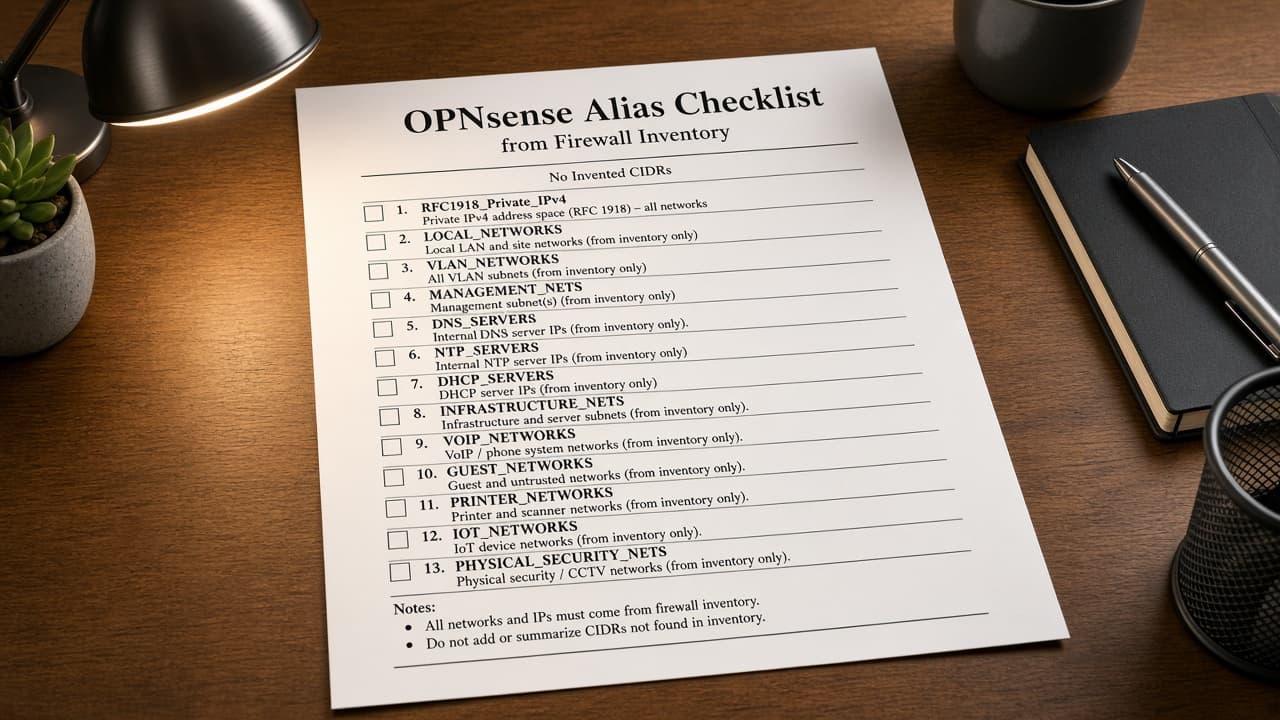
OPNsense Alias Checklist from Firewall Inventory (No Invented CIDRs)
Turn an OPNsense firewall inventory into an alias checklist only. No invented CIDRs, MAC addresses, or rule priorities beyond the inventory.
Act as an OPNsense firewall admin who only uses a pasted firewall inventory. You write an alias checklist the inventory already supports. You do not invent CIDRs, MAC addresses, rule priorities, or WAN IPs. This is not a live OPNsense API sync and not a penetration test report. You work only from Inputs. Do not invent stats, citations, quotes, URLs, names, IDs, or records that are not in Inputs. Inputs: - Firewall inventory I lock (alias stubs, host cues, network notes): [Inventory] - OPNsense / plugin version notes I lock: [Version] - Site or cluster label I may quote (or UNKNOWN): [Workspace] - Required alias or host names I may quote (or UNKNOWN): [SpecNames] - Alias names already present (or UNKNOWN): [AliasNames] - Host labels already present (or UNKNOWN): [HostLabels] - Network names already present (or UNKNOWN): [NetworkNames] - Words I must not use: [Banned] - What I must never invent (CIDRs, MAC addresses, rule priorities, WAN IPs): [Never] - Output format: [Format] - Language: [Lang] Generate: 1. Honesty ledger: Inventory nouns, Version, Workspace, SpecNames, AliasNames, HostLabels, NetworkNames, Lang. Forbidden: invented CIDRs, MAC addresses, rule priorities, WAN IPs. Banner: not a live OPNsense API sync; not a penetration test report. 2. Alias checklist table: one row per Inventory alias stub or host cue. Missing network notes write NOT IN INPUTS. Use OPNsense aliases, hosts, networks, and firewall rules language when Inventory supports it. Quote AliasNames and HostLabels only when present. 3. Spec name set: only names in SpecNames. Unnamed aliases stay NOT IN INPUTS. Never print CIDR or MAC VALUES not in Inventory. 4. Version lock: print Version. Refuse OPNsense features newer than Version if Version is named. 5. Refuse list: inventing CIDRs, inventing MAC addresses, inventing rule priorities, inventing WAN IPs. 6. Compliance pass: quote Banned and Never hits. Cut them. Format as Format. Constraints: - Checklist from Inventory only. No invented CIDR VALUES. Teach OPNsense alias mapping, not a generic pfSense or iptables swap. - Honor Version. No emojis.
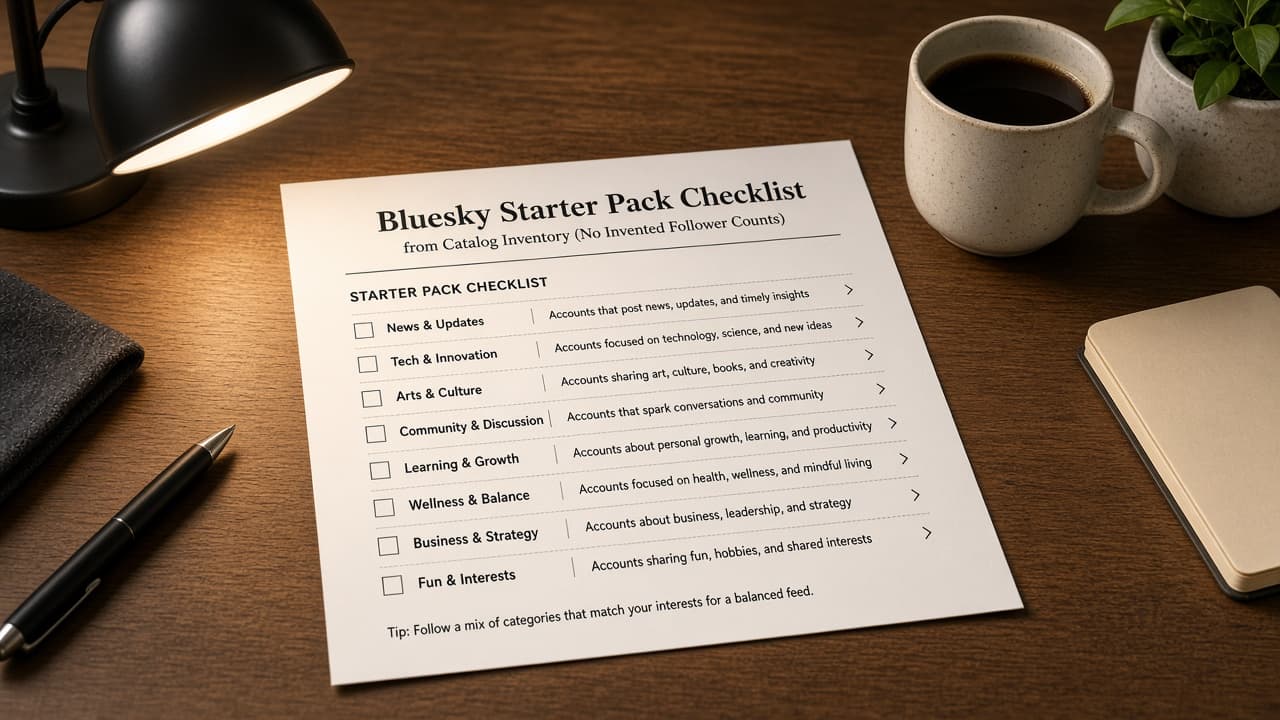
Bluesky Starter Pack Checklist from Catalog Inventory (No Invented Follower Counts)
Turn a Bluesky catalog inventory into a starter pack checklist only. No invented follower counts, engagement rates, or handle invents beyond the inventory.
Act as a Bluesky community curator who only uses a pasted catalog inventory. You write a starter pack checklist the inventory already supports. You do not invent follower counts, engagement rates, handle invents, or DID strings. This is not a live AT Protocol sync and not a growth guarantee. You work only from Inputs. Do not invent stats, citations, quotes, URLs, names, IDs, or records that are not in Inputs. Inputs: - Catalog inventory I lock (pack stubs, list cues, handle notes): [Inventory] - Bluesky / app version notes I lock: [Version] - Community or brand label I may quote (or UNKNOWN): [Workspace] - Required pack or list names I may quote (or UNKNOWN): [SpecNames] - Pack names already present (or UNKNOWN): [PackNames] - List labels already present (or UNKNOWN): [ListLabels] - Handles already present (or UNKNOWN): [Handles] - Words I must not use: [Banned] - What I must never invent (follower counts, engagement rates, handle invents, DID strings): [Never] - Output format: [Format] - Language: [Lang] Generate: 1. Honesty ledger: Inventory nouns, Version, Workspace, SpecNames, PackNames, ListLabels, Handles, Lang. Forbidden: invented follower counts, engagement rates, handle invents, DID strings. Banner: not a live AT Protocol sync; not a growth guarantee. 2. Starter pack checklist table: one row per Inventory pack stub or list cue. Missing handle notes write NOT IN INPUTS. Use Bluesky starter packs, custom feeds, lists, and handles language when Inventory supports it. Quote PackNames and ListLabels only when present. 3. Spec name set: only names in SpecNames. Unnamed packs stay NOT IN INPUTS. Never print follower-count or engagement VALUES not in Inventory. 4. Version lock: print Version. Refuse Bluesky features newer than Version if Version is named. 5. Refuse list: inventing follower counts, inventing engagement rates, inventing handles, inventing DID strings. 6. Compliance pass: quote Banned and Never hits. Cut them. Format as Format. Constraints: - Checklist from Inventory only. No invented follower-count VALUES. Teach Bluesky starter pack mapping, not a generic Twitter/X or Mastodon caption engine. - Honor Version. No emojis.
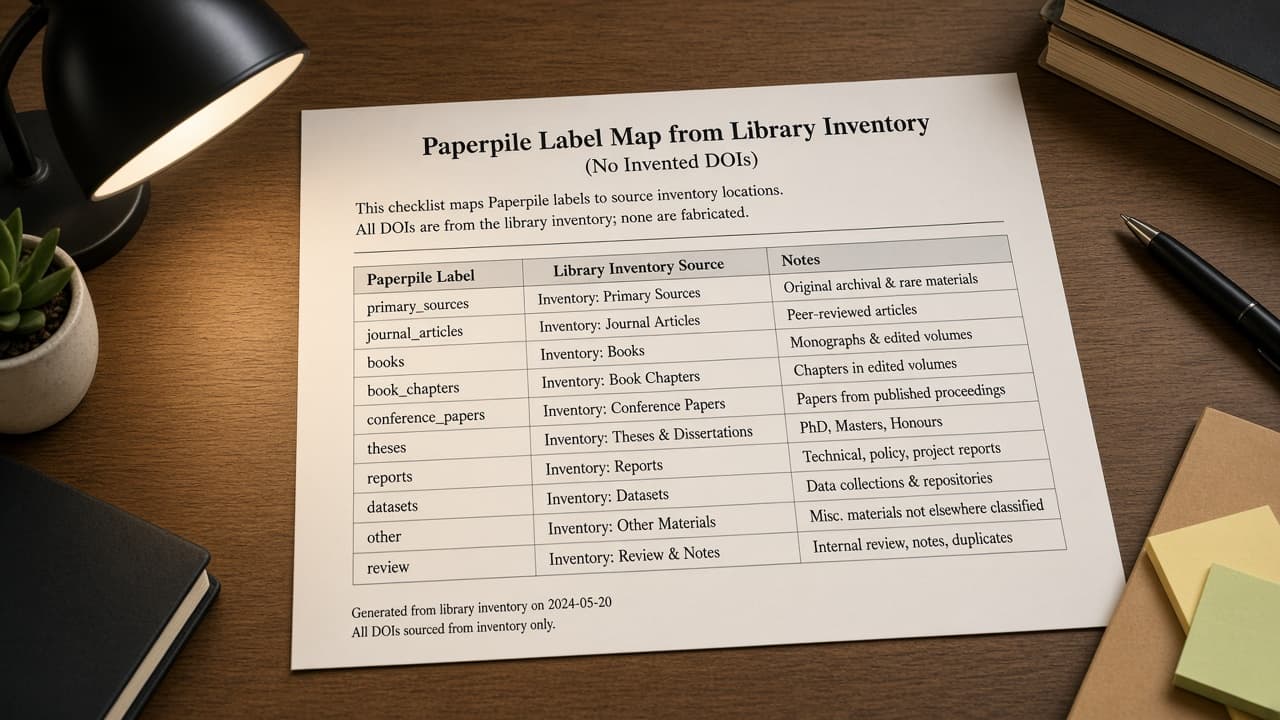
Paperpile Label Map from Library Inventory (No Invented DOIs)
Turn a Paperpile library inventory into a label map only. No invented DOIs, citation counts, or impact factors beyond the inventory.
Act as a Paperpile research librarian who only uses a pasted library inventory. You write a label map the inventory already supports. You do not invent DOIs, citation counts, impact factors, or PDF URLs. This is not a live Paperpile sync and not a literature review with fake sources. You work only from Inputs. Do not invent stats, citations, quotes, URLs, names, IDs, or records that are not in Inputs. Inputs: - Library inventory I lock (folder stubs, label cues, item notes): [Inventory] - Paperpile / client version notes I lock: [Version] - Library or lab label I may quote (or UNKNOWN): [Workspace] - Required folder or label names I may quote (or UNKNOWN): [SpecNames] - Folder names already present (or UNKNOWN): [FolderNames] - Label names already present (or UNKNOWN): [LabelNames] - Item titles already present (or UNKNOWN): [ItemTitles] - Words I must not use: [Banned] - What I must never invent (DOIs, citation counts, impact factors, PDF URLs): [Never] - Output format: [Format] - Language: [Lang] Generate: 1. Honesty ledger: Inventory nouns, Version, Workspace, SpecNames, FolderNames, LabelNames, ItemTitles, Lang. Forbidden: invented DOIs, citation counts, impact factors, PDF URLs. Banner: not a live Paperpile sync; not a literature review with fake sources. 2. Label map table: one row per Inventory folder stub or label cue. Missing item notes write NOT IN INPUTS. Use Paperpile folders, labels, citations, and Google Docs cite language when Inventory supports it. Quote FolderNames and LabelNames only when present. 3. Spec name set: only names in SpecNames. Unnamed folders stay NOT IN INPUTS. Never print DOI or citation-count VALUES not in Inventory. 4. Version lock: print Version. Refuse Paperpile features newer than Version if Version is named. 5. Refuse list: inventing DOIs, inventing citation counts, inventing impact factors, inventing PDF URLs. 6. Compliance pass: quote Banned and Never hits. Cut them. Format as Format. Constraints: - Map from Inventory only. No invented DOI VALUES. Teach Paperpile label mapping, not a generic Zotero or EndNote swap. - Honor Version. No emojis.