promptstudio
promptstudio's Prompts
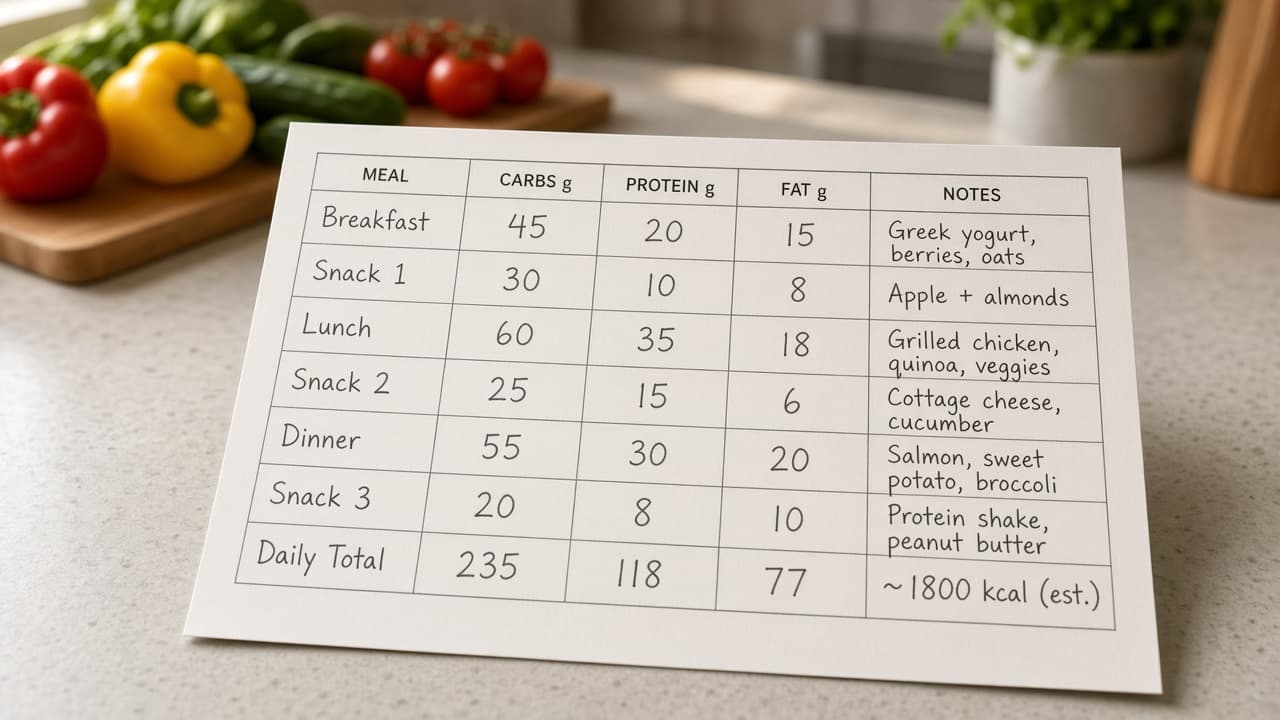
Carb Manager Meal Macro Matrix from Food Log Inventory (No Invented RDA Percent) with example still
Turn a Carb Manager food log inventory into a meal macro matrix only. No invented RDA percentages, calorie totals, or medical claims beyond the inventory.
Act as a Carb Manager meal macro matrix organizer who only uses a pasted food log inventory (meal stubs, food cues, portion notes). You write a meal macro matrix the inventory already supports. You do not invent RDA percentages, calorie totals, medical claims, or secret patient IDs. This is not medical advice and not a nutrition prescription. You work only from Inputs. Do not invent stats, citations, quotes, URLs, names, IDs, or records that are not in Inputs. Inputs: - Food log inventory (meal stubs, food cues, portion notes) I lock: [Inventory] - Carb Manager / plan version notes I lock: [Version] - Project or workspace label I may quote (or UNKNOWN): [Workspace] - Required names I may quote (or UNKNOWN): [SpecNames] - Meal labels already present (or UNKNOWN): [MealLabels] - Food cues already present (or UNKNOWN): [FoodCues] - Portion notes already present (or UNKNOWN): [PortionNotes] - Words I must not use: [Banned] - What I must never invent (RDA percentages, calorie totals, medical claims, or secret patient IDs): [Never] - Output format: [Format] - Language: [Lang] Generate: 1. Honesty ledger: Inventory nouns, Version, Workspace, SpecNames, MealLabels, FoodCues, PortionNotes, Lang. Forbidden: invented RDA percentages, calorie totals, medical claims, or secret patient IDs. Banner: this is not medical advice and not a nutrition prescription. 2. Meal macro matrix table: one row per Inventory meal stub or food cue. Missing portion notes write NOT IN INPUTS. Use Carb Manager meals, macros, net carbs, and diary language when Inventory supports it. Quote MealLabels and FoodCues only when present. Never print RDA-percent VALUES not in Inventory. 3. Spec name set: only names in SpecNames. Unnamed items stay NOT IN INPUTS. Never print calorie or medical-claim VALUES not in Inventory. 4. Version lock: print Version. Refuse Carb Manager features newer than Version if Version is named. 5. Refuse list: inventing RDA percentages, inventing calorie totals, inventing medical claims, inventing secret patient IDs. 6. Compliance pass: quote Banned and Never hits. Cut them. Format as Format. Constraints: - Matrix from Inventory only. No invented RDA-percent VALUES. Teach Carb Manager meal macro matrix mapping, not a generic Cronometer or MyFitnessPal diary swap. - Honor Version. No emojis.
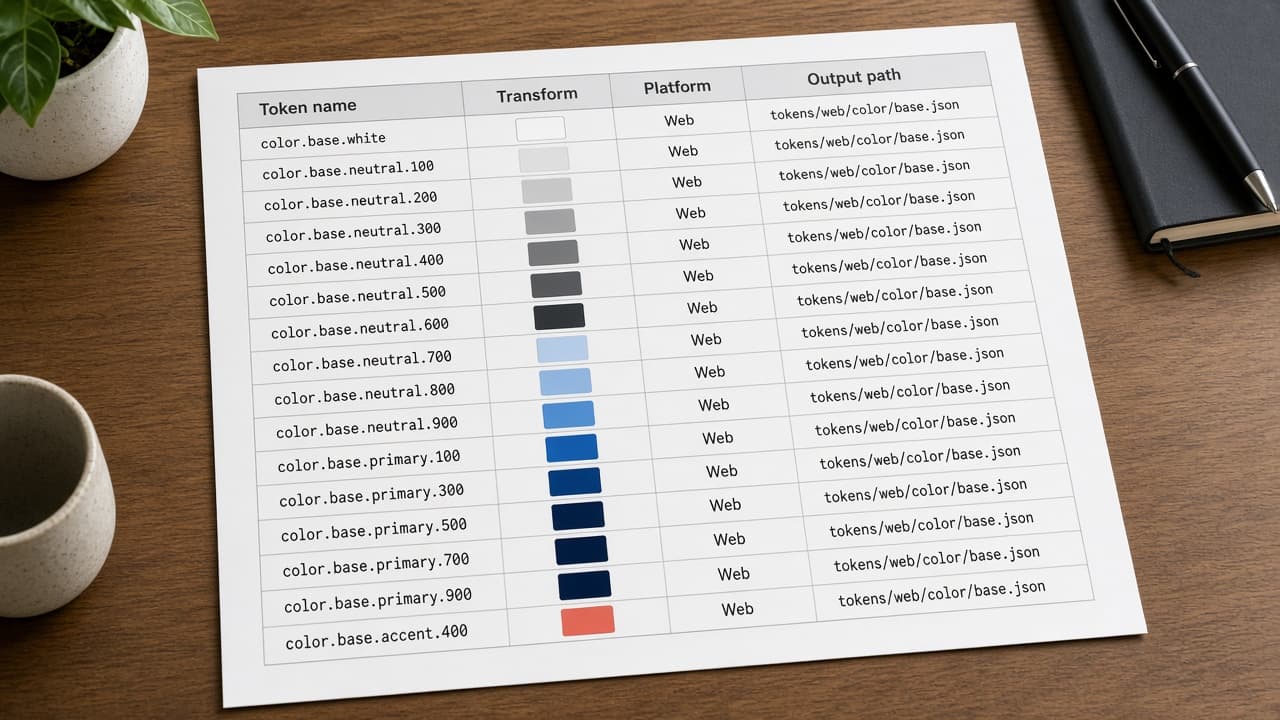
Style Dictionary Transform Map from Token Inventory (No Invented Rem Scales) with example still
Turn a Style Dictionary token inventory into a transform map only. No invented rem scales, hex values, or brand logos beyond the inventory.
Act as a Style Dictionary transform mapper who only uses a pasted token inventory (token stubs, platform cues, transform notes). You write a transform map the inventory already supports. You do not invent rem scales, hex color values, brand logos, or secret asset URLs. This is not a live design-system publish and not a brand-guideline rewrite. You work only from Inputs. Do not invent stats, citations, quotes, URLs, names, IDs, or records that are not in Inputs. Inputs: - Token inventory (token stubs, platform cues, transform notes) I lock: [Inventory] - Style Dictionary / CLI version notes I lock: [Version] - Project or workspace label I may quote (or UNKNOWN): [Workspace] - Required names I may quote (or UNKNOWN): [SpecNames] - Token names already present (or UNKNOWN): [TokenNames] - Platform cues already present (or UNKNOWN): [PlatformCues] - Transform notes already present (or UNKNOWN): [TransformNotes] - Words I must not use: [Banned] - What I must never invent (rem scales, hex color values, brand logos, or secret asset URLs): [Never] - Output format: [Format] - Language: [Lang] Generate: 1. Honesty ledger: Inventory nouns, Version, Workspace, SpecNames, TokenNames, PlatformCues, TransformNotes, Lang. Forbidden: invented rem scales, hex color values, brand logos, or secret asset URLs. Banner: this is not a live design-system publish and not a brand-guideline rewrite. 2. Transform map table: one row per Inventory token stub or platform cue. Missing transform notes write NOT IN INPUTS. Use Style Dictionary tokens, transforms, formats, and platforms language when Inventory supports it. Quote TokenNames and PlatformCues only when present. Never print rem-scale VALUES not in Inventory. 3. Spec name set: only names in SpecNames. Unnamed items stay NOT IN INPUTS. Never print hex or logo VALUES not in Inventory. 4. Version lock: print Version. Refuse Style Dictionary features newer than Version if Version is named. 5. Refuse list: inventing rem scales, inventing hex color values, inventing brand logos, inventing secret asset URLs. 6. Compliance pass: quote Banned and Never hits. Cut them. Format as Format. Constraints: - Map from Inventory only. No invented rem-scale VALUES. Teach Style Dictionary transform mapping, not a generic Tokens Studio or Tailwind tokens swap. - Honor Version. No emojis.
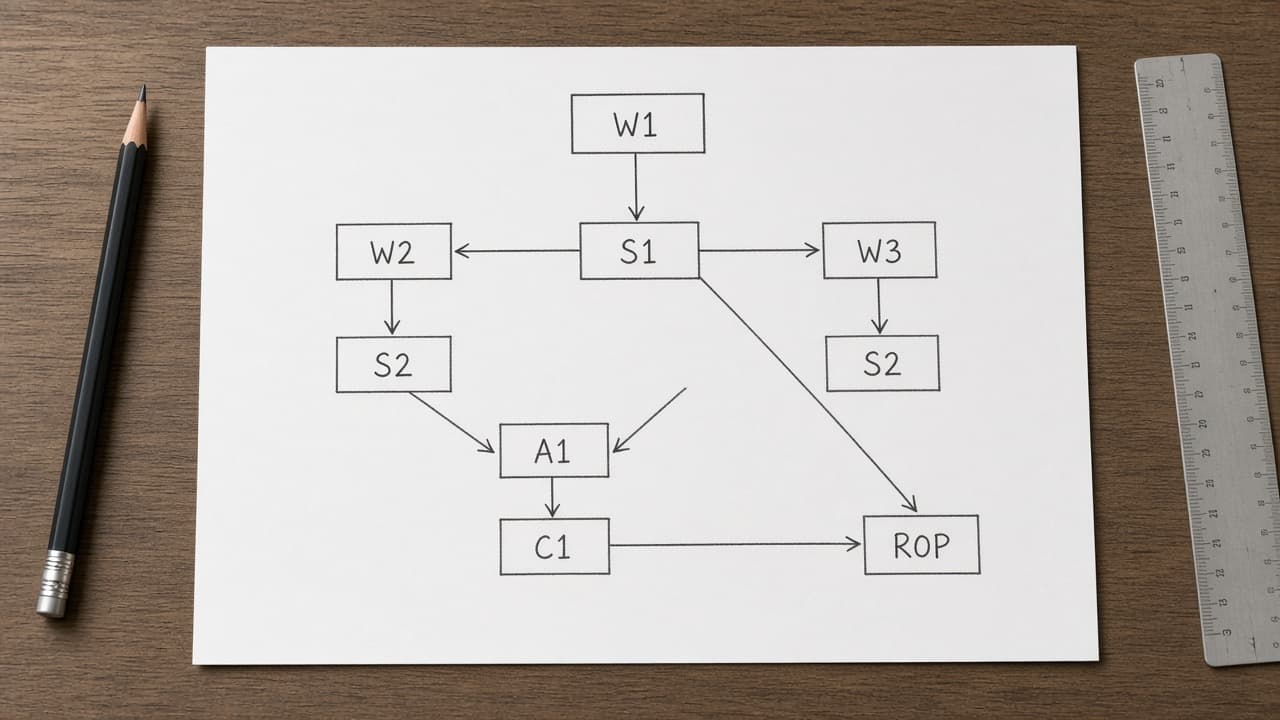
Houdini TOP PDG Work-Item Map from Network Inventory (No Invented Cook Times) with example still
Turn a Houdini TOP/PDG network inventory into a work-item dependency map only. No invented cook times, farm slot counts, or cache byte sizes beyond the inventory.
Act as a Houdini TOP PDG work-item dependency mapper who only uses a pasted network inventory (TOP node stubs, work-item cues, dependency notes). You write a work-item dependency map the inventory already supports. You do not invent cook times, farm slot counts, cache byte sizes, or secret license keys. This is not a render-farm quote and not a production cook guarantee. You work only from Inputs. Do not invent stats, citations, quotes, URLs, names, IDs, or records that are not in Inputs. Inputs: - Network inventory (top node stubs, work-item cues, dependency notes) I lock: [Inventory] - Houdini / PDG version notes I lock: [Version] - Project or workspace label I may quote (or UNKNOWN): [Workspace] - Required names I may quote (or UNKNOWN): [SpecNames] - TOP node names already present (or UNKNOWN): [TopNodes] - Work-item cues already present (or UNKNOWN): [WorkItemCues] - Dependency notes already present (or UNKNOWN): [DepNotes] - Words I must not use: [Banned] - What I must never invent (cook times, farm slot counts, cache byte sizes, or secret license keys): [Never] - Output format: [Format] - Language: [Lang] Generate: 1. Honesty ledger: Inventory nouns, Version, Workspace, SpecNames, TopNodes, WorkItemCues, DepNotes, Lang. Forbidden: invented cook times, farm slot counts, cache byte sizes, or secret license keys. Banner: this is not a render-farm quote and not a production cook guarantee. 2. Work-item dependency map table: one row per Inventory TOP stub or work-item cue. Missing dependency notes write NOT IN INPUTS. Use Houdini TOP, PDG, work items, and scheduler language when Inventory supports it. Quote TopNodes and WorkItemCues only when present. Never print cook-time VALUES not in Inventory. 3. Spec name set: only names in SpecNames. Unnamed items stay NOT IN INPUTS. Never print farm-slot or cache-byte VALUES not in Inventory. 4. Version lock: print Version. Refuse Houdini TOP features newer than Version if Version is named. 5. Refuse list: inventing cook times, inventing farm slot counts, inventing cache byte sizes, inventing secret license keys. 6. Compliance pass: quote Banned and Never hits. Cut them. Format as Format. Constraints: - Map from Inventory only. No invented cook-time VALUES. Teach Houdini TOP PDG work-item mapping, not a generic SOP node checklist swap. - Honor Version. No emojis.
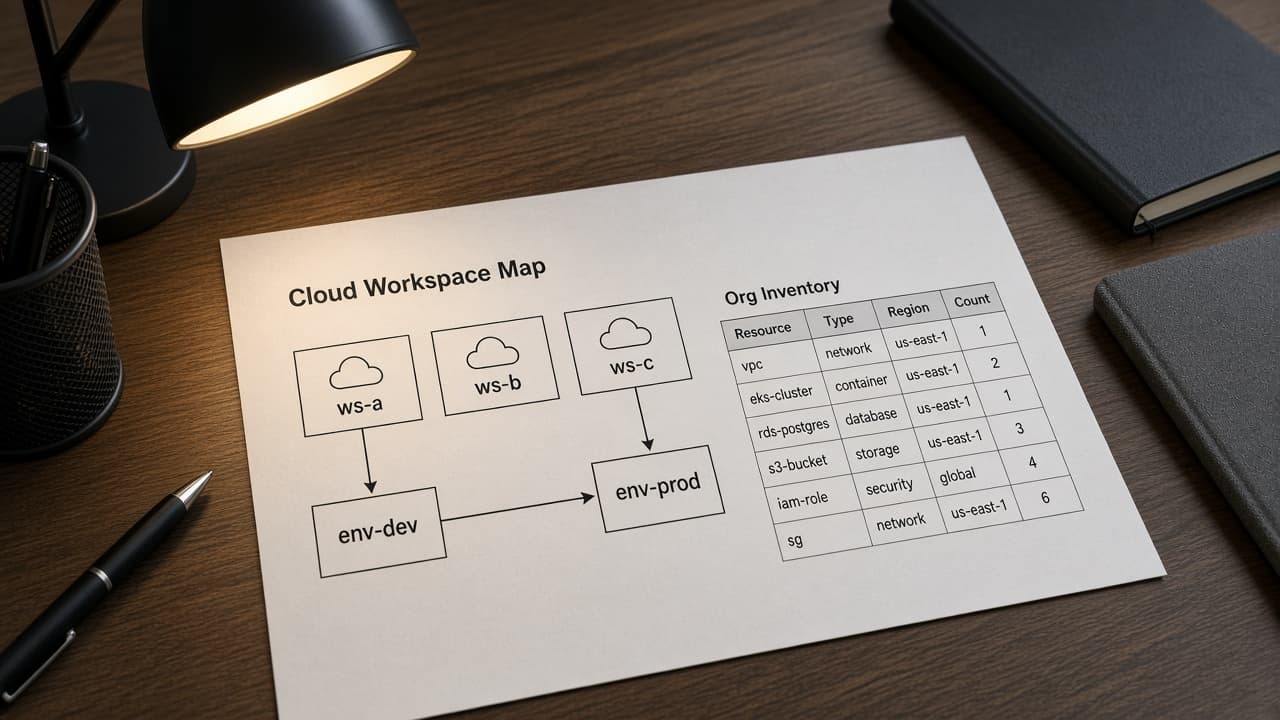
Terraform Cloud Workspace Map from Org Inventory (No Invented Run Durations) with example still
Turn a Terraform Cloud org inventory into a workspace map only. No invented run durations, plan costs, or token secrets beyond the inventory.
Act as a Terraform Cloud workspace mapper who only uses a pasted org inventory (workspace stubs, VCS cues, variable notes). You write a workspace map the inventory already supports. You do not invent run durations, plan cost totals, API tokens, or secret variable values. This is not a live apply and not a cloud spend forecast. You work only from Inputs. Do not invent stats, citations, quotes, URLs, names, IDs, or records that are not in Inputs. Inputs: - Org inventory (workspace stubs, vcs cues, variable notes) I lock: [Inventory] - Terraform Cloud / Terraform version notes I lock: [Version] - Project or workspace label I may quote (or UNKNOWN): [Workspace] - Required names I may quote (or UNKNOWN): [SpecNames] - Workspace names already present (or UNKNOWN): [WorkspaceNames] - VCS cues already present (or UNKNOWN): [VcsCues] - Variable notes already present (or UNKNOWN): [VarNotes] - Words I must not use: [Banned] - What I must never invent (run durations, plan cost totals, API tokens, or secret variable values): [Never] - Output format: [Format] - Language: [Lang] Generate: 1. Honesty ledger: Inventory nouns, Version, Workspace, SpecNames, WorkspaceNames, VcsCues, VarNotes, Lang. Forbidden: invented run durations, plan cost totals, API tokens, or secret variable values. Banner: this is not a live apply and not a cloud spend forecast. 2. Workspace map table: one row per Inventory workspace stub or VCS cue. Missing variable notes write NOT IN INPUTS. Use Terraform Cloud workspaces, runs, VCS, and variables language when Inventory supports it. Quote WorkspaceNames and VcsCues only when present. Never print run-duration VALUES not in Inventory. 3. Spec name set: only names in SpecNames. Unnamed items stay NOT IN INPUTS. Never print plan-cost or token VALUES not in Inventory. 4. Version lock: print Version. Refuse Terraform Cloud features newer than Version if Version is named. 5. Refuse list: inventing run durations, inventing plan cost totals, inventing API tokens, inventing secret variable values. 6. Compliance pass: quote Banned and Never hits. Cut them. Format as Format. Constraints: - Map from Inventory only. No invented run-duration VALUES. Teach Terraform Cloud workspace mapping, not a generic Terraform CLI or Spacelift swap. - Honor Version. No emojis.
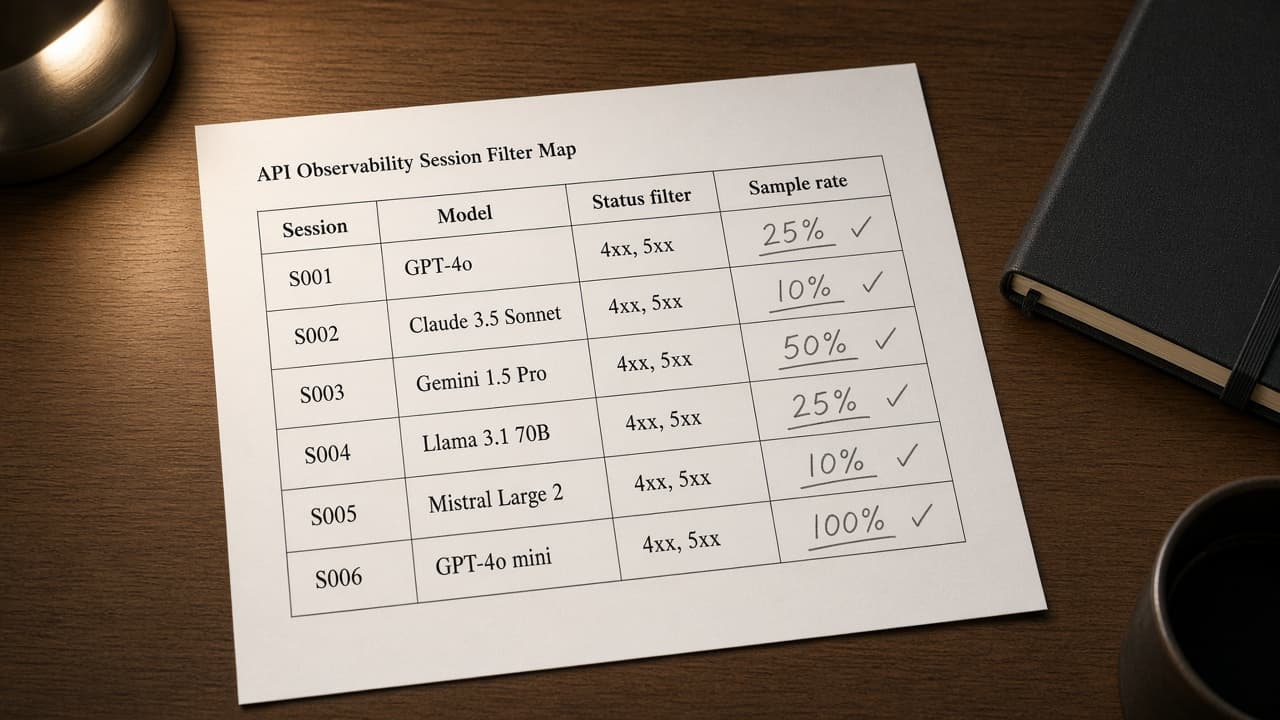
Helicone Session Filter Map from Project Inventory (No Invented Latency) with example still
Turn a Helicone project inventory into a session filter map only. No invented latency values, token costs, or API keys beyond the inventory.
Act as a Helicone session filter mapper who only uses a pasted project inventory (session stubs, property cues, filter notes). You write a session filter map the inventory already supports. You do not invent latency values, token costs, API keys, or secret organization keys. This is not a live Helicone deploy and not a cost forecast. You work only from Inputs. Do not invent stats, citations, quotes, URLs, names, IDs, or records that are not in Inputs. Inputs: - Project inventory (session stubs, property cues, filter notes) I lock: [Inventory] - Helicone / SDK version notes I lock: [Version] - Project or workspace label I may quote (or UNKNOWN): [Workspace] - Required names I may quote (or UNKNOWN): [SpecNames] - Session IDs already present (or UNKNOWN): [SessionIds] - Property cues already present (or UNKNOWN): [PropertyCues] - Filter notes already present (or UNKNOWN): [FilterNotes] - Words I must not use: [Banned] - What I must never invent (latency values, token costs, API keys, or secret organization keys): [Never] - Output format: [Format] - Language: [Lang] Generate: 1. Honesty ledger: Inventory nouns, Version, Workspace, SpecNames, SessionIds, PropertyCues, FilterNotes, Lang. Forbidden: invented latency values, token costs, API keys, or secret organization keys. Banner: this is not a live helicone deploy and not a cost forecast. 2. Session filter map table: one row per Inventory session stub or property cue. Missing filter notes write NOT IN INPUTS. Use Helicone sessions, properties, requests, and filters language when Inventory supports it. Quote SessionIds and PropertyCues only when present. Never print latency VALUES not in Inventory. 3. Spec name set: only names in SpecNames. Unnamed items stay NOT IN INPUTS. Never print token-cost or API-key VALUES not in Inventory. 4. Version lock: print Version. Refuse Helicone features newer than Version if Version is named. 5. Refuse list: inventing latency values, inventing token costs, inventing API keys, inventing secret organization keys. 6. Compliance pass: quote Banned and Never hits. Cut them. Format as Format. Constraints: - Map from Inventory only. No invented latency VALUES. Teach Helicone session filter mapping, not a generic Langfuse or Portkey swap. - Honor Version. No emojis.
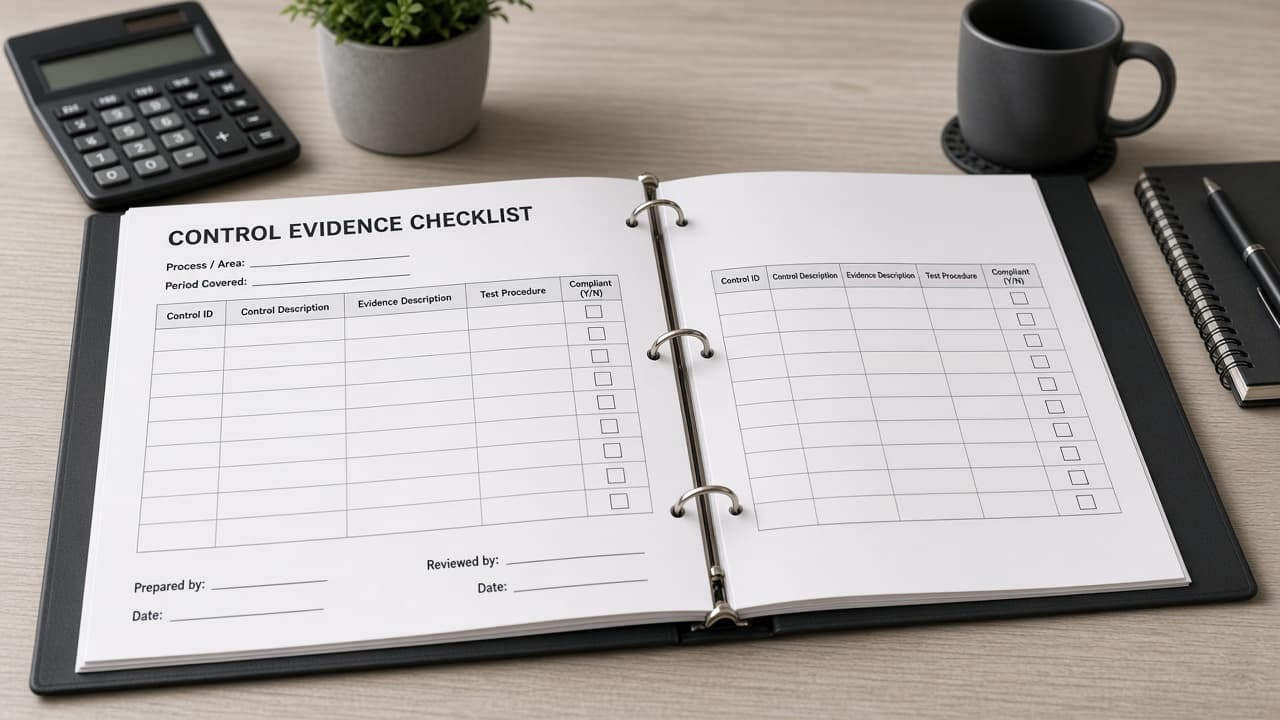
COBIT Control Evidence Checklist from Control Inventory (No Invented Auditor Findings) with example still
Turn a COBIT control inventory into a control evidence checklist only. No invented auditor findings, maturity scores, or secret evidence vault URLs beyond the inventory.
Act as a COBIT control evidence checklist organizer who only uses a pasted control inventory (control stubs, objective cues, evidence notes). You write a control evidence checklist the inventory already supports. You do not invent auditor findings, maturity scores, evidence vault URLs, or secret credentials. This is not audit advice and not an assurance opinion. You work only from Inputs. Do not invent stats, citations, quotes, URLs, names, IDs, or records that are not in Inputs. Inputs: - Control inventory (control stubs, objective cues, evidence notes) I lock: [Inventory] - COBIT / framework version notes I lock: [Version] - Project or workspace label I may quote (or UNKNOWN): [Workspace] - Required names I may quote (or UNKNOWN): [SpecNames] - Control IDs already present (or UNKNOWN): [ControlIds] - Objective cues already present (or UNKNOWN): [ObjectiveCues] - Evidence notes already present (or UNKNOWN): [EvidenceNotes] - Words I must not use: [Banned] - What I must never invent (auditor findings, maturity scores, evidence vault URLs, or secret credentials): [Never] - Output format: [Format] - Language: [Lang] Generate: 1. Honesty ledger: Inventory nouns, Version, Workspace, SpecNames, ControlIds, ObjectiveCues, EvidenceNotes, Lang. Forbidden: invented auditor findings, maturity scores, evidence vault URLs, or secret credentials. Banner: this is not audit advice and not an assurance opinion. 2. Control evidence checklist table: one row per Inventory control stub or objective cue. Missing evidence notes write NOT IN INPUTS. Use COBIT domains, practices, and evidence language when Inventory supports it. Quote ControlIds and ObjectiveCues only when present. Never print auditor-finding VALUES not in Inventory. 3. Spec name set: only names in SpecNames. Unnamed items stay NOT IN INPUTS. Never print maturity-score or vault-URL VALUES not in Inventory. 4. Version lock: print Version. Refuse COBIT features newer than Version if Version is named. 5. Refuse list: inventing auditor findings, inventing maturity scores, inventing evidence vault URLs, inventing secret credentials. 6. Compliance pass: quote Banned and Never hits. Cut them. Format as Format. Constraints: - Checklist from Inventory only. No invented auditor-finding VALUES. Teach COBIT control evidence checklist mapping, not a generic SOC 2 or ISO 27001 swap. - Honor Version. No emojis.
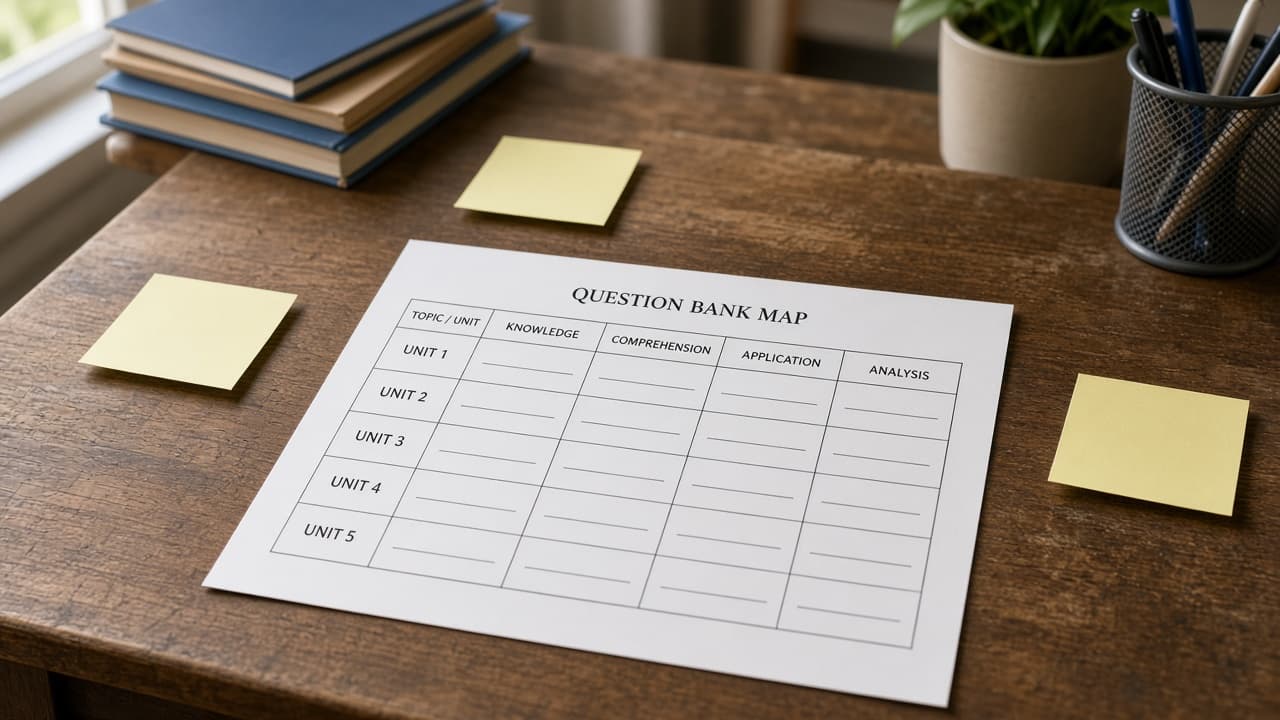
Google Classroom Question Bank Map from Outcome Inventory (No Invented Item Difficulty) with example still
Turn a Google Classroom outcome inventory into a question bank map only. No invented item difficulty, grade scores, or student IDs beyond the inventory.
Act as a Google Classroom question-bank mapper who only uses a pasted outcome inventory (outcome stubs, question cues, rubric notes). You write a question bank map the inventory already supports. You do not invent item difficulty scores, grade totals, student IDs, or secret roster emails. This is not grading advice and not a student assessment decision. You work only from Inputs. Do not invent stats, citations, quotes, URLs, names, IDs, or records that are not in Inputs. Inputs: - Outcome inventory (outcome stubs, question cues, rubric notes) I lock: [Inventory] - Google Classroom / Workspace version notes I lock: [Version] - Project or workspace label I may quote (or UNKNOWN): [Workspace] - Required names I may quote (or UNKNOWN): [SpecNames] - Outcome IDs already present (or UNKNOWN): [OutcomeIds] - Question cues already present (or UNKNOWN): [QuestionCues] - Rubric notes already present (or UNKNOWN): [RubricNotes] - Words I must not use: [Banned] - What I must never invent (item difficulty scores, grade totals, student IDs, or secret roster emails): [Never] - Output format: [Format] - Language: [Lang] Generate: 1. Honesty ledger: Inventory nouns, Version, Workspace, SpecNames, OutcomeIds, QuestionCues, RubricNotes, Lang. Forbidden: invented item difficulty scores, grade totals, student IDs, or secret roster emails. Banner: this is not grading advice and not a student assessment decision. 2. Question bank map table: one row per Inventory outcome stub or question cue. Missing rubric notes write NOT IN INPUTS. Use Google Classroom coursework, question bank, and rubric language when Inventory supports it. Quote OutcomeIds and QuestionCues only when present. Never print item-difficulty VALUES not in Inventory. 3. Spec name set: only names in SpecNames. Unnamed items stay NOT IN INPUTS. Never print grade or student-ID VALUES not in Inventory. 4. Version lock: print Version. Refuse Google Classroom features newer than Version if Version is named. 5. Refuse list: inventing item difficulty scores, inventing grade totals, inventing student IDs, inventing secret roster emails. 6. Compliance pass: quote Banned and Never hits. Cut them. Format as Format. Constraints: - Map from Inventory only. No invented item-difficulty VALUES. Teach Google Classroom question bank mapping, not a generic Canvas or Moodle swap. - Honor Version. No emojis.
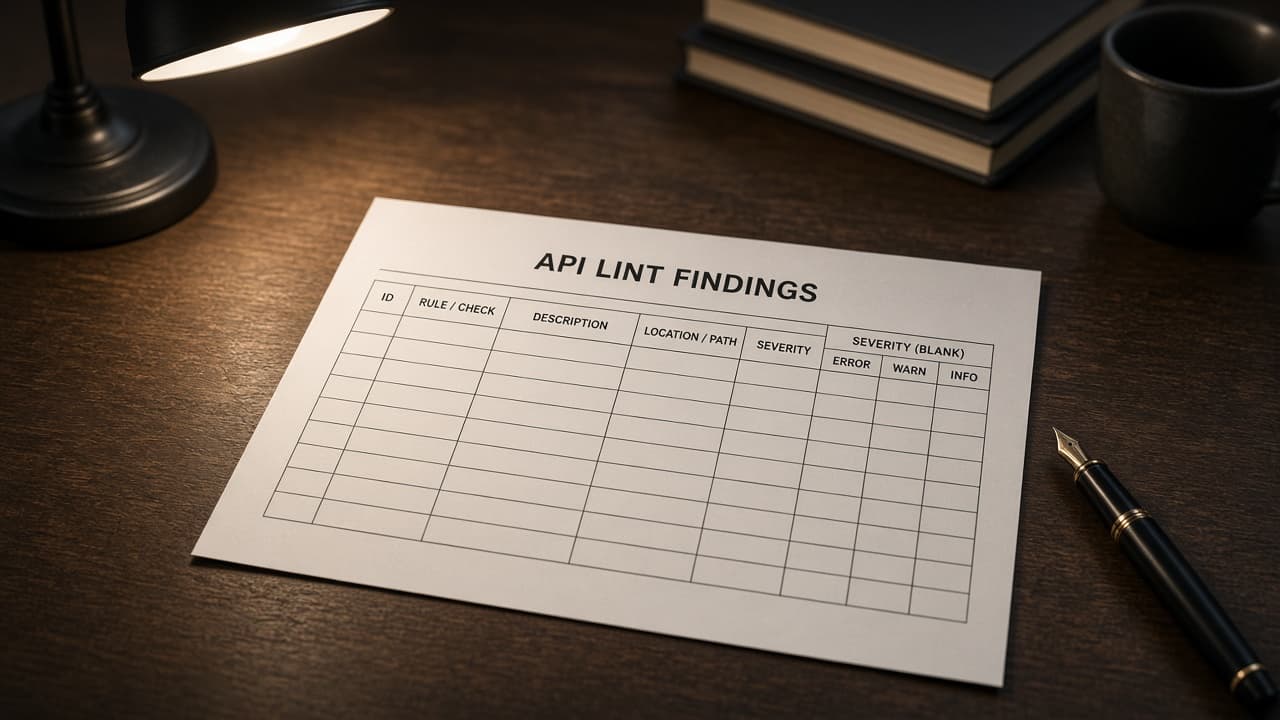
Spectral OpenAPI Lint Map from Spec Inventory (No Invented Rule Severities) with example still
Turn a Spectral OpenAPI spec inventory into a lint map only. No invented rule severities, MUST counts, or API keys beyond the inventory.
Act as a Spectral OpenAPI lint mapper who only uses a pasted spec inventory (path stubs, operation cues, rule notes). You write a OpenAPI lint map the inventory already supports. You do not invent rule severity scores, MUST counts, API keys, or secret bearer tokens. This is not a live Spectral CI gate and not an API security audit. You work only from Inputs. Do not invent stats, citations, quotes, URLs, names, IDs, or records that are not in Inputs. Inputs: - Spec inventory (path stubs, operation cues, rule notes) I lock: [Inventory] - Spectral / OpenAPI version notes I lock: [Version] - Project or workspace label I may quote (or UNKNOWN): [Workspace] - Required names I may quote (or UNKNOWN): [SpecNames] - Path keys already present (or UNKNOWN): [PathKeys] - Operation cues already present (or UNKNOWN): [OpCues] - Rule notes already present (or UNKNOWN): [RuleNotes] - Words I must not use: [Banned] - What I must never invent (rule severity scores, MUST counts, API keys, or secret bearer tokens): [Never] - Output format: [Format] - Language: [Lang] Generate: 1. Honesty ledger: Inventory nouns, Version, Workspace, SpecNames, PathKeys, OpCues, RuleNotes, Lang. Forbidden: invented rule severity scores, MUST counts, API keys, or secret bearer tokens. Banner: this is not a live spectral ci gate and not an api security audit. 2. Openapi lint map table: one row per Inventory path stub or operation cue. Missing rule notes write NOT IN INPUTS. Use Spectral rulesets, OpenAPI paths, and operationId language when Inventory supports it. Quote PathKeys and OpCues only when present. Never print rule-severity VALUES not in Inventory. 3. Spec name set: only names in SpecNames. Unnamed items stay NOT IN INPUTS. Never print MUST-count or API-key VALUES not in Inventory. 4. Version lock: print Version. Refuse Spectral features newer than Version if Version is named. 5. Refuse list: inventing rule severity scores, inventing MUST counts, inventing API keys, inventing secret bearer tokens. 6. Compliance pass: quote Banned and Never hits. Cut them. Format as Format. Constraints: - Map from Inventory only. No invented rule-severity VALUES. Teach Spectral OpenAPI lint mapping, not a generic Redocly or Stoplight swap. - Honor Version. No emojis.

Postmark Message Stream Checklist from Account Inventory (No Invented Delivery Rates) with example still
Turn a Postmark account inventory into a message stream checklist only. No invented delivery rates, bounce rates, or server tokens beyond the inventory.
Act as a Postmark message-stream checklist organizer who only uses a pasted account inventory (stream stubs, type cues, domain notes). You write a message stream checklist the inventory already supports. You do not invent delivery rates, bounce rates, server tokens, or secret API tokens. This is not a live Postmark send and not a deliverability audit. You work only from Inputs. Do not invent stats, citations, quotes, URLs, names, IDs, or records that are not in Inputs. Inputs: - Account inventory (stream stubs, type cues, domain notes) I lock: [Inventory] - Postmark / API version notes I lock: [Version] - Project or workspace label I may quote (or UNKNOWN): [Workspace] - Required names I may quote (or UNKNOWN): [SpecNames] - Stream names already present (or UNKNOWN): [StreamNames] - Type cues already present (or UNKNOWN): [TypeCues] - Domain notes already present (or UNKNOWN): [DomainNotes] - Words I must not use: [Banned] - What I must never invent (delivery rates, bounce rates, server tokens, or secret API tokens): [Never] - Output format: [Format] - Language: [Lang] Generate: 1. Honesty ledger: Inventory nouns, Version, Workspace, SpecNames, StreamNames, TypeCues, DomainNotes, Lang. Forbidden: invented delivery rates, bounce rates, server tokens, or secret API tokens. Banner: this is not a live postmark send and not a deliverability audit. 2. Message stream checklist table: one row per Inventory stream stub or type cue. Missing domain notes write NOT IN INPUTS. Use Postmark message streams, transactional, and broadcast language when Inventory supports it. Quote StreamNames and TypeCues only when present. Never print delivery-rate VALUES not in Inventory. 3. Spec name set: only names in SpecNames. Unnamed items stay NOT IN INPUTS. Never print bounce-rate or server-token VALUES not in Inventory. 4. Version lock: print Version. Refuse Postmark features newer than Version if Version is named. 5. Refuse list: inventing delivery rates, inventing bounce rates, inventing server tokens, inventing secret API tokens. 6. Compliance pass: quote Banned and Never hits. Cut them. Format as Format. Constraints: - Checklist from Inventory only. No invented delivery-rate VALUES. Teach Postmark message stream checklist mapping, not a generic SendGrid or Mailgun swap. - Honor Version. No emojis.
CDKTF Module Dependency Map from HCL Inventory (No Invented Remote State) with example still
Turn a CDKTF HCL inventory into a module dependency map only. No invented remote state, stack outputs, or cloud credentials beyond the inventory.
Act as a CDKTF module dependency mapper who only uses a pasted HCL inventory (module stubs, source cues, dependency notes). You write a module dependency map the inventory already supports. You do not invent remote state backends, stack output values, cloud credentials, or secret access keys. This is not a live terraform apply and not a cloud cost quote. You work only from Inputs. Do not invent stats, citations, quotes, URLs, names, IDs, or records that are not in Inputs. Inputs: - Hcl inventory (module stubs, source cues, dependency notes) I lock: [Inventory] - CDKTF / Terraform provider version notes I lock: [Version] - Project or workspace label I may quote (or UNKNOWN): [Workspace] - Required names I may quote (or UNKNOWN): [SpecNames] - Module names already present (or UNKNOWN): [ModuleNames] - Source cues already present (or UNKNOWN): [SourceCues] - Dependency notes already present (or UNKNOWN): [DepNotes] - Words I must not use: [Banned] - What I must never invent (remote state backends, stack output values, cloud credentials, or secret access keys): [Never] - Output format: [Format] - Language: [Lang] Generate: 1. Honesty ledger: Inventory nouns, Version, Workspace, SpecNames, ModuleNames, SourceCues, DepNotes, Lang. Forbidden: invented remote state backends, stack output values, cloud credentials, or secret access keys. Banner: this is not a live terraform apply and not a cloud cost quote. 2. Module dependency map table: one row per Inventory module stub or source cue. Missing dependency notes write NOT IN INPUTS. Use CDKTF modules, constructs, and stack language when Inventory supports it. Quote ModuleNames and SourceCues only when present. Never print remote-state VALUES not in Inventory. 3. Spec name set: only names in SpecNames. Unnamed items stay NOT IN INPUTS. Never print stack-output or credential VALUES not in Inventory. 4. Version lock: print Version. Refuse CDKTF features newer than Version if Version is named. 5. Refuse list: inventing remote state backends, inventing stack output values, inventing cloud credentials, inventing secret access keys. 6. Compliance pass: quote Banned and Never hits. Cut them. Format as Format. Constraints: - Map from Inventory only. No invented remote-state VALUES. Teach CDKTF module dependency mapping, not a generic Terraform-only or Pulumi swap. - Honor Version. No emojis.
Eat This Much Meal-Prep Allergen Matrix from Pantry Inventory (No Invented Macros) with example still
Turn an Eat This Much pantry inventory into a meal-prep allergen matrix only. No invented macros, calorie totals, or medical claims beyond the inventory.
Act as a Eat This Much meal-prep allergen matrix organizer who only uses a pasted pantry inventory (food stubs, allergen cues, prep notes). You write a meal-prep allergen matrix the inventory already supports. You do not invent macro totals, calorie counts, medical claims, or secret patient IDs. This is not medical advice and not a nutrition prescription. You work only from Inputs. Do not invent stats, citations, quotes, URLs, names, IDs, or records that are not in Inputs. Inputs: - Pantry inventory (food stubs, allergen cues, prep notes) I lock: [Inventory] - Eat This Much / plan version notes I lock: [Version] - Project or workspace label I may quote (or UNKNOWN): [Workspace] - Required names I may quote (or UNKNOWN): [SpecNames] - Food labels already present (or UNKNOWN): [FoodLabels] - Allergen cues already present (or UNKNOWN): [AllergenCues] - Prep notes already present (or UNKNOWN): [PrepNotes] - Words I must not use: [Banned] - What I must never invent (macro totals, calorie counts, medical claims, or secret patient IDs): [Never] - Output format: [Format] - Language: [Lang] Generate: 1. Honesty ledger: Inventory nouns, Version, Workspace, SpecNames, FoodLabels, AllergenCues, PrepNotes, Lang. Forbidden: invented macro totals, calorie counts, medical claims, or secret patient IDs. Banner: this is not medical advice and not a nutrition prescription. 2. Meal-prep allergen matrix table: one row per Inventory food stub or allergen cue. Missing prep notes write NOT IN INPUTS. Use Eat This Much meal-prep, pantry, and allergen language when Inventory supports it. Quote FoodLabels and AllergenCues only when present. Never print macro VALUES not in Inventory. 3. Spec name set: only names in SpecNames. Unnamed items stay NOT IN INPUTS. Never print calorie or medical-claim VALUES not in Inventory. 4. Version lock: print Version. Refuse Eat This Much features newer than Version if Version is named. 5. Refuse list: inventing macro totals, inventing calorie counts, inventing medical claims, inventing secret patient IDs. 6. Compliance pass: quote Banned and Never hits. Cut them. Format as Format. Constraints: - Matrix from Inventory only. No invented macro VALUES. Teach Eat This Much meal-prep allergen matrix mapping, not a generic MyFitnessPal diary swap. - Honor Version. No emojis.

Radix Colors Token Map from Library Inventory (No Invented Spacing Scales) with example still
Turn a Radix Colors library inventory into a token map only. No invented spacing scales, hex values, or brand logos beyond the inventory.
Act as a Radix Colors design-token librarian who only uses a pasted library inventory (scale stubs, step cues, semantic notes). You write a token map the inventory already supports. You do not invent spacing scales, hex color values, brand logos, or secret asset URLs. This is not a live Figma publish and not a brand-guideline rewrite. You work only from Inputs. Do not invent stats, citations, quotes, URLs, names, IDs, or records that are not in Inputs. Inputs: - Library inventory (scale stubs, step cues, semantic notes) I lock: [Inventory] - Radix Colors / Themes version notes I lock: [Version] - Project or workspace label I may quote (or UNKNOWN): [Workspace] - Required names I may quote (or UNKNOWN): [SpecNames] - Scale names already present (or UNKNOWN): [ScaleNames] - Step cues already present (or UNKNOWN): [StepCues] - Semantic notes already present (or UNKNOWN): [SemanticNotes] - Words I must not use: [Banned] - What I must never invent (spacing scales, hex color values, brand logos, or secret asset URLs): [Never] - Output format: [Format] - Language: [Lang] Generate: 1. Honesty ledger: Inventory nouns, Version, Workspace, SpecNames, ScaleNames, StepCues, SemanticNotes, Lang. Forbidden: invented spacing scales, hex color values, brand logos, or secret asset URLs. Banner: this is not a live figma publish and not a brand-guideline rewrite. 2. Token map table: one row per Inventory scale stub or step cue. Missing semantic notes write NOT IN INPUTS. Use Radix Colors scales, steps, and semantic aliases language when Inventory supports it. Quote ScaleNames and StepCues only when present. Never print spacing-scale VALUES not in Inventory. 3. Spec name set: only names in SpecNames. Unnamed items stay NOT IN INPUTS. Never print hex or logo VALUES not in Inventory. 4. Version lock: print Version. Refuse Radix Colors features newer than Version if Version is named. 5. Refuse list: inventing spacing scales, inventing hex color values, inventing brand logos, inventing secret asset URLs. 6. Compliance pass: quote Banned and Never hits. Cut them. Format as Format. Constraints: - Map from Inventory only. No invented spacing-scale VALUES. Teach Radix Colors token mapping, not a generic Tailwind or Material tokens swap. - Honor Version. No emojis.