How to Use the Wedding Officiant Script Prompt to Lead a Ceremony That Is Personal and Legal
Write a ceremony script a first time or seasoned officiant can read aloud: a timed run of show, a welcome and couple story built from real details, cues for readers and rituals like handfasting, vows in repeat after me or self written form, the declaration of intent and pronouncement that make it a legal ceremony, license signing steps to confirm with the clerk, and bracketed stage directions.
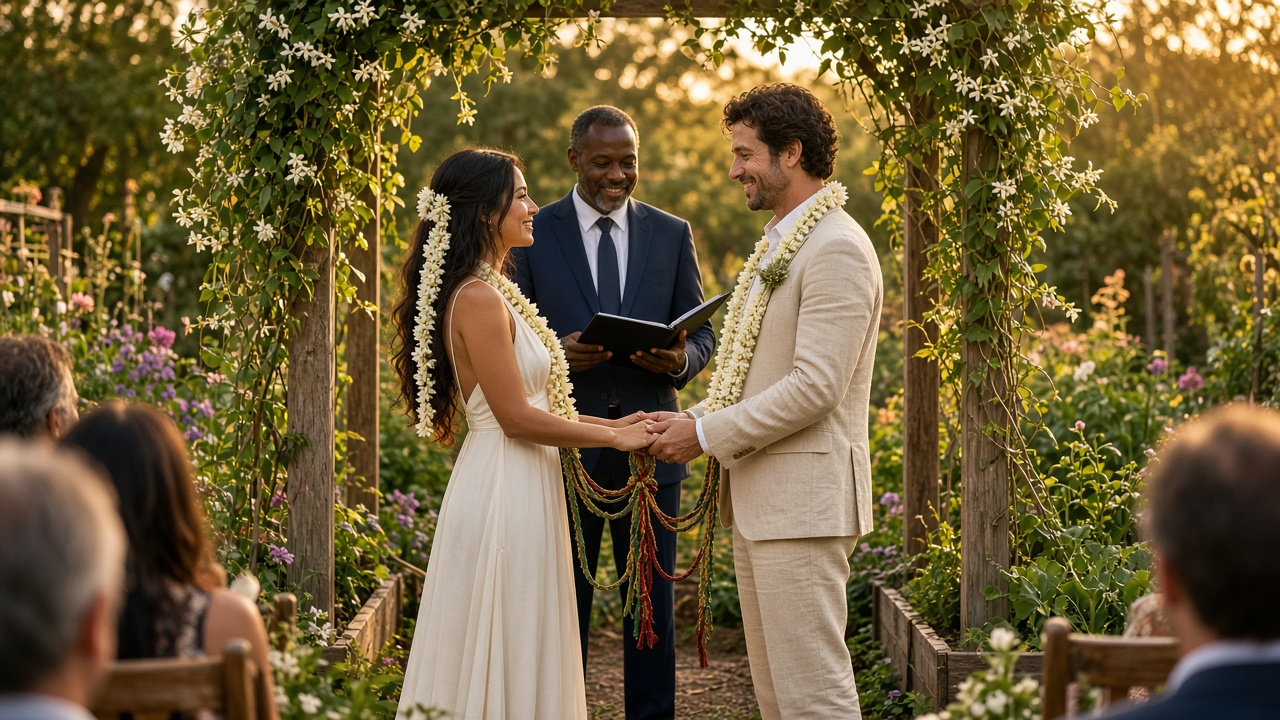
Being asked to officiate a friend's wedding is an honor, and it can be nerve racking. You need a script that sounds like the couple, cues that tell readers when to stand, vows people can actually repeat, and the legal moments that make the marriage count. The Wedding Officiant Ceremony Script Writer for Nonreligious and Interfaith Weddings: Run of Show With Timings, Couple Story, Reading Cues, Vow Formats, Declaration of Intent and Pronouncement, License Signing Steps, and Stage Directions prompt builds the full spoken script from the couple's real details, with a timed run of show, stage directions, and a list of license questions to confirm with the clerk.
What the prompt produces
- A run of show with start times from minute zero, fitted to your target length.
- A pronunciation line for every name at the top of the script.
- A welcome with a short moment for anyone being remembered.
- The couple story, written from details you provide, with one scene and one promise.
- Reader and ritual cues that say when people stand, where they go, and what words hand off to them.
- Vows in repeat after me phrases or as self written vows with a time limit.
- The declaration of intent and the pronouncement, marked so they cannot be skipped.
- License steps to confirm with the issuing clerk.
- Stage directions in brackets throughout, including where to step aside for the kiss photo.
How to fill the inputs
Couple includes names, how to pronounce them, what the couple want to be called, and pronouns. Spend time on pronunciation. Nothing deflates a ceremony faster than a mispronounced name.
StoryNotes is where the ceremony gets its heart. Give one specific moment, how they met, what they value, and anyone to honor. The prompt uses only what you write here.
CeremonyStyle sets the tone and length. Most ceremonies feel right somewhere between fifteen and twenty five minutes.
Participants lists who walks, who reads, and who holds the rings.
Rituals covers handfasting, garlands, a unity candle, or cultural traditions, with any order the family prefers.
LicensePlace names the state or country and the county where the license was issued, so the license checklist points you to the right clerk.
Reading the example output
The example is an eighteen minute nonreligious ceremony for a couple who met over a shared hose at a community garden:
- The run of show fits the time. Every section has a start time, ending with license signing after the recessional.
- The welcome honors a grandfather who loved gardening in two sentences, then moves on.
- The story uses one scene: the hose argument, followed by the detail that he now waters both plots every morning.
- The handfasting has words for each cord and a stage direction for slipping the knot off intact.
- The vows are short phrases, easy to repeat while emotional.
- The legal moments are labeled "do not skip", and the license section asks the officiant to confirm ordination acceptance, witnesses, and the return deadline with the county clerk.
Tips for better results
- Read the script aloud with a timer. Adjust sections, not your speaking speed.
- Print it in a large font in a folder you can hold with one hand.
- Rehearse the cues with readers and the ring holder so nobody wonders when to move.
- Call the clerk well before the wedding to confirm officiant rules and the license return process.
Mistakes to avoid
- Do not cut the declaration of intent or the pronouncement for time.
- Do not use inside jokes that leave most guests confused.
- Do not forget to sign the license before everyone heads to the party.
- Do not assume an online ordination is accepted everywhere. Confirm it locally.
Who it is for
Friends and family members officiating for the first time, professional officiants who want a faster first draft, couples writing their own ceremony with a celebrant, and wedding planners preparing timelines.
Related PromptDig links
Open the Wedding Officiant Ceremony Script Writer for Nonreligious and Interfaith Weddings: Run of Show With Timings, Couple Story, Reading Cues, Vow Formats, Declaration of Intent and Pronouncement, License Signing Steps, and Stage Directions prompt and add the couple's details to draft your script. For more creative writing prompts, Browse more prompts. If you have a ceremony or speech prompt that worked, Share a prompt.