How to Use the Oral History Interview Planner Prompt to Record Stories an Archive Will Accept
Plan an oral history interview the way archives expect: a pre interview summary, a chronological open question guide with follow up probes, a plain language release with restriction options, recording notes, and a timed index and metadata record for the finished recording.
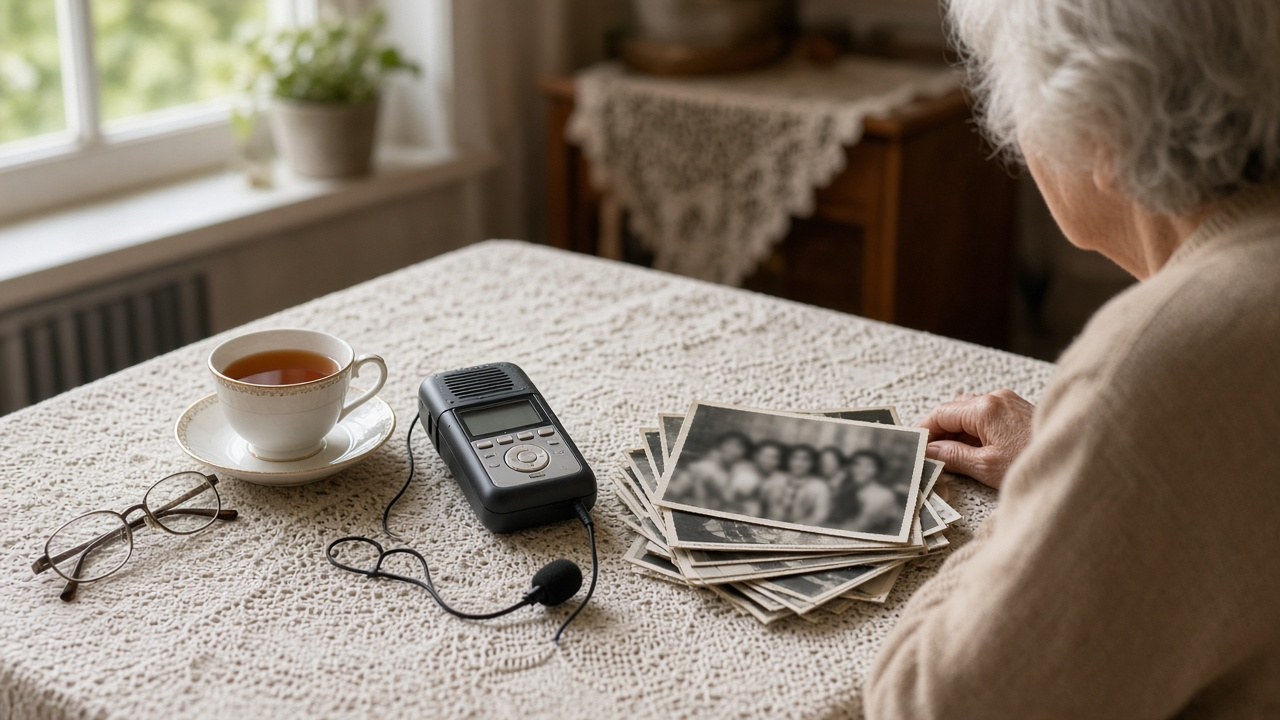
An oral history interview is only as useful as the paperwork around it. A beautiful two hour recording without a signed release, an index, or catalog details often sits on a hard drive because the archive cannot accept it. The Oral History Interview Planner: Narrator Pre Interview, Open Question Guide, Release and Restriction Terms, and Timed Transcript Index for an Archive prompt plans the whole interview the way community archives and historical societies expect, from the pre interview call to the timed index and metadata record.
What the prompt produces
- A pre interview summary with a short life timeline and the topics the narrator agreed to cover or asked to skip.
- A question guide in rough chronological order, with open questions and two follow up probes each.
- A sensitive topics plan that gives the narrator room to pause or skip.
- A recording slate and checklist covering room tone, levels, and session length.
- A plain language release draft with checkboxes for the restriction options your archive allows.
- A timed index with segment start times, a short synopsis, and keywords.
- A catalog metadata record ready for the repository.
- Follow up items such as spellings to confirm and photographs the narrator offered.
How to fill the inputs
ProjectAndRepository names the collection and the archive that will hold the recording. Include any intake rules, such as file format or the metadata standard they use.
NarratorBackground comes from your pre interview call. Write down life dates, places, jobs, and especially the topics the narrator does not want to discuss. The prompt keeps those topics out of the guide.
ResearchThemes connects this interview to the larger collection. Three themes is a good number for a 90 minute session.
RecordingSetup describes where and how you will record. A kitchen with a fridge running needs a different checklist from a quiet library room.
ReleaseOptions should list only the terms your repository allows. The prompt will not invent new restriction options.
SessionNotes can be added after the interview. Rough timestamps and topics are enough to build the timed index.
Reading the example output
The example plans an interview with a former textile mill worker for a local historical society.
- The pre interview summary records that she wants to talk about the mill, her church festa, and the 1960s closures, and that she asked not to discuss her late brother's illness.
- The question guide opens with "Tell me about the street you grew up on" and uses probes like "What did the room sound and smell like?" to draw out sensory memories.
- The sensitive topics plan tells the interviewer to listen and then offer to move on if the narrator raises the skipped subject herself.
- The release draft offers copyright transfer or a Creative Commons license, plus optional access restriction and name redaction.
- The timed index turns rough notes into searchable segments with keywords like "mill closures" and "union".
Tips for better results
- Keep questions open. "Tell me about" and "What do you remember" invite stories, while yes or no questions end them.
- Bring the release to the interview but sign it after recording, when the narrator knows what they said.
- Record a full slate at the start. Future researchers will thank you.
- Build the index within a week while you still remember the session.
Mistakes to avoid
- Do not add facts to the narrator's story that they did not say. The index and metadata should match the recording.
- Do not promise restrictions the archive cannot honor.
- Do not skip room tone. Editors and transcribers need it to clean the audio.
Who it is for
Local historical societies, public librarians, graduate students in history, community archive volunteers, and family historians who want recordings that last beyond one hard drive.
A practical interview routine
Hold a short pre interview call, then run the prompt to build the guide and release. Record the session, take rough timestamped notes, and run the prompt again with SessionNotes to build the index and metadata. Send the narrator a thank you note and a copy of the index, then deliver the recording, release, and records to the archive together.
Related PromptDig links
Open the Oral History Interview Planner: Narrator Pre Interview, Open Question Guide, Release and Restriction Terms, and Timed Transcript Index for an Archive prompt with your narrator notes and archive requirements. For more research prompts, Browse more prompts. If you have a method that works for your collection, Share a prompt.