How to Use Ollama Modelfile Map from Model Inventory (No Invented Token Counts)
Turn inventory into the deliverable named in the title. Stays faithful to Inputs only.
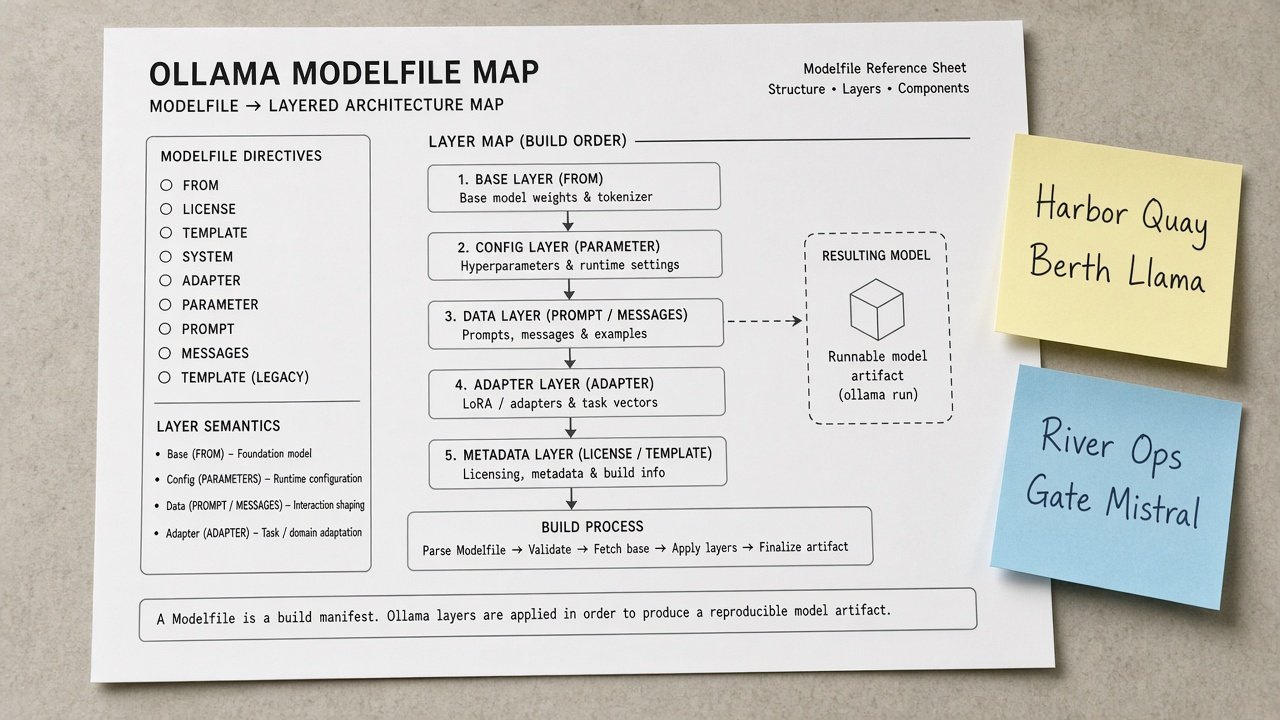
This guide shows how to run the PromptDig prompt Ollama Modelfile Map from Model Inventory (No Invented Token Counts) from a locked source packet so you get a usable draft without invented citations, stats, or identifiers. The prompt is built for ChatGPT, Claude, and Gemini. Open it on PromptDig, paste your Inputs, and keep every claim auditable.
What this prompt is for
The job titled Ollama Modelfile Map from Model Inventory (No Invented Token Counts) is a narrow domain workflow. It asks the model to work only from your Inputs, mark gaps as NOT IN INPUTS or UNKNOWN, and refuse to invent evidence. That matters when you need a first draft that a human can audit against a packet, not a polished story with fake footnotes. Goal: Turn an Ollama model inventory into a Modelfile map only. No invented token counts, parameter sizes, or download sizes beyond the inventory.
Ollama uses Modelfile FROM, PARAMETER, TEMPLATE, SYSTEM, and ADAPTER rather than a generic LLM dance. Lock Version so the Modelfile map does not claim AI agents the 0.3 era does not support. Paste model stubs and directive cues only. If token counts are missing, write NOT IN INPUTS instead of guessing parameter sizes.
Before you open the model
- Gather the Inventory packet you will lock (notes, requirements, outcomes, inventory lines, or baselines). Prefer plain text you can paste.
- Lock Version for the tool named in the title. If unnamed, write unknown.
- List Banned words and a Never invent list that matches the title boundary (no invented rates, IDs, scores, or owners).
- Choose Format and Language. Keep Extra fields UNKNOWN if you do not have an escalation path yet.
- Confirm the deliverable boundary matches the title so the model does not drift into captions, exam dumps, or advice.
Step-by-step run
- Open Ollama Modelfile Map from Model Inventory (No Invented Token Counts) on PromptDig and copy the prompt text.
- Replace every [bracket] field with your real Inputs. Do not leave sample nouns in place.
- Paste into your model of choice. If the model starts inventing, stop and restate the Never invent list at the top of a follow-up.
- Read the honesty ledger first. Confirm Version, Workspace, SpecNames, Lang, and Forbidden items match what you locked.
- Accept only the map or checklist rows that quote Inventory nouns. Anything that cannot be traced should be cut or marked NOT IN INPUTS.
- Use the gaps list as your homework. Fill those five owed fields before a second pass.
- Run the compliance pass: quote Banned and Never hits, cut them, and print counts when Cap is numeric.
Quality checks
- No invented citations, DOIs, CTR, attendance, reviews, nutrition facts, part numbers, scores, or owners.
- No emojis in the deliverable unless your Format explicitly allows them.
- Cap honored with printed counts when Cap is numeric.
- Domain banners present for clinical, legal, insurance, education-plan, or veterinary jobs (not advice, de-identify).
- Banned and Never hits quoted and removed.
- Missing fields stay NOT IN INPUTS or NO_DATA rather than guessed.
- Tool-specific steps stay inside the named product (not a swap-title skeleton).
Related links
- Ollama Modelfile Map from Model Inventory (No Invented Token Counts)
- Browse more prompts
- Share a prompt
Closing notes
Use this prompt when you want a structured first pass that stays faithful to a locked inventory. Keep the model inside the job boundary named in the title. If you need a different deliverable, pick another PromptDig prompt rather than stretching this one. After you fill the gaps list, rerun with only the new Inputs. That habit keeps drafts short, auditable, and ready for human review without invented evidence.
Keep every claim auditable against Inputs. Prefer short sections over fluff. If a field was blank, write NOT IN INPUTS rather than guessing. Lock any tool version named in Inputs; if unnamed, write unknown. Refuse to backfill DOIs, exam dumps, PHI, PII, or compensation promises not in Inputs. Character and byte caps in the job are hard; print counts when relevant. End every pass with the five-bullet gaps list so the next human edit has a clear queue. When you rerun, paste only the missing Inputs rather than rewriting the whole brief. A second pass should shrink invention risk, not expand scope into captions or advice.