How to Use the National Register Significance Statement Builder Prompt to Draft a Stronger Section 8
Draft Section 8 of a National Register of Historic Places nomination from your research notes: test the property against Criteria A to D and the criteria considerations, set areas and period of significance, write the historic context and significance narrative, assess the seven aspects of integrity, and list gaps a SHPO reviewer will ask about.
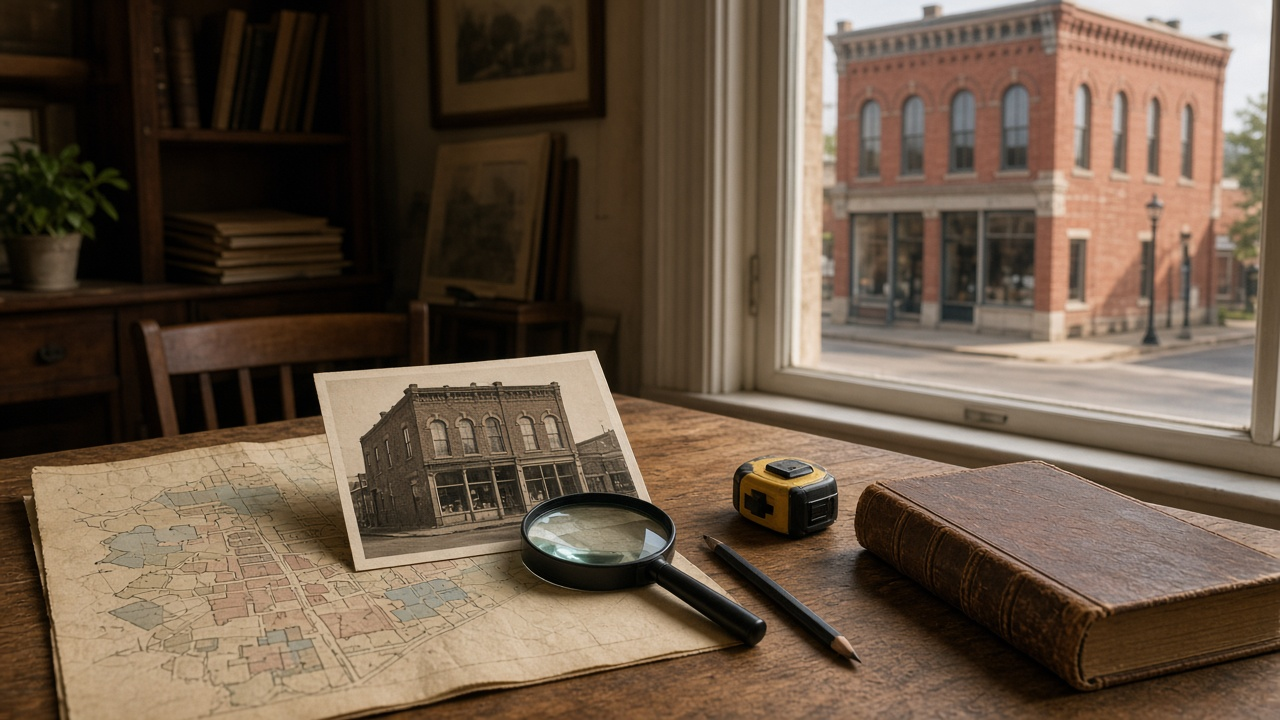
Listing a building on the National Register of Historic Places can open doors to preservation grants and tax credits, and it gives a community official recognition of its history. The hardest part of a nomination is Section 8, the Statement of Significance. It has to argue which criteria apply, set the period of significance, place the property in a historic context, and show the building still has integrity, all with sources. The National Register Nomination Significance Statement Builder: Criteria A to D Fit, Areas and Period of Significance, Historic Context, Seven Aspects of Integrity, and SHPO Reviewer Notes prompt drafts Section 8 from your research notes the way an architectural historian would and lists what a State Historic Preservation Office reviewer is likely to ask.
What the prompt produces
- A criteria screen that tests the property against Criteria A, B, C, and D.
- A criteria considerations check, such as moved buildings or properties under 50 years old.
- Areas of significance, period, and dates, each tied to a source.
- A historic context paragraph for your theme.
- A significance narrative for each criterion the evidence supports.
- An integrity assessment across the seven aspects.
- SHPO reviewer notes on weak sources, missing comparisons, and boundaries.
How to fill the inputs
PropertyFacts covers the name, address, building type, construction date, architect or builder, and original and current use.
ResearchNotes is the core of the nomination. List each fact with its source: deeds, fire insurance maps, city directories, newspaper articles, permits, and oral histories.
AlterationsLog lists every change to the building with dates, including storefronts, windows, siding, additions, and demolished parts.
ContextTheme names the pattern you want to argue, such as commerce in a county seat across a date range.
CriteriaTarget lists the criteria the owner hopes to use and the level of significance.
Reading the example output
The example covers a brick hardware store building on a small town main street. The owner wanted Criteria A, B, and C. The prompt keeps A, because deeds, maps, directories, and a newspaper article show the store supplied the farm township for 64 years. It drops B, because the owner's one term as mayor happened at city hall, not at the store, and the only source is a family letter. It treats C as weak, because the building is a typical commercial block by a builder with no other documented work.
The period of significance runs from the deed in 1898 to the last directory listing as a hardware store in 1962, with the reason for each year spelled out. The integrity section notes that the 1955 storefront was replaced in a restoration based on a 1910 photo and that the rear tin shop was demolished, but concludes that the building still conveys its role. The reviewer notes ask for comparisons with other main street buildings and a citation for the restoration photo.
Tips for better results
- Cite every fact in ResearchNotes. The prompt marks unsupported claims as NEEDS SOURCE.
- Include the alterations you would rather not mention. Reviewers will see them anyway.
- Name a specific context theme and date range instead of "local history."
- Ask your SHPO for sample nominations of similar properties to compare.
Mistakes to avoid
- Do not claim Criterion B because a notable person owned the building. The tie has to be where their important work happened.
- Do not stretch the period of significance to the present without a reason.
- Do not use promotional language. Reviewers expect measured historian prose.
Who it is for
Preservation consultants, historical society volunteers, building owners pursuing tax credits, graduate students in historic preservation, and local planning staff preparing survey work.
A practical routine
Gather sources first, run the prompt to draft Section 8, fill the NEEDS SOURCE gaps, then send the draft to your SHPO for an early informal review before submitting the full form.
Related PromptDig links
Draft your next nomination with the National Register Nomination Significance Statement Builder: Criteria A to D Fit, Areas and Period of Significance, Historic Context, Seven Aspects of Integrity, and SHPO Reviewer Notes prompt. For more research prompts, Browse more prompts. If you have a research prompt that helps with archives or history, Share a prompt.