How to Use the Made in USA Claim Reviewer Prompt to Fix Origin Claims Before Launch
Check a Made in USA claim on packaging, listings, and ads before launch: trace each significant part and processing step to its origin, apply the FTC all or virtually all standard, catch implied claims like flags and American made, and rewrite into a qualified or Assembled in USA claim with a substantiation file.
A Made in USA claim is one of the most valuable lines you can put on a box, and one of the easiest to get wrong. The FTC standard for an unqualified claim is that all or virtually all of the product is made in the United States. That means final assembly here, all significant processing here, and no more than negligible foreign content, traced back far enough to catch imported materials hiding inside parts you buy from a US supplier. The Made in USA Claim Reviewer: FTC All or Virtually All Test, Bill of Materials Origin Check, Implied Flag Claims, Qualified and Assembled in USA Rewrites, and a Substantiation File prompt walks through that test the way a product compliance specialist would, then rewrites every place the claim appears into something you can defend.
What the prompt produces
- A claim inventory of every express and implied claim, including flags, eagles, maps, and phrases like "American made."
- A category check that flags textile, wool, fur, and auto products, which follow their own labeling laws.
- An origin trace for every significant part and processing step.
- A verdict on whether an unqualified claim passes the all or virtually all test.
- Compliant alternatives, such as a qualified claim or Assembled in USA.
- Rewrites for each location, from the box front to a social ad.
- State notes for counsel, such as California's own rule.
- A substantiation file outline listing the documents to keep.
How to fill the inputs
ClaimLocations is the most important input. Paste the claim exactly as it appears in each place: packaging, hang tag, marketplace title and bullets, website footer, ads, and trade show banners. Implied claims count, so include the description of any flag or map artwork.
ProductCategory names what the product is. If it is clothing, bedding, or another textile, or a car or light truck, the prompt points you to the specific law for that category instead.
BillOfMaterials lists each component, the country it comes from, and its share of manufacturing cost. Ask suppliers where their raw materials come from, not just where they finish the part.
ProcessingSteps lists each step and where it happens, including final assembly and testing.
StateRules names the states you sell in that have their own origin rules.
Reading the example output
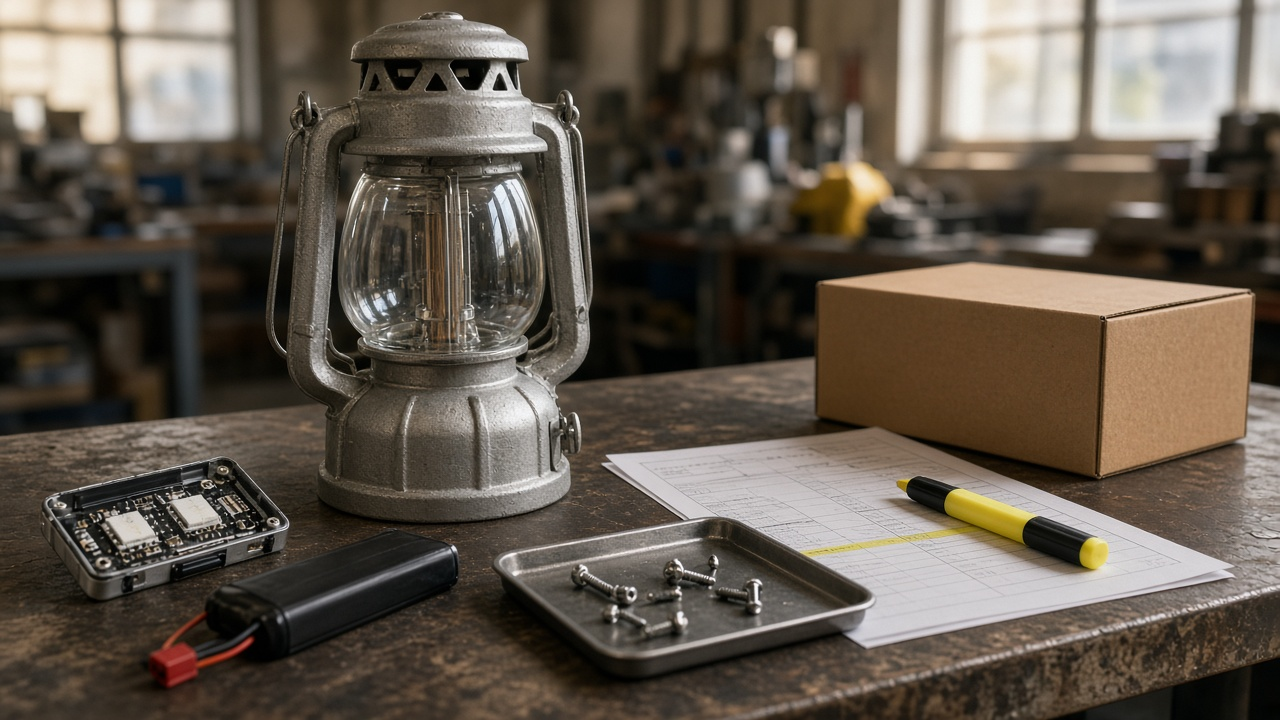
The example reviews a cast aluminum camping lantern. The housing is cast in Ohio from US aluminum, and the lantern is assembled and tested in Dayton. But the LED light engine and the battery pack come from China, and they are the parts that make a lantern work. The prompt traces every component and concludes that an unqualified claim fails, and that "100% USA made" in an Instagram ad is the most exposed line.
Instead of stopping at "no," the output gives two compliant options. A qualified claim names the imported parts clearly. An Assembled in USA claim works because casting, wiring, assembly, and testing in Dayton are substantial operations, which the output asks counsel to confirm. It then rewrites the box front, the marketplace title, the website footer, and the ad, and it tells you to remove the waving flag or place it next to the qualified line so it does not imply full US origin.
Tips for better results
- Get written origin declarations from suppliers before you run the review.
- Include small parts like fasteners. The prompt can judge whether they are negligible, but only if they are listed.
- Paste the claim from every channel, including ads your agency runs.
- Rerun the review whenever a supplier changes. One new part can change the verdict.
Mistakes to avoid
- Do not assume a part is US made because the supplier is in the US. Ask about its inputs.
- Do not keep flag artwork next to a qualified claim at a larger size than the qualifier.
- Do not treat the output as legal advice. It is a pre-review to make your counsel's time count.
Who it is for
Product marketers, small manufacturers, marketplace sellers, packaging designers, and in house compliance staff who need to check origin claims before launch or before a retailer audit.
A practical routine
Run the prompt when you first write the claim, again before packaging goes to print, and again when the bill of materials changes. Keep each output in your substantiation file with the supplier declarations it relied on.
Related PromptDig links
Check your next product claim with the Made in USA Claim Reviewer: FTC All or Virtually All Test, Bill of Materials Origin Check, Implied Flag Claims, Qualified and Assembled in USA Rewrites, and a Substantiation File prompt. For more marketing prompts, Browse more prompts. If you have a compliance prompt that saves your team time, Share a prompt.