How to Use the Homeowners Insurance Contents Claim Inventory Prompt to Organize Your Claim After a Loss
Organize a homeowners or renters contents claim after a fire, theft, or water loss: a room by room inventory with replacement prices from current listings, special limit checks for jewelry and electronics, how replacement cost and actual cash value play out, a recoverable depreciation plan, an additional living expense log, and a sworn proof of loss checklist.
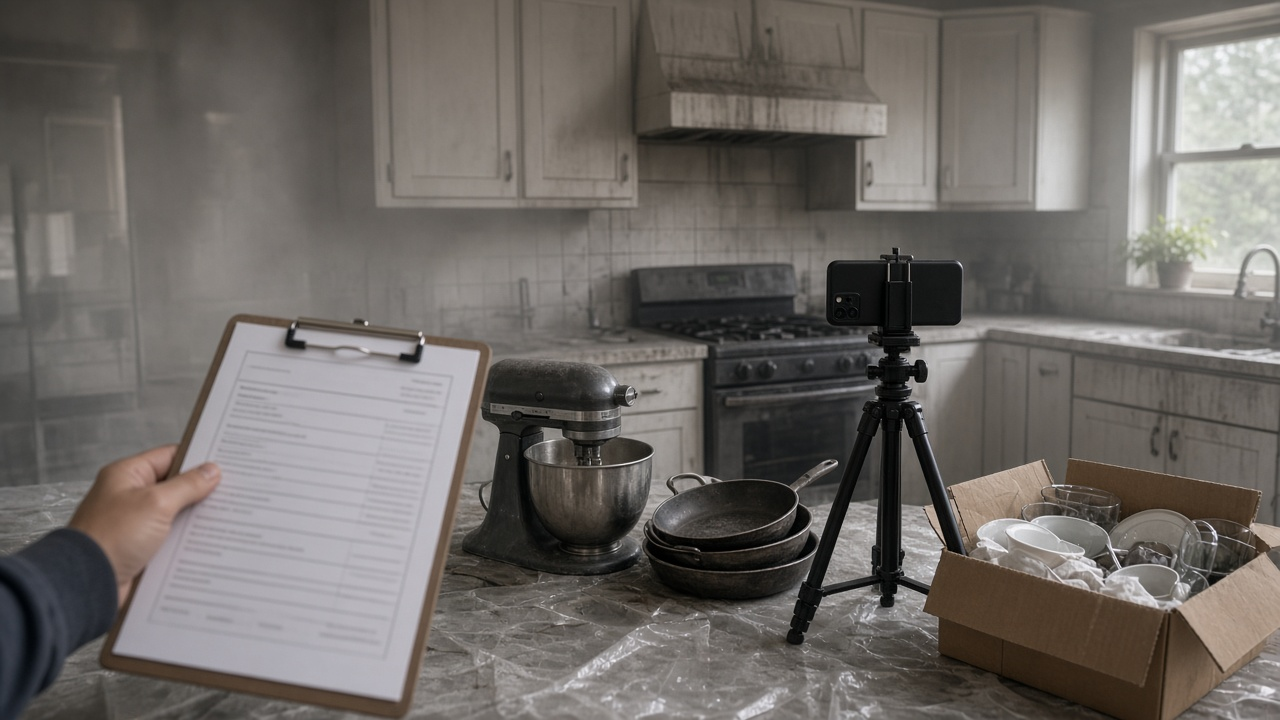
After a fire, theft, or water loss, the insurance company will ask for a list of everything that was damaged or lost, with ages, prices, and proof. Doing that while living in a hotel and replacing basics is overwhelming, and small mistakes can delay a payment or leave money on the table. The Homeowners Insurance Contents Claim Inventory and Proof of Loss Builder: Room by Room Item List, Replacement Cost vs ACV, Special Limits, Recoverable Depreciation, ALE Log, and Adjuster Follow Up prompt helps you organize the claim the way a property claim consultant would: a room by room inventory, special limit checks, a clear explanation of how replacement cost and actual cash value work on your policy, an additional living expense log, and a proof of loss checklist.
What the prompt produces
- A deadline list from the insurer's letters.
- A room by room inventory table with blanks for prices you fill from current listings.
- Special limit checks for jewelry, firearms, cash, collectibles, and similar categories.
- A replacement cost vs actual cash value explanation for your policy.
- An additional living expense log showing only costs above normal.
- A sworn proof of loss checklist.
- A follow up message to your adjuster.
How to fill the inputs
LossEvent covers the cause, date, claim number, adjuster, and any deadlines in letters from the insurer.
PolicyTerms comes from your declarations page and policy: the personal property limit, whether contents settle at replacement cost or actual cash value, the deductible, special limits, and additional living expense coverage.
RoomNotes lists what was lost or damaged in each room, with quantity, brand, model, age, and condition where you know them.
EvidenceList names the proof you have: receipts, order histories, photos, videos, manuals, and boxes.
ALECosts lists out of pocket costs since the loss, such as hotel nights, meals, laundry, and mileage.
Reading the example output
The example covers a kitchen grease fire with smoke damage through the first floor. The deadline list turns the adjuster's letter into calendar dates for the inventory and the proof of loss. The inventory table lists the mixer, pans, microwave, dishes, sofa, television, rug, and a jewelry box, with the evidence for each and blanks for prices the owner fills from current listings.
The special limits section catches a common misunderstanding: the jewelry limit on this policy applies to theft only, so smoke damaged jewelry falls under the full personal property limit. The valuation section explains that the first payment will be actual cash value, and that the depreciation held back is paid after you replace items within the policy's window. The living expense log counts only the restaurant spending above normal grocery costs, which is how insurers usually measure it.
Tips for better results
- Walk each room with your phone and record video before anything is thrown out.
- Search email and online order history for receipts. Many purchases are already documented.
- Use current listings for replacement prices and save the links.
- Ask for the depreciation schedule in writing so you can check the rates.
Mistakes to avoid
- Do not pad the claim. An inflated claim can void your coverage.
- Do not miss the replacement window for recoverable depreciation.
- Do not throw away damaged items until the adjuster says it is okay.
Who it is for
Homeowners and renters after a fire, theft, storm, or water loss, family members helping an older relative with a claim, and landlords helping tenants document their belongings.
A practical routine
Start the inventory the first week, update the living expense log every few days, send the inventory before the deadline, and track every call and email with the adjuster in one place. If the claim is denied or disputed, talk to a licensed public adjuster or attorney.
Related PromptDig links
Organize your claim with the Homeowners Insurance Contents Claim Inventory and Proof of Loss Builder: Room by Room Item List, Replacement Cost vs ACV, Special Limits, Recoverable Depreciation, ALE Log, and Adjuster Follow Up prompt. For more practical prompts for life admin, Browse more prompts. If you have a prompt that helped you through a stressful process, Share a prompt.