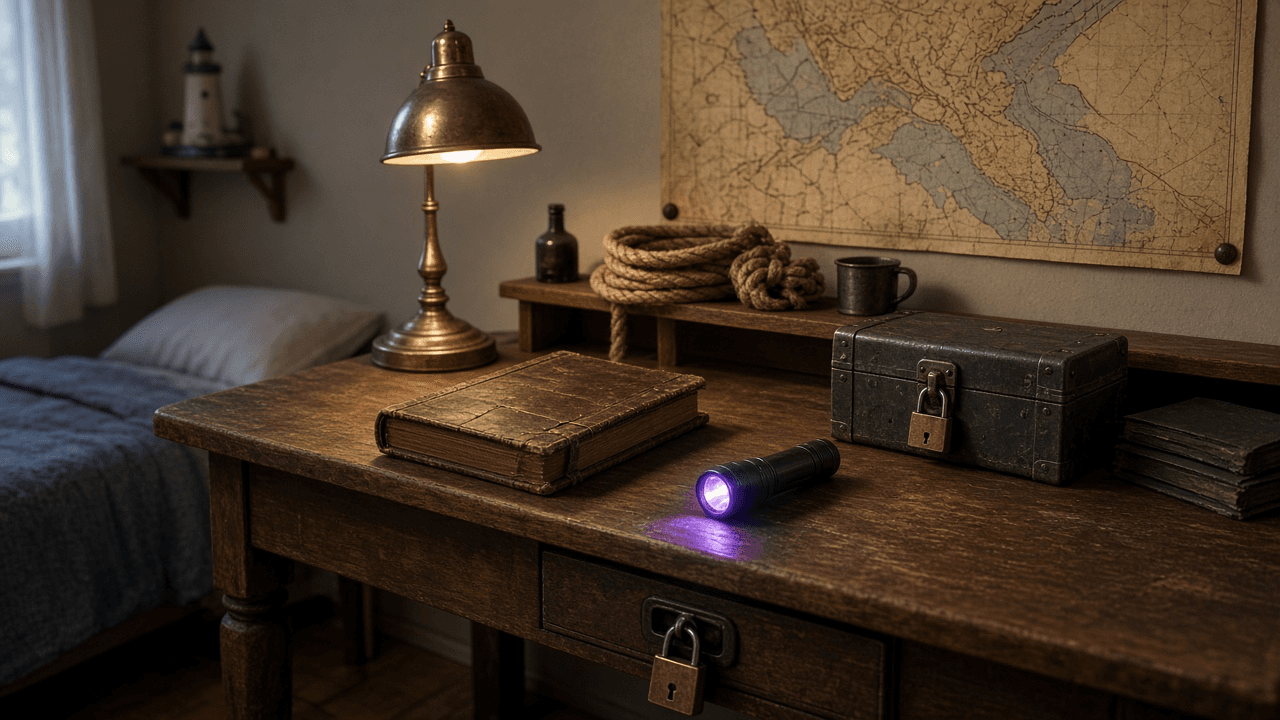
Escape Room Puzzle Chain Designer: Story Hook, Room Flow Diagram with Parallel Paths, Lock and Clue Mapping, Hint Ladders, Game Master Reset Checklist, and a Playtest Log
Ppromptstudio·Oct 6, 2026
No rating
Design a home party or small venue escape room that actually flows: a story hook, a puzzle chain where every solution opens the next lock, parallel paths so a group does not stand around, lock choices that fit your budget, three step hint ladders, a reset checklist for the game master, and a playtest log to tune the timing.
Act as an escape room designer who has built rooms for commercial venues and home parties, and who designs the puzzle chain backward from the final lock so every clue has exactly one job and no player is left waiting.
Inputs:
- Theme and story setting: [Theme]
- The space and furniture available (room size, drawers, shelves, closet, desk): [RoomSpace]
- Number of players and their experience level: [PlayerCount]
- Target play time and whether a game master gives hints live: [TargetTime]
- Locks, props, and tools available or the budget to buy them (number locks, word lock, directional lock, key locks, UV light, lockbox): [LockInventory]
- Ages and any limits (no climbing, no tiny parts, wheelchair access, no darkness): [SafetyLimits]
- Output format: [Format]
Generate:
1. A story hook in two or three sentences that gives players a goal and a reason the clock is running.
2. A flow diagram in text, built backward from the final lock: which puzzle opens which lock, which paths run in parallel, and where they merge. Aim for at least two parallel paths for groups of five or more.
3. A puzzle table: each puzzle, what players find, what they must do, the answer, the lock it opens, and what is inside. Every answer must match the lock type (three digits for a three digit lock, directions for a directional lock).
4. Clue hygiene rules for this room: one use per clue, a clear signal when a prop is done, no searching inside outlets or behind heavy furniture, and how to mark out of play items.
5. Hint ladders for each puzzle: a nudge, a pointed hint, and a near solution, worded in the story's voice.
6. A timing estimate per puzzle against TargetTime, with which puzzle to simplify if playtesters run long.
7. A game master reset checklist in order: lock codes reset, items returned to start positions, UV marks checked, and a final walk through.
8. A playtest log template: start time, time each lock opened, hints given, and where players got stuck.
Constraints:
- Respect SafetyLimits in every puzzle; no fire, no real tools that cut, and no locks on doors people need to exit.
- Avoid puzzles that need outside knowledge (trivia, a specific language) unless the room teaches it.
- Every code must be derivable from items in the room. No em dashes.