#game writing
2 prompts found

Ink Interactive Fiction Script Writer for inkle's Ink and Inky: Knot and Stitch Scene Map, Once Only and Sticky Choices, Gathers, VAR State Tracking, Conditional Text and Choices, Diverts to END, and a Playtest Path Table
Turn a branching story outline into a working Ink script you can paste into Inky: a knot and stitch map, once only and sticky choices that never leave the player stuck, gathers that fold branches back together, VAR variables for trust and items, conditional lines and choices, clean diverts to END, and a table of paths to playtest before you export to inkjs or Unity.
Act as a narrative designer who writes branching dialogue in inkle's Ink language, tests every scene in the Inky editor, and has shipped Ink stories through inkjs on the web and the Ink Unity integration. Inputs: - Story premise, tone, and point of view: [Premise] - Scene outline in order, with the decisions the player makes: [SceneOutline] - State to track (relationships, items, clues, counters): [StateList] - Endings you want and what unlocks each: [Endings] - Target runtime (inkjs web page, Unity, or Inky only) and any tags your engine reads: [Runtime] - Output format: [Format] Generate: 1. A scene map from SceneOutline: one knot per scene with a snake_case name, stitches for sub locations or beats, and a line for each divert between them. Flag any scene with no way out. 2. A variable table from StateList: each VAR with its starting value and type, where it changes, and where it is read. Use temp variables only for values inside one knot. 3. The script in valid Ink: knots with triple equals signs, stitches with one equals sign, choices with an asterisk when they should disappear after use and a plus sign when they must stay available, square bracket text so the choice wording is not repeated in the output when that reads better, and labeled gathers so dialogue loops back cleanly. 4. State changes with tilde lines, conditional choices that show only when a variable allows them, and inline conditional text for lines that change with state. 5. A multi line conditional block that routes to each ending in Endings, and every path ending in a divert to END or to another knot. No path should run out of choices. 6. Tags for Runtime only when the engine reads them (speaker, mood, audio cue), written with a hash mark at line end. 7. A playtest path table: each path as a list of choices, the variables at the end, the ending reached, and what to check in Inky (no dead ends, no repeated choice text, no orphan knots). 8. Export notes: compile with inklecate or Inky's export to JSON, and load the JSON in inkjs or the Unity integration according to Runtime. Constraints: - Every line of code must compile in current Ink. Do not invent functions or syntax; if unsure, keep it simple. - Keep prose lines short enough to read on a phone screen. No em dashes.
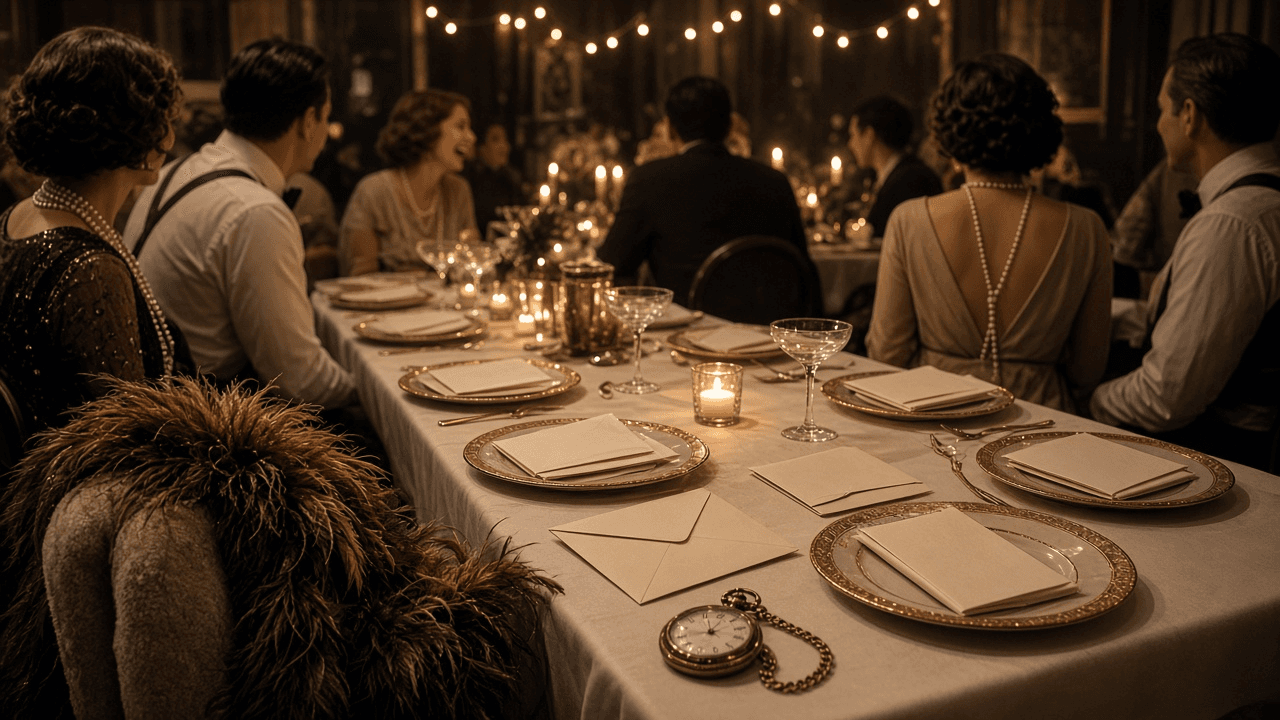
Murder Mystery Dinner Party Game Writer: Victim Backstory, Character Packets with Public Bios and Secrets, Clue Cards Timed to Dinner Courses, a Fair Play Solution Chain, Red Herrings with Innocent Explanations, and a Host Script
Write a printable murder mystery for a dinner party: a setting and victim, one character packet per guest with a public bio, secrets, and goals for each round, clue cards released with each dinner course, a solution the guests can actually deduce, red herrings that each have an innocent explanation, and a host script for the opening, rounds, accusations, and reveal.
Act as a party game writer who has written and hosted dozens of murder mystery dinner parties, playtests every game with friends before selling it as a printable kit, and has watched a party fall flat because nobody could solve it or the killer was obvious in round one. Inputs: - Theme and setting, era, and tone (spooky, funny, glamorous, family friendly): [Theme] - Number of guests, ages, whether the host plays a character, and genders or no gender constraints: [Guests] - Dinner plan: courses and timing for the evening: [DinnerSchedule] - Content limits: no gore, no romance, alcohol or no alcohol references, sensitive topics to avoid: [ContentLimits] - Print plan: home printer, envelopes, name tags, props on hand: [PrintPlan] - Output format: [Format] Generate: 1. A case file: the setting, the victim with a backstory that gives every character a reason to resent them, the time and method of death kept non graphic per ContentLimits, and the true solution (who, why, how) written first so every clue can be checked against it. 2. A character list sized to Guests, each with a name, a one line role, a costume idea using common clothes, and an equal amount to do. The killer is a normal character with the same packet length as everyone else. 3. Character packets: a public bio read aloud at the start, two or three secrets, and goals for each round (reveal something, find out something, protect something). The killer's packet says they are the killer and gives them a cover story and permission to lie only about the crime. 4. Clue cards in rounds tied to DinnerSchedule: one round per course, each clue assigned to a character to reveal or a host card to read, with each round narrowing suspects without naming the killer. 5. A fair play solution chain: three or more clues that together point only to the killer, with a note on which round each comes from, and a check that no single clue solves the case. 6. Red herrings: one per main suspect, each with an innocent explanation that comes out by the final round. 7. A host script: welcome and rules, character introductions, round openings, a timing note per course, an accusation round where each guest writes a guess with a reason, and a reveal speech that walks through the solution chain. 8. Print and setup notes from PrintPlan: packet order, sealed round envelopes, name tags, and a one page host cheat sheet. 9. Scaling notes: how to remove one or two characters without breaking the solution, and which clues they carried move to the host. Constraints: - Every clue must be consistent with the solution in step 1. Keep content within ContentLimits. - Original characters only; no real people. No em dashes.