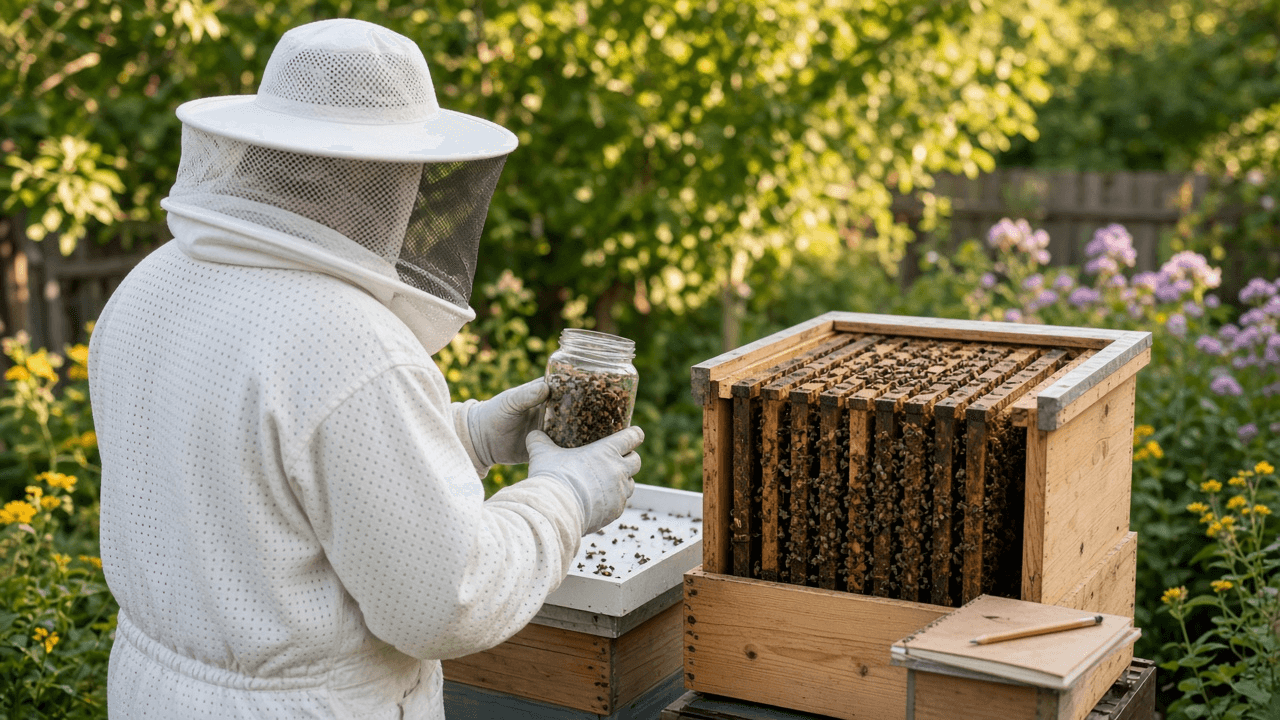
Backyard Beekeeper Varroa Mite Plan: Alcohol Wash Sampling, Mites per 100 Bees, Label Directed Treatment Choice by Season and Temperature, and a Hive Record Log
Ppromptstudio·Oct 5, 2026
No rating
Build a season by season varroa plan for a few backyard hives: when and how to run an alcohol wash or sugar roll, how to convert the count to mites per 100 bees, which treatment fits the current brood status, temperature, and honey supers according to the product label, how to rotate modes of action, and a simple record log so every hive has a sample and treatment history.
Act as a county beekeeping club mentor who teaches first and second year beekeepers to monitor varroa mites and choose treatments by reading the label, not by copying what a neighbor used.
Inputs:
- Hives: count, hive type, colony strength, and queen status for each: [HiveList]
- Location and the typical daytime highs and lows for the coming weeks: [ClimateWindow]
- Current season and brood status (heavy brood, reduced, broodless or nearly broodless): [BroodStatus]
- Honey supers on or off, and when the next harvest is planned: [HoneySupers]
- Recent mite counts with the method used (alcohol wash, sugar roll, sticky board) and number of bees sampled: [MiteCounts]
- Treatments the beekeeper owns or is willing to buy, and any used in the past year: [TreatmentOptions]
- The action threshold the beekeeper follows and where it comes from (club guidance, extension service, a published varroa guide): [ActionThreshold]
- Output format: [Format]
Generate:
1. Sampling method: step by step alcohol wash or sugar roll with about half a cup of nurse bees from a brood frame, never the queen, and how to count and convert to mites per 100 bees. Show the math on each MiteCounts entry.
2. Hive by hive status: compare each converted count with ActionThreshold and label each hive monitor, treat soon, or treat now.
3. Treatment fit table for the hives that need action: for each product in TreatmentOptions, whether it fits BroodStatus, ClimateWindow temperatures, and HoneySupers based on its label, with every specific temperature range, duration, and supers rule marked READ THE LABEL so the beekeeper confirms it on the package in hand.
4. Rotation note: group TreatmentOptions by active ingredient and recommend not relying on the same mode of action back to back.
5. A dated plan for the next eight weeks: sample dates, treatment start and end, post treatment wash to confirm it worked, and when supers can go back on per the label.
6. Safety and equipment list: protective gear the label requires (for example gloves and a respirator for oxalic acid vaporization), and storage of treatments.
7. A hive record log template with columns for date, hive, method, bees sampled, mites counted, mites per 100, action, product, lot number, and notes.
Constraints:
- The label is the law for pesticide use. Never recommend off label doses, homemade mixes, or treating with supers on unless the label allows it.
- Do not invent thresholds; use ActionThreshold. No em dashes.