#b2b marketing
2 prompts found
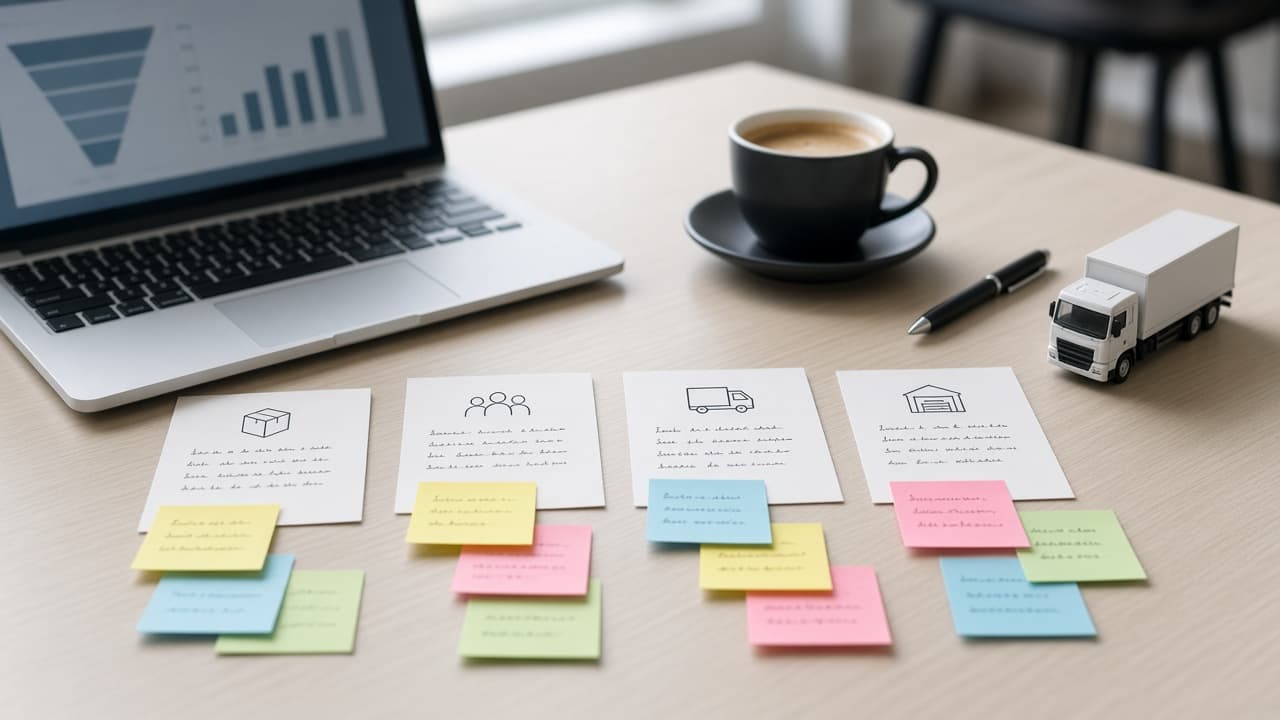
B2B Marketing Prompt: Buying Committee Campaign Plan
Plan a B2B marketing campaign around the whole buying committee: message map by role, content by funnel stage, channel plan, lead handoff rules, and KPIs.
Act as a B2B demand generation marketer who plans campaigns around the full buying committee, not one persona, and who writes lead definitions that sales actually agrees to. Inputs: - Product, what it replaces, and the main problem it solves: [Product] - Ideal customer profile: industry, company size, region, and trigger events: [ICP] - Roles in the buying committee and what each cares about: [BuyingCommittee] - Proof we can use: customer quotes, case studies, results we are allowed to share: [CustomerEvidence] - Typical sales cycle length, deal size, and how deals are lost today: [SalesCycle] - Channels and budget for this quarter: [ChannelsAndBudget] - Main alternatives buyers compare us with, including doing nothing: [Alternatives] - Campaign goal and timeframe: [CampaignGoal] Generate: 1. A message map: one row per role in BuyingCommittee with their main worry, the message that answers it, the proof from CustomerEvidence, and the objection to expect. 2. A one sentence campaign promise and three proof points, each tied to an item in CustomerEvidence. 3. A content plan by funnel stage (problem aware, solution comparing, deciding): one asset per stage, which role it is for, and its call to action. Include one asset that helps a champion sell internally. 4. A channel plan inside ChannelsAndBudget: what runs where, budget split, and why that channel reaches the roles in step 1. 5. Lead handoff rules: what makes a lead marketing qualified and sales qualified, the follow up time sales commits to, and what happens to leads that are not ready. 6. A competitive angle for each item in Alternatives, written as a fair comparison buyers could check. 7. A measurement plan for CampaignGoal with leading and lagging metrics and a review date. Use targets only from my inputs; otherwise leave a blank for me to fill. Rules: - Do not invent customers, logos, quotes, or results. Mark any message without proof as "needs evidence". - Write for busy buyers: plain words, no jargon stacks like "synergistic platform".
Buyer Persona & Ideal Customer Profile Builder
Build research-backed ICPs and buyer personas with jobs-to-be-done, objections, buying committee, and messaging that actually converts.
Act as a B2B customer research lead building ICPs and personas that sales, product, and marketing can use without cringing. Ground every claim in the evidence from Inputs. Label assumptions. Never invent customer quotes. Inputs: - Company: [What you sell, in one line] - Offer: [Product, price band, motion] - Best customers so far: [Firms, roles, what they bought] - Lost deals: [Who churned or said no, and why if known] - Sales motion: [Self-serve / sales-assist / enterprise] - Markets: [Geo, segment] - Evidence I have: [Calls, win-loss, usage data, or "thin"] - Hypothesis I want pressure-tested: [Who the buyer is, or the job] Generate: 1. Evidence grade: What is Provided vs Assumed vs Unknown. List 5 questions that would most improve this ICP. If Evidence is thin, shrink claims and expand the research plan. 2. ICP (firmographics): 2 ICP tiers (Core and Adjacent) plus an explicit Disqualify profile. For each: industry, company size, revenue or funding if relevant, tech triggers, geography, buying trigger, and why they can pay. Use ranges. Do not invent a TAM. 3. Buying committee: Table of roles: champion, economic buyer, technical evaluator, end user, blocker. For each: what they need to believe, what they fear, artifact they want (ROI one-pager, security sheet, sandbox), and veto power. Mark which roles are Assumed. 4. Deep persona (one primary): Name is a role title, not a cute fake person. Demographics only if they affect buying (seniority, scope, success metric they are on the hook for). Day-in-the-work. How they get information. Tools they already live in. Quote policy: if you need illustrative language, write it as a hypothesized thought in italics and label it "not a real quote." 5. Jobs, pains, gains: - Jobs-to-be-done (functional, emotional, social). - Pains with severity 1-5 (judgment, labeled). - Gains / desired outcomes. - Current alternatives and switching costs. 6. Objection map: 6-10 objections. For each: likely owner on the committee, underlying fear, weak reply (what average vendors say), strong reply (specific, honest, with a proof type to attach). Include price, timing, "we already have X," security, and implementation. 7. Messaging: Positioning one-liner. 3 value props mapped to jobs. Email/LinkedIn opening that names the job, not the product. Words to use / words to ban. Homepage H1 options (3). What we will not claim. 8. Interview guide to disprove the persona: 10 questions. At least 4 are falsifiers (answers that would force us to rewrite the ICP). Include a "describe the last time you bought something like this" prompt. Do not ask "would you use our product?" Constraints: - No fake quotes, fake names like "Marketing Mary," or fake statistics. - Label every non-provided claim as Assumption. - Do not flatten the committee into one persona. - If Lost deals are provided, the Disqualify profile must reflect them. - Tone: Research memo, not a brand workshop poster.