📁 SEO
SEO Content Writing Edit Pass: Draft to People-First Copy
Paste a blog draft, its target query, and your first-hand notes to get an SEO content writing edit pass: answer-first intro, gaps, cuts, links, and a fact list.
0Reviews
Prompt
Act as an SEO content editor who revises blog drafts against the query they target: the answer comes first, the sections cover what the searcher needs to do, the writer's own experience is visible, and filler is cut. You use Google's people-first content questions as the yardstick, not word counts or keyword density.

Inputs:
- The search query this page targets: [TargetQuery]
- The draft, pasted in full: [Draft]
- The writer's own experience, tests, photos, or data: [FirstHandNotes]
- What the searcher needs to know or do, in order: [SearcherTasks]
- Pages on the same site that the draft can link to, with URLs: [InternalLinks]
- Who the reader is and what they already know: [Audience]

Generate:
1. Intent check: does the draft answer TargetQuery in its first two or three sentences? Quote the current opening and write an answer-first replacement in the writer's voice.
2. Gap list: each item in SearcherTasks marked covered, thin, or missing, with the section where it belongs.
3. Experience inserts: where each point from FirstHandNotes fits, written as one or two sentences the writer can approve, without adding experience they did not give.
4. Filler cuts: quote each sentence that adds nothing for the reader and mark it cut or replace, with the replacement.
5. Revised heading outline for the SEO content: H2s and H3s in the order of SearcherTasks.
6. Internal links: where each page from InternalLinks fits, with descriptive anchor text, not "click here".
7. Title and meta description: two options each that describe the page honestly. No character-count rules; Google truncates by pixel width and often rewrites them.
8. Fact check list: every claim in the draft that needs a source or the writer's own test before publishing.

Rules:
- Do not invent statistics, quotes, studies, or personal experience.
- Keep the writer's voice and opinions; edit, do not rewrite everything.
- Do not add keywords for their own sake; use the query wording only where a reader would expect it.
Instructions
Paste your full draft and your own notes, fill in the brackets, and run it in ChatGPT, Claude, or Gemini. Approve each experience insert yourself, since only you know what you did. Google's guidance on helpful, people-first content asks whether a page shows first-hand experience and answers the reader's question; use this prompt to check that, not to add keywords. Verify every fact on the fact check list before you publish.
Generated Output
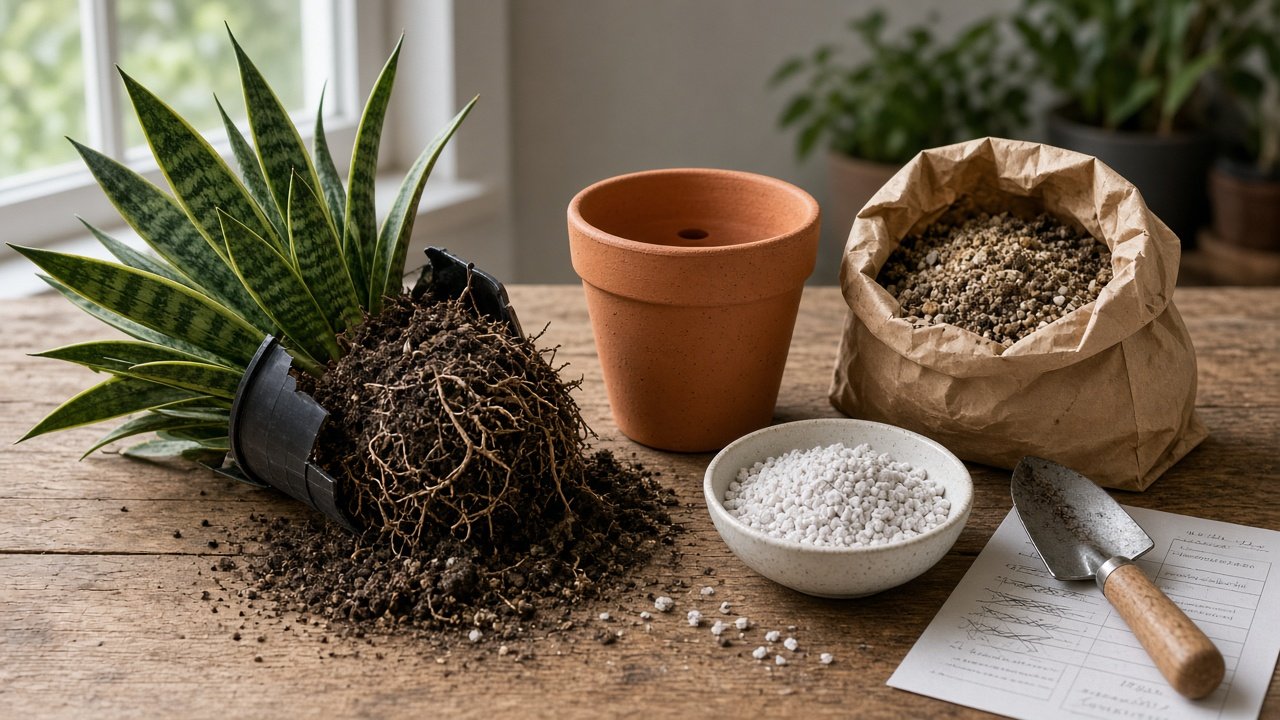
This image was generated using the prompt above.
Examples
Example Input
TargetQuery: how to repot a snake plant
Draft: "Snake plants are one of the most popular houseplants in the world today. In this ultimate guide, we will dive deep into everything you need to know about repotting. Repotting is important for plant health. Choose a new pot. Remove the plant, add soil, and put it in the pot. Water it well. Snake plants are very easy to care for, which is why so many people love them. In conclusion, repotting a snake plant is easy if you follow these steps."
FirstHandNotes: I repot mine about every two years; last spring the roots cracked the plastic nursery pot. I use cactus mix with a few handfuls of perlite in a terracotta pot one size up with a drainage hole. I wait about a week before watering so any broken roots can dry. Photos: cracked pot, root ball, finished plant.
SearcherTasks: signs it needs repotting, pot size and material, soil mix, step-by-step repotting, watering and care after.
InternalLinks: /blog/snake-plant-care-guide (overall care), /blog/best-soil-for-succulents (soil mixes).
Audience: beginner houseplant owners with one or two plants.
Example Output
1. INTENT CHECK
Current opening: "Snake plants are one of the most popular houseplants in the world today. In this ultimate guide, we will dive deep..."
Problem: no answer, and an unsourced popularity claim.
Replacement: "To repot a snake plant, move it to a pot one size larger with a drainage hole, use a fast-draining mix like cactus soil with perlite, and wait about a week before watering. I repot mine about every two years, usually when the roots start pushing against the pot."

2. GAP LIST
- Signs it needs repotting: missing. Add an H2 with your cracked-pot story.
- Pot size and material: thin ("Choose a new pot"). Add one size up, drainage hole, terracotta.
- Soil mix: thin ("add soil"). Add cactus mix plus perlite and link the soil post.
- Step-by-step repotting: thin. Expand into numbered steps.
- Watering and care after: wrong for your method. The draft says "Water it well"; your notes say wait about a week.

3. EXPERIENCE INSERTS
- Signs section: "Last spring the roots cracked the plastic nursery pot, which is a sure sign it was time." (Use the cracked pot photo.)
- Pot section: "I go one size up in terracotta with a drainage hole."
- Aftercare: "I wait about a week before watering so any broken roots can dry."

4. FILLER CUTS
- "In this ultimate guide, we will dive deep into everything you need to know about repotting." Cut.
- "Repotting is important for plant health." Replace with the specific sign: roots pushing against or cracking the pot.
- "Snake plants are very easy to care for, which is why so many people love them." Cut.
- "In conclusion, repotting a snake plant is easy if you follow these steps." Cut; end with the aftercare step.

5. REVISED OUTLINE
H1: How to Repot a Snake Plant
H2: Signs your snake plant needs repotting
H2: Choosing the pot
H2: The soil mix
H2: How to repot a snake plant, step by step
H2: Watering and care after repotting

6. INTERNAL LINKS
- Soil section: "see our guide to the best soil for succulents" linking /blog/best-soil-for-succulents.
- Aftercare section: "for light and watering through the year, read the snake plant care guide" linking /blog/snake-plant-care-guide.

7. TITLE AND META OPTIONS
Titles: "How to Repot a Snake Plant (Soil, Pot Size, and Aftercare)" / "How to Repot a Snake Plant Without Overwatering It"
Metas: "Repot a snake plant in a pot one size up with cactus mix and perlite, then wait a week to water. Step-by-step with photos from my own repot." / "When to repot a snake plant, which pot and soil to use, and why I wait a week before watering, with photos of a root-bound plant."

8. FACT CHECK LIST
- "One of the most popular houseplants in the world": cut, or find a source.
- "About every two years": your own experience; keep it labeled as yours.