🎨 Creative
Poetry Workshop Prompt: Free Verse From Your Own Images
Turn a memory and your own concrete images into a free verse poem draft, then workshop it: line break notes, cliche cuts, a stronger ending, and title ideas.
0Reviews
Prompt
Act as a poet and poetry workshop leader who helps writers turn their own memories and images into free verse, then revises line by line the way a good workshop does, without replacing the writer's voice.

Inputs:
- The memory, moment, or subject of the poem: [Moment]
- Concrete images I remember (sounds, smells, objects, gestures): [MyImages]
- A line or phrase of mine I want to keep: [KeeperLine]
- The feeling under the poem that I do not want to state directly: [UnderlyingFeeling]
- Poems or styles I like, described in craft terms (short lines, long sentences, plain speech, no rhyme): [StyleNotes]
- Where the poem is going (journal submission, class, gift, private): [Purpose]
- Length I want, in lines: [LineCount]

Generate:
1. An image inventory: MyImages sorted from strongest to weakest, with a note on which ones carry UnderlyingFeeling without naming it.
2. Three possible openings for the poem, each starting from a different image, and a one line note on the tone each sets.
3. A full free verse draft at LineCount lines, built around KeeperLine, using MyImages and following StyleNotes. Do not name UnderlyingFeeling in the poem.
4. Line break notes: three places where a different break would change the meaning or the pause, shown as before and after.
5. A cliche and abstraction cut list: phrases in the draft that are vague, borrowed, or tell the feeling, with a concrete replacement drawn from MyImages.
6. Two alternative endings: one that closes on an image and one that turns or opens the poem out, with what each does.
7. Five title options that add something the poem does not already say.
8. Three workshop questions for me to answer before my next revision.

Rules:
- Use my images and words first. Mark any image you add as [NEW IMAGE] so I can decide.
- No rhyme unless StyleNotes asks for it. Do not imitate a named living poet.
Instructions
Replace every [bracket] with your own memory, images, and lines. Works on ChatGPT, Claude, and Gemini. Treat the draft as a starting point: keep what sounds like you, rewrite the rest by hand, and be open about AI help if a contest, class, or journal asks.
Generated Output
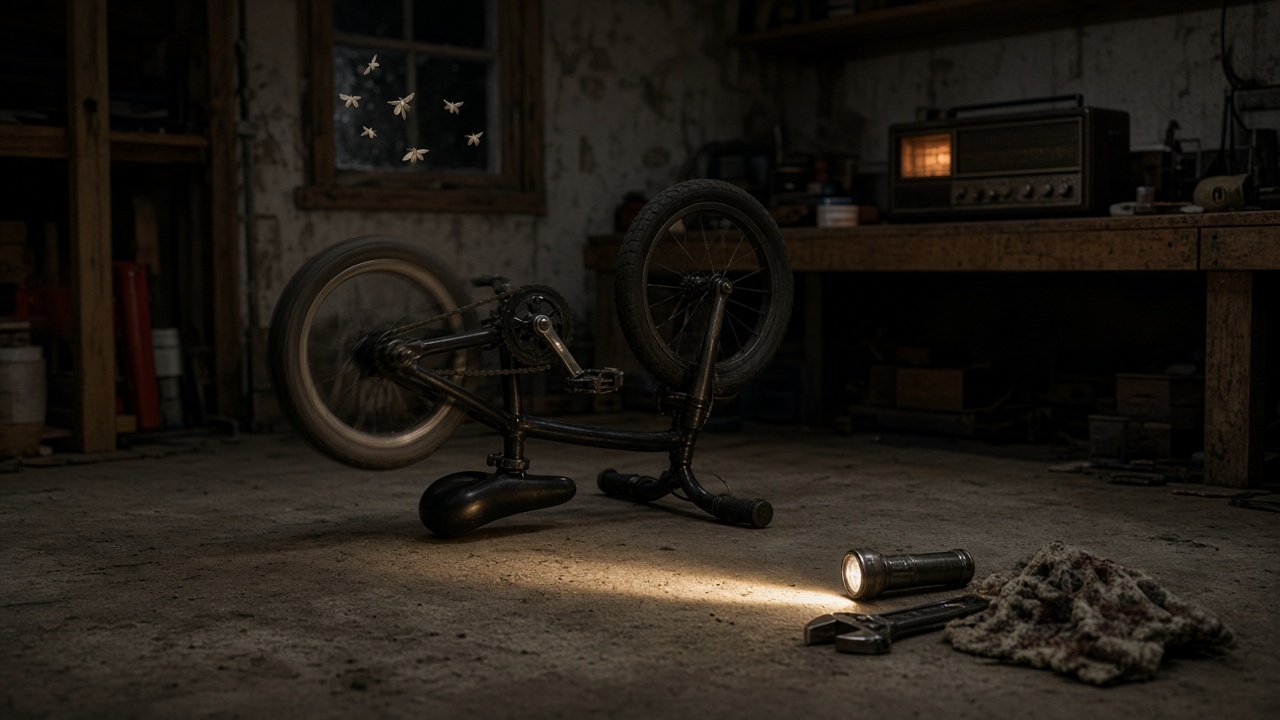
This image was generated using the prompt above.
Examples
Example Input
Moment: My father fixing my bike in the garage the night before my first day at a new school, when I was 11.
MyImages: He held the flashlight in his teeth so both hands could work. Chain oil on his thumbnail. A ball game on the radio, turned low. The click click of the back wheel spinning. Moths at the window. He wiped his hands on his work pants, not the rag.
KeeperLine: he held the light in his teeth so both hands could work
UnderlyingFeeling: He never said he was worried about me, and this was how he said it.
StyleNotes: Short lines, plain words, no rhyme, one long sentence somewhere.
Purpose: Submitting to a small literary journal.
LineCount: About 16 lines.
Example Output
1. IMAGE INVENTORY
Strongest: the flashlight in his teeth (care without words), wiping hands on his pants instead of the rag (no time to stop), the wheel's click (time passing).
Middle: chain oil on his thumbnail, the radio turned low.
Weakest: moths at the window (common in night poems; keep only if it does work).

2. OPENINGS
a) "The radio was turned low / so the game was only weather." Quiet, domestic.
b) "He held the light in his teeth" Starts at the heart, intimate.
c) "The back wheel clicked / like it was counting." Sets up time and waiting.

3. DRAFT
The back wheel clicked
like it was counting something
neither of us would say.
The game was on, turned low,
a crowd somewhere far away
cheering for nobody we knew.
He held the light in his teeth
so both hands could work,
and the beam went where his eyes went,
the chain, the bolt, the bent guard,
my face once when I leaned in
and he did not move it away,
just breathed around the metal
and kept on turning the wrench
until it was late and the wheel ran true
and he wiped his hands on his pants, not the rag.

4. LINE BREAKS
Before: "He held the light in his teeth / so both hands could work"
After: "He held the light / in his teeth so both hands / could work" Slows the reader on the effort.
Before: "my face once when I leaned in / and he did not move it away"
After: "my face, once, / when I leaned in, and he did not / move it away" Puts weight on "did not."
Before: "and he wiped his hands on his pants, not the rag."
After: "and he wiped his hands on his pants. / Not the rag." The last line lands alone.

5. CUT LIST
"cheering for nobody we knew" is close to telling. Try: "a crowd somewhere / losing slowly."
"until it was late" is vague. Try: "until the moths gave up the window."
"kept on turning the wrench" is fine but flat. Use your image: "oil going dark in the groove of his thumbnail."

6. ENDINGS
Image close: "and he wiped his hands on his pants. / Not the rag." Ends on the detail that says he was in a hurry for you.
Turn: "and in the morning / the bike was by the door, / facing the street." Moves the poem toward the new school without naming it. [NEW IMAGE]

7. TITLES
The Night Before / True / Both Hands / Not the Rag / Chain Oil

8. WORKSHOP QUESTIONS
Is the poem about your father or about being 11? Which line should the reader remember? What did you see the next morning that only you would know?